
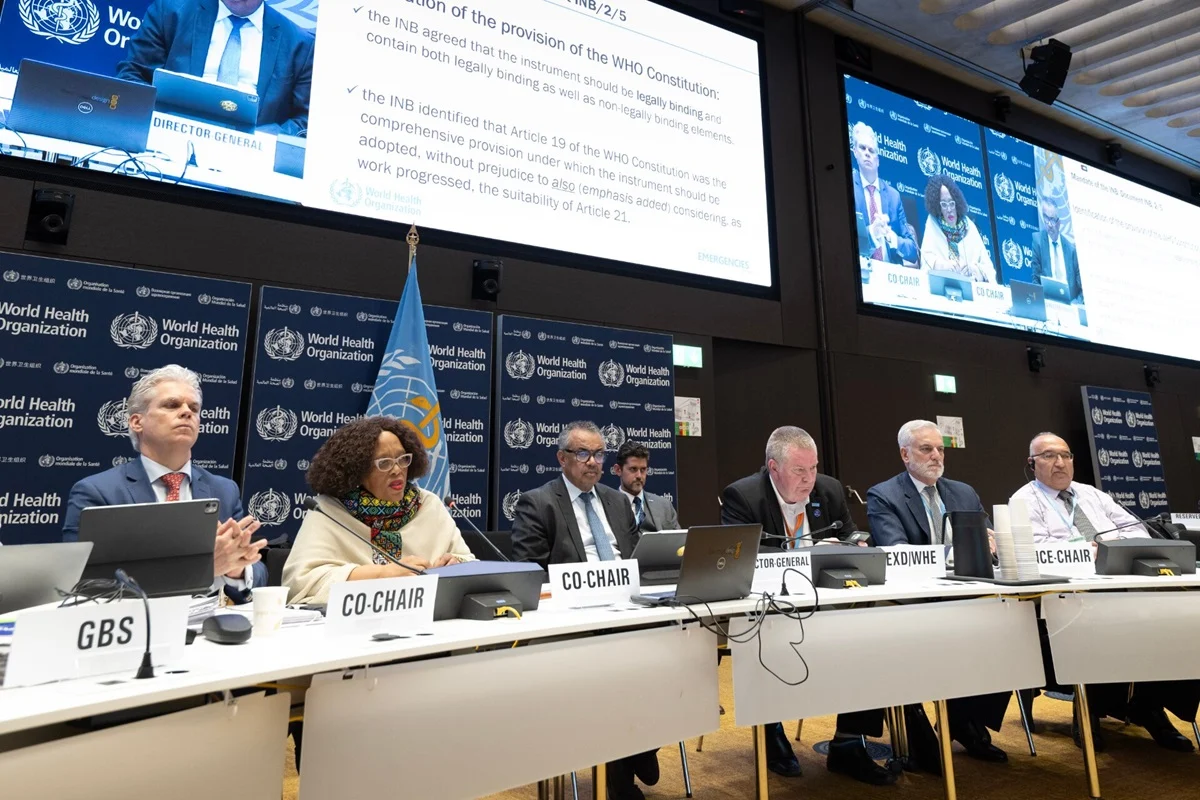
The international community has reached a critical juncture in its efforts to fortify global health security, as representatives from World Health Organization (WHO) member states concluded a pivotal round of negotiations in Geneva this week. The objective remains the finalization of a comprehensive, legally binding international instrument designed to govern pandemic prevention, preparedness, and response. With the Seventy-seventh World Health Assembly scheduled to convene on May 27, 2024, the pressure is mounting to transform a complex draft into a functional reality that can withstand the logistical and political rigors of a global health crisis.
The Path to Geneva: A Chronology of Cooperation
The genesis of this diplomatic undertaking traces back to the harrowing early months of the COVID-19 pandemic, which exposed profound fractures in international cooperation, supply chain resilience, and health equity. In March 2021, a coalition of two dozen heads of state and government issued a formal call for a global treaty. This coalition argued that the world could no longer rely on ad-hoc responses when faced with existential biological threats.
By December 2021, the WHO’s governing body officially authorized the establishment of the Intergovernmental Negotiating Body (INB). This entity was tasked with the Herculean mandate of drafting a treaty that would codify obligations for information sharing, surveillance, and the equitable distribution of countermeasures. The intervening two years have been characterized by grueling, iterative sessions where sovereign nations have attempted to balance national security interests with the necessity of collective global action.
Core Pillars of the Proposed Agreement
The draft agreement currently under deliberation is not merely a statement of intent; it aims to be a robust framework targeting three primary areas of global vulnerability:
- Pathogen Access and Benefit-Sharing (PABS): A central point of contention and negotiation, this system aims to ensure that when a new pathogen is identified, genomic sequence data is shared transparently and rapidly. In return, developing nations—often the sites of initial outbreaks—must be guaranteed timely, affordable access to the resulting life-saving vaccines, diagnostics, and therapeutics.
- The One Health Approach: Recognizing that the majority of emerging infectious diseases are zoonotic—originating in animals and jumping to humans—the treaty emphasizes the inextricable link between animal health, environmental stability, and human well-being. This requires integrated monitoring systems that transcend traditional human-centric public health surveillance.
- Financial Coordination and Capacity Building: The pandemic exposed the gross disparities in healthcare infrastructure. The proposed agreement seeks to establish a sustainable, predictable funding mechanism to bolster the surge capacity of low- and middle-income countries, ensuring that a weak link in one region does not become a global threat.
Official Perspectives and Diplomatic Resolve
Dr. Tedros Adhanom Ghebreyesus, the Director-General of the WHO, has consistently framed the treaty as a "generational agreement." During the recent Geneva proceedings, he underscored the gravity of the mission, stating, "Member States have shown unwavering commitment to forging a generational agreement to protect the world from a repeat of the horrors caused by the COVID-19 pandemic."
The INB Bureau, led by co-chairs Dr. Precious Matsoso of South Africa and Mr. Roland Driece of the Netherlands, has served as the diplomatic engine of this process. Dr. Matsoso characterized the work as a historic, if painstaking, endeavor. "This is not a simple exercise," she noted. "Getting this done means getting it right, and the INB Bureau is committed to help finalize a meaningful, lasting agreement."
Mr. Driece echoed this sentiment, framing the urgency of the negotiations through the lens of inevitable future threats. "It is not a matter of if a pandemic will happen again; it is a matter of when," Driece said. "We cannot afford to miss this historic opportunity to make the world safer from the next pandemic threat."
Global Context: Data and the Cost of Inaction
The urgency of these negotiations is underscored by the staggering statistics of the COVID-19 pandemic. According to WHO data, the pandemic claimed nearly 7 million lives officially, though excess mortality studies suggest the true toll may be significantly higher. Beyond the mortality figures, the global economy suffered its deepest contraction in decades, with the IMF estimating that the cumulative output loss from the pandemic amounted to trillions of dollars.
Furthermore, current vaccine inequality remains a sobering reminder of the status quo. During the height of the COVID-19 rollout, high-income countries secured the vast majority of initial doses, while many nations in the Global South struggled to vaccinate even their most vulnerable populations. The treaty aims to prevent this "vaccine nationalism," which not only prolongs the duration of pandemics but also facilitates the emergence of new, potentially more resistant variants.
Analysis: Implications of a Binding Instrument
The shift toward a "legally binding" instrument marks a significant evolution in international health law. Historically, the WHO has relied on the International Health Regulations (IHR), which, while important, often lacked the enforcement mechanisms required to compel state compliance during a crisis.
A new treaty would theoretically impose clearer obligations on states, such as mandatory reporting requirements and standardized investment in laboratory infrastructure. However, the success of this instrument hinges on the concept of "sovereign compromise." Critics and analysts point out that states are often reluctant to surrender control over their domestic health policies or intellectual property rights. The challenge for the INB is to draft language that is sufficiently specific to be actionable, yet flexible enough to earn the ratification of nations with widely disparate political and economic systems.
The Road to May and Beyond
As the INB transitions into a phase of intensified hybrid and in-person discussions, the focus shifts to resolving the remaining "bracketed" text—the areas where consensus remains elusive. The upcoming Seventy-seventh World Health Assembly will be a defining moment. Should the member states reach a consensus, the adoption of the treaty would represent the most significant expansion of global health architecture since the creation of the WHO in 1948.
If the negotiators succeed, the world will have a structured, cooperative framework to manage the next "Disease X." If they fail, or if the resulting document is watered down to a series of non-binding recommendations, experts warn that the international system will remain dangerously susceptible to the same fragmentation that defined the response to the COVID-19 crisis.
The stakes, therefore, remain exceptionally high. The work continuing in the coming weeks in Geneva is not just an exercise in bureaucratic drafting; it is an attempt to rewrite the rules of engagement for the next global health emergency. For the diplomats and public health experts involved, the window of opportunity is closing, and the mandate is clear: build a resilient global defense or risk repeating the catastrophic failures of the recent past. The international community now watches to see if the spirit of global cooperation can overcome the complexities of national interest in time for the assembly in late May.
