
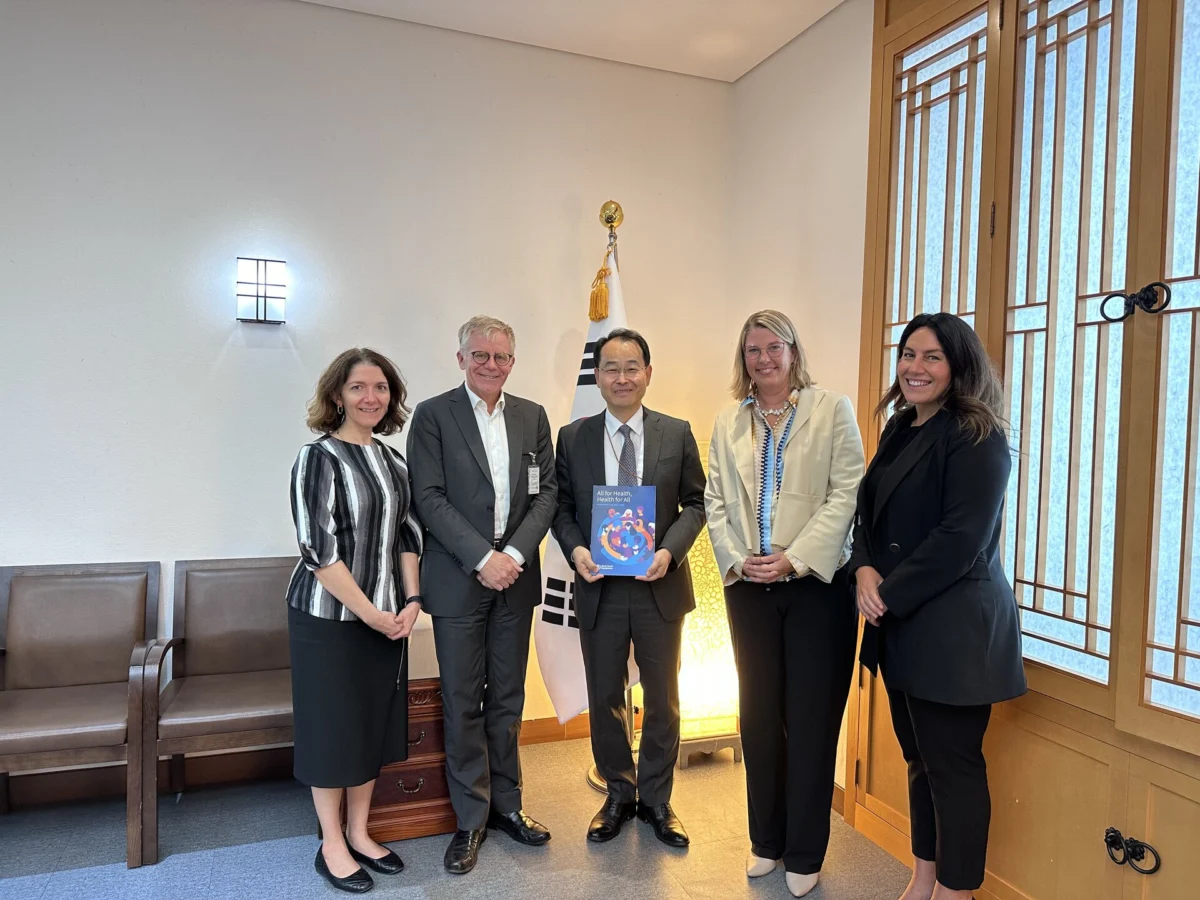
The partnership between the World Health Organization (WHO) and the Republic of Korea has evolved into one of the most consequential alliances in international public health, marking a trajectory that spans over 75 years. This relationship, which began in the aftermath of the Korean War when the nation was a primary recipient of international medical aid, has transformed into a sophisticated model of reciprocal cooperation. Today, the Republic of Korea stands as a cornerstone donor and a pivotal strategic leader in global health governance. This evolution was formally underscored during the second WHO-Republic of Korea Strategic Dialogue, held in Seoul from August 28 to 29, 2024, where both entities reaffirmed their commitment to navigating the complex landscape of modern health threats.
A Historical Trajectory: From Recipient to Global Architect
The history of the WHO-Korea relationship is a microcosm of the nation’s broader socioeconomic development. In the mid-20th century, the WHO played a fundamental role in providing basic health services and disease control to a war-torn nation. However, through rapid industrialization and an unwavering focus on human capital, South Korea achieved a historic turnaround. By the early 21st century, the nation had transitioned from being a recipient of developmental assistance to a significant contributor to the WHO’s core budgets and voluntary funds.
This shift is not merely financial; it represents a fundamental change in geopolitical influence. The Republic of Korea has increasingly leveraged its expertise in health technology, digital health infrastructure, and epidemic preparedness to shape international policy. The Second Strategic Dialogue served as the latest platform to solidify this transition, ensuring that Korean technical and financial resources are aligned with the WHO’s Fourteenth General Programme of Work (GPW 14) and the broader Sustainable Development Goal (SDG) 3: ensuring healthy lives and promoting well-being for all at all ages.
The Seoul Summit: Objectives and Stakeholders
The dialogue in Seoul brought together high-level delegations to synchronize priorities for the coming years. Dr. Catharina Boehme, Assistant Director-General for External Relations and Governance, spearheaded the WHO delegation, coordinating a multi-level team that included representatives from WHO headquarters, the Western Pacific Regional Office, and the WHO Country Office in Korea. Their participation emphasized the necessity of a "three-level" approach—integrating global policy, regional implementation, and country-specific action.

Representing the Republic of Korea, Dr. Hye-Jin Kim, Deputy Minister for Planning and Coordination at the Ministry of Health and Welfare, led a robust delegation that underscored the inter-ministerial nature of Korea’s health diplomacy. The inclusion of Dr. Young-Mee Jee, Commissioner of the Korea Disease Control and Prevention Agency (KDCA), signaled a deliberate focus on health security, pandemic preparedness, and the strengthening of global disease surveillance systems. Furthermore, the presence of officials from the Ministry of Foreign Affairs and the Ministry of Food and Drug Safety indicated that Korea views global health as an extension of its national security and foreign trade strategy.
Strategic Priorities and Policy Alignment
The two-day summit was structured around critical pillars of the global health agenda. The discussions prioritized the following areas:
- Sustainable Financing: A central theme of the dialogue was the "WHO Investment Case," a strategic framework designed to ensure predictable, flexible, and sustainable funding for the organization. As a key partner, Korea’s support is essential for the WHO to maintain its operational agility in the face of fluctuating global economic conditions.
- Pandemic Preparedness and Response: In the wake of COVID-19, the dialogue focused on the implementation of the International Health Regulations (IHR) and the ongoing negotiations surrounding the Pandemic Treaty. Korea’s experience in large-scale testing and contact tracing provides a blueprint that the WHO seeks to integrate into its global pandemic preparedness protocols.
- Digital Health and Innovation: Leveraging South Korea’s status as a global hub for technology, the dialogue explored the integration of Artificial Intelligence (AI) and digital health tools in primary healthcare systems. This includes creating data-sharing standards that can help low-and-middle-income countries improve their diagnostic capabilities.
- Health Systems Strengthening: Moving beyond emergency response, both parties discussed long-term investments in universal health coverage (UHC). The WHO emphasized that Korea’s model of high-quality, efficient national health insurance is a vital case study for nations currently undergoing systemic health reforms.
Legislative Engagement: The Role of Parliamentarians
A unique feature of the second Strategic Dialogue was the deliberate inclusion of legislative outreach. Recognizing that global health goals require sustained political backing, the WHO delegation held meetings with members of the National Assembly. This engagement is vital for several reasons: parliamentarians hold the power of the purse, dictate national health priorities through legislation, and ensure that executive branch commitments are honored across electoral cycles. By fostering a "health-in-all-policies" approach among Korean lawmakers, the WHO ensures that global health remains a bipartisan priority in Seoul.
Data-Driven Implications for Global Health
The partnership is underpinned by significant financial and technical data. The Republic of Korea has consistently increased its contributions to the WHO’s Contingency Fund for Emergencies (CFE), which allows the organization to respond to health crises within 24 hours of an outbreak. In 2023 alone, Korean-led initiatives provided essential funding for vaccine distribution in the Western Pacific region, significantly reducing the mortality rates of vaccine-preventable diseases in Southeast Asia.
Furthermore, the collaboration has catalyzed the development of the "Global Health Security Index" initiatives, where Korea provides the technical expertise to help other countries assess their vulnerabilities. The alignment achieved in Seoul ensures that these efforts are not fragmented. By unifying their strategic priorities, the WHO and Korea are effectively reducing the duplication of efforts, thereby increasing the efficiency of aid and technical assistance globally.

Analysis: Why the Partnership Matters Now
The timing of this dialogue is critical. The world is currently navigating a period of "polycrisis," characterized by climate change-induced health threats, the rising burden of non-communicable diseases, and the ever-present risk of zoonotic outbreaks. The WHO’s dependence on a small group of traditional donors is shifting toward a model that values the contributions of "middle-power" leaders like the Republic of Korea.
For Korea, this partnership is a vehicle for "soft power." By championing the global health agenda, the nation enhances its diplomatic standing and secures its interests in global stability. For the WHO, the partnership serves as a lifeline for technical innovation. Korea’s sophisticated manufacturing sector for vaccines and diagnostics makes it a indispensable partner for the WHO’s goal of regionalizing medical supply chains to prevent the bottlenecks seen during the pandemic.
Future Outlook and Commitments
As the Strategic Dialogue concluded, the consensus was clear: the partnership must move toward more formalized, long-term agreements. The "alignment of priorities" mentioned by participants suggests that future cycles of the dialogue will likely focus on measurable outcomes. This includes setting specific targets for the number of health professionals trained through joint WHO-Korea programs and the establishment of shared research centers for pandemic prevention.
The closing sessions of the meeting focused on creating a monitoring mechanism for the commitments made during the two days. Both the WHO and the Korean government agreed that periodic reviews would be necessary to ensure that the momentum generated in Seoul translates into tangible, on-the-ground improvements in global health outcomes.
Conclusion
The second WHO-Republic of Korea Strategic Dialogue represents more than just a diplomatic formality; it is a strategic alignment of one of the world’s most effective national health systems with the primary international body responsible for global public health. As the Republic of Korea continues to solidify its role as a leader in global health, the partnership serves as a template for how middle-power nations can contribute to a safer, healthier world. Through this sustained cooperation, both the WHO and the Republic of Korea are demonstrating that global health security is not merely a moral imperative, but a practical necessity that requires the unified action of all nations, backed by consistent, evidence-based strategy. As the world moves forward into a new decade of health challenges, the Seoul meeting serves as a testament to the power of a 75-year-old relationship that shows no signs of stagnation, but rather, a dynamic evolution toward greater global impact.
