

The agricultural and food landscape in the Netherlands is facing a transformative crossroads. A powerful, cross-sectoral coalition consisting of 46 prominent agrifood organizations, food producers, major retailers, trade bodies, non-profit institutions, foodservice operators, and educational entities has formally appealed to the Dutch government. The coalition is pressing state leaders to enact a comprehensive national action plan specifically tailored to plant-based food production and consumption. Central to their proposal is the creation of a €65 million annual acceleration fund designed to bridge the gap between supply and demand, stimulate local agricultural practices, and ensure the nation meets its ambitious sustainability and public health benchmarks for 2030.
This urgent petition was formally presented to members of the Dutch House of Representatives, including MPs Joris Lohman and Anne-Marijke Podt. By uniting actors across the entire value chain—from primary agricultural cultivation to retail shelves—the coalition aims to propel the Netherlands toward its national target of ensuring that at least 50% of all consumed proteins are plant-based by the end of the decade. As European nations grapple with the dual pressures of climate change and soaring healthcare costs associated with diet-related chronic illnesses, the Dutch proposal represents one of the most comprehensive cross-industry calls for systemic dietary reform seen in Western Europe.
Background Context and the Protein Transition Imperative
The push for a national action plan does not emerge in a vacuum. Over the past decade, the Netherlands has positioned itself as a progressive voice within the European Union regarding sustainable agriculture, yet it remains heavily reliant on conventional livestock farming and intensive meat production. Livestock agriculture is widely recognized as a major contributor to greenhouse gas emissions, nitrogen pollution, and land degradation—all of which are acute ecological challenges in the densely populated Dutch landscape.
Simultaneously, nutritional science increasingly points to the health benefits of shifting away from heavy animal protein consumption toward whole foods, legumes, nuts, seeds, and minimally processed plant alternatives. High rates of cardiovascular disease, Type 2 diabetes, and obesity continue to strain public health infrastructure and drive up national healthcare expenditures. By incentivizing a dietary pivot toward plant-based nutrition, the government could systematically mitigate these lifestyle-related diseases.
Furthermore, the protein transition is intimately connected to national and international food security. Disruptions in global supply chains, geopolitical instability, and the vulnerability of imported feedstocks for livestock have exposed the fragility of modern food systems. Developing a robust, domestically integrated plant-based supply chain enhances national food autonomy, insulates consumers from price volatility, and positions Dutch agribusiness at the forefront of the burgeoning global market for sustainable food innovations.
A Strategic Five-Pillar Framework for Systemic Change
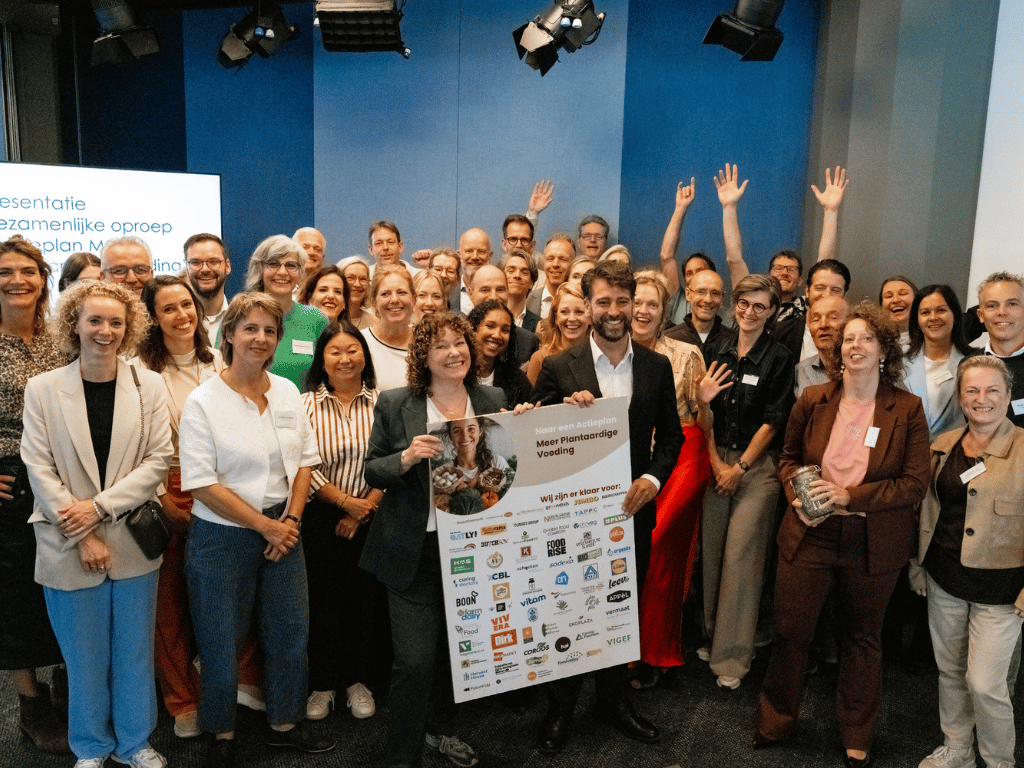
To turn policy ambition into measurable execution, the coalition has structured its proposal around five core pillars. These pillars address the systemic bottlenecks that currently hinder the widespread adoption of plant-based foods, ensuring that interventions are targeted, holistic, and mutually reinforcing.
First, the coalition emphasizes stimulating demand and actively improving the retail and consumer food environment. This involves making plant-based foods more visible, accessible, and affordable compared to conventional animal products. Price parity remains a formidable barrier for many consumers; thus, targeted fiscal measures and national awareness campaigns are deemed essential to normalize plant-forward eating habits in alignment with official national dietary guidelines.
Second, the strategy focuses heavily on strengthening domestic cultivation through direct farmer support and enhanced value chain cooperation. Transitioning away from traditional models poses significant financial and operational risks for individual farmers. The proposed framework seeks to derisk this transition by providing agronomic support, technical training, and secure off-take agreements that guarantee fair earnings for producers who cultivate protein-rich crops such as peas, beans, lentils, and ancient grains.
Third, the coalition advocates for using public procurement as a powerful market lever. Government-funded institutions—including public schools, universities, hospitals, defense catering facilities, and municipal offices—purchase immense volumes of food daily. By mandating or strongly incentivizing plant-forward procurement standards in these public kitchens, the state can instantly create a stable, high-volume domestic market for plant-based producers.
Fourth, the strategy prioritizes expanding research, development, and technological innovation. Overcoming sensory, functional, and nutritional bottlenecks in plant-based product development requires sustained investment. The coalition recommends bolstering funding for collaborative scientific initiatives and long-term innovation challenges, enabling food technologists and agronomists to refine processing methods, improve taste profiles, and optimize nutritional density.
Finally, the fifth pillar centers on bolstering the international positioning of the Dutch agrifood sector through strategic exports and targeted branding. The Netherlands has long been a global agricultural powerhouse. By capturing early-mover advantages in the sustainable protein market, Dutch enterprises can export not only finished plant-based products but also agricultural technology, processing machinery, and intellectual property to international markets.
Financial Architecture and the €65M Annual Fund
At the heart of the coalition’s proposal is the establishment of a dedicated €65 million annual acceleration fund. This financial mechanism is meticulously designed to permeate every tier of the plant-based value chain, spanning primary cultivation, mid-stream processing, product formulation, consumer research, and export promotion.

To ensure transparency, efficiency, and high-impact allocation, the coalition recommends that the fund be administered by an experienced public implementation body, such as the Netherlands Enterprise Agency (RVO). Grant applications and strategic investments would be rigorously vetted by an independent advisory committee composed of multidisciplinary experts representing academia, agricultural science, the food processing industry, public health organizations, and environmental sustainability groups.
Significantly, one-third of the total annual funding—approximately €21.6 million—is explicitly earmarked for the advancement of organic plant-based farming. The Dutch government has previously established a formal objective to transition 15% of all national agricultural land to certified organic production by 2030. The coalition argues that sustainable dietary shifts cannot be decoupled from ecological agricultural methods; thus, expanding organic crop cultivation is fundamental to achieving a closed-loop, environmentally sound food system.
Cross-Sector Signatories and Broad Industry Backing
The credibility and weight of this national appeal derive largely from the unprecedented diversity of its signatories. Uniting 46 distinct entities across historically siloed sectors signals a profound market consensus: the transition toward plant-based foods is no longer a niche ideological movement, but an economic and structural necessity.
The coalition features prominent multinational and domestic food manufacturers, including Oatly, The Vegetarian Butcher Collective, and Schouten Europe, alongside major foodservice giants like Sodexo. Non-governmental organizations and specialized think tanks—such as ProVeg International, Foodvalley NL, and the Questionmark Foundation—have lent their research and advocacy expertise to the initiative.
Furthermore, trade bodies representing the retail sector, including the Central Bureau for Food Trade (CBH)—which speaks on behalf of dominant supermarket chains such as Albert Heijn, Lidl, Aldi, and Jumbo—have endorsed the framework. This inclusion of major retailers is vital, as supermarkets control the primary interface between food producers and everyday consumers. Additional backing from the Dutch Vegetarian Association and prominent educational institutions ensures that consumer advocacy and workforce training are deeply embedded in the initiative from day one.
International Precedents: Looking to Denmark and the European Union
In designing their national action plan, the Dutch coalition has drawn explicit inspiration from regional pioneers, most notably Denmark. Denmark made global headlines by introducing the world’s first national action plan specifically targeted at promoting plant-based foods, backed by an initial public investment of one billion Danish kroner (approximately €168 million at the time).
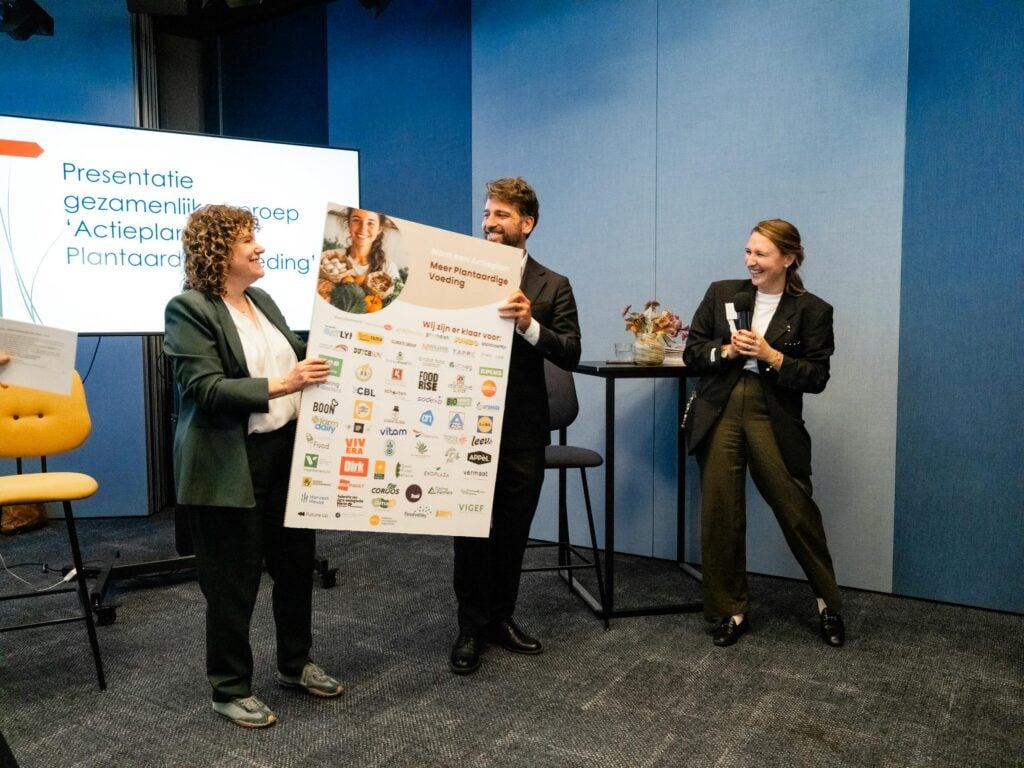
Reflecting on the Danish experience, Rasmus Prehn, CEO of Organic Denmark and former Danish Minister of Agriculture, highlighted the mechanics of their success. The Danish state grant successfully funded specialized culinary education for professional kitchen staff and agricultural students, expanded the integration of organic legumes and plant-forward meals in public and private institutional catering, and financed extensive field trials for new crop varieties. Prehn emphasized that close, continuous cooperation with civil society and a broad range of market stakeholders was the bedrock of Denmark’s transition, offering a valuable blueprint for Dutch policymakers.
On a supranational level, the Dutch proposal dovetails with broader European Union policy discussions, notably the EU Protein Plan. While the European strategy has formally acknowledged the strategic importance of plant-based proteins for human consumption and animal feed, critics have frequently noted that Brussels has historically fallen short of establishing binding, concrete production targets. By crafting a localized, highly actionable national framework, the Netherlands is positioning itself to outpace broader EU timelines, transforming regional ambitions into tangible domestic reality.
Outlook, Political Landscape, and Anticipated Next Steps
The presentation of the action plan to the Dutch House of Representatives arrives at a critical juncture in national politics. Currently, both the Ministry of Agriculture and a broad bipartisan majority within the Dutch parliament are actively debating and formulating legislative measures designed to encourage sustainable protein consumption and facilitate the broader agricultural transition.
The agricultural ministry faces intense pressure to reconcile the economic viability of rural farming communities with strict European environmental regulations concerning nitrogen emissions and water quality. Proponents of the plant-based action plan argue that investing in protein crops offers an ideal economic lifeline for farmers seeking diversification away from saturated livestock sectors. By securing guaranteed state support, infrastructure funding, and technical assistance, farmers can pivot toward high-value protein crops with confidence in their long-term earning capacity.
As the political debate unfolds in The Hague, the unified coalition remains poised to collaborate directly with government officials to translate their five-pillar framework into binding legislation. If enacted, the €65 million annual fund and national action plan could fundamentally reshape the Dutch food system, establishing a resilient economic model that balances public health, environmental stewardship, and agricultural prosperity well into the future.
