
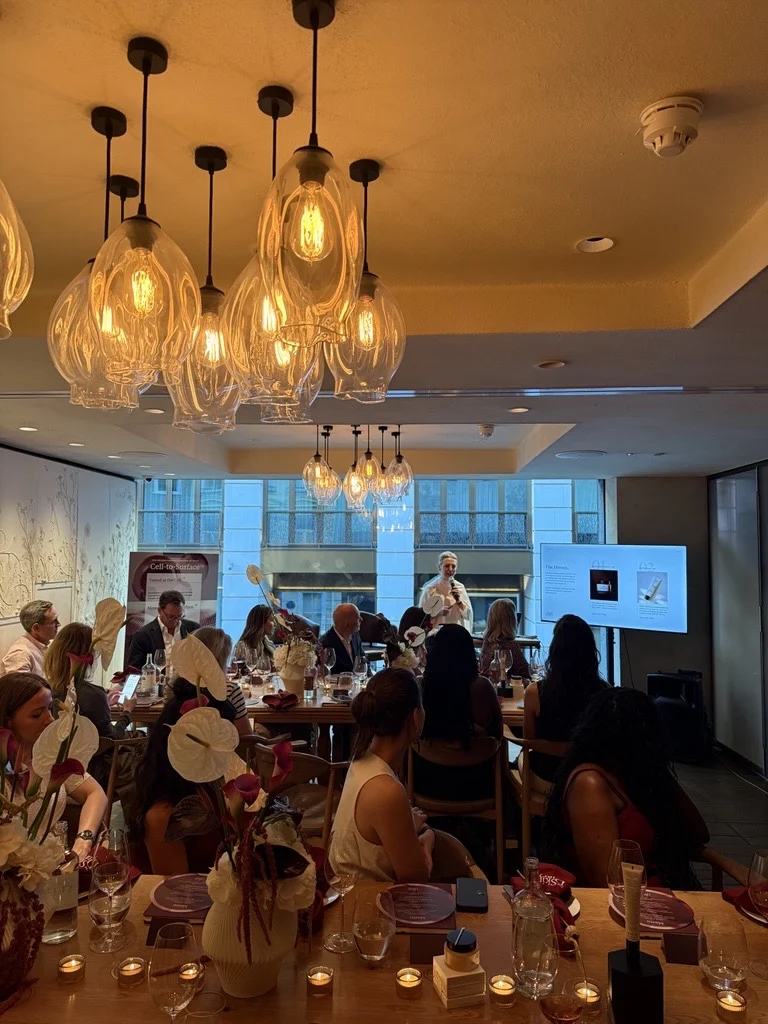
On July 2, 2024, at the prestigious HIDE venue in Mayfair, London, The Skin Diary hosted an exclusive "Cell-to-Surface" evening, marking a significant milestone in the brand’s mission to bridge the gap between dermatological science and consumer skincare. The event, which drew a curated audience of medical professionals, aesthetic practitioners, and members of the press, served as a platform for the company to challenge the prevailing standards of clinical evidence within the beauty industry. Led by a trio of experts—consultant dermatologist Dr. Clare Kiely, renowned scientist Professor Chris Griffiths OBE, and nurse prescriber Julie Scott—the evening combined high-level scientific discourse with practical clinical insights, culminating in the introduction of a new testing framework designed to bring unprecedented transparency to product efficacy claims.
The Chronology of the Cell-to-Surface Evening
The event commenced with a drinks reception at HIDE, a location chosen for its association with refined craftsmanship and attention to detail, mirroring the brand’s own ethos. This initial segment provided a networking forum for attendees to discuss the current state of the aesthetics market, which has seen a surge in "medical-grade" products that often lack the rigorous data to support such labeling.
Following the reception, guests were invited to a formal presentation that structured the brand’s narrative through three distinct lenses: the necessity of evidence, the biological mechanisms of skin aging, and the practical application of treatments in a clinical setting. The sequence of speakers was intentionally designed to move from the macro-level problems of the industry to the micro-level biological solutions, and finally to the human element of patient satisfaction.
The Call for Transparency: Dr. Clare Kiely’s Critique of Skincare Marketing
Dr. Clare Kiely, consultant dermatologist and co-founder of The Skin Diary, opened the presentation by addressing what she described as a crisis of clarity in the skincare sector. Her address focused on the ubiquitous use of the term "clinically proven," a phrase that has become a staple of skincare marketing but often lacks a standardized definition.
Dr. Kiely argued that the industry currently operates in a regulatory "gray area" where the barrier for making scientific claims is dangerously low. "‘Clinically proven’ is used very freely in skincare, yet it can mean anything from an ingredient study in a petri dish to a consumer questionnaire," she noted. Her critique highlighted a common industry practice where brands cite the efficacy of a single raw ingredient—often tested at concentrations higher than those found in the final product—as evidence for the finished formulation’s performance.
To combat this, Dr. Kiely emphasized that The Skin Diary’s philosophy is rooted in testing the "finished formula" rather than isolated components. She urged the industry to move toward a model of rigorous clinical trials that mirror the pharmaceutical sector’s approach, ensuring that when a patient or consumer sees a claim of "repair" or "defense," it is backed by objective, reproducible data.
The Science of Structural Integrity: Professor Chris Griffiths and the Role of Fibrillin
The scientific core of the evening was delivered by Professor Chris Griffiths, OBE, a figure of international standing in dermatology. As the chief scientist and founder of The Skin Diary, Professor Griffiths transitioned the discussion from industry ethics to the specific biochemical challenges of skin aging. His presentation centered on the role of fibrillin-1, a glycoprotein essential for the formation of elastic fibers in the extracellular matrix of the skin.
Professor Griffiths described fibrillin as the "mandatory scaffolding for elastic fibres," explaining that its degradation is a primary driver of skin laxity and the formation of fine lines. In the context of photoaging—damage caused by chronic exposure to UV radiation—the breakdown of fibrillin-1 precedes the loss of elastin, making it a critical biomarker for early intervention.
His discussion provided the scientific rationale behind The Skin Diary’s product development. By focusing on ingredients that support and protect the fibrillin scaffold, the brand aims to address the structural foundations of the skin rather than merely treating surface-level symptoms. Professor Griffiths’ involvement brings a level of academic prestige to the brand; his previous work at the University of Manchester and his contributions to the understanding of psoriasis and skin aging have positioned him as a leading authority on how topical interventions can influence skin architecture.
Bridging the Gap: The Patient Perspective and Clinical Protocols
The final speaker, Julie Scott, a nurse prescriber and the strategic and clinic lead for The Skin Diary, shifted the focus toward the "real-world" application of these scientific principles. Scott’s role was to demonstrate how high-level science translates into daily patient routines and clinical outcomes.
A significant portion of her presentation was dedicated to the patient experience, featuring video testimonials from individuals using The Skin Diary’s core products: Night Repair Therapy and Age Defence. These testimonials underscored a common hurdle in medical-grade skincare: compliance. Many highly effective treatments are abandoned by patients due to complex application processes or irritation. Scott highlighted that the brand’s protocol is designed for ease of use, ensuring that the "Cell-to-Surface" benefits are actually realized through consistent application.
Scott also detailed the in-clinic protocols that allow practitioners to integrate The Skin Diary products into wider treatment plans, such as post-procedure recovery or as a long-term maintenance regime for anti-aging. By showing the tangible results through patient eyes, she reinforced the brand’s claim that scientific excellence does not have to come at the expense of a positive user experience.
The Cell-to-Surface Framework: A New Methodology for Efficacy
The centerpiece of the evening was the formal introduction of the "Cell-to-Surface" standard. As explained by Dr. Kiely and the team, this is a three-tiered testing methodology designed to provide a comprehensive view of a product’s impact. The framework is structured as follows:
- Cellular Level: This phase involves laboratory testing to understand the biological effect of the formula on skin cells. This goes beyond simple hydration to look at how ingredients interact with the skin’s internal structures, such as the fibrillin scaffolding mentioned by Professor Griffiths.
- Clinical Level: This stage utilizes instrumental testing—such as high-resolution imaging and elasticity measurements—to provide objective, quantifiable data on visible improvements. This removes the subjectivity of "self-assessment" and provides a factual basis for claims regarding wrinkle reduction or skin firmness.
- Surface Level: The final tier reflects the patient’s perspective—what they can see and feel. This ensures that the biological and instrumental improvements translate into a visible aesthetic change that meets consumer expectations.
By assessing the finished formula across these three levels, The Skin Diary aims to set a new benchmark for what "evidence-based skincare" should look like.
Industry Implications: Addressing the "Science-Washing" Epidemic
The "Cell-to-Surface" event comes at a time when the skincare industry is facing increased scrutiny over "science-washing"—the practice of using scientific jargon to mislead consumers about a product’s efficacy. Data from market research firms suggests that while the "clinical" skincare category is one of the fastest-growing segments of the $150 billion global beauty market, consumer trust is simultaneously wavering due to inconsistent labeling and exaggerated claims.
The Skin Diary’s initiative is a direct response to this trend. By advocating for transparent, multi-level testing, the brand is positioning itself as a leader in a movement toward "Radical Transparency." If successful, this approach could pressure other brands in the premium and medical-grade space to provide more robust data, potentially leading to a shift in how skincare is regulated and marketed in the UK and beyond.
Furthermore, the emphasis on fibrillin-1 research highlights a shift in the industry away from "general anti-aging" toward "targeted structural repair." As consumers become more educated on ingredients like retinoids, peptides, and antioxidants, the demand for specific, biomarker-targeted treatments is expected to rise.
Future Outlook for The Skin Diary
The Mayfair event served not only as an educational seminar but also as a definitive statement of intent for The Skin Diary. By aligning themselves with the highest levels of dermatological expertise and proposing a new standard for clinical evidence, the founders are looking to carve out a permanent space in the professional aesthetics market.
As the brand moves forward, the "Cell-to-Surface" standard will likely serve as the foundation for all future product launches. For practitioners, the brand offers a scientifically validated option that simplifies the patient’s home-care routine without compromising on results. For the broader industry, the event at HIDE stands as a challenge: to raise the bar for evidence and ensure that "clinically proven" once again carries the weight of scientific truth.
The evening concluded with a Q&A session, where attendees delved deeper into the specifics of the fibrillin research and the logistics of the three-level testing. The consensus among the gathered professionals was one of cautious optimism—a sense that the industry is overdue for a scientific "re-set" and that frameworks like "Cell-to-Surface" are a necessary step toward regaining consumer trust and achieving genuine dermatological progress.
