
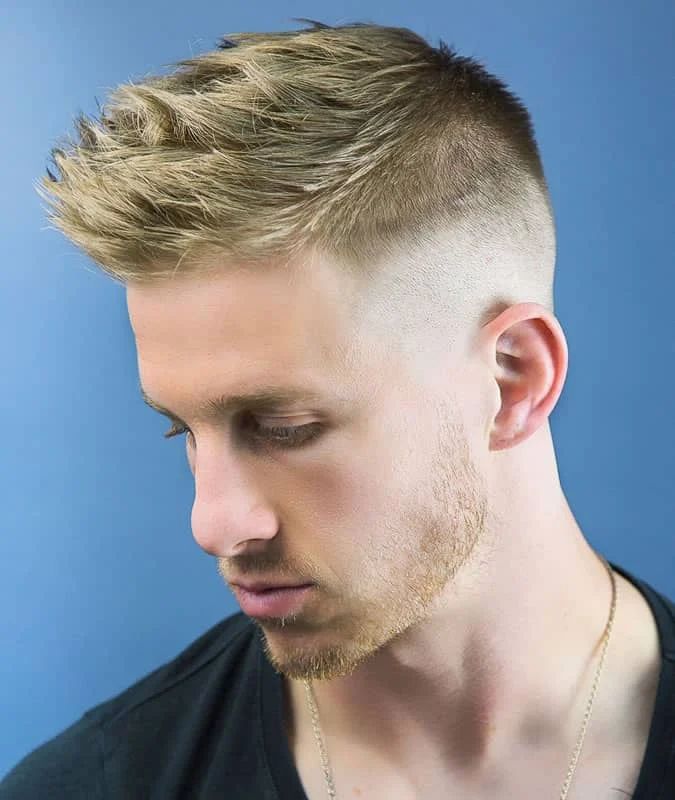
The faux hawk, a style that emerged as a more accessible and refined cousin to the iconic mohawk, continues to be a popular choice for men seeking a blend of edge and wearability. This versatile haircut, characterized by shorter sides and longer hair on top that can be styled into a point or a textured peak, offers a modern alternative to traditional styles. Its adaptability across various hair types and lifestyles has cemented its place in contemporary men’s grooming.
Understanding the Faux Hawk: A Modern Take on a Punk Classic
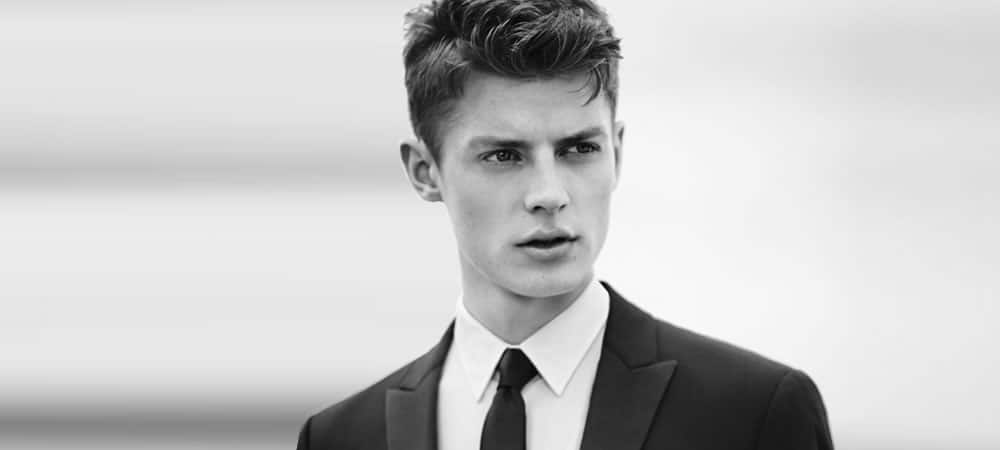
The faux hawk draws its lineage from the rebellious spirit of the mohawk, a hairstyle famously associated with punk rock culture and iconic figures like Mr. T. However, the faux hawk distinguishes itself by eschewing the extreme shaved sides of its predecessor, opting instead for a more subtle gradient or shorter cut on the sides, allowing for a smoother transition and broader social acceptance. Celebrity stylists like Jason Collier, who has worked with notable figures such as Justin Timberlake and Damian Lewis, describe the faux hawk as a "crowd-pleaser, less dramatic than a mohawk and has a sleek, urban sophistication to it that makes it a far more wearable look." This approach allows individuals to embrace a statement hairstyle without the potential drawbacks of a full mohawk, such as restricted professional opportunities or a perception of aggression.
The core of the faux hawk lies in its graduated length: significantly shorter hair on the sides and back, with a progressively longer section running up the center of the head to the front. This allows for styling versatility, enabling the hair to be swept upwards, textured, or formed into a distinct peak. Unlike a pompadour, which typically requires more length and a specific styling technique, the faux hawk’s length on top is sufficient for manipulation but remains manageable. This balance between style and practicality is a key reason for its enduring appeal.

Choosing the Right Faux Hawk: Factors to Consider
Selecting the ideal faux hawk involves a careful consideration of individual face shape and lifestyle. These two elements are paramount in ensuring the haircut complements the wearer’s features and integrates seamlessly into their daily routine.

For individuals with longer face shapes, such as rectangular or triangular, the faux hawk should be approached with a focus on avoiding excessive height on top and overly tight sides. Such elements can elongate the face further, creating an imbalanced appearance. Conversely, those with wider face shapes, including heart or round faces, can benefit from adding volume and height to the top of the faux hawk, while keeping the sides shorter to create a more sculpted and balanced silhouette. Oval-faced individuals, often considered fortunate in terms of facial symmetry, generally have more freedom to experiment with varying lengths and styles of the faux hawk.
Lifestyle also plays a crucial role. The visual of celebrities sporting artfully tousled faux hawks often belies the styling effort required. Generally, the longer the hair on top, the more time and product will be needed to achieve and maintain the desired look. For those with limited time or a preference for low-maintenance grooming, opting for a shorter variation of the faux hawk is advisable. This ensures that the style remains practical and achievable without demanding excessive daily attention.

Styling the Faux Hawk: Techniques and Products
Achieving a well-styled faux hawk does not necessitate an arsenal of heavy-duty styling products. The key lies in a combination of proper preparation and judicious product application. Celebrity stylist Jason Collier emphasizes simplicity: "To style the faux hawk, keep it simple."

For individuals with fine or straight hair, allowing the hair to air dry before styling is often sufficient. However, those with thicker or wavy hair may benefit from blow-drying and brushing the hair to achieve a sleeker foundation. When applying styling products, moderation is crucial. Over-application can lead to stiff, unnatural-looking spikes rather than a textured, voluminous finish. Collier recommends a strong-hold hair wax, using a pea-sized amount that is warmed between the palms before application. This ensures even distribution and helps to activate the product’s hold without weighing down the hair.
The faux hawk is inherently designed to be somewhat effortless and textured. This means that extensive mirror time and complex styling tools are typically not required. Fingers are often the most effective tool for manipulating the hair into the desired shape. "Simply use your fingers to push the lengths of the hair up, and tweak it until you’re happy with how the area looks," Collier advises. While individual spikes are an option, a more natural and appealing finish often involves pulling the hair upwards in a slightly tousled, "lived-in" manner, avoiding an overly "done" appearance.

Exploring Different Faux Hawk Variations
The versatility of the faux hawk is best illustrated by its numerous variations, each offering a distinct aesthetic and catering to different preferences and hair types.

The Faded Faux Hawk
The faded faux hawk bridges the gap between the bold statements of the mohawk and a more conventional haircut. It incorporates shaved or very short sides that gradually blend into the longer hair on top, creating a subtle yet distinct contrast. This style retains a degree of the original mohawk’s edginess while remaining socially acceptable and accessible.
How to Get It: To achieve this look, barbers typically use clippers starting at a grade 0 at the nape of the neck and gradually increase the grade up to a 2, using intermediate grades like 0.5 to 2 for the fade. The hair on top should be of uniform length but layered to provide texture and volume. Styling paste is then used to define and separate the strands, enhancing the textured effect. Joseph Lanzante, a prominent hair stylist and barbering academy owner, notes that the layered top is crucial for preventing the peak from falling flat.

The Short Faux Hawk
This variation is an excellent choice for men who desire the faux hawk aesthetic without the commitment to significant length. It offers plenty of texture on top while maintaining a neat and professional appearance, making it suitable for office environments.
How to Get It: A clipper fade is instrumental in achieving the sharp, uniform look of a short faux hawk. The shorter the fade, the greater the contrast between the sides and the top. Stylists like Josh Thorner of Manifesto Barbers recommend discussing the desired maximum length through the middle with your barber, ensuring a rounded shape at the sides to connect with the fade. The length on top is typically graduated from back to front, with more length retained at the fringe. Styling often involves a surf spray to create texture, applied to damp hair and then dried with a diffuser. A matte clay product can be used to finish, providing hold and a non-shiny texture.

The Shaggy Faux Hawk
For men with naturally wavy or curly hair, the shaggy faux hawk offers a way to smarten up their natural texture while still embracing a stylish cut. This style emphasizes texture on top with minimal fuss on the sides, striking a balance between a groomed appearance and a casually tousled look.
How to Get It: Joe Mills, a renowned hair stylist and owner of Joe and Co., suggests that the top section should ideally be at least four inches long, with shaved sides. Chopping into the top layers is recommended to create significant texture, which is essential for maintaining the faux hawk’s peak. For styling, sea salt spray is applied to damp hair, followed by blow-drying with a hairdryer, using fingers to lift the front into a messy quiff. A matte paste is then used to finish the look, providing hold and definition.

The Medium Faux Hawk
The medium faux hawk represents a balanced approach, offering more length and styling potential than a short version, but remaining less dramatic than a long or faded style. It’s a versatile option that can easily transition between different looks.
How to Get It: According to Lanzante, achieving a medium faux hawk involves using hair clippers on the back and sides, typically from a grade 3 to a grade 4. The hair on the crown is layered to maintain uniform length and texture. A medium-shine paste is then used to define and enhance the texture. This length allows for more pronounced styling of the central section, creating a more substantial peak.

The Long Faux Hawk
This variation is for those with ample time and a willingness to maintain a more dramatic hairstyle. It requires significant length on top and is often paired with a fade on the sides. The long faux hawk is a bold statement, demanding regular attention to stay in peak condition.
How to Get It: Thorner advises asking for a clipper fade on the back and sides that isn’t excessively short. The key here is to keep the top disconnected from the sides, with the length cut from back to front, making the back the shortest point. Significant length should be retained at the fringe. Texturizing with a styling cream when dry is recommended. Apply to damp hair, then blow-dry upwards and backwards. For added hold, a blast of cold air after drying can help seal the cuticle. Hairspray can be used for extra security if the style tends to fall throughout the day.

The Undercut Faux Hawk
The undercut faux hawk is a more daring variation that requires a skilled barber due to its disconnected nature. It features longer, textured hair on top with a distinct separation from the closely cropped or shaved sides. This style is high-drama and high-maintenance.
How to Get It: Mills describes this as a slightly shorter iteration of the shaggy faux hawk, maintaining the disconnected top but with less overall length. Crucially, there needs to be enough length on top to avoid the appearance of an accidental haircut. A minimum of a couple of inches is recommended. The style is designed to have a slightly DIY feel. Texture spray is applied to clean, damp hair, followed by blow-drying. A grooming cream is then used to add texture with the fingers.

Conclusion
The faux hawk, in its myriad forms, offers a compelling blend of rebellion and refinement, proving its enduring relevance in men’s hairstyling. Whether opting for a subtle fade, a textured shaggy look, or a more dramatic undercut, the faux hawk provides a canvas for personal expression. Understanding the nuances of face shape, lifestyle, and styling techniques empowers individuals to choose and maintain a faux hawk that not only looks sharp but also fits seamlessly into their lives. As evidenced by its continued presence on red carpets and in barbershops, the faux hawk remains a testament to the power of a well-executed, adaptable hairstyle.
