
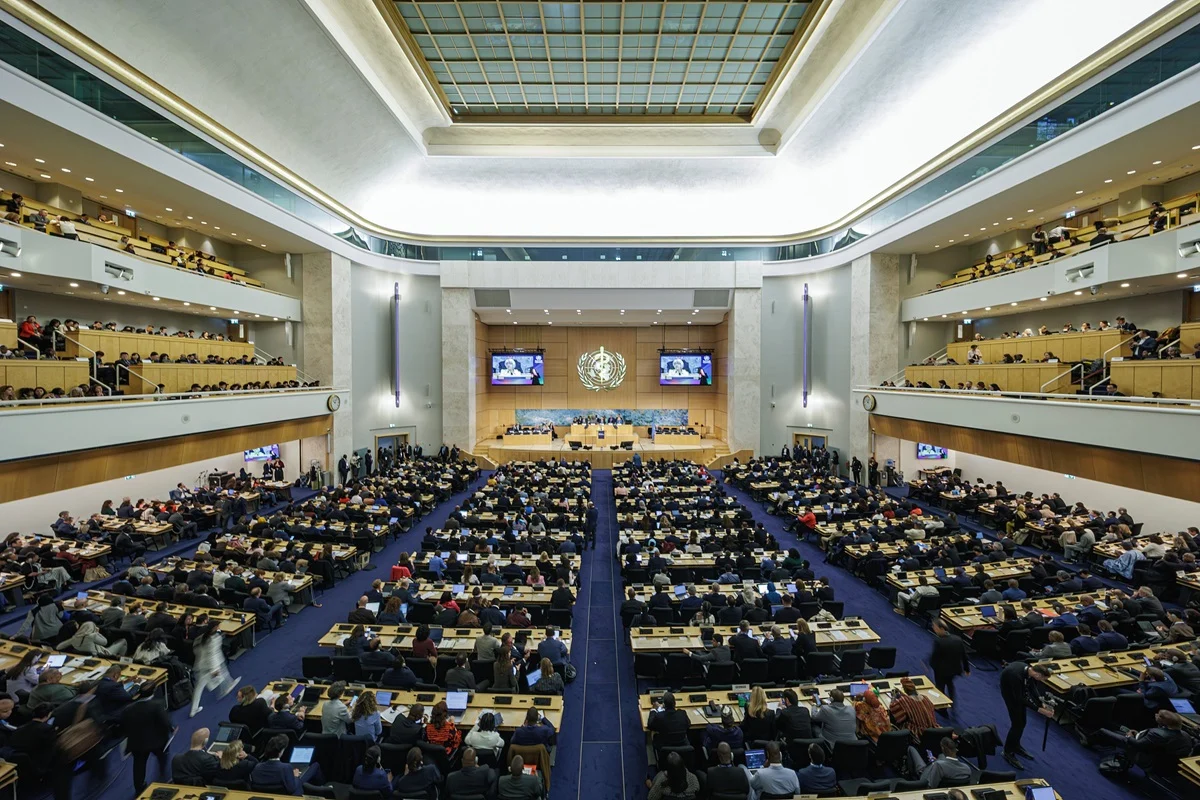
The Seventy-ninth session of the World Health Assembly (WHA79) officially commenced today at the Palais des Nations in Geneva, Switzerland, marking a pivotal moment for international public health governance. As the supreme decision-making body of the World Health Organization (WHO), this year’s assembly brings together health ministers, heads of state, and high-level delegates from 194 Member States to deliberate on a range of critical issues, from pandemic preparedness and the impact of climate change on health to the sustainable financing of the organization. The opening day was characterized by the formal election of the assembly’s leadership, high-level diplomatic addresses, and the presentation of prestigious awards recognizing lifelong contributions to global health.
The assembly opened with the election of Dr. Víctor Elías Atallah Lajam, the Minister of Public Health of the Dominican Republic, as the President of the 79th World Health Assembly. Dr. Atallah Lajam takes the helm at a time when the global health community is transitioning from emergency response to long-term systemic resilience. In his acceptance remarks, the newly elected President emphasized the necessity of bridging the gap between developed and developing nations to ensure equitable access to medical innovation and essential health services.
Leadership Appointments and Governance Structure
To support the President in his duties and ensure a balanced representation of the WHO’s six regional offices, five Vice-Presidents were elected to the bureau. These include Dr. Mohamed Ali Al-Ghouj of Libya (Eastern Mediterranean Region), Dr. Assa Badiallo Touré of Mali (African Region), Mrs. Katarzyna Drążek-Laskowska of Poland (European Region), Mrs. Neesha Mehta of Nepal (South-East Asia Region), and Mr. Elias Kapavore of Papua New Guinea (Western Pacific Region).
The governance of the assembly is further structured through two main committees that handle the bulk of the technical and administrative work. Dr. Timur Sultangaziyev of Kazakhstan was appointed Chair of Committee A, which is tasked with reviewing technical and health matters, including the implementation of the 14th General Programme of Work (GPW 14). Concurrently, Dr. Kwabena Mintah Akandoh of Ghana was appointed Chair of Committee B, which oversees the financial, administrative, and legal aspects of the WHO, including the approval of the program budget and the progress of the WHO Investment Round.
High-Level Welcome and Diplomatic Addresses
The inaugural session featured a high-level welcome ceremony that underscored the geopolitical importance of health as a pillar of global stability. H.E. Elisabeth Baume-Schneider, Federal Councillor of the Swiss Confederation, addressed the delegates on behalf of the host country. She highlighted Switzerland’s commitment to multilateralism and its role as a hub for international health diplomacy.
Following the host country’s welcome, H.E. John Dramani Mahama, the President of Ghana and Special Guest of Honour, delivered a keynote address. President Mahama focused on the African continent’s health trajectory, noting the significant strides made in local manufacturing of vaccines and the ongoing challenges posed by the "brain drain" of healthcare workers from the Global South to the Global North. He called for a new "Global Social Contract for Health" that prioritizes workforce retention and health system strengthening in low-income settings.
The morning plenary also received recorded video messages from several world leaders. United Nations Secretary-General António Guterres reminded the assembly that health is a fundamental human right and warned that the Sustainable Development Goals (SDGs) for 2030 are currently off-track. H.E. Mia Mottley, the Prime Minister of Barbados, provided a stirring address on the intersection of climate change and public health, urging the WHO to integrate climate resilience into all future health protocols, particularly for Small Island Developing States (SIDS). Additionally, H.E. Ahmad Al Sharaa, President of the Syrian Arab Republic, offered remarks concerning the reconstruction of health infrastructure in post-conflict zones.
Recognition of Excellence: The Awards for Global Health
A centerpiece of the opening day was the presentation of the Awards for Global Health by Dr. Tedros Adhanom Ghebreyesus, the WHO Director-General. These awards are bestowed upon individuals who have demonstrated extraordinary dedication to public health over several decades.
The 2026 recipients include:
- Dr. Tore Godal: Often referred to as the "architect of global health," Dr. Godal was recognized for his role in founding Gavi, the Vaccine Alliance, and his decades of work in infectious disease research and maternal health.
- Dr. Merceline Dahl-Regis: A Bahamian physician and public health pioneer, she was honored for her leadership in the elimination of measles, rubella, and congenital rubella syndrome in the Americas.
- Dr. Mike Ryan: The Executive Director of the WHO Health Emergencies Programme. Dr. Ryan received the award for his tireless leadership on the frontlines of global health crises, from Ebola outbreaks to the COVID-19 pandemic.
- Dr. Heba El Sewedy: An Egyptian philanthropist and founder of the Ahl Masr Foundation, recognized for her groundbreaking work in providing free treatment for burn victims and advocating for prevention and social integration in the Middle East and Africa.
Dr. Tedros remarked that these individuals embody the spirit of the WHO, stating that their "lifetime achievements have not only saved millions of lives but have also provided a blueprint for future generations of health professionals."
The Afternoon Plenary and the Spanish Contribution
The afternoon session concluded with an address by the Special Guest, H.E. Pedro Sánchez, Prime Minister of Spain. Prime Minister Sánchez reaffirmed Spain’s commitment to global health solidarity, particularly through its support for the WHO’s "Investment Round"—a mechanism designed to ensure more predictable and flexible funding for the organization. He emphasized that global health security is an investment in economic stability and that Spain would continue to advocate for the "One Health" approach, which recognizes the interconnectedness of human, animal, and environmental health.
Background and Context: The Significance of WHA79
The 79th World Health Assembly arrives at a critical juncture in history. As of May 2026, the world is navigating the complexities of a post-pandemic landscape while facing new threats from zoonotic diseases, antibiotic resistance, and the health impacts of escalating regional conflicts.
The primary focus of this year’s assembly is the formalization of the 14th General Programme of Work (2025–2028), which sets the strategic direction for the WHO. This plan aims to accelerate progress toward the "Triple Billion" targets: one billion more people benefiting from universal health coverage, one billion more people better protected from health emergencies, and one billion more people enjoying better health and well-being.
Furthermore, WHA79 serves as a deadline for several key negotiations. The assembly is expected to review the final implementation plans for the "Pandemic Accord," a landmark international treaty designed to prevent a repeat of the inequities seen during the early 2020s. Data from the WHO indicates that while global life expectancy has rebounded since the pandemic, the disparity in life expectancy between the richest and poorest nations remains over 18 years, a gap the assembly aims to address through targeted policy interventions.
Chronology of the Opening Day
- 09:00 – 10:30: Opening of the session by the outgoing President and the formal election of Dr. Víctor Elías Atallah Lajam.
- 10:30 – 12:00: High-level welcome addresses by the Swiss Federal Council and the President of Ghana.
- 12:00 – 13:00: Video messages from the UN Secretary-General and heads of state from Barbados and Syria.
- 14:30 – 16:00: Director-General’s Address and the presentation of the Awards for Global Health.
- 16:00 – 17:30: Plenary debate and address by Prime Minister Pedro Sánchez of Spain.
- 18:00: Adjournment of the first day and commencement of regional coordination meetings.
Supporting Data and Economic Implications
The assembly is also tasked with addressing the WHO’s budget for the 2026-2027 biennium. The proposed budget seeks a 20% increase in assessed contributions—the dues paid by Member States—to reduce the organization’s reliance on volatile voluntary donations. According to financial reports presented to Committee B, voluntary contributions currently account for nearly 80% of the WHO’s funding, which often leads to "earmarking" where donors dictate how funds are spent, potentially neglecting critical but underfunded areas like non-communicable diseases (NCDs).
Data released ahead of the assembly shows that NCDs, including heart disease and diabetes, now account for 74% of all deaths globally. However, these conditions receive less than 10% of global health donor funding. WHA79 is expected to debate a new funding formula that reallocates resources to primary healthcare systems capable of managing both infectious and chronic diseases.
Broader Impact and Global Outlook
The decisions made during this week-long assembly will have far-reaching implications for the global pharmaceutical market, international travel protocols, and environmental regulations. For instance, a proposed resolution on "Health and Climate" seeks to mandate that national health systems reach net-zero emissions by 2040, a move that would require massive investment in green hospital infrastructure.
As the assembly progresses into its second day, the focus will shift to the technical deliberations of Committee A. Observers expect heated debates regarding the sharing of pathogen data and the intellectual property rights associated with life-saving medicines. Nevertheless, the tone set on the opening day was one of cautious optimism. The election of a diverse leadership team and the presence of high-profile political figures suggest a renewed commitment to the WHO as the central coordinating authority in global health.
The 79th World Health Assembly will continue through the end of the week, concluding with the adoption of resolutions that will define the global health agenda for the remainder of the decade. The world watches as Geneva becomes the focal point for a collective effort to build a healthier, safer, and more equitable future for all.
