
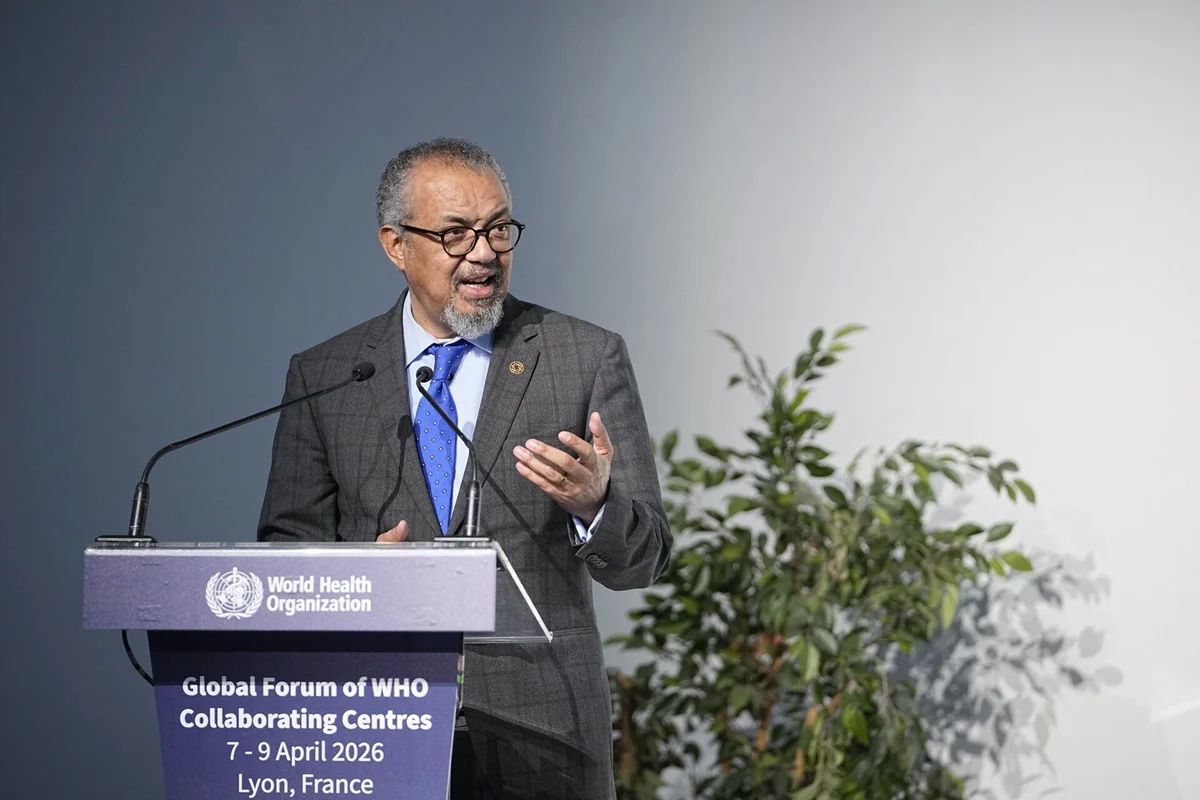
The World Health Organization (WHO) has successfully concluded its inaugural Global Forum of Collaborating Centres, marking a significant milestone in the history of international public health by convening more than 800 premier institutions from over 80 countries to address the most pressing health threats of the 21st century. This historic gathering, held in the lead-up to the World Health Day 2026 campaign, represents the largest mobilization of the WHO’s technical and scientific network since its inception. The forum served as a strategic platform for scientists, researchers, and policymakers to align their efforts against a backdrop of increasing global fragmentation, shifting the focus from isolated scientific projects toward a more integrated, dynamic model of international partnership.
A Legacy of Scientific Diplomacy: The Evolution of the WHO Network
The Collaborating Centres (CCs) are not merely external partners but are the foundational pillars of the WHO’s scientific authority. The origins of this network date back to the Second World Health Assembly in 1949. At that time, the nascent World Health Organization faced a critical strategic choice: whether to build its own independent laboratories and research facilities or to leverage the existing intellectual capital within its member states. The Assembly chose the latter, establishing a constitutional mandate that the WHO should advance health research by coordinating and supporting existing institutions worldwide.
Over the subsequent 77 years, this model has proven to be one of the most effective examples of scientific diplomacy in history. What began as a handful of laboratories has expanded into a massive decentralized network comprising leading academic institutions, national health agencies, and specialized research centers. These institutions provide the WHO with access to top-tier expertise in diverse fields, from infectious disease modeling and tobacco control to mental health and occupational safety. By utilizing this existing infrastructure, the WHO ensures that its global norms and standards are informed by the most rigorous, peer-reviewed evidence available across different geographical and economic contexts.
Addressing Global Health in a Fragmented World
The 2026 Global Forum was convened during a period of significant geopolitical and economic volatility. Participants at the meeting highlighted that the modern world is increasingly fragmented, with political tensions and economic nationalism often hindering the free flow of scientific data and resources. However, experts at the forum argued that these challenges also present a unique opportunity to revitalize the spirit of internationalism.
The conclusion of the forum saw a collective shift toward "dynamic and integrated partnerships." Historically, many Collaborating Centres worked on specific, time-bound projects with narrow technical scopes. The new vision presented at the forum encourages these institutions to act as a permanent, interconnected web of expertise capable of rapid mobilization. This evolution is seen as essential for managing "borderless" health threats, such as antimicrobial resistance, climate-induced health crises, and the rapid spread of zoonotic diseases.
The Strategic Importance of CORC and the Readiness for Disease X
A central focus of the forum was the formalization of the Collaborative Open Research Consortia (CORC). This initiative is designed to address one of the most significant gaps in global health security: the lack of coordinated research and development for unknown pathogens. The CORC mission is specifically oriented toward "Disease X"—a placeholder name used by the WHO to describe a hypothetical, unknown pathogen that could cause a future pandemic.
By bringing together thousands of scientists under the CORC umbrella, the WHO aims to accelerate the development of "prototype" vaccines, diagnostics, and therapeutics. The strategy is to build a foundation of scientific readiness so that when a new pathogen emerges, the world is not starting from zero. This proactive approach involves:
- Standardization of Research Protocols: Ensuring that data collected in one part of the world is compatible with research conducted elsewhere.
- Technological Sovereignty: Supporting regional research hubs to ensure that low- and middle-income countries have the capacity to develop their own medical countermeasures.
- Open Science Principles: Encouraging the rapid sharing of genomic sequences and preliminary trial data to shave weeks or months off the development timeline for life-saving interventions.
Leadership Perspectives: Standing with Science
The forum featured high-level addresses from the WHO’s top leadership, emphasizing the moral and practical necessity of the network. Dr. Tedros Adhanom Ghebreyesus, WHO Director-General, characterized the network as an "immensely valuable but under-utilized resource." He noted that the Collaborating Centres are a powerful demonstration of what it means to "stand with science" in an era where misinformation can be as damaging as the viruses themselves. Dr. Tedros emphasized that these centres are vital for translating abstract evidence into tangible actions that strengthen national health systems and protect vulnerable populations.
Supporting this sentiment, Dr. Sylvie Briand, WHO Chief Scientist, highlighted the concentration of expertise within the network. She remarked that the spirit of trusted scientific collaboration is no longer just a "value-add" but is indispensable to the survival of global health infrastructure. Dr. Briand pointed out that as global health challenges become more complex—intertwining with environmental and animal health—the specialized knowledge housed within the 800+ CCs provides the only viable path toward a healthier future.
Integration with the One Health Summit and World Health Day 2026
The Global Forum was strategically aligned with the international One Health Summit. The "One Health" approach recognizes that the health of humans is inextricably linked to the health of animals and the shared environment. Many of the Collaborating Centres represented at the forum specialize in veterinary medicine, environmental science, and ecology, reflecting a holistic view of pandemic prevention.
The forum also served as a launchpad for the World Health Day 2026 campaign, themed "Together for health. Stand with science." This campaign aims to rebuild public trust in scientific institutions and emphasize the role of international cooperation in achieving Universal Health Coverage (UHC). By linking the technical work of the CCs with a global public awareness campaign, the WHO hopes to secure greater political and financial support for scientific research.
Navigating Financial Constraints through Collective Investment
One of the most sobering topics discussed at the forum was the current state of global health financing. Many member states are facing domestic economic pressures, leading to reductions in discretionary spending for international health initiatives. Participants emphasized that in a climate of shrinking budgets, the Collaborating Centre model is more relevant than ever.
The CC network operates on a principle of shared responsibility. Because these institutions are largely funded by their host countries or through independent research grants, they provide the WHO with billions of dollars worth of technical expertise at a fraction of the cost of maintaining a centralized bureaucracy. However, the forum participants warned that even this decentralized model requires "collective investment." Coordination requires resources, and the delegates stressed that preventing a local health crisis from becoming a global emergency is far more cost-effective than responding to a full-scale pandemic.
Analytical Implications: A New Era for the WHO
The establishment of a recurring Global Forum—with the next meeting scheduled for 2027—signals a shift in how the WHO intends to exert influence. As the organization faces challenges to its normative authority, it is doubling down on its role as the world’s "scientific conductor." By strengthening the bonds between the 800+ Collaborating Centres, the WHO is creating a resilient, distributed network that can withstand political shifts in any single member state.
This "networked" approach to global governance allows for greater agility. It also democratizes scientific leadership, as the forum included significant representation from institutions in the Global South, ensuring that the global health agenda is not dictated solely by Western academic centers. The emphasis on "Disease X" and the CORC initiative further suggests that the WHO is prioritizing long-term preparedness over reactive crisis management.
Chronology of the WHO Collaborating Centres Network
- 1948: The World Health Organization is established.
- 1949: The Second World Health Assembly affirms the policy of utilizing existing national institutions rather than creating WHO-owned research centers.
- 1950s-1970s: The network expands primarily in the fields of infectious diseases, such as influenza and malaria, establishing the first global surveillance systems.
- 1980s-2000s: The scope of CCs broadens to include non-communicable diseases (NCDs), mental health, and health systems strengthening.
- 2020-2023: The COVID-19 pandemic highlights the critical role of CCs in genomic sequencing and vaccine testing but also reveals gaps in global research coordination.
- 2024-2025: Development of the CORC framework and planning for the first Global Forum.
- 2026: The inaugural Global Forum of Collaborating Centres is held, aligning with the One Health Summit.
- 2027: Scheduled date for the second Global Forum to assess progress on Disease X readiness and integrated partnerships.
Conclusion: Shaping a Healthier Future
The conclusion of the first Global Forum of Collaborating Centres marks the beginning of a more unified chapter in global public health. By bringing together the world’s leading scientific minds and institutions, the WHO has reinforced the idea that science is a global public good that transcends borders. As the network moves toward the 2027 forum, the focus will remain on turning high-level scientific knowledge into life-saving action, ensuring that the world is better prepared for the inevitable health challenges of the future. The commitment to "stand with science" is not merely a slogan for the 2026 campaign; it is the operational reality of a network that has become the backbone of global health security.
