
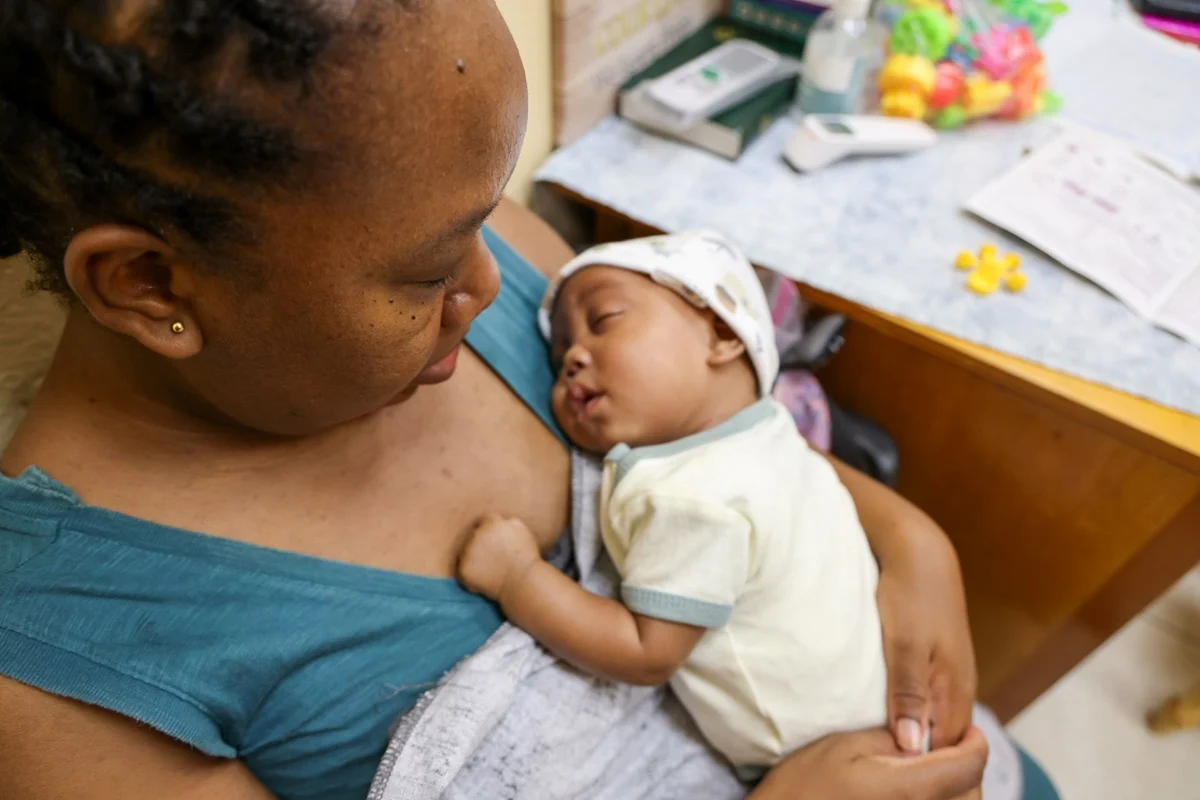
The World Health Organization (WHO) has officially certified The Bahamas for the elimination of mother-to-child transmission (EMTCT) of HIV, marking a historic milestone in the nation’s public health history and strengthening the Caribbean’s leadership in the global fight against the virus. This achievement, announced following a rigorous validation process, signifies that The Bahamas has implemented highly effective interventions to ensure that children are born free of HIV, effectively ending the domestic epidemic in this specific demographic. The certification places The Bahamas among an elite group of nations globally that have successfully met the stringent criteria for EMTCT, underscoring a decades-long commitment to health equity, universal access, and integrated primary care.
The recognition was met with high-level commendation from international health leaders. Dr. Tedros Adhanom Ghebreyesus, WHO Director-General, praised the nation’s political resolve and the tireless work of its frontline health professionals. He noted that by ensuring children are born free of HIV, The Bahamas is securing a healthier and brighter future for the next generation. This sentiment was echoed by Dr. Jarbas Barbosa, Director of the Pan American Health Organization (PAHO) and WHO Regional Director for the Americas, who described the milestone as a moment of national pride and a catalyst for broader efforts to eliminate other communicable diseases across the Caribbean and the Americas.
A Chronology of Public Health Progress
The path to this certification was not immediate; it was the result of a deliberate, multi-decade strategy that began during the height of the HIV/AIDS epidemic in the late 20th century. In the 1990s, the Caribbean region faced some of the highest HIV prevalence rates in the world, second only to sub-Saharan Africa. The Bahamas, in particular, was confronted with a significant public health challenge that required a radical shift in how infectious diseases were managed within the maternal and child health framework.
By the early 2000s, The Bahamas began integrating HIV screening into routine antenatal care. This transition was pivotal, as it moved HIV services out of specialized, often stigmatized silos and into the mainstream of primary healthcare. Over the following twenty years, the government scaled up its response, ensuring that antiretroviral therapy (ART) was available to all pregnant women living with HIV. The introduction of more effective drug regimens and the refinement of clinical protocols led to a steady decline in the number of infants born with the virus.
In recent years, the push for WHO validation became a national priority. The government worked closely with PAHO, UNICEF, and UNAIDS to align its domestic health indicators with international standards. This involved a comprehensive review of clinical data, laboratory capacity, and human rights protections to ensure that the elimination was not only achieved but was also sustainable and grounded in the principles of equity.
The Bahamian Model: Strategic Pillars of Success
The success of The Bahamas is attributed to a comprehensive and inclusive healthcare model that prioritizes access for all, regardless of socioeconomic status, nationality, or legal standing. One of the most significant pillars of this model is the provision of universal antenatal care. By removing financial and legal barriers to care, the Bahamian health system ensures that every pregnant woman can access screening and treatment. This inclusivity is critical in a region characterized by significant migratory flows, as it ensures that no mother or child is left behind due to their citizenship status.
The clinical protocol is built on a "test and treat" strategy. Pregnant women are screened for HIV at their first antenatal appointment, with a follow-up test conducted in the third trimester to capture any new infections that may occur during pregnancy. This dual-testing approach allows for early intervention, which is the most effective way to prevent transmission to the fetus.
Furthermore, the Bahamian health system has successfully integrated the National Infectious Disease Programme with the Maternal and Child Health (MCH) programme. This coordination ensures a seamless transition for mothers from pregnancy to postpartum care. Key components of this integrated approach include:
- Integrated Laboratory Networks: A robust system for rapid testing and viral load monitoring that provides clinicians with the data needed to manage infections effectively.
- Pre-Exposure Prophylaxis (PrEP): The Bahamas has pioneered the use of PrEP for pregnant women at high risk of HIV infection, adding an extra layer of prevention to the standard care package.
- Multi-Month Dispensing: To improve adherence to treatment, the health system provides multi-month supplies of antiretroviral medicines, reducing the need for frequent clinic visits and minimizing the risk of treatment interruptions.
- Archipelagic Reach: Given the geography of The Bahamas, the government has invested in a network of clinics across the archipelago, ensuring that residents of the "Family Islands" have the same access to high-quality care as those in the capital, Nassau.
Technical Benchmarks and the Validation Process
To receive WHO certification for EMTCT, a country must undergo a rigorous external evaluation and prove that it has met specific impact and programmatic targets. The "Gold Standard" for elimination is not necessarily a zero-incidence rate, but rather a reduction of transmission to a level where it no longer constitutes a major public health threat.
The impact targets required for certification include:
- An HIV transmission rate from mother to child of less than 2% in non-breastfeeding populations.
- An incidence of new pediatric HIV infections of less than or equal to 50 cases per 100,000 live births.
On the programmatic side, countries must demonstrate:
- Antenatal care coverage (at least one visit) of 95% or higher.
- HIV testing coverage for pregnant women of 95% or higher.
- Antiretroviral treatment coverage for HIV-positive pregnant women of 95% or higher.
The Bahamas successfully demonstrated that it had sustained these targets for at least two years. The validation process also involved an assessment of the "four pillars" of the WHO framework: data systems, laboratory quality, clinical services, and human rights/gender equality. The inclusion of human rights is particularly notable, as it requires the government to prove that services are provided without coercion and that the rights of women living with HIV are protected within the healthcare system.
Global and Regional Perspectives
The Bahamas now joins a prestigious group of 12 countries and territories in the Region of the Americas that have achieved this certification. Cuba was the first in the world to be certified in 2015, followed by several other Caribbean nations and, most recently, Brazil in 2023. This regional trend highlights the Americas as a global leader in the EMTCT movement.
Anurita Bains, Global Associate Director for HIV/AIDS at UNICEF, noted that Latin America and the Caribbean have long been a "beacon of progress" in this effort. She emphasized that more than half of all countries globally that have achieved elimination are from this region, a legacy of leadership that serves as an inspiration for other nations.
Winnie Byanyima, Executive Director of UNAIDS, highlighted the socioeconomic implications of this achievement. She stated that when women can test early and stay in care, every child is given a better chance of a healthy life. Byanyima attributed the success to steady investment in primary healthcare and the dedicated work of health teams and people living with HIV, who have been instrumental in advocating for better services and reducing stigma.
Broader Impact and the EMTCT Plus Initiative
The achievement in The Bahamas is part of a larger regional strategy known as the EMTCT Plus Initiative. This initiative, spearheaded by PAHO in collaboration with UNICEF and UNAIDS, aims to go beyond HIV to eliminate the mother-to-child transmission of four major diseases: HIV, syphilis, hepatitis B, and congenital Chagas disease.
By integrating these services, health systems can maximize efficiency and improve health outcomes for both mothers and infants. The Bahamas’ success in HIV elimination provides a blueprint for tackling these other conditions. The nation is already working toward the elimination of syphilis and hepatitis B transmission, leveraging the same infrastructure and protocols that led to the HIV milestone.
This effort is also a critical component of PAHO’s broader Elimination Initiative, which seeks to eliminate more than 30 communicable diseases and related conditions in the Americas by 2030. These include tuberculosis, malaria, and various neglected tropical diseases. The Bahamian model proves that even in small-island developing states with complex geographies, significant public health goals are achievable through political will and sustained investment.
Sustaining the Legacy
While the WHO certification is a cause for celebration, Bahamian health officials emphasize that the work is far from over. Maintaining "elimination status" requires continuous surveillance, high levels of testing, and an unwavering commitment to treating every pregnant woman living with HIV.
Dr. Michael Darville, Minister of Health and Wellness of The Bahamas, acknowledged the collective effort required to reach this point. He credited the nurses and doctors across the archipelago’s public and tertiary healthcare systems for their dedication. Looking forward, the government plans to further strengthen its primary care services and enhance its data monitoring systems to ensure that any potential resurgence of the virus is caught and addressed immediately.
The elimination of mother-to-child transmission of HIV in The Bahamas is more than a clinical victory; it is a testament to the power of public health policy when it is rooted in compassion and equity. By protecting its youngest citizens from a life-altering virus, The Bahamas has not only met a global health standard but has also reaffirmed its commitment to the fundamental right to health for all its people. As the Caribbean continues to lead the way, the lessons learned from the Bahamian experience will undoubtedly inform and inspire global efforts to end the HIV epidemic once and for all.
