
Months after establishing a mycoprotein production partnership in India, Planetary, a Geneva-based startup, has successfully secured substantial new investment to propel its innovative fermentation technology and licensing platform onto the global stage. The company announced this week that it has closed a significant funding round totaling approximately 32 million Swiss francs (equivalent to $41 million USD), comprising 16 million Swiss francs ($20.4 million USD) in Series A financing and an additional six million francs ($7.6 million USD) in credit facilities. This infusion of capital is poised to accelerate Planetary’s ambitious expansion plans and solidify its position in the rapidly evolving alternative protein market.
The funding round was spearheaded by prominent venture capital firms Radikal Capital and Oetker Ventures, signaling strong confidence in Planetary’s technological prowess and business model. The investment saw further participation from a consortium of influential investors, including Royal Cosun, Arc Investors, Green Generation Fund, AgriFoodTech Venture Alliance, and existing backers Astanor Ventures and XAnge. This broad investor base underscores the widespread recognition of Planetary’s potential to disrupt traditional food production and create a more sustainable and circular bioeconomy.
With this substantial financial backing, Planetary is strategically positioned to achieve several critical milestones over the next 18 to 24 months. According to David Brandes, co-founder and CEO of Planetary, these objectives include the robust expansion of its international technology licensing business, achieving core profitability at an asset level, and significantly diversifying its product range. "Our focus is on building out our international technology licensing business, gaining core profitability on an asset level, and branching out into a more diversified product range," Brandes stated in an exclusive interview. This multi-pronged strategy aims to leverage Planetary’s proprietary technology across a wider array of applications and geographical markets.
A Business Model Rooted in Circularity and Economic Viability
At the core of Planetary’s innovative approach lies its comprehensive biomass and precision fermentation platform, aptly named BioBlocks. This advanced system is meticulously designed to encompass every stage of bioprocess development, from initial design and rigorous scale-up to efficient industrial manufacturing. BioBlocks serves as the foundational technology for developing and industrializing next-generation food and material solutions, utilizing a diverse spectrum of feedstocks. This versatility is a key differentiator, allowing Planetary to adapt its technology to various regional resources and market demands.
The company’s intellectual property (IP)-rich strategy centers on the global licensing of its transformative technology to agro-industrial partners. A particular focus is placed on collaborations with sugar companies, enabling them to repurpose low-value byproducts, such as sugar sidestreams, into high-value proteins, fibers, and enzymes. This upcycling process is central to Planetary’s vision of unlocking a "new circular bioeconomy," where waste is transformed into valuable resources, thereby minimizing environmental impact and maximizing economic potential.
"Our fermentation platform empowers partners to convert sugar, sugar sidestreams, and other agricultural byproducts into biomanufactured compounds via aerobic industrial fermentation," explained Brandes. This process not only creates valuable ingredients but also addresses the growing global challenge of food waste and the need for more sustainable agricultural practices.
While mycoprotein production represents a significant initial application for Planetary’s biomass fermentation capabilities, the company’s deep expertise in industrial bioprocesses, encapsulated within the BioBlocks platform, extends far beyond this single product. Planetary has a proven track record of supporting both established consumer packaged goods (CPG) giants and agile startups in bringing precision-fermented products to market. This includes a broad range of potential applications, from alternative proteins and fats to novel coloring agents, functional enzymes, and even specialized materials. "The concepts, ranging from proteins to fats, coloring agents, enzymes, and certain materials, are promising, and we expect breakthroughs in selected areas, which we stand ready to produce industrially at the right time," Brandes elaborated.
The company is actively pursuing the global expansion of its sugar-to-protein upcycling technology. A key objective is to enable the production of mycoprotein at ultra-low costs, targeting figures below $1 per kilogram. This ambitious goal is being pursued through strategic partnerships with industrial players situated in regions that are both rich in sucrose and currently face protein deficiencies. Such an approach not only addresses nutritional needs but also creates new economic opportunities and strengthens local food systems.
Planetary has already established strategic alliances with several key agro-industrial partners on the technology licensing front. These public collaborations include prominent entities such as Schweizer Zucker in Switzerland, Cosun in the Netherlands, and DBO in India. The selection process for new partnerships is rigorous, with each opportunity being assessed individually. "Every opportunity is assessed individually. Ultimately, unit economics (cost of goods sold) are the main decision criteria for whether or not to engage in establishing production capacity in a given context," Brandes emphasized. "If we can significantly beat the price of conventional protein, and if there is a consumer market in a specific region, then we are excited about the opportunity." This focus on cost-competitiveness and market demand is crucial for the widespread adoption of alternative protein solutions.
Strategic Expansion: New Products and Future Funding
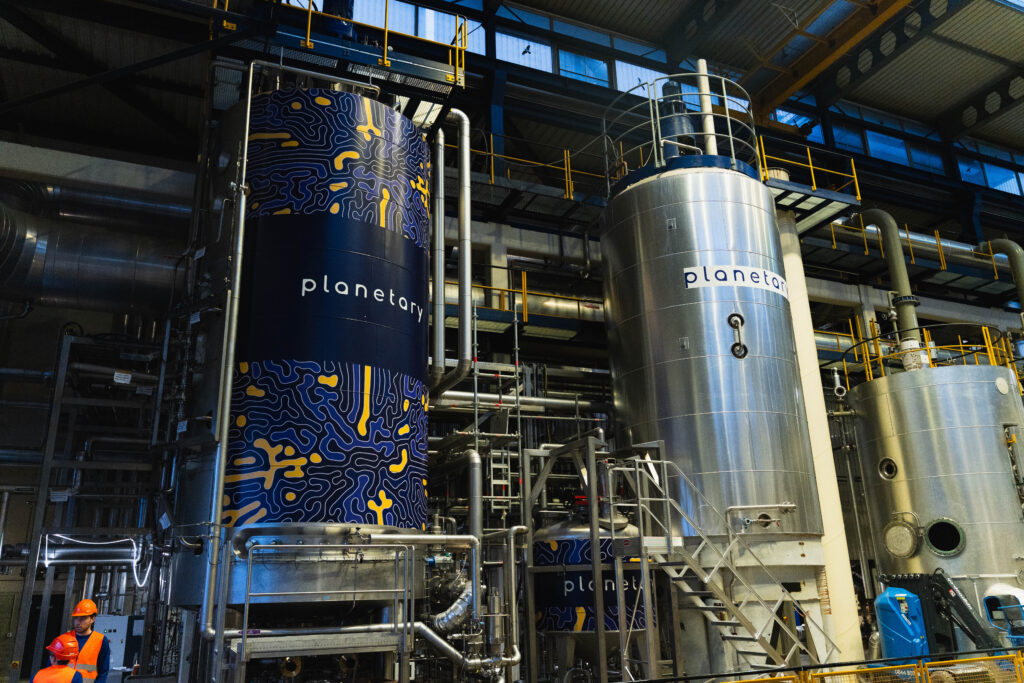
Planetary has already demonstrated its manufacturing capabilities by establishing industrial-scale production at its facility in Aarberg, Switzerland. This operational base serves as a testament to their ability to translate laboratory innovation into tangible, large-scale production. The company is now actively seeking to onboard a diverse range of talent, including experienced engineers, commercial leaders, and product innovators. Simultaneously, Planetary is looking to engage with customers who are keen to co-develop future food products, fostering a collaborative ecosystem for innovation.
The company’s strategic growth trajectory has been further bolstered by its acquisition of the core brand, intellectual property, and key assets of Libre Foods, a Spanish mycelium meat manufacturer, in June of the previous year. This strategic move significantly expanded Planetary’s portfolio and market reach within the alternative protein sector. Following this acquisition, Planetary successfully launched a mycoprotein fillet under Aldi Suisse’s MyVay brand nationwide. Notably, this product achieved price parity with conventional chicken, a significant milestone in making sustainable protein options more accessible and competitive.
Building on this success, Planetary is now actively rolling out additional Business-to-Business (B2B) launches under the Libre label across various European markets. The versatility of their technology is a key selling point, as it is adaptable to a wide range of applications. "Our technology is fit to serve a range of applications, including meat alternatives, hybrid meats, dairy alternatives, protein/fibre fortification, and pet food, always in a B2B context," Brandes confirmed. This broad applicability positions Planetary as a comprehensive solutions provider for the food industry.
Addressing the regulatory landscape, Brandes noted that the company is working with approved strains, which may necessitate regional certification in certain markets. However, he clarified that this process is generally straightforward and does not involve the stringent novel food regulations often associated with entirely new food ingredients. This streamlined regulatory pathway is expected to facilitate faster market entry for their products.
The BioBlocks platform, recognized as a WIPO GREEN-listed innovation, has achieved this significant funding round in what is widely acknowledged as one of the most challenging food-tech funding environments of the past decade. "Raising capital outside AI and defense now requires far more focus and resilience than it did just a few years ago," Brandes observed. The current economic climate, marked by geopolitical uncertainties and commodity price volatility, paradoxically strengthens the imperative for robust, sovereign, and circular food systems. "Yet, recent geopolitical turmoil and commodity volatility only strengthen the case for a sovereign, circular, and high-quality food system: stay the course and hold the line, nothing worth building comes easy," he added.

To navigate and succeed in this demanding environment, Planetary has demonstrated its comprehensive capabilities. This includes mastery of industrial in-house bioprocess development, direct control over production infrastructure, and a proven ability to generate revenue through product distribution. These full-stack capabilities, substantiated by concrete data, have been crucial in securing investor confidence. "In order to prevail in the current environment, Planetary had to prove full-stack capabilities, from industrial in-house bioprocess development to production infrastructure control and product distribution, all proven by hard data: a bioprocess delivering below price-party COGS; an industrial infrastructure you can see and touch; and distribution generating real revenue," Brandes explained.
Looking ahead, Planetary is strategically engaging with select investors for a second closing of its current funding round. This additional capital infusion is anticipated later in the summer and will further support the company’s ongoing expansion and innovation initiatives. The company’s sustained momentum, underscored by this substantial funding achievement, positions it as a significant player poised to shape the future of food production.
