
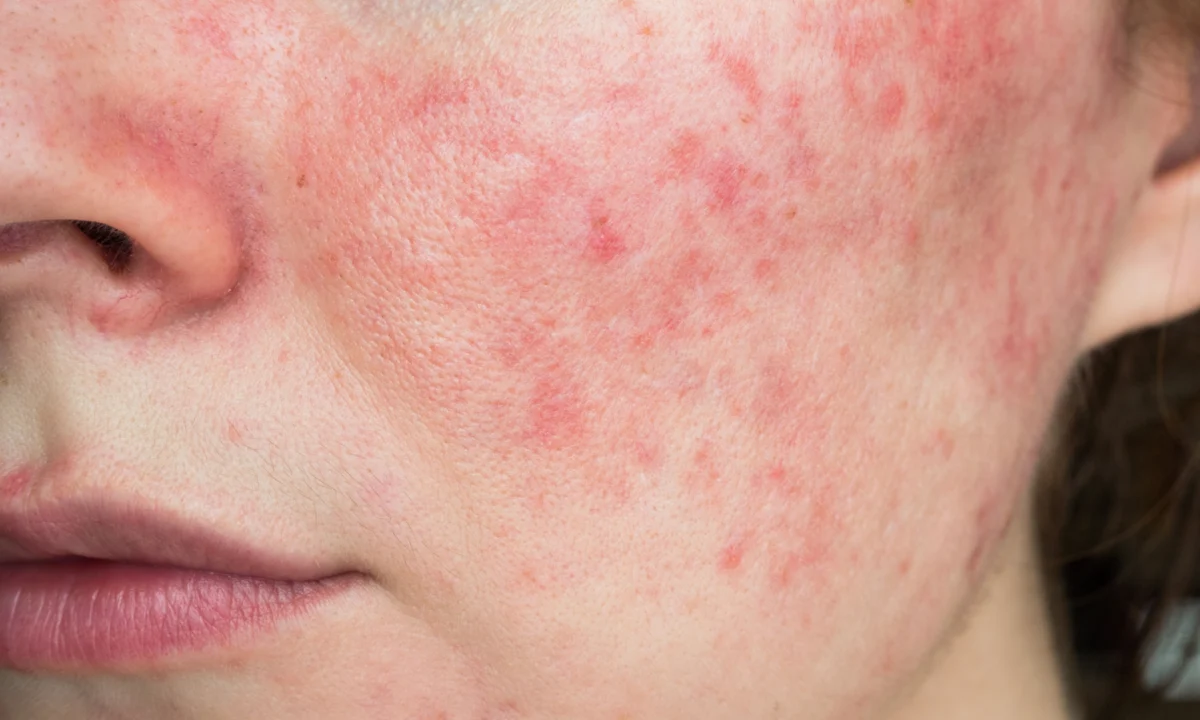
The medical understanding of dermatological sensitivity has undergone a significant shift following the publication of new research from the George Washington (GW) University School of Medicine and Health Sciences, which provides empirical evidence that Sensitive Skin Syndrome (SSS) is a biologically distinct condition from rosacea. For decades, the clinical community often categorized SSS as a precursor or a mild variant of rosacea due to overlapping symptomatic profiles, such as redness, stinging, and irritation. However, the pilot study, recently published in the Journal of the American Academy of Dermatology, demonstrates that the underlying molecular drivers and immune responses of the two conditions are fundamentally different, potentially revolutionizing how millions of patients are diagnosed and treated.
The study, led by Dr. Adam Friedman, professor and chair of dermatology at GW, utilized advanced molecular analysis to compare the skin environments of women with self-reported sensitive skin against those with non-sensitive skin. The findings indicate that the hallmark biological triggers associated with rosacea—specifically the overgrowth of Demodex mites and heightened innate immune activity—are notably absent in individuals suffering from SSS. This discovery challenges the long-standing "continuum" theory, which suggested that skin sensitivity was simply the lower end of the rosacea spectrum.
Understanding the Biological Divergence: Demodex and Antimicrobial Peptides
To differentiate between the two conditions, researchers focused on the presence of Demodex mites and the expression of specific antimicrobial peptides (AMPs). In patients with rosacea, Demodex folliculorum—a microscopic mite that lives in or near human hair follicles—is typically found in significantly higher densities than in healthy skin. These mites are known to trigger an inflammatory response, contributing to the papules, pustules, and persistent erythema characteristic of rosacea.
However, the GW study, which analyzed 30 women between the ages of 30 and 50, found that Demodex mites were present at nearly identical rates in both sensitive skin and non-sensitive skin participants. This lack of mite overgrowth in SSS patients suggests that the inflammatory trigger for sensitive skin is not microbial in the same way it is for rosacea.
Furthermore, the research highlighted a stark contrast in the presence of cathelicidin and dermcidin, two antimicrobial peptides that serve as the skin’s first line of defense against pathogens. In rosacea patients, cathelicidin levels are typically elevated and processed abnormally, leading to chronic inflammation and the formation of new blood vessels (angiogenesis). In a surprising reversal, the GW researchers found that participants with Sensitive Skin Syndrome actually exhibited significantly reduced levels of these peptides.
The university’s findings suggest that while rosacea is characterized by an overactive or "hyper-innate" immune response, SSS may be defined by a deficiency in the skin’s protective chemical barrier. This reduction in antimicrobial peptides could leave the skin more vulnerable to environmental irritants, explaining the sensory symptoms of burning and itching without the specific inflammatory pathways seen in rosacea.
The Evolution of Dermatological Classification
The classification of Sensitive Skin Syndrome has historically been a challenge for the medical community. Unlike rosacea, which has clear clinical markers like telangiectasia (visible blood vessels) and inflammatory lesions, SSS is largely defined by subjective patient experiences. Patients often report "hyper-reactivity" to topical products, weather changes, or stress, yet their skin may appear clinically normal upon examination.
Because of this diagnostic ambiguity, SSS was frequently dismissed as a psychological phenomenon or grouped under the umbrella of "sub-clinical rosacea." The GW study provides the necessary objective data to move SSS into its own category of dermatological pathology. By identifying a specific biological profile—low peptide levels and normal mite density—the research provides a framework for developing objective diagnostic tests that do not rely solely on patient self-reporting.
The timeline of this research reflects a growing interest in the "skin barrier" and the "skin microbiome." Over the last decade, dermatology has moved away from simply treating symptoms toward understanding the molecular signaling that causes those symptoms. This pilot study serves as a critical milestone in that transition, providing a baseline for larger, more comprehensive trials.
Clinical Implications and Targeted Therapies
The distinction between SSS and rosacea carries profound implications for clinical practice. Currently, many patients with sensitive skin are prescribed treatments intended for rosacea, such as topical metronidazole, azelaic acid, or ivermectin. While these are effective at reducing mite populations or controlling specific inflammatory pathways, they may be unnecessary or even counterproductive for a patient whose primary issue is a peptide deficiency or a compromised physical barrier.
Dr. Adam Friedman emphasized the importance of this distinction for frontline clinicians. "These findings further support our ongoing work that SSS is a unique skin condition, not simply a milder form of rosacea, a condition well known for imparting skin sensitivity," Friedman stated. "This distinction matters because it can help clinicians avoid treatments that may not benefit sensitive skin patients and instead focus on over-the-counter and prescription therapies better aligned with the biology of the condition."
For patients with SSS, the focus may shift toward "barrier repair" and "peptide replenishment" rather than "anti-parasitic" or "anti-inflammatory" interventions. Treatments that enhance the skin’s natural moisture factor (NMF) and support the production of endogenous peptides could become the new standard of care. This would involve a more surgical approach to skincare, moving away from the broad-spectrum "sensitive skin" labels often found on consumer products.
Broader Impact on the Skincare Industry
The global skincare market, valued at over $150 billion, has seen a massive surge in products marketed specifically for "sensitive skin." However, the lack of a standardized medical definition for SSS has led to a "wild west" of marketing claims. The GW University study provides the scientific community and the cosmetic industry with a more precise target for product formulation.
If SSS is indeed characterized by a reduction in cathelicidin and dermcidin, the next generation of dermo-cosmetics may incorporate biomimetic peptides designed to reinforce the skin’s innate defenses. Furthermore, the discovery that Demodex mites are not a factor in SSS allows formulators to avoid harsh antimicrobial agents that might further irritate a delicate skin barrier.
Industry analysts suggest that this research could lead to a new category of "biologically-aligned" skincare. Rather than just being "free from" irritants (like fragrances or sulfates), future products for SSS may be "enriched with" the specific biological components that the GW study identified as lacking in sensitive skin.
Future Research Directions
While the GW study is a significant step forward, researchers acknowledge that as a pilot study with 30 participants, it represents the beginning of a larger investigation. The study focused exclusively on women aged 30-50, a demographic that most frequently reports skin sensitivity. Future research will need to include men and a broader age range to determine if these biological markers are consistent across the entire population.
Additionally, researchers are interested in exploring the "why" behind the low peptide levels in SSS patients. Is the deficiency genetic, or is it an acquired state resulting from environmental damage or chronic use of certain topical agents? Understanding the etiology of the peptide reduction will be key to developing preventative measures.
The study also opens the door for research into the "neuro-sensory" component of SSS. Since patients report pain and stinging without high-level inflammation, there is likely an interplay between the skin barrier and the peripheral nervous system. Investigating how low levels of dermcidin might affect nerve endings in the epidermis could provide the final piece of the puzzle in understanding why SSS feels the way it does.
A New Chapter in Skin Health
The research from George Washington University marks a turning point in the field of dermatology. By successfully decoupling Sensitive Skin Syndrome from rosacea at a molecular level, the study validates the experiences of millions of patients who have struggled to find effective relief for their skin concerns.
As the medical community moves toward a model of precision medicine, studies like this ensure that "sensitive skin" is no longer a vague complaint but a recognized biological state requiring specific, evidence-based care. The path forward involves a more nuanced understanding of the skin’s complex ecosystem, where the absence of a protector (peptides) can be just as significant as the presence of an invader (mites). With this new data, the goal of achieving healthy, resilient skin for those with SSS has moved significantly closer to reality.
