
For decades, the global beauty and haircare industry has anchored much of its product recommendations and diagnostic routines around the concept of hair porosity. Consumers navigating the sprawling aisles of cosmetic retailers or seeking customized regimens online are routinely encouraged to categorize their hair as having low, medium, or high porosity. This classification dictates everything from the types of conditioning agents they purchase to the heavy oils they apply in search of ultimate hydration. However, a comprehensive scientific reassessment of hair physics reveals that popular porosity diagnostics—most notably the ubiquitous "float test" and "drop test"—are fundamentally flawed, relying on elementary misinterpretations of surface chemistry and molecular behavior.
The widespread reliance on these diagnostic methods has created a pervasive mythology within consumer beauty circles. While the practical advice generated by porosity-focused routines occasionally leads individuals toward products that suit their hair strands, this success is almost entirely coincidental. The underlying mechanisms that proponents claim to measure do not actually occur in the manner described. By examining the peer-reviewed chemical and physical behavior of human hair, scientists have dismantled the foundational assumptions of hair porosity, shifting the focus away from internal absorption myths and toward surface-level hair damage and molecular interactions.
The Evolution of Hair Porosity Lore and Consumer Diagnostics
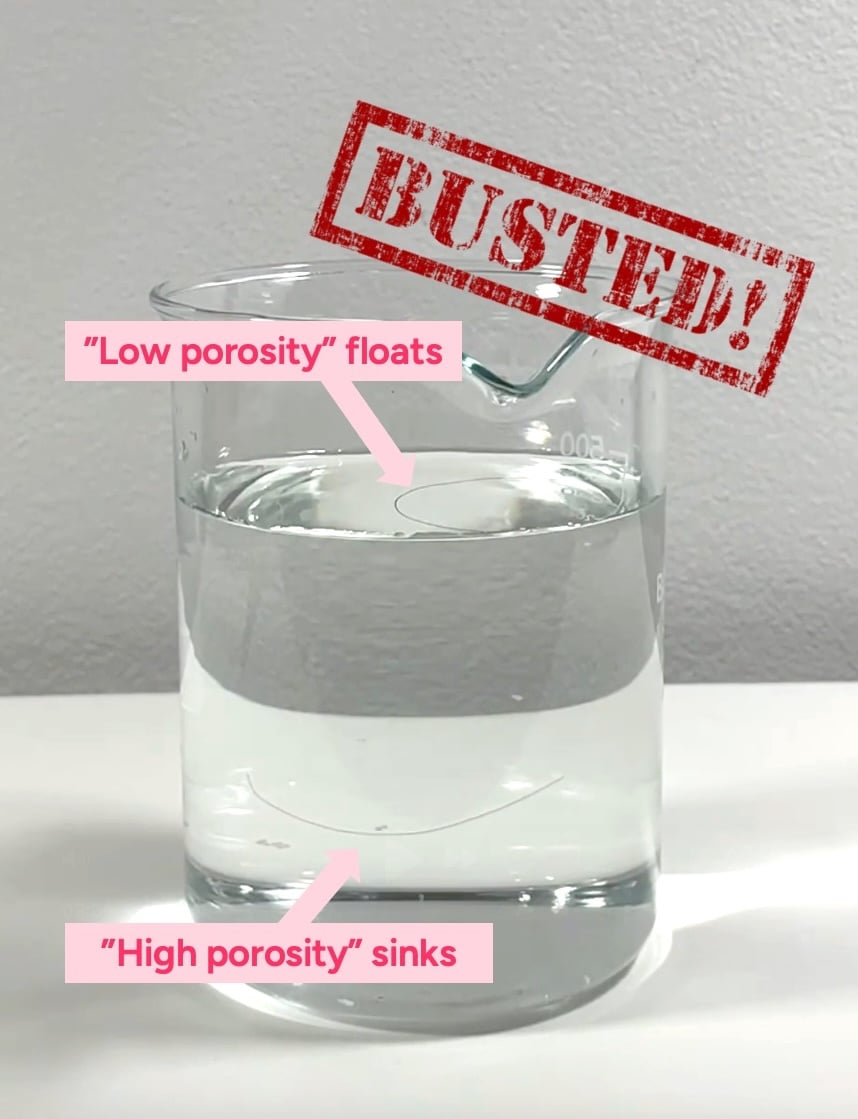
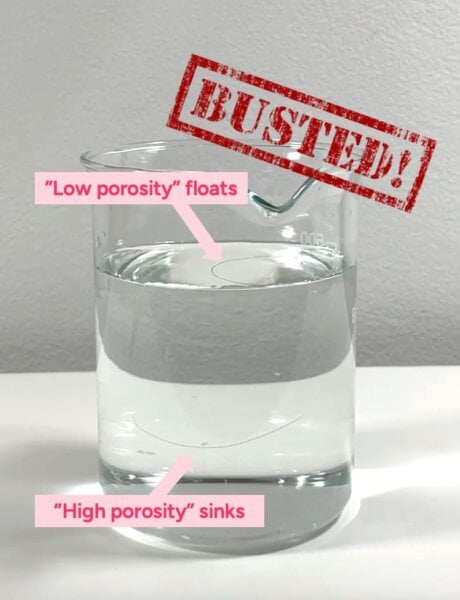
The popularization of hair porosity testing gained significant traction alongside the rise of natural hair care movements and online beauty blogging platforms throughout the 2010s. Eager for accessible ways to personalize complex routines without laboratory equipment, beauty enthusiasts popularized simple kitchen-science experiments. Chief among these is the "float test," which instructs a person to pluck a clean strand of hair and drop it into a glass of room-temperature water. According to the prevailing lore, hair that floats leisurely on the surface is labeled "low porosity" due to a tightly sealed cuticle that supposedly locks water out. Hair that sinks slowly is deemed "medium porosity," while hair that plunges immediately to the bottom is diagnosed as "high porosity," supposedly riddled with gaping holes that rapidly absorb liquid water.
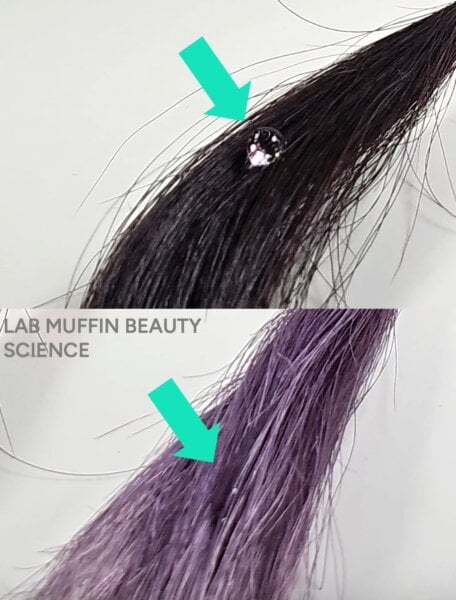
A secondary diagnostic method, known as the "drop test," involves placing a single droplet of water onto a taut lock of hair. Proponents claim that if the water beads up into a pristine, spherical droplet, the hair is low porosity and impermeable. Conversely, if the droplet flattens out and vanishes, the hair is categorized as high porosity, assumed to be greedily drinking in the moisture due to structural breaches in the cuticle layer.
Despite their widespread endorsement by social media influencers and select salon professionals, these tests fundamentally misrepresent how hair interacts with water. They do not measure the internal volume of the hair shaft, nor do they gauge how moisture penetrates the cortex. Instead, these tests measure surface tension and the degree of physical damage sustained by the exterior cuticle layer.
Unpacking the Myth of Water-Resistant Hair
To understand why these diagnostic tests fail, one must first dismantle the core misconception that undamaged human hair is naturally waterproof. Within consumer haircare discourse, a persistent narrative suggests that a healthy cuticle acts as a rigid, impermeable shingle-like roof that seals the hair shaft against moisture, and that artificial conditioners are required to replicate this waterproof barrier.
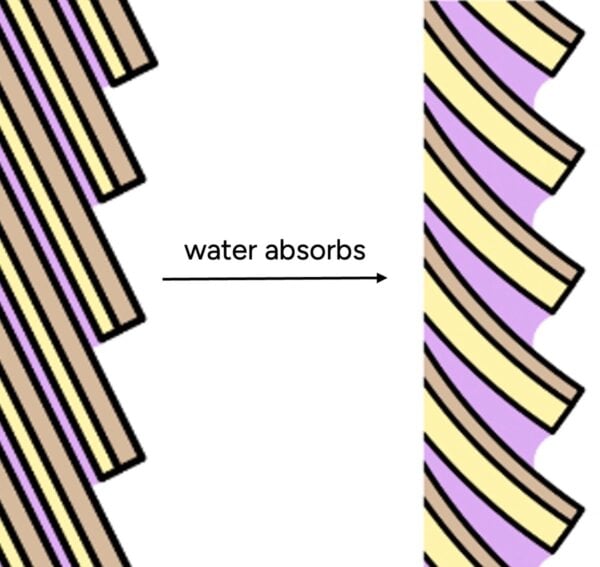
Empirical studies in cosmetic chemistry demonstrate that this is entirely false. Undamaged, untreated human hair is remarkably hydrophilic and capable of absorbing approximately 30 percent of its own dry weight in liquid water within a matter of minutes. Furthermore, the water content of healthy, conditioned hair fluctuates rapidly in direct response to environmental humidity.
According to foundational data compiled in chemical analyses of human hair behavior, the water absorption percentage scales predictably with ambient humidity:
- At 0 percent relative humidity, the water content absorbed is 0 percent.
- At 8 percent relative humidity, hair absorbs 3.9 percent of its weight in water.
- At 40 percent relative humidity, water absorption rises to 10.2 percent.
- At 63 percent relative humidity, absorption reaches 14.8 percent.
- At 86 percent relative humidity, hair absorbs 22.6 percent of its weight in water.
- At 100 percent relative humidity, undamaged hair absorbs a staggering 31.2 percent of its own weight in water.
This rapid absorption occurs because the hair’s natural protective lipid barrier—known as the F-layer—resides only on the outermost tips of each individual cuticle scale. Countless microscopic gaps and pathways remain exposed, allowing moisture to infiltrate easily. The structure of a hair shaft functions remarkably similarly to a pinecone, reacting dynamically to moisture in the surrounding atmosphere rather than serving as a sealed pipeline.
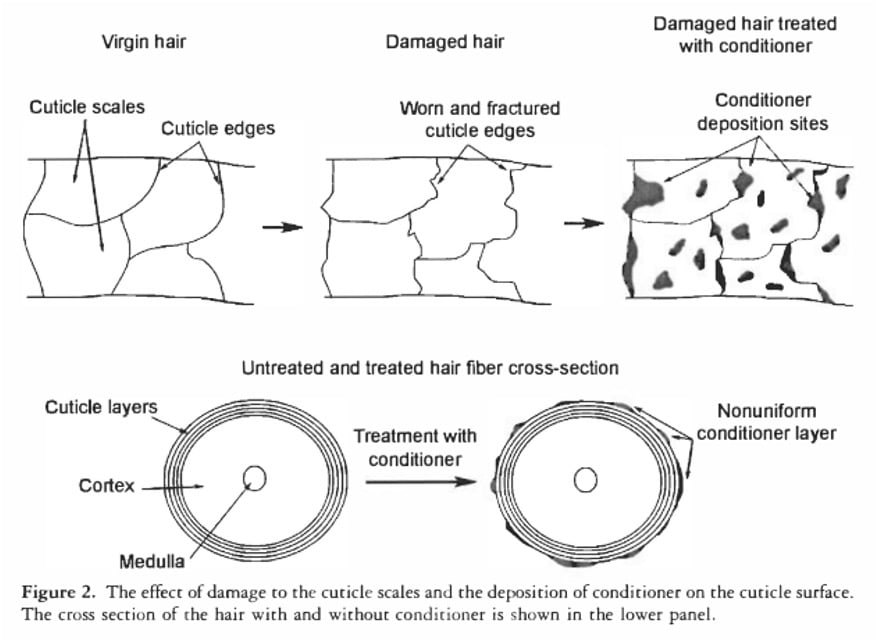
Moreover, commercial hair conditioners do not form a continuous, impermeable, waterproof film over the hair shaft. Atomic force microscopy and related surface analyses reveal that conditioners deposit onto the hair in isolated, microscopic blobs rather than a uniform sheet. While these minuscule droplets of conditioning agents are sufficient to smooth the tactile friction of the hair and provide a soft hand-feel, individual water molecules are vastly smaller than these deposits. Consequently, conditioners are entirely ineffective at blocking liquid water from entering the hair.
The True Science: Surface Tension and Hydrophobicity
Given that even pristine, undamaged hair readily absorbs nearly a third of its weight in water, the classic float and drop tests require a entirely different scientific explanation. That explanation lies in the realm of surface tension.
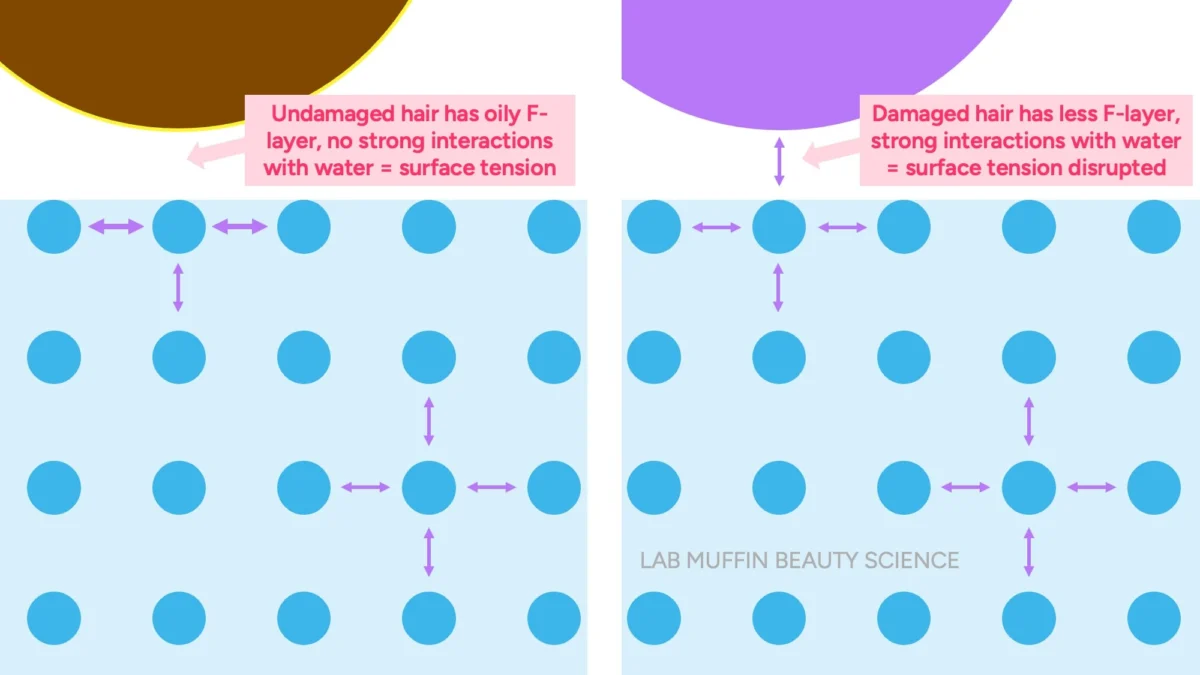
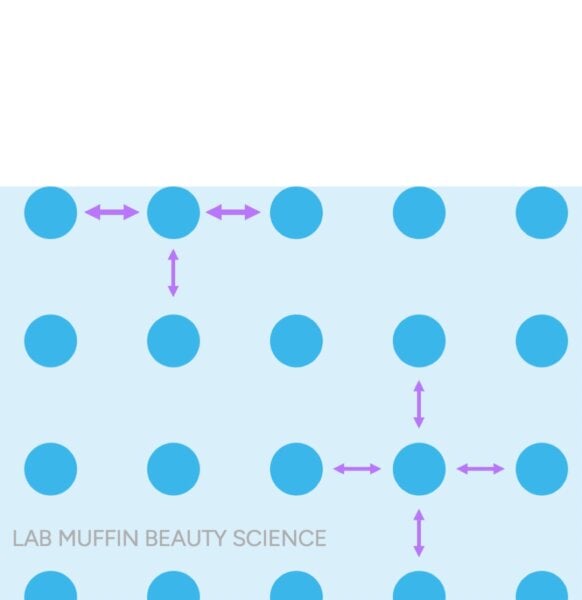
In liquid water, individual molecules engage in robust hydrogen bonding, pulling in all directions against one another. Molecules situated at the very surface of the liquid have fewer neighboring molecules to bond with, resulting in stronger localized attractive forces among the surface molecules. This creates an invisible, elastic "skin" across the water’s surface—a phenomenon known as surface tension. This surface tension is powerful enough to support dense objects like metal paperclips (which are roughly eight times denser than water) and lightweight insects, preventing them from sinking despite their negative buoyancy.
When a drop of detergent or a surfactant is introduced, it disrupts these hydrogen bonds, destroying the surface tension and causing objects like paperclips to sink instantly, regardless of whether the object can absorb water.
Applying this physical principle to the hair float test clarifies why damaged hair sinks. Healthy hair possesses an intact F-layer rich in fatty acids, rendering the surface hydrophobic (water-repelling). When placed in water, this hydrophobic barrier preserves the surface tension of the water. However, when hair undergoes chemical processing, heat styling, or mechanical friction, the protective lipid layer is stripped away, exposing the underlying protein structure which is hydrophilic (water-loving).
When damaged, water-loving hair comes into contact with water, it immediately forms hydrogen bonds with the liquid at the surface. This molecular interaction disrupts the water’s surface tension, collapsing the microscopic "skin" holding up the strand and allowing it to sink. The hair does not sink because it suddenly filled with water; it sinks because its damaged surface actively broke the surface tension of the liquid.
Similarly, the drop test merely visualizes whether the surface of the hair lock is hydrophobic or hydrophilic. Damaged hair can absorb only marginally more water—roughly 45 percent of its weight compared to 30 percent for healthy hair—meaning the dramatic flattening of a water droplet is not a sign of hyper-absorption into internal cavities, but rather the result of water spreading rapidly across a damaged, highly wettable surface.
Implications for the Beauty Industry and Salon Practices
The revelation that porosity tests are essentially surface-damage diagnostics carries significant implications for both everyday consumers and professional stylists. While the overarching advice associated with porosity categories—such as recommending lightweight hydrators for low-damage hair and intensive repair treatments for high-damage hair—generally yields positive results, the diagnostic rationale is fundamentally misdirected.
Industry experts and cosmetic chemists emphasize that conflating surface damage with internal porosity can lead to flawed technical applications, particularly in professional salon environments. For instance, chemical treatments such as permanent waving solutions, relaxers, or oxidative hair dyes rely on internal diffusion rates to process effectively. Stylists who misinterpret a surface-damage diagnostic test as a measure of true internal porosity risk miscalculating processing times or chemical strengths.
Cosmetic scientists strongly advise that professional evaluations should rely on direct product testing and physical strand assessments rather than folk-science diagnostics like floating strands in water. As consumer awareness shifts toward evidence-based beauty education, the debunking of hair porosity tests marks a pivotal step toward demystifying cosmetic science and fostering a more scientifically literate approach to personal grooming.
