
In a significant diplomatic intervention aimed at safeguarding future global health security, Brazilian President Luiz Inácio Lula da Silva and World Health Organization (WHO) Director-General Dr. Tedros Adhanom Ghebreyesus have issued a joint appeal to the leaders of the G7, G20, BRICS, and all sovereign nations. The leaders are calling for the immediate finalization of the Pathogen Access and Benefit-Sharing (PABS) system, the final and most contentious component of the WHO Pandemic Agreement. This plea arrives as negotiators prepare for a critical session scheduled from July 6 to July 17, a window seen by many as the definitive opportunity to codify the lessons learned from the COVID-19 pandemic into international law.
The joint statement emphasizes that while the international community has made strides in cooperative health frameworks, the absence of a finalized PABS annex leaves the world vulnerable to the same systemic failures that characterized the 2020-2023 crisis. The PABS system is designed to create a formal, equitable mechanism for the rapid sharing of pathogen samples and genetic sequence data in exchange for guaranteed access to the resulting medical countermeasures, such as vaccines, diagnostics, and therapeutics. Without this "last piece of the puzzle," the broader Pandemic Agreement cannot enter into full force, leaving the global health architecture incomplete.
The Human and Economic Rationale for Reform
The impetus for this high-level appeal is rooted in the staggering statistics of the COVID-19 era. Official estimates from the WHO and independent research bodies suggest that the pandemic claimed as many as 20 million lives globally. Beyond the human toll, the economic devastation was unprecedented in the modern era. Data from the International Monetary Fund (IMF) indicates that the pandemic resulted in over $13 trillion in lost global economic output. These losses were felt across every sector, from the collapse of international supply chains to the disruption of education for an entire generation of students.
President Lula and Dr. Tedros argue that the investment required to establish a robust pandemic preparedness system is negligible when compared to the cost of inaction. They point to current health threats, including ongoing Ebola outbreaks and the persistent risk of avian influenza, as evidence that the "next pandemic" is not a distant possibility but an imminent threat. Scientific modeling currently estimates a nearly 25% chance of another pandemic-scale event occurring within the next decade, driven by factors such as climate change, shifting land-use patterns, and the increasing proximity of human populations to wildlife reservoirs of zoonotic diseases.
A Chronology of Global Health Diplomacy
The journey toward a Pandemic Agreement began in the wake of the initial COVID-19 waves, as Member States recognized that the existing International Health Regulations (2005) were insufficient for a fast-moving, global respiratory pathogen.
- December 2021: The World Health Assembly (WHA) established an Intergovernmental Negotiating Body (INB) to draft and negotiate a WHO convention, agreement, or other international instrument on pandemic prevention, preparedness, and response.
- 2022–2023: Multiple rounds of negotiations took place in Geneva, focusing on equity, sovereignty, and financing. During this period, the concept of the PABS system emerged as the central pillar of the "equity" debate.
- May 2024: Brazil, holding the G20 presidency, successfully pushed for the recognition of inequality as a primary driver of pandemic vulnerability. Despite this progress, the 77th World Health Assembly concluded without a finalized PABS annex, as Member States requested more time to resolve technical and political differences.
- July 2024: Negotiators are set to reconvene for a high-stakes session (July 6–17) with the goal of reaching a consensus that can be presented for formal adoption.
The current deadlock centers on how benefits—specifically vaccines and treatments—are defined and distributed. Developing nations, often referred to as the Global South, are seeking firm commitments that a percentage of production will be reserved for equitable distribution during an emergency. Conversely, nations with large pharmaceutical sectors have raised concerns regarding intellectual property and the logistical complexities of mandatory sharing.
The Pathogen Access and Benefit-Sharing (PABS) Mechanism
At its core, the PABS annex is a "fair bargain" intended to replace the current ad hoc approach to pathogen sharing. Currently, when a new virus is detected, the sharing of its genetic information relies largely on voluntary cooperation. While scientists often share data quickly, there is no legal guarantee that the country providing the data will receive affordable access to the vaccines developed using that information.
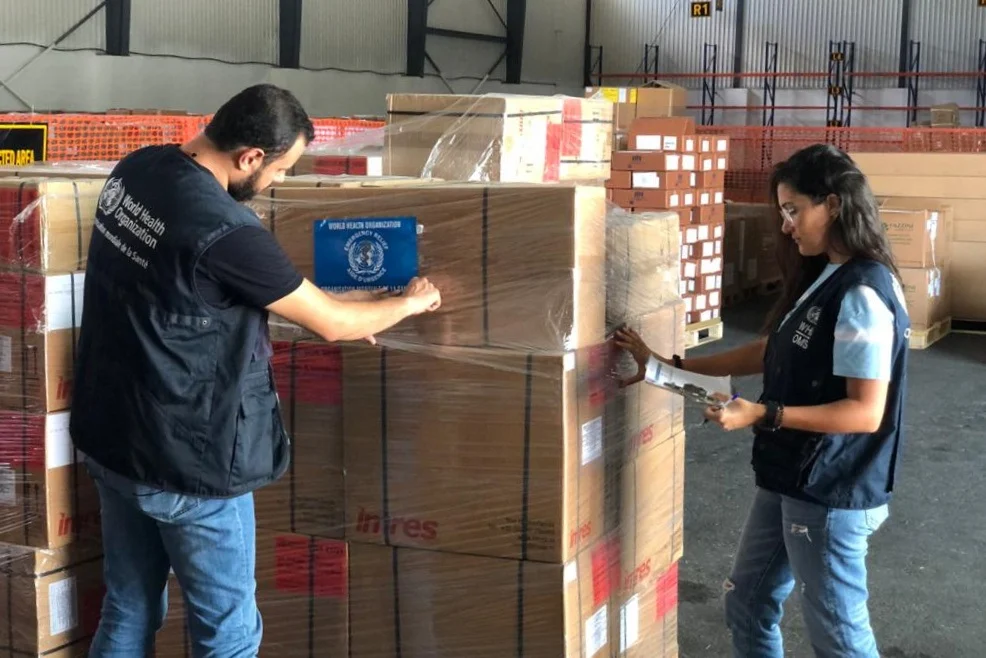
The proposed PABS framework seeks to formalize this process. Under the system, countries would commit to sharing biological materials and genetic sequences through WHO-coordinated platforms. In return, manufacturers of vaccines and therapeutics who utilize these materials would be required to provide a portion of their production to the WHO at affordable prices or as donations for distribution to high-risk populations in lower-income countries.
This system aims to provide "predictability" for both governments and the private sector. By establishing stable, pre-negotiated rules, laboratories and pharmaceutical companies can move at the speed required by an outbreak without being hindered by case-by-case negotiations over intellectual property or distribution rights in the middle of a crisis.
Addressing Sovereignty and Misinformation
A significant portion of the joint appeal is dedicated to addressing concerns regarding national sovereignty. In various jurisdictions, critics of the Pandemic Agreement have alleged that the treaty would grant the WHO the power to impose lockdowns, mandate vaccinations, or override national health policies.
President Lula and Dr. Tedros have explicitly refuted these claims, citing Article 22, paragraph 2 of the draft agreement. The text clarifies that the WHO has no authority to direct or alter a country’s domestic laws or policies. Decisions regarding travel restrictions, clinical mandates, and social distancing remain entirely within the purview of sovereign states. The PABS annex, as an integral part of the agreement, is described as a tool for international cooperation rather than a mechanism for global governance. The appeal urges heads of state to instruct their negotiators to "reach for consensus with courage rather than caution," emphasizing that solidarity is the most effective form of national defense against biological threats.
Geopolitical Implications and the Role of Leadership
The call to action is strategically directed at the G7, G20, and BRICS—groupings that represent the vast majority of the world’s economic power and manufacturing capacity. The involvement of President Lula is particularly significant given Brazil’s leadership role in the G20 and its historical advocacy for health equity. Under Brazil’s leadership, the G20 has increasingly focused on the nexus between social inequality and global health security.
From a geopolitical perspective, the finalization of the Pandemic Agreement is seen as a test of whether a fragmented international order can still produce meaningful multilateral solutions. The "North-South" divide remains the primary hurdle. High-income nations prioritize rapid access to data to protect their populations and economies, while middle- and low-income nations prioritize "benefit-sharing" to ensure they are not left at the back of the queue for life-saving supplies, as occurred during the 2021 vaccine rollout.
Industry reactions have been mixed. While many biotechnology firms support the need for clear rules on pathogen sharing, trade groups have expressed concern that overly prescriptive benefit-sharing requirements could stifle innovation or complicate research and development pipelines. The July negotiations will need to balance these commercial interests with the public health necessity of equitable access.
The Urgency of the 17 July Deadline
The joint letter concludes with a stern warning regarding the timeline. The leaders argue that July 17 must be viewed as a "deadline, not a milestone." They highlight that the factors increasing the risk of pandemics—such as environmental degradation and the dual-use risks associated with biotechnology—are accelerating.
"A virus left to burn anywhere will, in time, find everyone," the statement warns, reinforcing the strategic argument that containing an outbreak at its source is far more cost-effective than attempting to manage a full-scale pandemic. The leaders point to the historical successes of global health cooperation, such as the eradication of smallpox and the near-elimination of polio, as evidence that humanity is capable of the collective action required to finalize the Pandemic Agreement.
As the July 6 start date for negotiations approaches, the focus of the international community shifts to Geneva. The outcome of these talks will likely determine the global health landscape for decades to come. If successful, the PABS annex will serve as the foundation for a more resilient and equitable world. If the session ends in another stalemate, the "promise" made in the aftermath of COVID-19 may remain unkept, leaving the world as vulnerable to the next pathogen as it was in the early days of 2020.
