
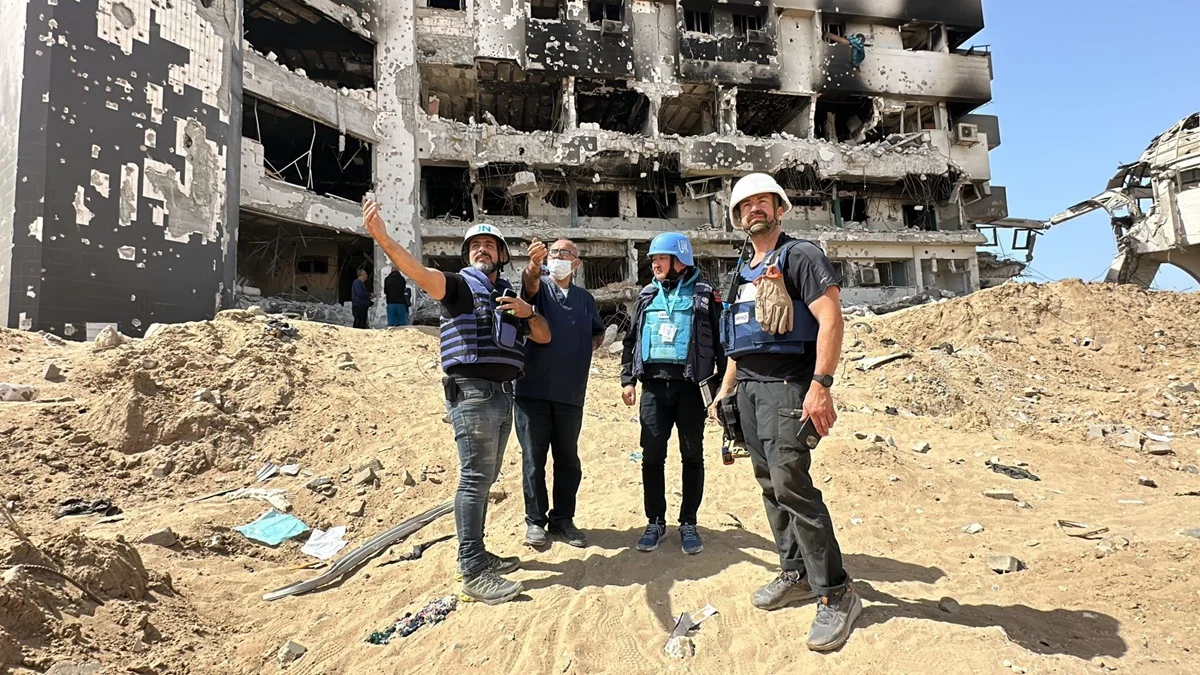
Ten years after the United Nations Security Council unanimously adopted Resolution 2286, intended to protect healthcare in armed conflicts, the global humanitarian landscape is marked not by progress, but by a profound and systemic failure to uphold international law. The heads of the world’s leading humanitarian and health organizations—the International Committee of the Red Cross (ICRC), the World Health Organization (WHO), and Médecins Sans Frontières (MSF)—issued a joint statement this week, warning that the sanctity of medical care in war zones is being eroded at an accelerating pace. Instead of the intended reduction in violence against healthcare workers and facilities, the last decade has seen an intensification of attacks, leaving entire populations without life-saving services and signaling a broader collapse of the norms intended to limit the horrors of war.
The Promise and Failure of Resolution 2286
Adopted on May 3, 2016, UN Security Council Resolution 2286 was hailed as a landmark diplomatic achievement. It was the first resolution of its kind to focus exclusively on the protection of the wounded and sick, medical personnel, and humanitarian workers in conflict zones. The resolution strongly condemned acts of violence, attacks, and threats against medical personnel and facilities, demanding that all parties to armed conflicts fully comply with their obligations under international humanitarian law (IHL).
However, ten years later, the organizations on the front lines report that the resolution has failed to translate into safety on the ground. "Today, we mark not an achievement—we mark a failure," the joint statement reads. The leadership of the ICRC, WHO, and MSF emphasized that the harm the resolution sought to prevent has continued unabated. Hospitals continue to be reduced to rubble, ambulances are routinely obstructed, and medical staff are killed while performing their duties. The organizations argue that this is not a failure of the law itself, but a catastrophic failure of political will among member states to enforce the rules they themselves helped draft.
A Chronology of Declining Protections
The path to Resolution 2286 began with a series of high-profile tragedies that shocked the international conscience. In October 2015, a U.S. airstrike destroyed an MSF trauma center in Kunduz, Afghanistan, killing 42 people. This event, alongside systematic attacks on hospitals in Syria and Yemen, catalyzed the push for a dedicated UN resolution.
In 2012, the World Health Assembly had already adopted Resolution 65.20, which mandated the WHO to provide leadership on the global collection of data regarding attacks on healthcare. This created the Surveillance System for Attacks on Health Care (SSA), a tool intended to provide the empirical evidence needed to hold perpetrators accountable. By 2016, with the passage of Resolution 2286, the UN Secretary-General provided a clear roadmap of recommendations for states, including the need for independent investigations into attacks and the integration of IHL into national legislation and military doctrine.
Despite these frameworks, the timeline of the last decade is punctuated by increasingly brazen violations. From the siege of Aleppo to the ongoing conflicts in Gaza, Ukraine, Sudan, and Myanmar, the deliberate or indiscriminate targeting of healthcare has become a recurring feature of modern warfare. In 2023 and 2024, the scale of destruction reached levels that humanitarian leaders describe as unprecedented in the post-WWII era.
Statistical Reality: Data on the Frontlines
The data compiled by the WHO and independent monitors like the Safeguarding Health in Conflict Coalition (SHCC) paints a grim picture of the escalating danger. In 2023 alone, the SHCC documented over 2,500 incidents of violence against healthcare in conflict zones globally—a 25% increase from the previous year. These incidents included the killing of over 400 health workers and the damage or destruction of nearly 700 medical facilities.
In the occupied Palestinian territory, the WHO has documented hundreds of attacks on healthcare facilities since October 2023, leading to the near-total collapse of the medical infrastructure in the Gaza Strip. Similarly, in Ukraine, the WHO has verified over 1,500 attacks on healthcare since the full-scale invasion began in February 2022, affecting hospitals, clinics, and ambulances. In Sudan, the conflict that erupted in April 2023 saw more than 70% of health facilities in conflict-affected areas rendered non-functional within months due to looting, occupation by armed groups, and direct shelling.
These figures represent more than just infrastructure damage; they signify the loss of hundreds of thousands of medical consultations, surgeries, and vaccinations. When a single hospital is destroyed, the ripple effect impacts maternal health, chronic disease management, and emergency trauma care for an entire region.
Regional Case Studies and the "Crisis of Humanity"
The joint statement highlights that when healthcare is no longer safe, it serves as the clearest warning sign that the rules of war are breaking down. This "crisis of humanity" is visible in several key theaters:
Sudan: The rapid degradation of the healthcare system in Sudan exemplifies the total disregard for the "sanctity of healthcare." Medical warehouses have been systematically looted, and doctors have been targeted for providing care to perceived enemies. The result is a country where treatable conditions like malaria and maternal complications have become death sentences.
Gaza: The scale of destruction in Gaza has forced doctors to perform amputations and surgeries without anesthesia, often on the floors of overcrowded facilities. The ICRC and MSF have repeatedly called for the protection of the "medical mission," noting that the obstruction of medical supplies and the detention of medical personnel constitute grave breaches of IHL.
Ukraine: The conflict in Ukraine has seen a pattern of "double-tap" strikes, where a second missile hits a location shortly after the first, specifically targeting the first responders and medical teams who arrive to treat the wounded. This tactic is a direct violation of the protections afforded to medical personnel under the Geneva Conventions.
The Legal and Moral Framework of Protection
Under International Humanitarian Law, specifically the Geneva Conventions of 1949 and their Additional Protocols, medical personnel, facilities, and transports must be respected and protected at all times. They must not be the object of attack, and their work must not be unnecessarily obstructed.
The ICRC, WHO, and MSF reiterate that the obligation of states goes beyond their own conduct. Under the Common Article 1 of the Geneva Conventions, states have a duty to "respect and ensure respect" for the law. This means that influential nations have a legal and moral responsibility to pressure their allies and proxies to stop attacking healthcare.
The recommendations provided by the UN Secretary-General in the wake of Resolution 2286 remain actionable. These include:
- Domestic Legislation: States must enact laws that specifically protect medical personnel and patients during armed conflict.
- Military Training: Rules of engagement and military doctrines must explicitly forbid the targeting of medical facilities and ensure that "dual-use" justifications (claims that hospitals are being used for military purposes) are subject to rigorous evidence and proportional response requirements.
- Accountability: There must be credible, transparent, and independent investigations into every attack on healthcare to end the culture of impunity.
Broader Impact and the Collapse of Public Health
The long-term implications of attacking healthcare extend far beyond the immediate casualties of war. The destruction of medical infrastructure leads to the resurgence of eradicated diseases and the collapse of public health gains that took decades to achieve.
In Yemen, the targeting of water and health infrastructure contributed to one of the worst cholera outbreaks in modern history. In various African conflict zones, the inability of vaccination teams to operate safely has led to new outbreaks of polio and measles. Furthermore, the psychological impact on the medical workforce is profound. The "brain drain" of skilled doctors and nurses fleeing conflict zones where they are targeted leaves remaining populations with a permanent deficit of expertise.
The joint statement emphasizes that "healthcare must never be a casualty of war." When the international community allows hospitals to become targets, it undermines the very foundation of the humanitarian project, which is based on the principle that even in the midst of the most violent disagreements, there must be a space for healing and humanity.
Urgent Call for Action
To prevent another decade of deteriorating norms, the ICRC, WHO, and MSF have called upon all states to urgently implement measures that go beyond rhetoric. They demand that the systematic documentation of attacks be strengthened and that the evidence collected by the WHO be used as a basis for diplomatic and legal action.
"This is not a failure of the law. It is a failure of political will," the statement concludes. The organizations are calling on world leaders to demonstrate the leadership required to end the violence. This includes ensuring that humanitarian aid is not criminalized and that medical ethics are respected, allowing doctors to treat all patients based on need alone, regardless of their political or military affiliations.
As the international community reflects on the ten years since Resolution 2286, the message from the front lines is clear: without a fundamental shift in how states prioritize the protection of healthcare, the next decade will likely see an even more complete erasure of the protections that have, for over 150 years, defined the limits of warfare. The crisis of healthcare in conflict is, at its core, a crisis of the global commitment to human dignity.
