
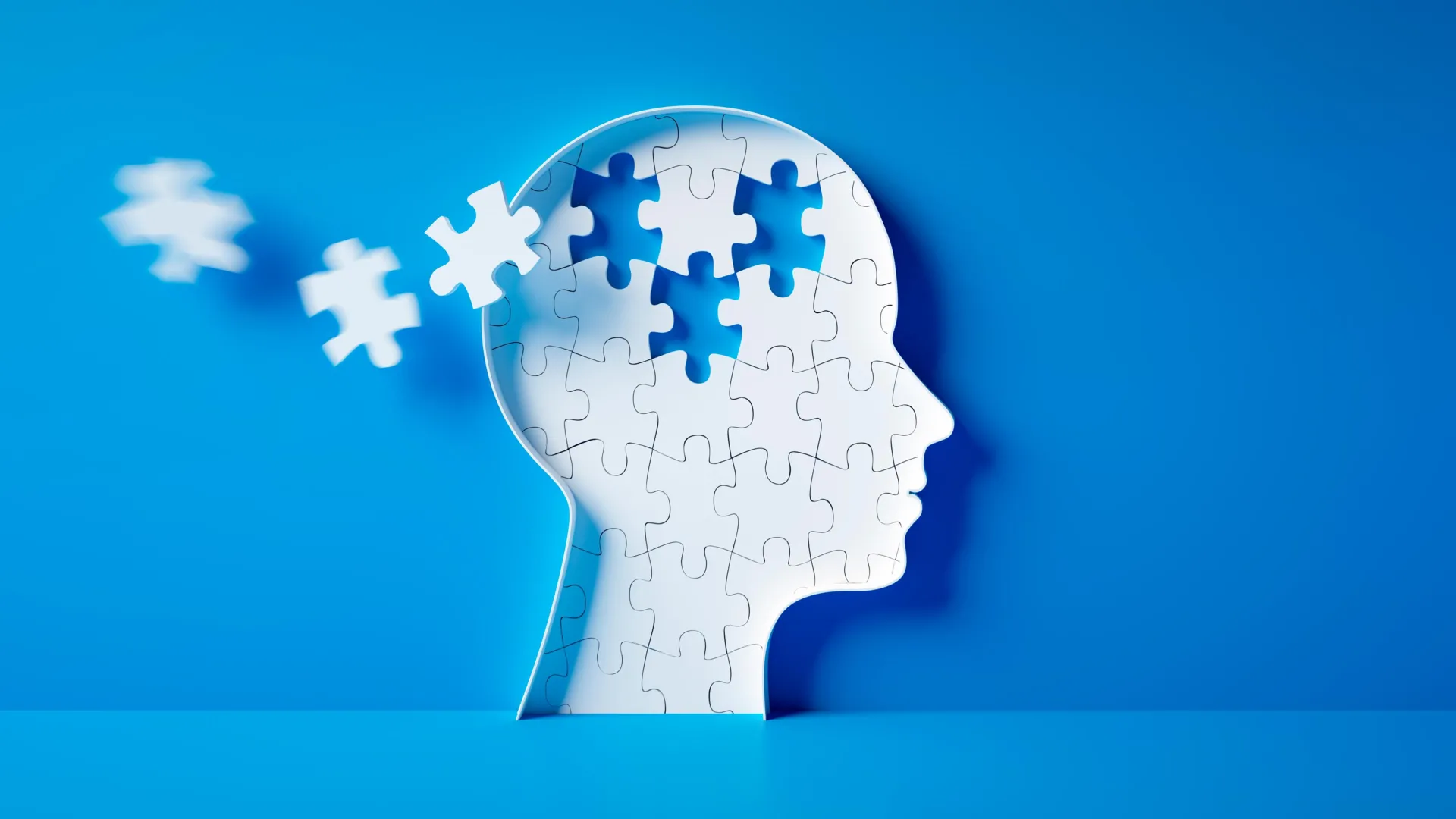
For generations, the scientific and public consensus surrounding human aging has been dominated by a narrative of inevitable mental decay. As decades pass, society has conditioned itself to expect a steady erosion of memory, a sluggish processing speed, and an overall diminishing of cognitive faculties. However, a growing body of research is challenging this deficit-only model. Scientists are increasingly investigating whether the neurological transformations observed in older adults represent a malfunction, or if they are, in fact, a sophisticated evolutionary recalibration. Rather than simply losing capacity, the aging brain may be undergoing a purposeful restructuring to prioritize accumulated wisdom, broad contextual understanding, and mentorship over the micro-detailing of daily existence.
This paradigm-shifting concept sits at the core of a recent study published in the journal Perspectives on Psychological Science. Headed by researchers at the University of Arizona, the study introduces the "adaptive aging hypothesis," an investigative framework drawing heavily on molecular biology, advanced neuroimaging, and evolutionary theory. By bridging gaps between how brains function in youth versus later life, this research offers a compelling explanation for why thinking and memory pivot as humans age, suggesting that the senior brain is not broken, but simply optimized for entirely different tasks.
The Chronology and Genesis of the Adaptive Aging Hypothesis
The roots of the adaptive aging hypothesis stem from decades of shifting observations in neuroscience and evolutionary biology. Historically, cognitive aging was studied primarily through the narrow lens of pathology or loss. In the mid-to-late 20th century, psychologists mapped declines in fluid intelligence—the ability to think logically and solve problems in novel situations—noting that these metrics peak early in adulthood and steadily drift downward.
However, a parallel track of psychological research consistently demonstrated that crystallized intelligence—the accumulation of knowledge, facts, and skills derived from life experience—actually increases or remains stable well into old age. For years, these two trajectories were viewed as a tug-of-war between growth and decay.
The University of Arizona team sought to reconcile this dichotomy by examining the biological drivers behind these shifts. Led by co-author Fabian-Xosé Fernandez, an associate professor of cognition and neural systems, the research group synthesized molecular biology data with neuroimaging studies spanning both human and animal subjects. Their synthesis suggested that the neurobiological changes observed in older cohorts are too uniform, systemic, and evolutionary conserved to be random accidents of deterioration. Instead, they appear to be a coordinated developmental stage—a biological milestone just as vital as puberty or early childhood brain development.
Shifting Gears: From Hippocampal Detail to Frontal Cortex Meaning
To understand how the brain transitions from a sponge-like information collector to a custodian of wisdom, neuroscientists look to the interplay between two primary brain structures: the hippocampus and the frontal cortex.
In early life, the brain’s architecture is heavily weighted toward episodic memory creation. The hippocampus acts as the chief archivist, capturing specific, high-resolution details of events, including the environmental context, sensory inputs, and precise temporal sequences. Young brains require this hyper-detailed recording apparatus because children and young adults possess virtually no internal baseline or comprehensive schema of how the world operates. Every interaction is a novel data point that must be cataloged precisely to build an initial cognitive foundation.
As humans progress into their fifth, sixth, and seventh decades of life, however, a profound neurological realignment occurs. According to the adaptive aging hypothesis, brain activity gradually shifts away from an intense reliance on the hippocampus and leans more heavily into the frontal cortex. This structural and functional rebalancing moves the mind away from obsessing over nitty-gritty, episodic details and toward extracting the "gist" of experiences.
This shift allows older adults to filter new data through a massive, preexisting web of semantic knowledge. Instead of expending cognitive energy to memorize every minute aspect of a new situation, the mature brain instantly categorizes the event, recognizes underlying patterns, and connects it to decades of accumulated life lessons. Far from being a failure of memory, this neurological triage is an efficiency breakthrough.
Evolutionary Drivers and the Preservation of Intergenerational Knowledge
To validate whether this shift is an intentional evolutionary design rather than a byproduct of cellular wear-and-tear, researchers examined similar neurological transitions across various animal models. The discovery of parallel processes in other social species strongly implies an evolutionary driving force.
From an evolutionary standpoint, the preservation of an older demographic within a social group only makes biological sense if that group derives a net benefit from their continued survival. In ancestral human societies, elders served as vital repositories of survival data—knowing where to find water during a drought, how to navigate complex social hierarchies, and how to arbitrate tribal disputes.
The adaptive aging hypothesis posits that nature engineered a biological mechanism to protect this accumulated database. By dampening the urge to constantly collect and store raw, episodic minutiae, the brain safeguards its vast semantic and autobiographical archives. Consequently, older adults are biologically primed for roles that require strategic judgment, teaching, storytelling, and cultural transmission. The evolutionary mandate shifts from learning how the world works to passing down how the world works to the next generation.
Divergence From Pathology: Normal Aging Versus Alzheimer’s Disease
A critical component of the University of Arizona team’s work involves drawing a sharp, unmistakable line between healthy cognitive aging and neurodegenerative conditions such as Alzheimer’s disease. In decades past, medical pedagogy frequently framed Alzheimer’s as merely an accelerated, extreme form of normal aging. The adaptive aging hypothesis forcefully rejects this premise, establishing that healthy brain evolution and neurodegenerative pathology are fundamentally distinct processes.
During normative aging, the quiet demotion of hippocampal dominance is a natural, orderly transition. In stark contrast, Alzheimer’s disease is characterized by catastrophic disruptions in brain circuitry, driven largely by the accumulation of pathological proteins such as amyloid-beta and tau.
Rather than experiencing a healthy, moderated reduction in hippocampal engagement, brains affected by Alzheimer’s often exhibit paradoxical and destructive hyperactivity within the hippocampus. This abnormal neural firing disrupts the delicate networks required for memory retrieval, linguistic access, and self-reflection. Pathological processes effectively hijack and shatter the peaceful developmental transition that the adaptive aging hypothesis identifies as a hallmark of healthy maturity. By clearly separating these trajectories, researchers hope to refine diagnostic tools, ensuring that normal, adaptive changes in older adults are never mistakenly pathologized.
Societal Implications and the Revaluation of Senior Capital
The implications of the adaptive aging hypothesis extend far beyond academic neuroscience journals; they challenge the foundational assumptions of modern, productivity-obsessed societies. Contemporary economic and social structures routinely evaluate cognitive vitality through metrics tailored to younger populations—emphasizing rapid information processing speeds, multitasking, and the rote memorization of novel data.
When measured against these youth-centric benchmarks, older adults are frequently mischaracterized as deficient. The University of Arizona researchers argue that this metric mismatch squanders one of society’s most valuable and underutilized resources.
By forcing older individuals to process information and execute tasks using methods native to younger brains, society may actively work against the brain’s natural, healthy inclinations. Instead of penalizing older adults for natural shifts in cognitive style, institutions and communities are being urged to redesign environments to harness senior strengths.
Fostering structured intergenerational programs—such as mentorship initiatives, community storytelling projects, and collaborative workspaces—could bridge the gap between youthful adaptability and senior wisdom. These environments create natural pipelines for the exchange of expertise, ensuring that decades of hard-won institutional and cultural knowledge are not lost to the digital ether.
Analytical Outlook: The Future of Cognitive Research
As the global population ages, understanding the true nature of cognitive maturity has transitioned from a niche scientific inquiry to an urgent public health and socio-economic priority. The adaptive aging hypothesis provides a refreshing, empirically grounded framework that reframes growing older not as a tragedy of subtraction, but as a phase of specialized transformation.
Future research will likely focus on mapping the precise molecular triggers that initiate the shift from hippocampal reliance to frontal cortex dominance. Additionally, clinical researchers will continue to leverage these insights to better isolate the early warning signs of neurodegenerative diseases from the peaceful, adaptive evolution of a healthy senior mind.
Ultimately, the narrative surrounding the aging brain is undergoing a much-needed renaissance. The recognition that the mature brain is optimized for wisdom, social bonding, and the stewardship of knowledge paves the way for a more inclusive society—one that values human capability across the entire span of life, honoring both the sponge of youth and the architect of age.
