
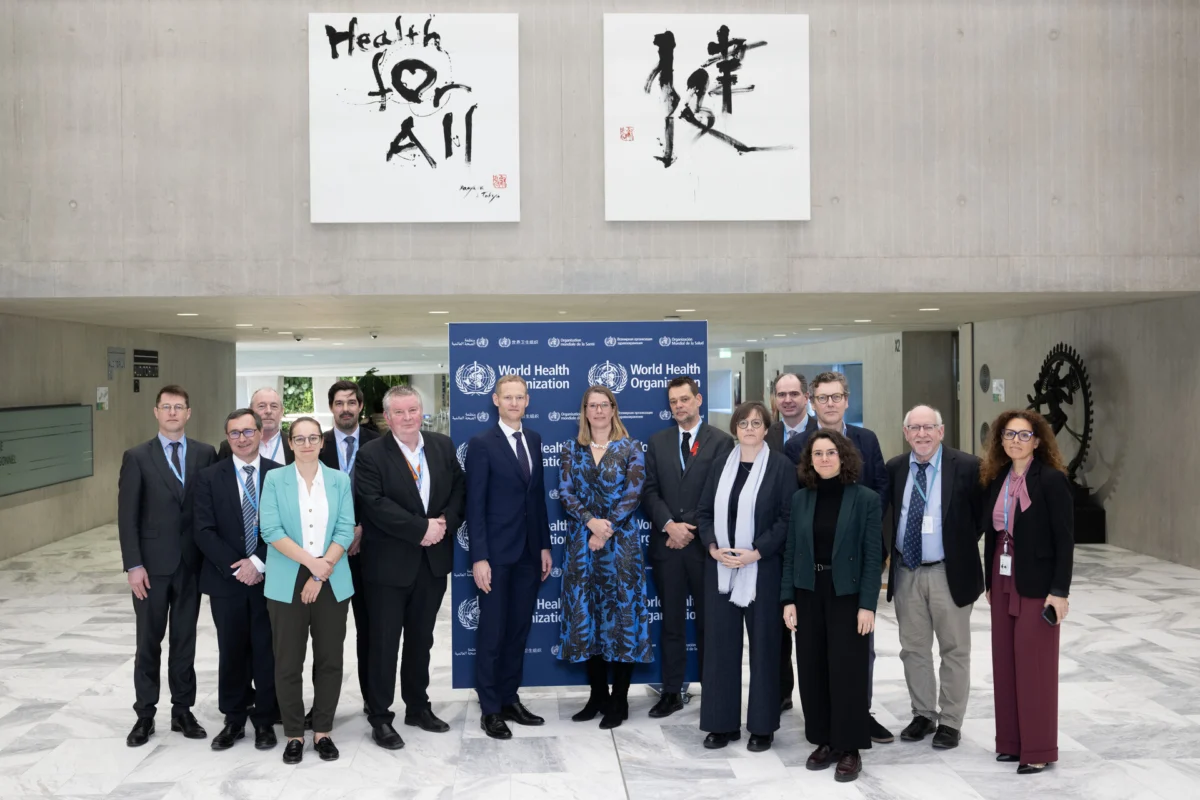
The Kingdom of Belgium and the World Health Organization (WHO) have concluded a pivotal three-day strategic dialogue in Geneva, signaling a deepened commitment to addressing the world’s most pressing health challenges. Held from March 2 to March 5, 2025, the meetings served as a comprehensive review of the long-standing bilateral partnership, focusing on aligning Belgium’s international development cooperation priorities with the WHO’s 14th General Programme of Work (GPW14). The delegation, led by H.E. Christophe Payot, Ambassador of Belgium to the United Nations in Geneva, represented a unified front comprising the Belgian Federal government, the Flemish government, and the Walloon government, underscoring the nation’s holistic commitment to multilateralism.
This high-level engagement occurs at a critical juncture for global health. With the international community still recovering from the socio-economic shocks of the COVID-19 pandemic and facing the dual threats of climate change and geopolitical instability, the partnership aims to move beyond traditional donor-recipient dynamics. Instead, the dialogue emphasized a collaborative approach toward building resilient health systems, ensuring equitable access to medical countermeasures, and fostering sustainable local production of health technologies.
A Chronology of Collaboration and Strategic Alignment
The relationship between Belgium and the WHO is rooted in decades of shared values regarding human rights and the right to health. Over the last four years, this partnership has undergone significant evolution. The 2021-2024 cycle marked a period of intensive cooperation, particularly in the operationalization of the UHC-Partnership, which has seen tangible improvements in primary health care delivery across Belgium’s partner countries, including Mozambique and the Democratic Republic of Congo.
During the 2024 Belgian Presidency of the Council of the European Union, the nation placed global health at the center of the EU’s legislative agenda, advocating for the protection of medical supply chains and the strengthening of the European Health Union. This strategic dialogue acted as a bridge between the accomplishments of that presidency and the long-term goals outlined in the WHO’s upcoming administrative cycle.
The sessions were structured into three thematic pillars:
- The Access to Medicines Programme: A deep dive into market shaping and the transition from short-term aid to sustainable local production.
- Health Emergencies and Biological Resilience: A critical examination of the ongoing pandemic treaty negotiations and the implementation of the "One Health" approach.
- Universal Health Coverage (UHC) and System Strengthening: A review of mental health integration into primary care and the alignment of country-level programs.
Data-Driven Progress and Country-Level Impact
Central to the discussions were the outcomes of the Access to Medicines programme. Data presented by WHO technical experts highlighted the efficacy of market-shaping interventions in Senegal, which served as a case study for reducing costs and improving the availability of essential vaccines and diagnostics. By moving away from a reliance on imported finished goods, the program aims to bolster local manufacturing capacity, thereby shortening supply chains and mitigating the risks associated with global logistics disruptions.
In the realm of Universal Health Coverage, the dialogue reviewed progress made since 2021. The UHC-Partnership, which Belgium has significantly funded, has facilitated the integration of mental health services into primary care settings in several low-to-middle-income countries. Analysis provided during the meeting indicated that for every dollar invested in mental health services at the primary care level, the long-term economic return—measured in increased workforce productivity and reduced hospitalization costs—is significant. This data has solidified Belgium’s decision to maintain its support for mental health as a cornerstone of its development cooperation.
Official Responses and Diplomatic Perspectives
The tone of the dialogue was marked by mutual recognition of the complexities inherent in modern global health governance. Mr. Koen Van Acoleyen, Minister Counselor at the Permanent Representation of Belgium to the UN, emphasized the necessity of transparency. "After listening to the leaders and experts of WHO, we now better understand how they are navigating these challenging times," he stated. "We are honoured that we can walk this road together."

Dr. Catharina Boehme, Assistant Director-General for External Relations and Governing Bodies at the WHO, commended the Belgian delegation for their nuanced understanding of the Organization’s operational hurdles. She specifically highlighted the collaborative efforts in Mozambique and Senegal as templates for future engagement. "We thank you for your support, honesty, and strong engagement for global health. Your efforts in supporting our work in these regions are clear examples of the crucial work we accomplish together," Dr. Boehme noted.
Mr. Dirk Brems, Director of Thematic and Multilateral Cooperation, reflected on the broader implications of the partnership. He stated, "We recognize WHO as a trustworthy partner in global health. We felt proud hearing how crucial our support is to the Organization and how it is having a positive impact at country, regional, and global levels. It’s important we continue these discussions as we tread uncharted territories, and we look forward to working together for strong and sustained multilateralism."
The "One Health" Imperative and Biological Risk Mitigation
A significant portion of the dialogue was dedicated to the "One Health" approach—a multidisciplinary strategy that recognizes the interconnection between people, animals, plants, and their shared environment. With the acceleration of biological risks and the increased frequency of zoonotic spillover events, the WHO and Belgium agreed that the current global architecture for health emergencies requires urgent reform.
The discussions were framed by the stark reality of current events, including the health emergency response efforts in Gaza. The WHO presented detailed accounts of the logistical and security challenges in delivering aid in conflict zones, serving as a reminder of the fragility of health infrastructure during war. This presentation informed the consensus that the future pandemic agreement must include robust mechanisms for the protection of health personnel and the maintenance of essential services during acute emergencies.
Implications for the 14th General Programme of Work (GPW14)
As the WHO prepares for the implementation of the 14th General Programme of Work (GPW14), the Belgium-WHO partnership is positioning itself to be a primary catalyst for systemic change. The GPW14 aims to place health systems strengthening at the heart of global development, moving away from disease-specific silos toward a more comprehensive, integrated approach.
The alignment of Belgium’s bilateral development cooperation with WHO country office programs is expected to reduce administrative redundancy. By synchronizing their efforts, both parties hope to create a "force multiplier" effect in their partner countries, ensuring that health policies are not just designed in Geneva, but effectively implemented on the ground.
Broader Impact and Future Outlook
The strategic dialogue concluded with a commitment to finalizing a renewed WHO-Belgium Country Cooperation Strategy. This document will serve as a roadmap for the next several years, providing a clear framework for accountability and measurable results.
The implications of this strengthened alliance extend beyond the two parties involved. In a global landscape often characterized by fragmented interests, the cooperation between a major European donor and a multilateral agency sets a precedent for how industrialized nations can effectively support global public goods. By prioritizing evidence-based approaches—ranging from neglected tropical diseases to sexual and reproductive health and rights—Belgium and the WHO are signaling that they intend to tackle the root causes of health inequality rather than merely addressing the symptoms.
As the international community looks toward the next major global health summits, the Belgium-WHO partnership stands as a model for proactive, transparent, and impact-oriented collaboration. The emphasis on "navigating challenging times" suggests a shared acknowledgement that the future of global health will be defined by resilience, rapid adaptation, and an unwavering commitment to equitable access, regardless of geopolitical volatility. Moving forward, the focus will remain on the long-term sustainability of these initiatives, ensuring that the progress made in the early 2020s serves as the foundation for a more secure and equitable health future for all.
