
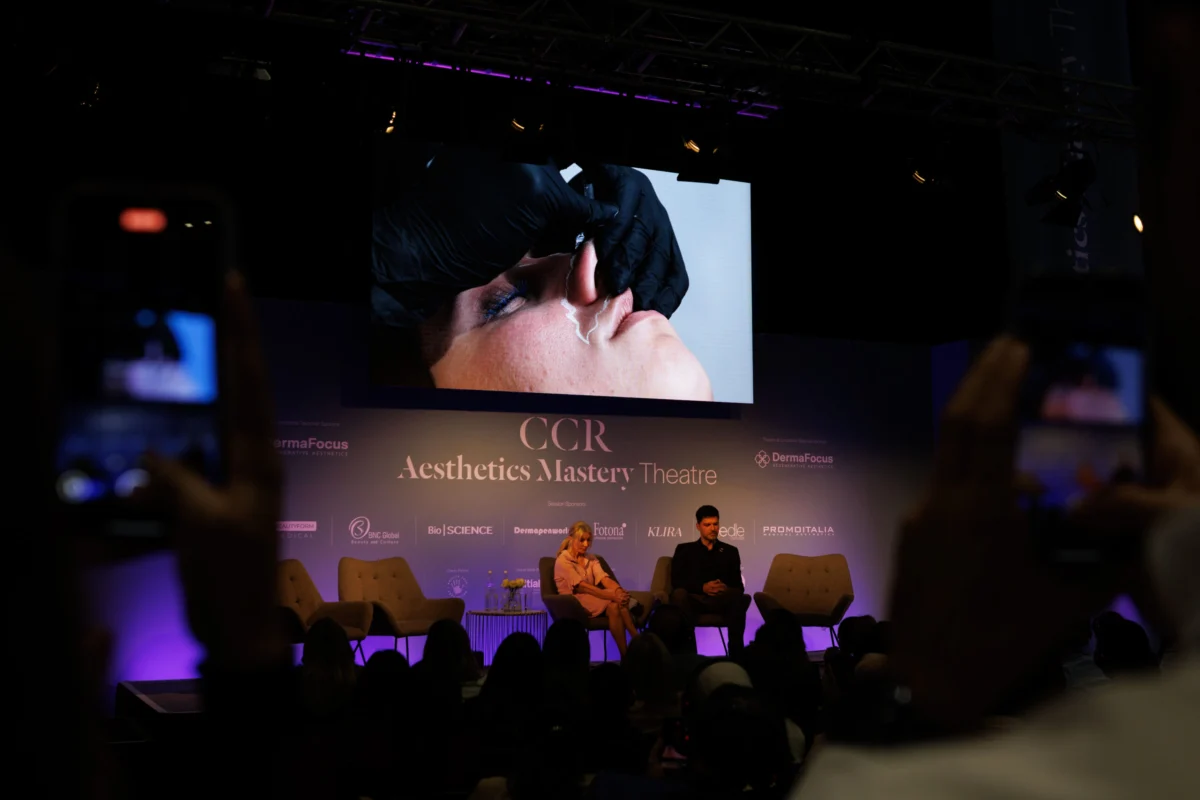
The Aesthetics media brand has officially announced the introduction of the Aesthetics Results Awards, a new clinical recognition program scheduled to debut at the Clinical Cosmetic Regenerative Congress (CCR) in 2026. This initiative represents a strategic shift in the industry’s awards landscape, moving the focus from brand popularity or commercial success toward the rigorous verification of safe, ethical, and exceptional patient outcomes achieved over a 12-month period. Hosted within the Aesthetics Mastery Theatre on the second day of the CCR flagship event, the awards aim to provide a high-level educational platform where practitioners can demonstrate their clinical proficiency in front of an audience of peers and industry leaders.
The launch comes at a time when the medical aesthetics sector is facing increased scrutiny regarding practitioner standards and the transparency of clinical results. By centering the awards on detailed, evidence-based case studies, the organizers intend to elevate the benchmark for what constitutes "excellence" in the field. The program is structured to move beyond the traditional gala format, instead offering a focused two-hour live session that integrates peer-to-peer learning with professional recognition.
Chronology and Key Milestones for the 2026 Awards
The rollout of the Aesthetics Results Awards follows a structured timeline designed to ensure that only the most robust clinical work reaches the final stage. The call for entries has been initiated well in advance of the 2026 congress to allow practitioners sufficient time to document patient journeys from initial consultation through to long-term follow-up.
According to the official schedule, the entry window will remain open through the first half of 2026. Following the submission deadline, a panel of independent judges—comprising some of the most respected names in plastic surgery, dermatology, and aesthetic medicine—will begin a rigorous shortlisting process in August 2026. This phase involves a deep dive into the submitted data, ensuring that all entries meet the strict criteria for clinical evidence and ethical conduct.
The finalists will be announced in the late summer of 2026, providing them with a several-week window to prepare their live presentations. The culmination of the process will take place during the CCR 2026 event, held annually at the ExCeL London. On Day 2 of the congress, the shortlisted practitioners will present their cases live on the Aesthetics Mastery Theatre stage. Unlike traditional awards where winners are notified in advance or via a simple announcement, the Aesthetics Results Awards will feature a live deliberation or reveal immediately following the presentations, emphasizing the "theatre" of clinical mastery.
Categorization of Clinical Excellence
The awards are divided into four distinct categories, each designed to address a core pillar of modern aesthetic practice. These categories reflect the diversity of treatments currently offered in the UK and international markets, as well as the increasing complexity of patient needs.
1. Best Full-Face Transformation Using Injectables
This category focuses on the sophisticated use of neuromodulators, dermal fillers, and biostimulators to achieve holistic facial rejuvenation or profile balancing. Judges will look for practitioners who demonstrate an understanding of facial anatomy, volume replacement, and the "less is more" philosophy that characterizes contemporary ethical practice. The emphasis is on natural-looking results that respect the patient’s original features while addressing signs of aging or structural asymmetries.
2. Best Skin Transformation
Focusing on the health and quality of the integumentary system, this category covers interventions ranging from medical-grade skincare and chemical peels to energy-based devices (EBDs) and microneedling. The criteria for this category are particularly focused on objective improvements in skin texture, pigmentation, and inflammatory conditions such as acne or rosacea. Evidence of long-term skin health maintenance is a critical component of a successful entry here.
3. Best Body Transformation
As the market for non-surgical body contouring continues to expand, this category recognizes excellence in fat reduction, muscle toning, and skin tightening. Entries must demonstrate how practitioners combined technology—such as cryolipolysis, radiofrequency, or electromagnetic stimulation—with patient lifestyle advice to achieve measurable and sustainable changes in body composition or silhouette.
4. Most Challenging Aesthetic Case Study
Perhaps the most prestigious of the four, this category is dedicated to the "difficult" cases that require high-level problem-solving. This includes the management of complex complications, the correction of previous "botched" work from other providers, or the treatment of patients with rare anatomical challenges. Success in this category is defined by the practitioner’s ability to navigate adverse events, maintain patient safety, and achieve a positive outcome under significant clinical pressure.
Judging Criteria and the Requirement for Robust Evidence
To maintain the integrity of the Aesthetics Results Awards, the organizers have implemented a set of stringent submission guidelines. Every entry must be accompanied by a comprehensive case report that mirrors the standards of a peer-reviewed medical journal. This includes a detailed patient history, a record of the initial consultation, the rationale behind the chosen treatment plan, and a step-by-step account of the delivery of care.
A pivotal requirement is the inclusion of high-quality clinical photography. The Aesthetics Journal has long championed standardized photography as a cornerstone of ethical practice, and the awards will enforce these guidelines strictly. Images must be captured with consistent lighting, angles, and backgrounds, without the use of filters, makeup, or post-production editing that could obscure the true results.
Furthermore, practitioners must provide documentation on adverse event management and aftercare protocols. This requirement ensures that the awards do not just celebrate the "after" photo, but also the safety and professionalism of the process. Patient feedback and Patient Reported Outcome Measures (PROMs) are also weighted heavily in the scoring process, reflecting a industry-wide shift toward patient-centered care.
Supporting Data: The Growth of the Medical Aesthetics Market
The introduction of the Aesthetics Results Awards is supported by significant market data indicating a growing demand for transparency and clinical validation. According to recent industry reports, the global medical aesthetics market was valued at approximately $15.4 billion in 2023 and is projected to expand at a compound annual growth rate (CAGR) of 11% through 2030. In the United Kingdom specifically, the non-surgical market accounts for a substantial portion of this growth, with an estimated 90% of all cosmetic procedures now being non-surgical.
However, with growth comes the challenge of maintaining standards. Data from organizations like Save Face and the Joint Council for Cosmetic Practitioners (JCCP) suggest that patient complaints often stem from unrealistic expectations or poor communication regarding outcomes. By highlighting "real-world" results through the Aesthetics Results Awards, the organizers aim to provide a counter-narrative to the often-misleading imagery found on social media platforms. The awards serve as a data-driven repository of what is possible when medical expertise is applied correctly.
Official Responses and Industry Context
Holly Carver, the editor and content manager at Aesthetics, emphasized that the awards are a natural progression for the brand and its partnership with CCR. "CCR has always championed ethical, evidence-based practice, and the Aesthetics Results Awards are a natural extension of that ethos," Carver stated. "We wanted to create a platform that celebrates real-world outcomes, where practitioners can showcase not only great results but also their commitment to safety, transparency and patient-centered care."
The reaction from the wider medical community has been largely positive. Specialty leaders suggest that the live presentation format at CCR 2026 will bridge the gap between theoretical learning and practical application. By allowing finalists to explain their clinical reasoning in a public forum, the awards function as a "live peer review," which is often missing in the commercialized sectors of aesthetic medicine.
Industry analysts also note that the timing of the awards coincides with the UK government’s ongoing work toward a licensing scheme for non-surgical cosmetic procedures. As the regulatory environment tightens, accolades that are based on clinical proof rather than marketing spend are expected to carry significantly more weight with both the profession and the public.
Broader Impact and Implications for Professional Standards
The launch of the Aesthetics Results Awards is expected to have a ripple effect across the sector. Firstly, it encourages practitioners to adopt more rigorous documentation habits. The prospect of presenting at a major congress like CCR serves as an incentive for clinicians to standardize their photography and record-keeping, which inherently improves patient safety.
Secondly, the awards address the "filter culture" that has permeated the aesthetics industry. By requiring unedited, high-resolution clinical images, the awards provide a reality check for both practitioners and patients. This focus on "authentic" results is crucial for managing patient expectations and reducing the psychological impact of unrealistic beauty standards promoted online.
Finally, the awards reinforce the identity of aesthetics as a medical specialty. By utilizing the Aesthetics Mastery Theatre—a venue typically reserved for high-level clinical demonstrations—the awards elevate the act of reviewing patient outcomes to a scholarly pursuit. This helps to distinguish medically-led practice from purely cosmetic services, highlighting the complexity and skill required to manage human tissue and biological responses.
As CCR 2026 approaches, the Aesthetics Results Awards are positioned to become a cornerstone of the event, transforming the way clinical success is measured and celebrated in the UK and beyond. The initiative underscores a collective commitment to moving the industry toward a more transparent, evidence-based, and patient-focused future.
