
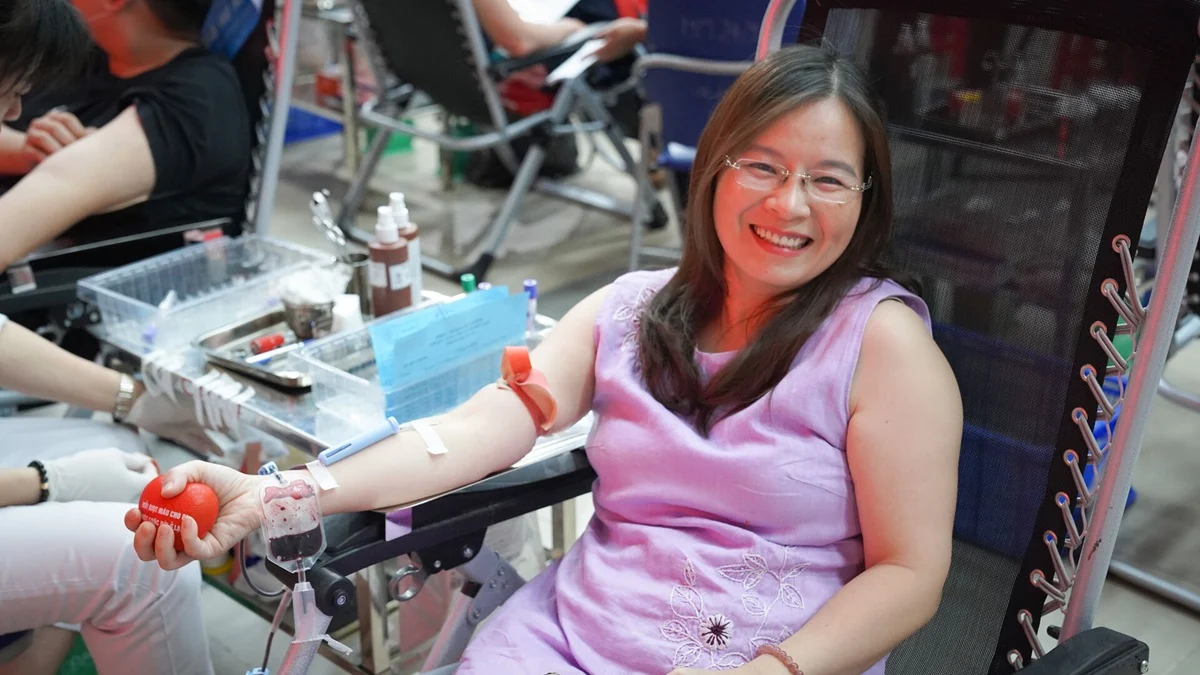
The World Health Organization (WHO) has released a comprehensive new dataset revealing a decade of significant growth in global blood collections, alongside a sobering reminder of the deep-seated inequalities that continue to jeopardize patient lives in lower-income regions. According to the latest figures, global blood donations surged by nearly 19% between 2013 and 2023, reaching an estimated 120 million donations annually. This progress is largely attributed to the sustained efforts of voluntary, unpaid donors, who now account for more than 85% of the world’s blood supply. However, the report underscores a "postal code lottery" in healthcare, where a patient’s geographical location dictates their access to life-saving transfusions.
The data, derived from 132 countries, provides the most detailed look yet at the infrastructure supporting global health systems. While the increase in raw numbers is a cause for celebration, the WHO warns that the benefits of this growth are not being felt equally. High-income nations, which represent only a fraction of the global population, continue to command a disproportionate share of the available blood supply. This disparity leaves millions of patients in developing nations—particularly women in labor and children suffering from severe malaria-induced anaemia—at extreme risk.
The Evolution of Global Blood Systems: A Decade in Review
The trajectory of blood safety and availability over the last ten years reflects a global shift toward professionalized and altruistic donation models. In 2013, the WHO set ambitious targets to transition away from replacement and paid donations, which are statistically linked to higher risks of transfusion-transmissible infections. The 2023 data suggests that this transition is nearing completion in many regions.
The 19% increase in collections over the last decade represents more than just a statistical uptick; it reflects the expansion of national blood services and more effective public health messaging. Between 2013 and 2018, many countries focused on establishing centralized blood services to improve efficiency. Following the global disruptions caused by the COVID-19 pandemic in 2020 and 2021, blood systems faced unprecedented stress tests. The fact that collections have not only recovered but exceeded pre-pandemic levels is a testament to the resilience of voluntary donor networks.
The WHO’s latest findings are part of the Global status report on blood safety and availability 2025, which draws on data from 168 countries. This report provides a benchmark for the next decade of health policy, emphasizing that while the quantity of blood is rising, the "safety net" provided by regulation and financing is still full of holes in many jurisdictions.
Statistical Disparities: The Wealth Gap in Blood Access
The most striking revelation in the WHO’s data is the persistent correlation between a country’s income level and its ability to provide blood to its citizens. High-income countries, home to just 15% of the world’s population, collect 36% of all global blood donations. This creates a massive surplus in some regions while others operate in a state of perpetual deficit.
The donation rate per 1,000 people serves as a critical indicator of a health system’s maturity. The WHO found that these rates vary from a low of 0.4 donations to a high of 53 donations per 1,000 population. Specifically, 24 countries reported collecting fewer than 5 donations per 1,000 people. For context, most health experts agree that a minimum of 10 to 20 donations per 1,000 people is necessary to meet the basic needs of a modern health system.
The source of blood also varies by economic status. In high-income countries, 98.4% of donations come from voluntary, unpaid donors. In low-income countries, this figure drops to 63.4%. The remaining supply in these poorer nations often comes from "family replacement" donors—where a patient’s relatives are required to donate blood to replenish the stock used for their loved one. While this system keeps some hospitals functioning, it is often unreliable and can lead to delays in emergency care.
Clinical Demand: Who is Being Left Behind?
The lack of access to safe blood is not merely a logistical failure; it is a direct contributor to mortality rates for several vulnerable populations. The WHO identifies several key groups whose survival depends on a robust blood supply:
- Maternal Health: Postpartum hemorrhage is a leading cause of maternal death globally. In many low-income countries, a lack of blood for transfusion turns a treatable complication into a fatal event.
- Pediatric Care: Children with severe anaemia, often resulting from malaria or malnutrition, require rapid transfusions to prevent organ failure.
- Chronic Conditions: Patients living with sickle-cell disease, thalassaemia, and haemophilia require regular, lifelong transfusions to manage their conditions and maintain quality of life.
- Trauma and Surgery: From road traffic accidents to emergency cesarean sections and cancer surgeries, the modern operating room cannot function without a guaranteed blood supply.
Dr. Tedros Adhanom Ghebreyesus, WHO Director-General, emphasized the ethical imperative of addressing these gaps. "No one should die because safe blood is unavailable when it is needed," he stated. He noted that while the generosity of voluntary donors is the "cornerstone" of the system, governments must take the lead in building the infrastructure required to process and deliver that blood.
Regulatory Weaknesses and the Challenge of Sustainability
A safe blood supply requires more than just donors; it requires a sophisticated chain of testing, processing, storage, and distribution. The WHO analysis reveals significant gaps in the governance of these systems. Nearly one-third of the countries surveyed still lack specific national legislation to regulate the safety and quality of blood products.
The data on quality assurance is equally concerning. Only 64% of countries have systems for the regular inspection of blood services, and only 62% have formal licensing systems in place. Furthermore, just 40% of countries reported that their blood transfusion services are accredited by recognized international or national bodies. Without these safeguards, the risk of transmitting infections like HIV, Hepatitis B, and Hepatitis C remains a constant threat in under-regulated regions.
Sustainability is also hampered by a lack of financial commitment. More than 14% of countries—roughly 1 in 7—reported having no dedicated government budget for blood services and no cost-recovery mechanisms. This leaves blood centers dependent on sporadic donor funding or out-of-pocket payments from patients, neither of which provides the stability needed for long-term health planning.
Global Directives and the Call to Action
In response to these findings, the WHO has outlined a series of urgent recommendations for member states. The organization is calling for a multi-pronged approach to stabilize and equalize the global blood supply:
- Strengthening Governance: Countries are urged to pass legislation that establishes national blood blood systems under a single regulatory authority.
- Expanding Quality Assurance: Implementation of standardized screening for all donated blood to ensure it is free from infections.
- Sustainable Financing: Governments must integrate blood services into their national health insurance schemes or provide direct budgetary support.
- Improving Clinical Practice: Training healthcare workers on the "rational use" of blood to ensure that this scarce resource is used only when medically necessary, thereby reducing wastage.
- Data and Surveillance: Enhancing digital tracking systems to monitor blood stocks in real-time and prevent local shortages.
These initiatives are being highlighted ahead of World Blood Donor Day on June 14. The 2024-2025 campaign, themed "One Drop of Humanity. Give Blood. Save Lives," aims to humanize the statistics by focusing on the individual lives saved through the simple act of donation.
Broader Implications for Global Health Security
The state of a nation’s blood supply is often a "canary in the coal mine" for its overall health system resilience. A country that cannot provide safe blood is unlikely to be able to manage a large-scale pandemic or a natural disaster. The WHO’s report suggests that investing in blood systems provides a high return on investment for general health security.
By improving blood availability, countries can make immediate progress toward the United Nations Sustainable Development Goals (SDGs), particularly Goal 3, which aims to reduce global maternal mortality and end preventable deaths of newborns and children under five.
Furthermore, the report highlights the growing importance of plasma-derived medicinal products (PDMPs). Plasma is used to create essential medicines for immune deficiencies and clotting disorders. Currently, the production of these medicines is concentrated in a few high-income countries, leaving the rest of the world dependent on expensive imports. The WHO is encouraging countries to improve their capacity to collect and process plasma to increase local access to these specialized treatments.
As the world looks toward 2026, the WHO will continue to advocate for "Together for health. Stand with science" as a guiding principle. The organization maintains that the science of transfusion medicine is well-understood; the primary barriers to universal access are no longer technical, but political and financial. The 2025 report serves as both a roadmap and a challenge to the international community to ensure that the "gift of life" is available to everyone, regardless of where they were born.
