
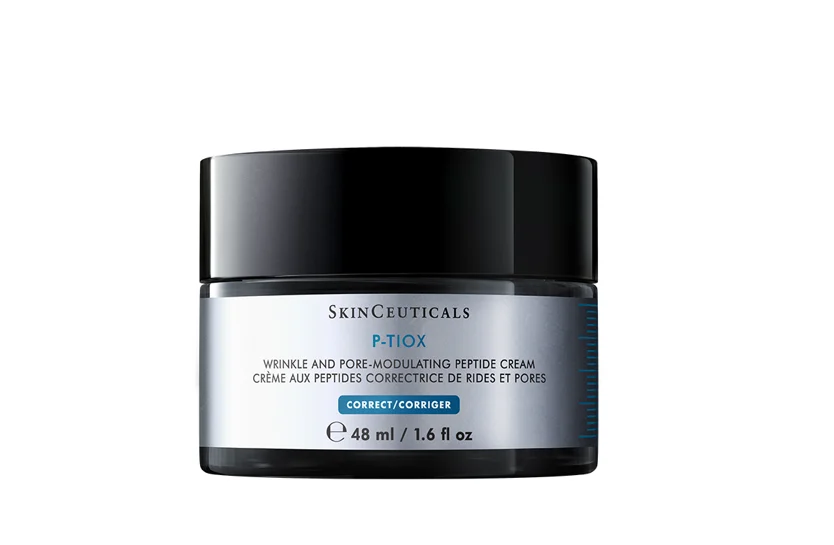
SkinCeuticals, a globally recognized leader in science-backed professional skincare, has officially announced the upcoming release of its newest formulation, the P-TIOX Cream, which is scheduled to make its commercial debut on 15 June. This new addition to the brand’s corrective category is positioned as a high-performance, wrinkle-and-texture-correcting moisturizer engineered to address some of the most persistent concerns in dermatological aging, including deep-set expression lines, visible pore enlargement, and suboptimal skin hydration levels. According to the manufacturer, the P-TIOX Cream utilizes a sophisticated, patent-pending complex that integrates 10% Myrixin and 2% tripeptide technology, marking a significant advancement in the brand’s efforts to bridge the gap between topical applications and professional aesthetic interventions.
The introduction of the P-TIOX Cream follows the brand’s established "Prevent, Protect, Correct" philosophy, focusing specifically on the "Correct" pillar. The formulation is designed to target the visible signs of aging that result from both intrinsic factors, such as cellular slowdown, and extrinsic factors, such as repeated facial expressions and environmental stressors. By combining advanced peptide science with proven dermatological actives like niacinamide, lipohydroxy acid (LHA), and tetrapeptides, SkinCeuticals aims to provide a comprehensive solution that improves skin radiance, moisture retention, and overall surface quality.
Scientific Composition and Ingredient Efficacy
At the heart of the P-TIOX Cream is a patent-pending complex that represents a new frontier for SkinCeuticals’ Research and Development department. The inclusion of 10% Myrixin is particularly notable. Myrixin is a concentrated active ingredient targeted at the underlying mechanisms of skin texture irregularities. When combined with the 2% tripeptide technology, the formula seeks to modulate the appearance of "contraction lines"—those wrinkles that form due to repeated facial movements. While topical creams cannot replace the physiological effects of injectable neurotoxins, the P-TIOX technology is specifically developed to provide a needle-free alternative or a complementary maintenance product for patients seeking to prolong the results of clinical treatments.
In addition to the peptide complex, the P-TIOX Cream incorporates a blend of secondary actives designed to optimize the skin’s barrier and surface appearance. Niacinamide, a form of Vitamin B3, is included for its well-documented ability to soothe the skin, improve barrier function, and reduce the appearance of discoloration. Lipohydroxy acid (LHA), a derivative of salicylic acid, provides precise, cell-by-cell exfoliation. This helps to refine the skin’s surface, making pores appear smaller and more uniform. Finally, the addition of tetrapeptides works to support the skin’s structural integrity, promoting a firmer and more resilient complexion.
The synergy of these ingredients aims to provide "immediate hydration," a key demand for modern skincare consumers who prioritize both long-term corrective results and instant aesthetic improvements. By addressing the skin’s moisture levels, the cream helps to plump the surface, which can immediately reduce the visibility of fine lines associated with dehydration.
Evolution of the P-TIOX Line and Brand Chronology
The launch of the P-TIOX Cream on 15 June is a strategic expansion of the P-TIOX franchise, which has already seen success with its serum counterparts. SkinCeuticals has a long history of pioneering topical antioxidants and corrective serums, dating back to the foundational research of Dr. Sheldon Pinnell. The brand’s trajectory has consistently moved toward "integrated skincare," a concept where topical products are used in tandem with professional procedures such as chemical peels, laser treatments, and injectables.
Over the last decade, the brand has shifted its focus toward specific peptide technologies. Peptides, which are short chains of amino acids, serve as the building blocks of essential proteins like collagen and elastin. By innovating within this space, SkinCeuticals has been able to offer products that go beyond simple hydration, targeting the very signals that govern skin aging. The development of the P-TIOX Cream follows years of clinical observation and consumer feedback, which highlighted a need for a moisturizing format that offers the same potency as a corrective serum but with the added benefits of barrier support and texture refinement.
Market Context and Supporting Data
The global anti-aging skincare market is currently experiencing a period of robust growth, with a projected compound annual growth rate (CAGR) of approximately 5% to 7% over the next five years. Within this sector, the demand for "medical-grade" or "cosmeceutical" products is outperforming the general prestige beauty market. Consumers are increasingly sophisticated, often researching ingredients like peptides and niacinamide before making a purchase.
Supporting data from independent market research suggests that the "tweakment" trend—non-surgical aesthetic procedures—has created a parallel demand for topical products that can mimic or enhance these results. Data indicates that nearly 60% of patients who receive injectable treatments are looking for daily-use products that can extend the interval between clinic visits. The P-TIOX Cream is positioned precisely at this intersection. Furthermore, clinical studies often cited by the brand demonstrate that consistent use of high-concentration peptide formulas can lead to a significant reduction in the depth of forehead lines and "crow’s feet" over a 12-week period.
The focus on pore size and skin texture is also a response to the "glass skin" trend, which emphasizes a smooth, luminous, and almost poreless complexion. By including LHA and niacinamide, SkinCeuticals is addressing a demographic that spans from younger consumers interested in "pre-juvenation" to more mature consumers looking to reverse established signs of photo-aging.
Official Responses and Professional Perspectives
The announcement of the P-TIOX Cream has been met with enthusiasm from within the company and the broader dermatological community. Oliver Pearce, the medical events and communications manager at SkinCeuticals, emphasized the product’s role in the brand’s broader innovation pipeline.
"We are delighted to announce the launch of our next innovation, P-TIOX Cream," Pearce stated. "Building on the success of our peptide technology, this new addition to the P-TIOX family is designed to complement professional results and empower patients with total skin confidence."
Pearce’s comments highlight a key component of SkinCeuticals’ business strategy: the "professional-first" approach. By designing products that "complement professional results," the brand secures its position within dermatology clinics and medispas, where clinicians recommend products to patients as part of a post-procedure regimen.
While external medical professionals have not yet released independent peer-reviewed studies on this specific formulation, the consensus among aesthetic practitioners is that topical peptides are an essential component of modern age-management. Many clinicians are expected to welcome the P-TIOX Cream as a versatile tool that can be used by patients who may be hesitant to undergo injections but still desire visible improvements in skin smoothness and line depth.
Broader Impact and Industry Implications
The launch of the P-TIOX Cream is likely to have several implications for the skincare industry. First, it reinforces the trend of "clinicalization" in the beauty market. As more brands move toward high-concentration actives and patent-pending complexes, the barrier to entry for new competitors becomes higher, favoring established players with significant R&D budgets like SkinCeuticals’ parent company, L’Oréal.
Secondly, the emphasis on "total skin confidence" reflects a shift in marketing language. Instead of promising to "erase" wrinkles—a claim that often faces regulatory scrutiny—brands are focusing on "quality," "radiance," and "texture." This shift toward "skin quality" as a primary metric of beauty is a significant movement in the industry, moving away from the "anti-wrinkle" obsession of previous decades toward a more holistic view of skin health.
Furthermore, the P-TIOX Cream’s multi-functional nature—acting as a moisturizer, an exfoliant (via LHA), and a corrective treatment—addresses the growing consumer desire for "skinimalism." Rather than applying five different serums, consumers are looking for high-efficacy "super-creams" that can perform multiple roles in a single step.
As the 15 June launch date approaches, the industry will be watching to see how the P-TIOX Cream performs in the highly competitive prestige skincare market. If successful, it could pave the way for further peptide-based innovations within the SkinCeuticals portfolio, potentially expanding into targeted treatments for other areas of the body or specialized formulations for sensitive skin types.
Conclusion
The P-TIOX Cream represents a calculated step forward for SkinCeuticals, merging the brand’s clinical heritage with cutting-edge peptide science. By targeting deep-set lines and skin texture through a 10% Myrixin and 2% tripeptide complex, the company is addressing a specific and lucrative gap in the market. As professional results become the benchmark for consumer expectations, the ability of a topical cream to provide measurable improvements in skin quality will be the true test of its success. With its debut set for mid-June, the P-TIOX Cream is poised to become a central fixture in both professional clinics and the daily routines of skincare enthusiasts worldwide.
