
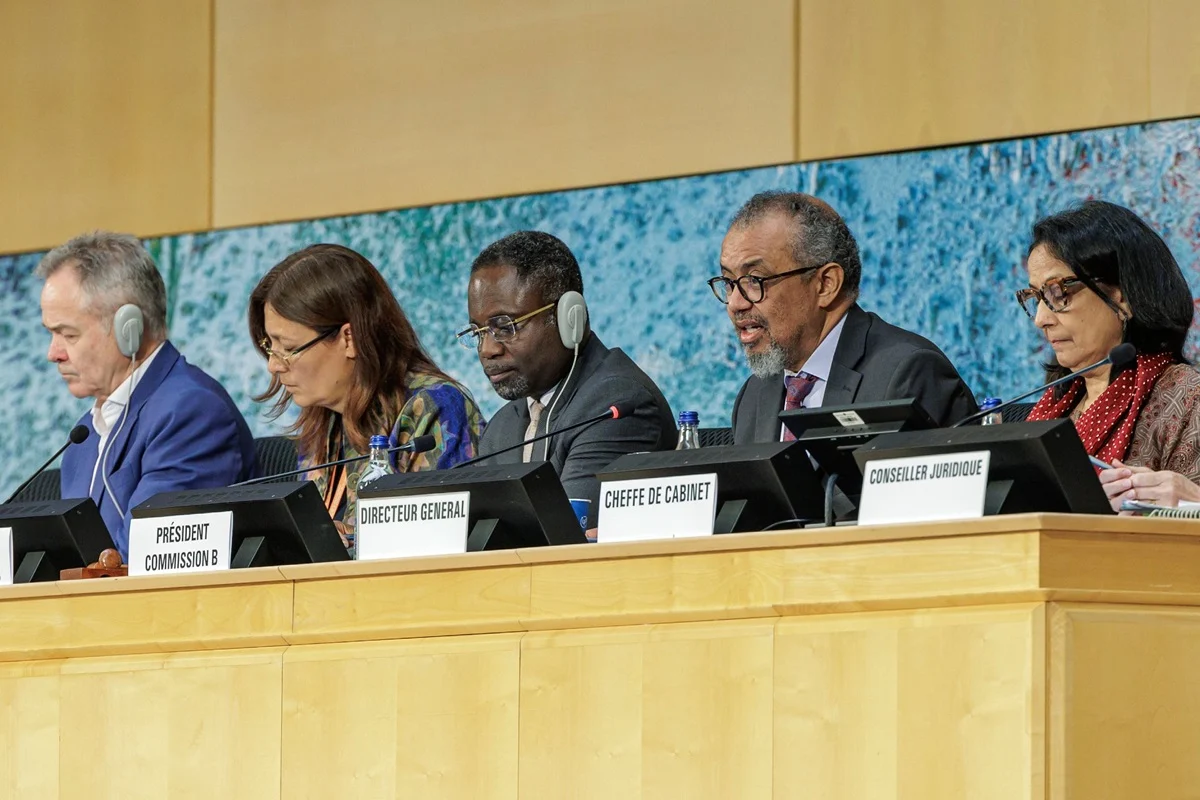
In a decisive move to modernize the international response to health crises and chronic disease, the World Health Assembly has officially established a joint process led by Member States to overhaul the global health architecture. This initiative, hosted by the World Health Organization (WHO) in collaboration with global health partners, aims to create a more resilient, equitable, and streamlined framework for international health cooperation. The decision comes at a pivotal moment as the international community grapples with the lingering effects of the COVID-19 pandemic, escalating geopolitical tensions, and the rapid emergence of transformative technologies like artificial intelligence. By aligning these reforms with the broader UN80 Initiative, Member States seek to ensure that the global health system is prepared for the challenges of the mid-21st century.
Reforming the Global Health Architecture for a New Era
The Assembly’s decision to reform the global health architecture stems from a collective recognition that the current systems, while successful in historical disease eradication and norm-setting, are no longer sufficient for today’s complex environment. The newly established process is mandated to develop specific recommendations that maximize access and equity across all regions. A primary driver for this reform is the increasing fragmentation of the global health landscape. Over the past two decades, the number of actors—including non-governmental organizations, private foundations, and specialized global funds—has proliferated. While this has brought increased funding, it has also led to duplication of efforts, power imbalances, and a dilution of national health sovereignty.
Member States emphasized that the WHO must maintain its central normative and convening role. However, the reform process will be uniquely Member State-led to ensure that the resulting architecture respects country ownership. The initiative will specifically address the "contractions in health financing" that have plagued many developing nations, as well as the need to integrate regional capacities that emerged during the pandemic. By drawing on the UN80 Initiative—a movement aimed at revitalizing the United Nations for its 80th anniversary—the reform seeks to bridge the gap between high-level diplomacy and ground-level health delivery. The Director-General is expected to submit a comprehensive report detailing these transformation options at next year’s World Health Assembly.
Addressing the Global Burden of Stroke: A Historic Resolution
For the first time in the history of the World Health Assembly, delegates approved a dedicated resolution on stroke, titled "Reducing the burden of stroke: strengthening prevention, acute care, rehabilitation and health-system readiness." This resolution, championed by Egypt and co-sponsored by a diverse group of nations including Chile, Georgia, Palestine, Paraguay, and Tunisia, signals a shift in global health priorities toward non-communicable diseases (NCDs) that cause long-term disability.
The statistical urgency behind this resolution is profound. Data presented to the Assembly revealed that the lifetime risk of stroke has surged by 50% over the last two decades. Currently, one in four adults is expected to suffer a stroke in their lifetime. In 2021 alone, stroke was the third leading cause of death and disability worldwide, with 11.9 million new cases reported. The resolution calls for a multi-faceted approach:
- Prevention: Implementing population-wide strategies to manage hypertension and tobacco use.
- Acute Care: Establishing specialized stroke units and improving the "golden hour" response time.
- Rehabilitation: Integrating long-term care into primary health systems to reduce the economic burden on families.
- Accountability: Linking progress to the WHO Global NCD Action Plan 2023–2030.
Advancing Smart Pharmacovigilance and Vaccine Safety
The Assembly also achieved a major milestone in patient safety by approving a resolution to strengthen global pharmacovigilance systems. Pharmacovigilance—the science and activities relating to the detection, assessment, and prevention of adverse effects of medicines—has traditionally been a weak link in the health systems of low-income countries. The COVID-19 pandemic underscored the necessity for real-time safety monitoring of vaccines and medical devices on a global scale.
The resolution encourages the adoption of "smart" pharmacovigilance, which leverages digital technologies and artificial intelligence to detect safety signals more rapidly than traditional manual reporting. Furthermore, it addresses the modern challenge of mis- and disinformation. Member States committed to building public trust through transparency and better data governance. By integrating patient-reported outcomes into national monitoring systems, the WHO aims to create a more responsive safety net for the millions of people accessing new medical technologies. Progress on these commitments will be monitored and reported to the Assembly through 2032, ensuring a decade of sustained focus on medicine safety.
The 2026–2035 Strategy for Emergency, Critical, and Operative Care
Recognizing that millions of deaths are preventable through timely medical intervention, the Assembly approved the Global Strategy for Integrated Emergency, Critical and Operative (ECO) Care 2026–2035. This strategy addresses conditions that account for an estimated 38 million deaths and 1.3 billion disability-adjusted life years (DALYs) annually. ECO care covers the entire spectrum of life-saving interventions, from trauma care at the scene of an accident to complex surgical procedures and intensive care unit (ICU) management.
The strategy identifies critical gaps in the global workforce, noting that many countries suffer from a chronic shortage of specialized nurses and surgeons. To combat this, the WHO will provide a roadmap for countries to strengthen their health systems’ "readiness." This includes improving the supply chain for essential surgical equipment and developing evidence-based policy options for affordable care. By 2026, the WHO will consult with Member States to set specific implementation targets, aiming to integrate ECO services into the broader framework of Universal Health Coverage (UHC).
Bridging the Diagnostic Gap through Teleradiology
In many parts of the world, particularly in rural and underserved areas, the lack of trained radiologists means that life-saving imaging—such as X-rays, CT scans, and MRIs—cannot be interpreted. To solve this, the Assembly endorsed a resolution to scale up teleradiology. This involves the secure electronic transmission of medical images from one location to another for the purpose of interpretation and diagnosis.
The resolution highlights teleradiology as a cost-effective method to expand access to expert diagnostic services. However, it also raises important questions regarding data protection and ethical standards. Member States have agreed to integrate teleradiology into their national digital health strategies, ensuring that the use of AI in image interpretation remains under human clinical oversight. This move is expected to significantly improve maternal and child health outcomes, as well as the management of communicable diseases like tuberculosis, where imaging is a primary diagnostic tool.
Precision Medicine and the Quest for Equity
A landmark resolution on precision medicine was also adopted, setting a global path toward personalized health care. Precision medicine uses molecular, genomic, and clinical data to tailor treatments to individual patients. While this technology has shown immense promise in treating cancer and rare genetic disorders, there is a significant risk of a "genomic divide" between wealthy and poor nations.
Member States expressed concern that most genomic data currently used in research comes from populations of European descent, potentially making precision treatments less effective for other ethnic groups. The resolution requests the WHO to develop a global strategy to ensure that precision medicine is implemented equitably. This includes building laboratory capacity in low- and middle-income countries and creating a framework for ethical data sharing. The goal is to ensure that "the right care reaches the right person at the right time," regardless of their geographic location.
Geopolitical Realities: Argentina and the Middle East
The 77th World Health Assembly also navigated sensitive geopolitical issues. One significant discussion involved Argentina’s notification of withdrawal from the WHO. Following a period of diplomatic consultation, the Assembly reached a consensus to take "no further action at this stage," while emphasizing that Argentina’s full cooperation remains vital to the organization’s mission. This pragmatic approach reflects the Assembly’s desire to maintain universal membership during a time of global health volatility.
Furthermore, the Assembly addressed the deteriorating humanitarian situation in the occupied Palestinian territory (oPt). A report by the Director-General detailed a health system under extreme duress, with infrastructure damage in Gaza estimated at $1.39 billion and total health sector losses reaching $6.78 billion. Since October 2023, there have been 1,947 recorded attacks on healthcare facilities across the territory. Despite these obstacles, the Assembly voted to continue reporting on these conditions and approved resolutions aimed at mitigating the public health impact of the ongoing escalation in the Middle East, including in Jordan and Gulf Cooperation Council countries.
Implications for the Future of Global Health
The resolutions passed during this Assembly represent a holistic attempt to modernize global health governance. By focusing on both high-tech advancements—like precision medicine and AI-driven pharmacovigilance—and fundamental care systems—like stroke response and emergency surgery—the WHO is attempting to balance innovation with basic human rights.
The move toward a Member State-led reform of the global health architecture is perhaps the most significant long-term development. It signals a shift away from a top-down approach toward a more collaborative, "bottom-up" model where national sovereignty and regional expertise are given greater weight. As the WHO prepares to report on the progress of these initiatives in the coming years, the success of these resolutions will depend on sustained political will and the mobilization of financial resources to ensure that the "architecture" of global health is built on a foundation of equity and resilience.
