
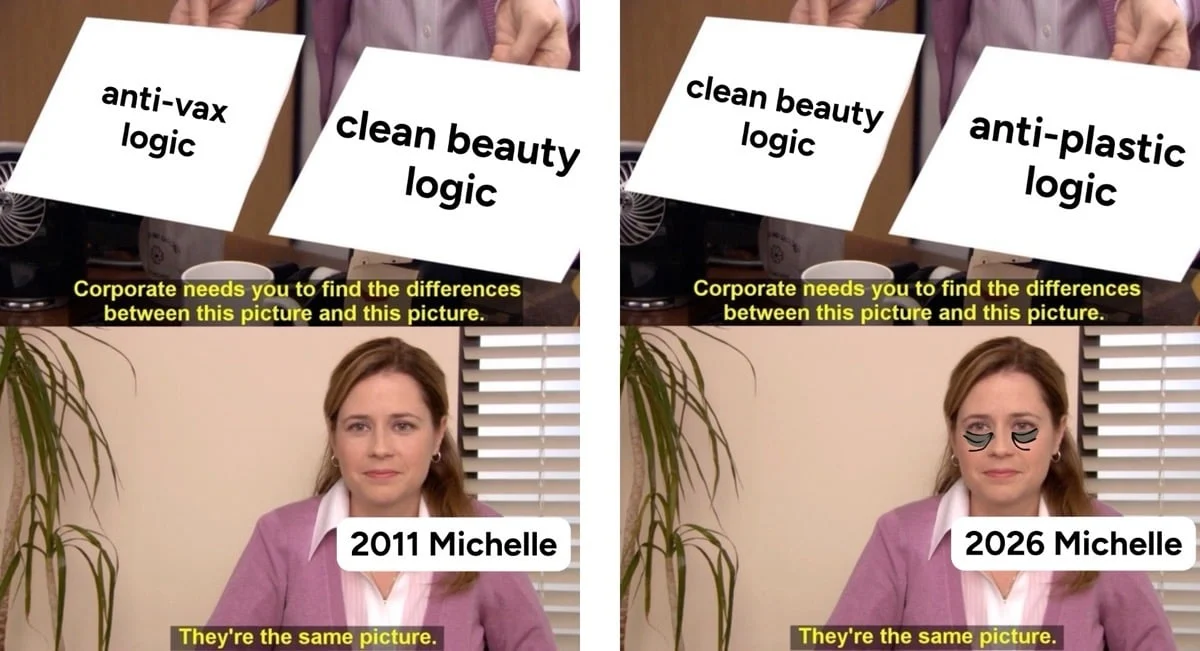
A critical examination of the burgeoning "plastic-free" movement reveals striking parallels with the "clean beauty" trend, both of which often rely on pseudoscientific arguments and misinterpretations of data, according to an analysis published by Lab Muffin Beauty Science. The article, authored by Michelle Wong and accessed on June 2, 2026, posits that the anti-plastic sentiment, much like its "non-toxic" predecessor, risks becoming a conduit for misinformation, ultimately undermining genuine efforts towards environmental and human health.
The central thesis emerged from an observation by @idea.soup on Threads, suggesting that an "anti-polyester movement" could evolve into a "right-wing pipeline." This notion resonated with Wong, a science communicator who began her work in 2011 specifically to counter the "non-toxic" clean beauty movement, recognizing its logical similarities and shared demonization of substances like aluminum and formaldehyde with anti-vaccination narratives. Wong now identifies the same concerning patterns within the escalating anti-plastic discourse prevalent among beauty brands and influencers, characterized by sweeping "plastic-free" claims and alarmist rhetoric concerning microplastics.
The Echoes of Clean Beauty: A Scientific Scrutiny
The "clean beauty" movement, which gained significant traction in the 2010s, advocates for products free from a curated list of ingredients deemed "toxic" or "unnatural," often without robust scientific backing regarding their safety at typical exposure levels. This movement, while ostensibly promoting consumer health, has been criticized by scientists and dermatologists for fostering chemophobia and promoting an "appeal to nature" fallacy. The current "plastic-free" trend, the analysis suggests, mirrors these foundational flaws, despite many of its proponents acknowledging the pseudoscientific nature of clean beauty. This disconnect highlights a form of motivated reasoning, where critical thinking is selectively applied.
It is crucial to state that the critique is not a dismissal of legitimate concerns regarding plastic waste and its environmental impact. The global production of plastics has surged dramatically, reaching over 400 million tonnes annually, with only a fraction effectively recycled. The accumulation of plastic in oceans and landfills is an undeniable crisis, and research into the health implications of microplastics is a vital field. However, the analysis argues that an uncritical, blanket rejection of plastics, driven by fear-mongering rather than comprehensive scientific assessment, often leads to counterproductive outcomes. This mirrors the "dirty ingredients" approach of clean beauty, where removing a demonized substance might inadvertently lead to less safe or less effective alternatives.
1. The Appeal to Nature Fallacy: "Plastic = Bad, Natural = Good"
A cornerstone of both clean beauty and the anti-plastic movement is the "appeal to nature" fallacy. This logical error asserts that anything natural is inherently good or safe, while anything synthetic or man-made (like plastic) is inherently bad or dangerous. This extends even to bioplastics, which are derived from natural starting materials but still fall under the "plastic" umbrella.
The flaw in this reasoning is fundamental: a substance’s origin provides no direct indication of its health or environmental effects. Many natural substances are highly toxic (e.g., hemlock, arsenic, botulinum toxin), while numerous synthetic materials are benign or beneficial. In the context of beauty, this fallacy led to the rejection of highly effective and safe synthetic preservatives like parabens in favor of "natural" alternatives that might be less effective, require higher concentrations, or be more allergenic. For plastics, this translates to an uncritical push towards "natural" packaging alternatives like glass, metal, or paper, often without a holistic understanding of their true environmental footprints.
2. Ignoring the Fundamentals of Sustainability Science: Beyond End-of-Life
Just as clean beauty often disregards basic toxicology principles (such as "the dose makes the poison"), blanket "plastic-free equals better for the environment" claims frequently ignore the fundamentals of sustainability science, particularly Life Cycle Assessment (LCA). LCA is the scientific standard for quantifying a product’s environmental impact across its entire lifespan, from raw material extraction, manufacturing, transport, use, to end-of-life disposal or recycling.
Most public discussions around plastics, however, are almost entirely focused on end-of-life issues: microplastics, recycling rates, landfill accumulation, and "trash islands." While these are significant concerns, they represent only one phase of a product’s life cycle. Crucially, the public often overlooks the environmental impacts associated with raw material extraction, manufacturing energy, and transportation, which can be far more significant for alternative materials. A 2018 study in Journal of Cleaner Production highlighted that consumers tend to overemphasize end-of-life impacts, leading to inaccurate judgments about the environmental superiority of alternatives.
Climate change, universally recognized by scientists as the paramount environmental threat, is often where plastic packaging offers surprising advantages. Plastics are lightweight and durable, leading to lower transportation emissions compared to heavier alternatives like glass or metal. For instance, a 2011 Denkstatt report found that switching from plastic to glass, paper, or aluminum would, on average, require 3.6 times more material, 2.2 times more energy, and result in 2.7 times more carbon emissions. This is due to plastics’ high strength-to-weight ratio, superior barrier properties that reduce product spoilage (especially food), and lower energy requirements in certain manufacturing processes.
For example, a typical plastic water bottle weighs significantly less than a glass bottle of the same volume, drastically reducing fuel consumption during shipping. Similarly, plastic packaging often extends the shelf life of perishable goods, thereby reducing food waste, which itself is a major contributor to greenhouse gas emissions. These benefits are not universal, and LCAs must be conducted on a case-by-case basis. However, the blanket demonization of plastic overlooks these nuanced advantages. The current trend, driven by some beauty brands, often promotes consuming "less plastic" by encouraging the purchase of more aluminum, glass, or paper alternatives, potentially shifting environmental burdens rather than reducing overall impact. This can be seen in marketing strategies, such as Dieux Skin’s promotion of aluminum samples and limited-edition tote bags, where the underlying environmental benefit is questionable and often perceived inaccurately by consumers.
3. Methodological Issues in Research: The Case of Microplastics
A significant parallel with clean beauty’s reliance on flawed or misinterpreted studies is the current discourse around microplastics. Many studies claiming widespread microplastic presence in the human body or specific organs have been found to suffer from serious methodological issues, as highlighted by a Guardian article on January 13, 2026. Measuring minute quantities of any substance is challenging, but microplastics present unique difficulties, often leading to false positives or exaggerated findings that generate sensational headlines.
One common quantification method, pyrolysis-GCMS (Py-GCMS), has been shown to misidentify fats as polyethylene unless rigorous corrections are applied. This means studies using this method, including one famously claiming a "spoon’s worth of microplastics in our brains," might be overreporting findings. Contamination is another pervasive problem; microplastics are ubiquitous, leading to instances where researchers inadvertently count particles from their own gloves, lab equipment, or the ambient environment as originating from the sample. This makes it incredibly difficult to isolate and accurately quantify microplastics from biological samples, where the actual amount might be significantly lower or even negligible.
These complex methodological challenges provide fertile ground for misinformation. The public, without specialized scientific knowledge, can easily be swayed by alarming headlines based on studies that, upon closer scrutiny by experts, are deemed unreliable or misinterpreted.
4. Assuming Presence Means Harm: Correlation vs. Causation
Another prevalent logical fallacy shared by both movements is the assumption that the mere presence of a substance automatically implies harm or causation of disease. Finding microplastics in diseased tissues, such as arterial plaque or the brains of individuals with dementia, does not automatically mean microplastics are causing these conditions.
This conflation of correlation with causation is a classic scientific pitfall. Such findings could be explained by several factors:
- Reverse Causation: The disease itself might make an individual more susceptible to accumulating microplastics.
- Confounding Factors: Other lifestyle or environmental factors could be contributing to both the disease and microplastic exposure.
- Incidental Finding: Microplastics are pervasive in the environment, so their presence in any tissue might be an incidental finding with no pathological significance.
A well-known clean beauty example is the "parabens in breast tumors" study, which generated widespread fear. Critics quickly pointed out that the study only measured parabens in tumor tissue and did not compare these levels to normal breast tissue, nor did it establish a causal link between parabens and cancer. The presence of parabens, common in many personal care products, was assumed to be harmful without sufficient evidence.
5. Ignoring Other Benefits of Materials: Beyond the Demonized Aspect
The single-minded demonization of a material often leads to an oversight of its other crucial benefits. For plastics, these benefits extend beyond environmental impacts (as discussed with LCAs) to critical aspects like public health and safety.
- Hygiene and Sterility: Plastics are indispensable in medical and pharmaceutical applications due, in part, to their ability to be easily sterilized and their inertness. Single-use plastic packaging for sterile medical devices has revolutionized healthcare, preventing infections.
- Durability and Safety: Plastics are lightweight, shatter-resistant, and durable, making them ideal for packaging, child-safe products, and reducing breakage during transport. Replacing plastic containers with glass, for example, increases weight, fragility, and the risk of injury.
- Accessibility: Plastics often provide cost-effective solutions, making essential products more accessible to a wider population.
Similarly, in clean beauty, the rejection of parabens as preservatives overlooked their significant benefits. Parabens are highly effective broad-spectrum preservatives, meaning smaller quantities are needed to prevent microbial contamination compared to many "natural" alternatives. This often makes them safer for sensitive skin and less likely to cause allergic reactions, as lower concentrations reduce the likelihood of irritation. The removal of parabens, driven by unfounded fears, has sometimes led to products with shorter shelf lives, increased risk of contamination, or the use of alternative preservatives that are actually more allergenic or less effective.
6. Science-Washing and Convenient Experts: A Misleading Narrative
A pervasive tactic in both movements is "science-washing" – the appropriation of scientific language and concepts to lend credibility to unsubstantiated claims. Brands and influencers often proclaim their commitment to science while simultaneously promoting anti-plastic myths, selectively citing evidence, and endorsing "convenient experts" whose views align with their marketing narratives. This is particularly insidious when prominent figures, like Charlotte Palermino of Dieux Skin, who are otherwise seen as advocates for science, contribute to this performative greenwashing.
The phenomenon is characterized by:
- Cherry-picking Data: Highlighting studies that support a particular viewpoint while ignoring contradictory or more comprehensive evidence.
- Misrepresenting Expertise: Featuring individuals with tangential qualifications as authoritative experts on complex topics (e.g., a nutritionist commenting on material science).
- Greenwashing: Making vague or unsubstantiated environmental claims, which regulators in the US (FTC), UK (CMA), and Australia (ACCC) are increasingly scrutinizing as misleading.
For clean beauty, this manifested in claims of "toxin-free" products based on irrelevant animal studies using extremely high doses, or the misinterpretation of endocrine disruptor research. In the anti-plastic sphere, it involves promoting anecdotal evidence over rigorous LCAs or exaggerating the known risks of microplastics. The solution, as suggested, lies in brands hiring genuine sustainability experts and heeding their advice, rather than engaging in marketing-driven science-washing.
Other Parallels and Motivated Reasoning
Beyond these core points, numerous other parallels exist. Both movements foster a culture of fear, employ alarmist language, and often promote expensive, less effective "alternatives" as superior. They tend to oversimplify complex scientific issues into binary "good vs. bad" narratives. It is also notable that some of the same "experts" who previously fueled fear around parabens and phthalates have now shifted their focus to microplastics, demonstrating a consistent pattern of promoting alarm without adequate scientific rigor.
The underlying issue often boils down to "motivated reasoning" and confirmation bias. Individuals, and even mainstream media, tend to accept evidence that aligns with their existing beliefs or political/social alignments. A recent example involved The Guardian correcting previous articles on microplastic measurement issues and quoting multiple independent scientists alongside a former Dow chemist. Despite the inclusion of diverse, credible scientific voices, some readers dismissed the entire article as "bought by Big Plastic" simply because one source had industry ties. As cosmetic scientist Jen Novakovich notes, "Discounting something solely based on funding source or affiliation is actually the opposite of critical thinking." Evaluating the arguments themselves, rather than solely their source, is the more challenging but scientifically sound approach.
Conclusion: The Path to Genuine Sustainability
While the imperative to reduce plastic waste and mitigate environmental impact is undeniable, the "plastic-free" movement, when driven by pseudoscientific narratives and fear, risks becoming a misdirected effort. By drawing parallels to the "clean beauty" movement, this analysis underscores the dangers of emotional appeals and oversimplified solutions in complex scientific domains.
Genuine progress towards better human and environmental health requires a commitment to scientific literacy, critical thinking, and holistic assessment methodologies like Life Cycle Assessment. It demands that consumers, brands, and influencers move beyond simplistic "plastic = bad" rhetoric and engage with the nuanced realities of material science, toxicology, and sustainability. Without this rigorous, evidence-based approach, the pursuit of "plastic-free" alternatives may inadvertently lead to greater environmental burdens, undermine consumer trust, and distract from the truly impactful solutions needed to address our planet’s most pressing challenges. The work of science communicators like Michelle Wong and Jen Novakovich (The Eco Well), who tirelessly advocate for evidence-based discussions on these topics, remains crucial in navigating this complex landscape.
