
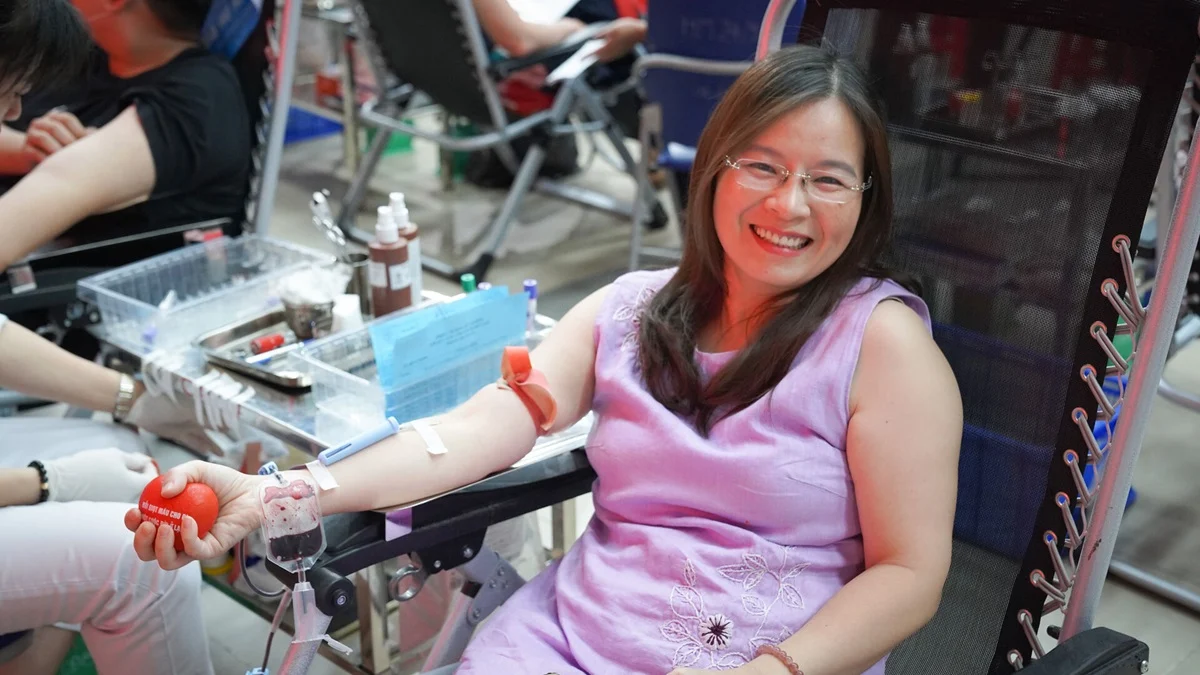
New data released by the World Health Organization (WHO) indicates a decade of sustained progress in the global effort to secure safer blood supplies, yet these gains are starkly offset by persistent inequalities in access and significant structural weaknesses in the governance and financing of national blood systems. The findings, derived from the Global Status Report on Blood Safety and Availability 2025, highlight a world where the life-saving potential of a blood transfusion is frequently dictated by a patient’s geographic location and the economic status of their nation. While global blood collections have seen a double-digit increase over the last ten years, the distribution of these resources remains heavily skewed toward high-income nations, leaving vulnerable populations in lower-income regions at heightened risk.
The report, which synthesizes data from 132 countries, reveals that global blood collections increased by nearly 19% between 2013 and 2023. This growth is largely attributed to the expansion of voluntary, unpaid donation programs, which now account for over 85% of the estimated 120 million blood donations received annually. Despite this upward trajectory, the WHO warns that the infrastructure supporting these supplies is often fragile. In many parts of the world, the lack of robust regulatory frameworks and sustainable funding models threatens to undo the progress made in donor recruitment.
A Decade of Growth: Chronology of the Global Blood Supply (2013–2023)
The period between 2013 and 2023 represents a transformative era for global transfusion medicine. In the early 2010s, many developing nations relied heavily on "replacement donation"—where family members of a patient are required to donate blood to replenish the hospital’s stocks. The WHO has long advocated for a transition away from this model toward a 100% voluntary, unpaid donor base, as research consistently shows that voluntary donors have the lowest prevalence of blood-borne infections such as HIV, Hepatitis B, and Hepatitis C.
By 2023, the data shows that this advocacy has yielded significant results. The 19% increase in total collections reflects not only better recruitment strategies but also an improving awareness of blood donation as a civic duty. However, this decade of growth was not without its challenges. The COVID-19 pandemic (2020–2022) created a massive disruption in blood collection services worldwide, as lockdowns prevented donors from reaching centers and mobile drives were canceled. The fact that global numbers have rebounded to show a net increase since 2013 suggests a high level of resilience in certain national systems, though it also underscores the fragility of those that lacked the digital infrastructure to manage donor appointments during the crisis.
Supporting Data: The Widening Gap Between High and Low-Income Nations
The most alarming aspect of the WHO’s latest dataset is the sheer scale of inequality in blood availability. While high-income countries represent only 15% of the global population, they are responsible for 36% of all blood donations. This disparity creates a "transfusion vacuum" in low-income regions where the need is often greatest due to higher rates of trauma, maternal complications, and infectious diseases.
Blood donation rates, measured as donations per 1,000 population, serve as a primary indicator of a country’s ability to meet its clinical needs. The WHO reports a staggering range from 0.4 to 53 donations per 1,000 people. Crucially, 24 countries reported collecting fewer than 5 donations per 1,000 population. For context, the WHO generally suggests that a donation rate of 10 to 20 per 1,000 population is necessary to meet the basic needs of a modern health system.
The source of blood also varies by economic status. In high-income countries, 98.4% of donations come from voluntary, unpaid donors. In contrast, in low-income countries, this figure drops to 63.4%. This reliance on paid or replacement donors in poorer nations not only compromises the safety of the blood supply but also places an undue emotional and financial burden on the families of patients in crisis.
Structural Failures: Governance and Quality Assurance Gaps
Safety is as critical as availability, yet the WHO data reveals that the "safety" of blood is far from guaranteed in many jurisdictions. Effective blood systems require a foundation of legislation, regulation, and regular inspection. However, nearly one-third of the countries surveyed still lack specific national legislation to govern the safety and quality of blood and blood products.
The gaps in quality assurance are particularly concerning:
- Inspections: Only 64% of countries have a system for regular inspection of blood services.
- Licensing: Only 62% of countries have formal licensing systems for blood centers.
- Accreditation: A mere 40% of countries indicate that at least some of their blood transfusion services are accredited by recognized international or national bodies.
Without these safeguards, the risk of transfusion-transmitted infections remains a reality. Furthermore, the lack of standardized screening processes means that even when blood is available, its quality may be inconsistent, leading to suboptimal clinical outcomes for patients.
The Financial Sustainability Crisis
Beyond the clinical and regulatory challenges lies a deep-seated economic problem. Sustainable financing is the "achilles heel" of national blood systems. The WHO report indicates that more than one in seven countries (approximately 14%) have no dedicated government budget for blood services and no cost-recovery mechanisms in place.
In these nations, blood services often operate on a hand-to-mouth basis, relying on intermittent donor funding or NGO support. This lack of financial stability prevents long-term investment in modern technology, such as Nucleic Acid Testing (NAT) for pathogens or advanced component separation equipment. When blood services are not integrated into the national health budget, they remain marginalized, making it impossible to build the resilient health systems required for Universal Health Coverage (UHC).
Human Impact: Who Suffers When Blood is Missing?
The lack of access to safe blood is not merely a statistical issue; it is a primary driver of mortality in several key patient groups. In lower-income countries, the shortage of blood is a leading cause of maternal death. Postpartum hemorrhage is the single largest cause of maternal mortality worldwide, and in many cases, a timely transfusion of two units of blood is the difference between life and death.
Similarly, children under the age of five are disproportionately affected. Severe anemia caused by malaria or malnutrition requires rapid transfusion support. In regions where blood stocks are chronically low, these children often die while waiting for a compatible donor. The report also highlights the needs of patients with chronic conditions like sickle-cell disease and thalassemia, who require regular transfusions throughout their lives. For these individuals, a lack of blood is not an acute crisis but a chronic, life-limiting reality.
Official Responses and the Call to Action
The WHO Director-General, Dr. Tedros Adhanom Ghebreyesus, emphasized the moral imperative of addressing these gaps. "No one should die because safe blood is unavailable when it is needed," he stated. He praised the growing contribution of voluntary donors but warned that "where a person lives can still determine whether they have access to the blood transfusion they need."
In response to the findings, health ministers from several African and Southeast Asian nations have signaled a renewed commitment to legislative reform. Inferred reactions from international NGOs, such as the International Federation of Red Cross and Red Crescent Societies (IFRC), suggest a push for greater "south-south" cooperation, where middle-income countries share their expertise in donor recruitment and blood processing with lower-income neighbors.
The WHO’s recommendations are clear: governments must move beyond seeing blood donation as a charitable activity and instead treat it as a core component of the national healthcare infrastructure. This includes:
- Enacting comprehensive blood safety legislation.
- Securing dedicated national funding.
- Implementing universal screening of all donated blood for infections.
- Improving clinical transfusion practices to reduce unnecessary use of blood.
Broader Implications and Future Outlook
The release of this data comes ahead of World Blood Donor Day on June 14, 2026. This year’s campaign, "One Drop of Humanity. Give Blood. Save Lives," aims to humanize the data by focusing on the individual stories of donors and recipients. However, the broader implication of the WHO report is that individual generosity cannot replace institutional responsibility.
As the world looks toward the 2030 Sustainable Development Goals, the state of global blood supplies serves as a litmus test for health equity. If the current trends of inequality persist, the "wealth gap" in health will continue to widen. The data from 2023 serves as both a roadmap of what has been achieved and a warning of the work that remains. Ensuring that a safe, sustainable, and equitable blood supply exists for everyone, regardless of their income or location, remains one of the most urgent challenges in global public health.
The WHO Global Status Report 2025 provides the most comprehensive evidence base to date for policy changes. With data covering 97% of the world’s population, there is no longer an excuse for inaction. The path forward requires a combination of political will, financial investment, and the continued altruism of millions of voluntary donors worldwide.
