

Hyaluronic acid (HA), alongside its close relative sodium hyaluronate, stands as a cornerstone ingredient in modern skincare and cosmetic formulations, celebrated for its exceptional hydrating properties. This naturally occurring glycosaminoglycan is intrinsically woven into the fabric of the human body, with a significant concentration found within the extracellular matrix—the intricate scaffold that provides structural support and organization to skin cells. Distributed across both the superficial epidermis and the deeper dermis, HA plays multifaceted roles vital for skin health, including maintaining hydration, facilitating metabolic processes, aiding in skin repair mechanisms, and offering crucial protection against environmental aggressors such as free radicals and UV radiation.
The Scientific Underpinnings of Hyaluronic Acid
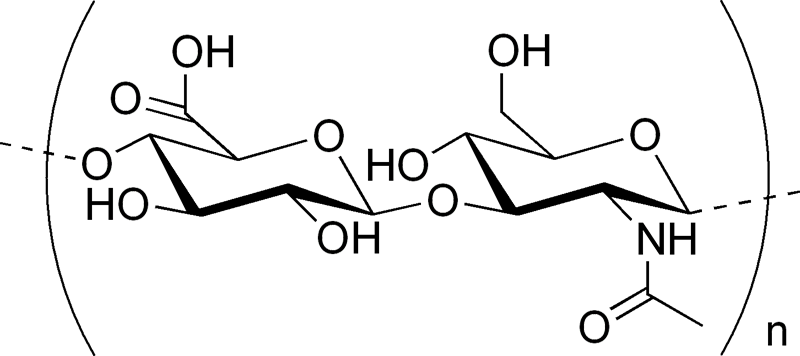
At its core, hyaluronic acid is a long, unbranched polysaccharide, a type of carbohydrate molecule composed of repeating disaccharide units of D-glucuronic acid and N-acetyl-D-glucosamine. Its remarkable ability to bind and retain water molecules is attributed to its highly polar nature, featuring numerous hydroxyl groups that readily form hydrogen bonds with water. This molecular characteristic allows HA to act as a powerful humectant, drawing moisture from the environment and the deeper layers of the skin to the surface, effectively plumping and firming the skin.
For decades, it was a prevalent belief that a decrease in the skin’s natural hyaluronic acid levels directly correlated with the visible signs of aging, such as thinning and dryness. However, more recent and refined research indicates a nuanced understanding: while the overall amount of hyaluronic acid in the skin may not drastically diminish with age, its distribution and molecular integrity undergo significant changes. These alterations, influenced by both intrinsic aging processes and extrinsic factors like sun exposure, contribute to the loss of skin elasticity, volume, and the appearance of fine lines and wrinkles. Understanding this redistribution is crucial for developing targeted skincare strategies that aim to restore not just quantity, but also optimal functionality of HA within the skin.
Hyaluronic Acid’s Evolution in Skincare: A Chronology
The journey of hyaluronic acid from scientific discovery to a ubiquitous beauty ingredient is a testament to its profound efficacy. First isolated by Karl Meyer and John Palmer in 1934 from bovine vitreous humor, its initial applications were primarily in the medical field. Early uses included ophthalmic surgery, where its viscoelastic properties were invaluable, and as an injectable treatment for osteoarthritis, providing lubrication and cushioning to joints.
Its foray into the cosmetic world gained significant momentum in the latter half of the 20th century, particularly with advancements in biotechnology that allowed for large-scale, cost-effective production through biofermentation. This method, which utilizes bacteria to synthesize HA, circumvented the ethical and purity concerns associated with animal-derived sources. By the 1990s and early 2000s, as consumer awareness of skin hydration and anti-aging benefits grew, hyaluronic acid began to emerge as a star ingredient in serums, moisturizers, and masks. Its lightweight feel, coupled with powerful hydrating effects that visibly reduce the appearance of dehydration lines, solidified its status as a must-have in cosmetic formulations worldwide.
Diverse Molecular Weights: Tailoring Efficacy for Skin Layers
A critical aspect of hyaluronic acid’s performance in skincare lies in its molecular weight, which dictates its ability to penetrate the skin and the specific benefits it confers. Skincare formulations often employ HA in different sizes, each designed to target distinct layers and functions:
-
High Molecular Weight Hyaluronic Acid (HMW-HA): Characterized by larger molecular sizes, HMW-HA primarily resides on the skin’s surface. Here, it forms a breathable, hygroscopic film that acts as an invisible moisture barrier. This surface-level action is paramount for preventing transepidermal water loss (TEWL), locking in existing moisture, and drawing humidity from the atmosphere. The result is immediate surface hydration, a smoother skin texture, and a temporary plumping effect that diminishes the visibility of superficial fine lines. While highly effective for surface hydration and barrier support, HMW-HA does not significantly penetrate deeper into the skin due to its size.
-
Low Molecular Weight Hyaluronic Acid (LMW-HA) and Oligomeric/Hydrolyzed Hyaluronic Acid: These smaller fragments are created by enzymatically or chemically breaking down HMW-HA. The reduction in molecular size allows LMW-HA to penetrate beyond the stratum corneum, reaching the lower epidermis. This deeper penetration facilitates hydration within the epidermal layers, contributing to improved skin elasticity and resilience from within. Sodium hyaluronate, a salt form of HA, typically represents these smaller fragments, offering enhanced skin penetration and stability in formulations.
The discourse around LMW-HA often includes discussions about its potential to act as an "inflammatory signal." While the term "inflammation" frequently carries negative connotations in popular discourse, it is crucial to recognize that inflammatory responses are complex biological processes, many of which are essential for skin repair, defense, and overall health. Research, including studies on skin cells, has indicated that LMW-HA can indeed modulate cellular responses, improving the skin’s intrinsic ability to repair itself, bolstering its defense mechanisms against microbial invaders, and potentially aiding in the management of conditions such as seborrheic dermatitis. This underscores the nuanced understanding required when evaluating active ingredients; a measured inflammatory response can be beneficial, particularly in contexts of healing and cellular defense. Further research continues to elucidate the precise mechanisms and optimal applications of LMW-HA in normal skin.
It is important to manage consumer expectations: while topical application of even low molecular weight hyaluronic acid offers exceptional hydration and contributes to skin health, it cannot fully "replenish" the body’s natural deep dermal stores of HA. Its primary and most demonstrable benefits remain rooted in its hydrating prowess, which in turn enhances skin barrier function, improves skin texture, and contributes to a more youthful and vibrant appearance. Beyond hydration, some studies suggest modest anti-inflammatory and antioxidant activities, further cementing its role as a multi-functional skincare active.
Beyond Topical Application: Expanding Uses of Hyaluronic Acid
Hyaluronic acid’s versatility extends far beyond topical skincare, demonstrating its critical role in various medical and cosmetic procedures:
-
Injectable Dermal Fillers: One of the most prominent non-topical applications of HA is in injectable dermal fillers, exemplified by brands like Juvéderm, Restylane, and Voluma. In these applications, HA molecules are typically cross-linked to create a more stable, gel-like substance that can be precisely injected into the skin to restore lost volume, smooth deep wrinkles and folds, and enhance facial contours. The cross-linking process prolongs the HA’s residence time in the tissue, with effects lasting from several months to over a year, depending on the product and injection site. These procedures require significant medical expertise and precision for safe and effective outcomes. Furthermore, chemically modified hyaluronic acid has been explored in more extensive augmentation procedures, such as Macrolane, a controversial filler previously used for breast and buttock enhancement, highlighting the broad spectrum of its medical-cosmetic utility.
-
Makeup and Primers: In the realm of cosmetics, dehydrated hyaluronic acid spheres are ingeniously incorporated into anhydrous (water-free) formulations, particularly in skin-smoothing primers. When these products are applied to the skin, the dry HA spheres settle into fine lines and wrinkles. Upon contact with the skin’s natural moisture and ambient humidity, these spheres begin to absorb water and swell, effectively plumping up the skin and optically smoothing the appearance of lines and imperfections. This mechanism offers an immediate, albeit temporary, blurring and perfecting effect, preparing the skin for subsequent makeup application.
-
Oral Supplements: Oral supplements containing hyaluronic acid are widely available in nutrition stores, often marketed for skin hydration, joint health, and anti-aging benefits. However, the scientific community maintains a degree of skepticism regarding their efficacy for skin improvement. The primary concern revolves around the bioavailability of HA after oral ingestion. It is questionable whether hyaluronic acid can survive the harsh acidic environment of the digestive tract intact and whether sufficiently large molecules can then be absorbed into the bloodstream and effectively transported to the skin to exert systemic benefits. While some studies suggest potential benefits for joint health, robust, conclusive evidence supporting significant skin benefits from oral HA supplementation remains largely elusive, underscoring the importance of critical evaluation of health claims.
Sourcing and Sustainability: Ethical Considerations in HA Production
The origin of hyaluronic acid is an important consideration for consumers, particularly those with dietary or ethical preferences. Historically, HA was primarily extracted from animal sources, most notably rooster combs, which are remarkably rich in HA (containing approximately 15 times more HA than human skin). While effective, this method raises concerns for vegetarian and vegan consumers due to its animal origin.
Fortunately, advancements in biotechnology have largely shifted the industry towards biofermentation. This process involves cultivating specific strains of bacteria (e.g., Streptococcus equi) in a controlled environment, which then naturally produce hyaluronic acid as a byproduct of their metabolic processes. Biofermentation offers several advantages: it provides a vegan-friendly and cruelty-free source of HA, ensures a consistent and high-purity product, and allows for precise control over the molecular weight, enabling manufacturers to tailor HA for specific applications. For consumers, identifying the source of HA in products is increasingly important, with many brands transparently labeling their HA as "vegan" or "bio-fermented" to cater to ethical preferences.
Debunking Myths and The Imperative of Scientific Scrutiny
In the fast-paced world of beauty science communication, "fun facts" often gain traction and are widely disseminated, sometimes without rigorous verification. A prominent example is the oft-cited claim that "1 gram of hyaluronic acid can hold onto 6 liters of water." While hyaluronic acid is indeed an extraordinary humectant, the exact quantitative claim has been subject to scientific scrutiny.
As noted in a correction on November 25, 2025, in the original publication by Lab Muffin Beauty Science, this specific claim, though frequently appearing in scientific literature and popular articles (including a 2007 Int J Toxicol article by members of the Cosmetic Ingredient Review panel), lacks a verifiable original reference. Further investigation, such as that detailed by Borchers and Pirrung in the Journal of Cosmetic Science, highlights the absence of empirical data to substantiate this precise figure.
This serves as a crucial reminder of the importance of scientific literacy and critical evaluation, even when encountering information from respected journals and authors. Myths and unsubstantiated claims can permeate scientific discourse, particularly when tangential to the primary focus of a publication or when they become widely accepted without consistent re-verification. Consumers and professionals alike are encouraged to approach such claims with skepticism and to seek out primary research or critically reviewed syntheses of scientific evidence. The true power of hyaluronic acid lies in its proven biological functions and its demonstrated efficacy in various applications, rather than in potentially exaggerated "fun facts."
The Market Landscape and Future Outlook
Hyaluronic acid’s widespread adoption has transformed the beauty industry, establishing it as a key player in formulations across price points, from luxury serums to budget-friendly lotions. Its appeal stems from its gentle nature, suitability for most skin types, and visible results in improving skin hydration and texture. The market continues to innovate, with new forms of HA and delivery systems constantly being explored, such as encapsulated HA for sustained release or combinations with other active ingredients like peptides and antioxidants to amplify synergistic effects.
As research progresses, a deeper understanding of HA’s interaction with various cellular pathways and its role in modulating skin health is emerging. Future developments may include highly customized HA formulations tailored to individual skin needs, advanced bio-engineering techniques to create novel HA derivatives, and further exploration into its therapeutic potential beyond current applications. The journey of hyaluronic acid, from its initial isolation to its current status as a skincare icon, exemplifies the dynamic interplay between scientific discovery, technological innovation, and evolving consumer demands. Its enduring presence underscores its undeniable value as a powerful ingredient for maintaining skin vitality and addressing the signs of aging.
Affiliate Disclosure: I receive a small commission for purchases made via affiliate links.
How to cite: Wong M. What is hyaluronic acid and how does it work in skincare and makeup?. Lab Muffin Beauty Science. November 25, 2025. Accessed June 2, 2026. https://labmuffin.com/what-is-hyaluronic-acid-and-how-does-it-work/
References
- S Gariboldi et al., Low molecular weight hyaluronic acid increases the self-defense of skin epithelium by induction of beta-defensin 2 via TLR2 and TLR4 (open access), J Immunol 2008, 181, 2103-2110.
- M Essendoubi, C Gobinet, R Reynaud, JF Angiboust, M Manfait & O Piot, Human skin penetration of hyaluronic acid of different molecular weights as probed by Raman spectroscopy, Skin Res Technol 2016, 22, 55-62.
- T Schlesinger & C Rowland Powell, Efficacy and safety of a low molecular weight hyaluronic acid topical gel in the treatment of facial seborrheic dermatitis final report (open access), J Clin Aesthet Dermatol 2014, 7, 15-18.
- Borchers, K., & Pirrung, T. (2018). The “6 Liters of Water” Myth. Journal of Cosmetic Science, 69(1), 44.
- Meyer, K., & Palmer, J. W. (1934). The polysaccharide of the vitreous humor. Journal of Biological Chemistry, 107(3), 629-634.
