
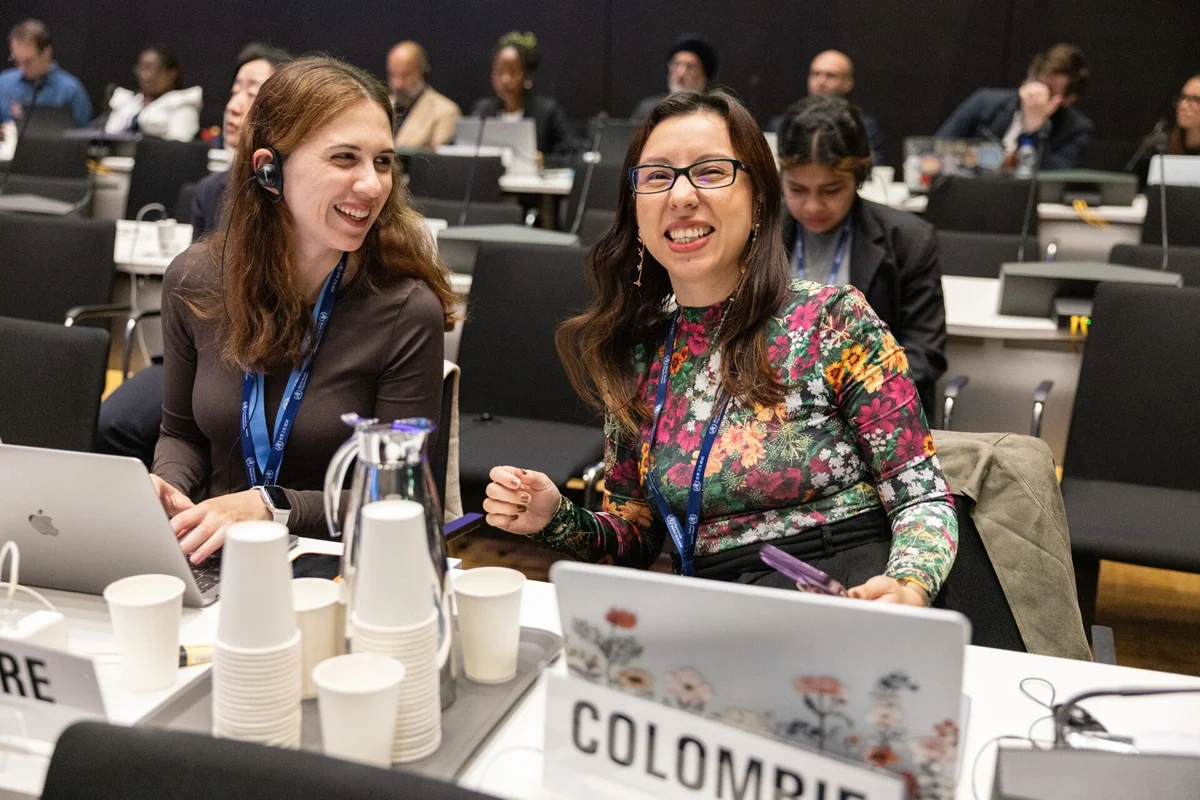
The Seventy-ninth World Health Assembly (WHA79) concluded this week in Geneva, Switzerland, marking a transformative moment for international public health governance as Member States reached a consensus on a suite of more than 20 decisions and 13 resolutions. These agreements target a diverse spectrum of critical health challenges, ranging from chronic conditions like stroke and liver disease to the existential threat of antimicrobial resistance (AMR) and the ethical complexities of the international migration of health workers. As the supreme decision-making body of the World Health Organization (WHO), the Assembly brought together ministers of health and high-level representatives from 194 Member States to deliberate on the future of global health security, financing, and equity.
The conclusion of the Assembly was marked by a ceremonial presentation of gavels by WHO Director-General Dr. Tedros Adhanom Ghebreyesus. These tokens of appreciation were awarded to the President of the Seventy-ninth World Health Assembly, Dr. Víctor Atallah Lajam, Minister of Health of the Dominican Republic, as well as to the Chairs of the two main working bodies: Dr. Timur Sultangaziyev, Deputy Minister of Health of Kazakhstan (Committee A), and Dr. Kwabena Mintah Akandoh, Minister of Health of Ghana (Committee B). In his closing address, Dr. Tedros emphasized that the true measure of the Assembly’s success lies not in the documentation produced, but in the tangible improvements seen in clinical settings and households worldwide. He underscored that political commitment and sustained financing are the essential conduits for turning these high-level resolutions into life-saving interventions.
A New Framework for the Global Health Architecture
One of the most significant political outcomes of the Seventy-ninth World Health Assembly was the formal agreement to reform the global health architecture. This reform is envisioned as a Member State-led, WHO-hosted joint process designed to streamline international responses to health emergencies and optimize the coordination between various global health actors. This move comes in response to the fragmented nature of the global response observed during recent pandemics, aiming to create a more cohesive, transparent, and accountable system.
The reform process is expected to address long-standing issues regarding the distribution of resources, the speed of emergency declarations, and the equity of access to medical countermeasures. By placing Member States at the helm of this transformation, the WHO aims to ensure that the revised architecture reflects the diverse needs of both developed and developing nations, fostering a sense of shared ownership in global health security.
Strengthening the Ethical Recruitment of Health Personnel
In a milestone for medical ethics and labor rights, Member States approved a resolution to amend the WHO Global Code of Practice on the International Recruitment of Health Personnel. This represents the first significant update to the Code in 16 years, reflecting the dramatic shifts in the global labor market and the increasing pressures on health systems worldwide. The amendments are the culmination of extensive consultations led by Member States and informed by an Expert Advisory Group (EAG).
The revised Code now explicitly includes provisions for care workers, acknowledging their vital role in the health ecosystem. Furthermore, it clarifies the applicability of ethical recruitment standards during global health emergencies, preventing the "brain drain" from vulnerable nations when they most need their workforce. A key feature of the updated resolution is the encouragement of co-investment. This principle suggests that destination countries, which benefit from the expertise of migrant health workers, should invest in the health systems and training infrastructure of the source countries to ensure a mutually beneficial relationship.
Data from the WHO suggests a projected global shortage of 10 million health workers by 2030, with the most acute deficits in low- and lower-middle-income countries. By strengthening the implementation of this Code, the Assembly aims to protect the integrity of health systems in developing nations while upholding the rights of individual health workers to seek employment opportunities abroad.
Health as a Pillar of Economic Policy: The 2026–2030 Strategy
The Assembly took a radical step toward redefining the relationship between finance and medicine by adopting the Strategy on the Economics of Health for All (2026–2030). This strategy marks a departure from viewing health spending as a mere budgetary cost, reframing it as a fundamental investment in economic stability and sustainable development. Delegates emphasized that the "global health financing emergency" requires a shift toward well-being-oriented economies where health outcomes are integrated into fiscal and industrial policies.
The strategy outlines a vision where economic success is measured by the health and equity of the population. It aims to equip finance and health ministries with the technical capacity to collaborate more effectively, ensuring that universal health coverage (UHC) is sustainably funded. This policy shift is expected to influence how international financial institutions and national governments prioritize health in their long-term economic planning, potentially unlocking new streams of domestic and international funding for public health infrastructure.
Addressing the "Silent Pandemic" of Antimicrobial Resistance
Recognizing the escalating threat of "superbugs," Member States approved an updated Global Action Plan on Antimicrobial Resistance (GAP-AMR) for the period 2026–2036. The urgency of this plan is underscored by sobering data: WHO’s Global Antimicrobial Resistance and Use Surveillance System (GLASS) reported that in 2023, one in six common bacterial infections showed resistance to standard antibiotic treatments. Recent studies estimate that bacterial AMR was associated with 4.71 million deaths in 2021 alone.
The updated GAP-AMR adopts a "One Health" approach, which recognizes the interconnectedness of human, animal, and environmental health. The plan sets an ambitious target: a 10% reduction in bacterial AMR-associated deaths in humans by 2030. To achieve this, the plan calls for:
- Expanded equitable access to effective antimicrobials.
- Significant reductions in the use of antimicrobials in the agrifood sector.
- Mitigation of environmental pollution from resistant microbes and antimicrobial residues.
- Improved surveillance and data reporting, building on the 104 countries that already report to the WHO system.
Analysis suggests that without these interventions, AMR could claim up to 39 million lives by 2050, with the burden falling disproportionately on low- and middle-income countries (LMICs).
The First Comprehensive Resolution on Radiation and Health
For the first time in its history, the World Health Assembly approved a comprehensive resolution on radiation and health, covering both ionizing and non-ionizing radiation. This landmark decision addresses the widespread exposure of populations to radiation from environmental, medical, and occupational sources. The resolution highlights the specific vulnerabilities of pregnant women and children and acknowledges the significant global cancer burden contributed by natural sources such as radon gas and ultraviolet (UV) radiation.
Under this new mandate, Member States commit to:
- Strengthening national radiation protection systems and exposure monitoring.
- Integrating radiation risk management into public health programs.
- Ensuring the safe and equitable use of radiation in medical technologies, such as radiotherapy and diagnostic imaging.
- Scaling up public awareness campaigns regarding the risks of UV exposure and domestic radon.
The WHO has been tasked with conducting a global mapping of existing initiatives to identify gaps in radiation protection. A progress report on these efforts is scheduled for the 81st World Health Assembly in 2028.
Clinical and Disease-Specific Advancements
Beyond the broad structural and economic strategies, the 79th WHA addressed several specific health crises through targeted resolutions:
- Stroke and Heart Disease: New frameworks were established to improve the speed of intervention and the availability of rehabilitation services.
- Tuberculosis (TB): Following the setbacks caused by the COVID-19 pandemic, Member States recommitted to the "End TB Strategy," focusing on new vaccine development and shorter treatment regimens.
- Liver Disease: Resolutions were passed to scale up screening and treatment for hepatitis, which remains a leading cause of liver cancer globally.
- Diagnostic Imaging and Precision Medicine: The Assembly recognized the role of advanced technology in modern healthcare, calling for more equitable access to diagnostic tools and personalized treatment approaches that can improve outcomes for complex conditions like haemophilia.
Chronology of the Seventy-ninth World Health Assembly
The journey to these resolutions began months before the Geneva gathering, with Member State-led consultations and expert advisory meetings held throughout late 2024 and early 2025.
- Day 1-2: The Assembly opened with high-level statements from heads of state and the Director-General’s report, setting the tone for "Health for All."
- Day 3-5: Intensive committee sessions (A and B) saw technical debates on the Global Action Plan for AMR and the amendments to the Recruitment Code.
- Day 6-7: The focus shifted to the economic strategy and radiation protection, culminating in the formal adoption of the resolutions.
- Closing Session: The symbolic passing of the gavel and the final call to action by Dr. Tedros.
Implications and Future Outlook
The outcomes of the 79th World Health Assembly signal a shift toward a more proactive and ethically grounded global health policy. The amendments to the recruitment code and the new economic strategy suggest that the international community is beginning to address the root causes of health inequality—namely, the lack of human resources and the chronic underfunding of public systems.
However, as Dr. Tedros noted, the value of these resolutions is contingent upon their implementation. The coming years will require a rigorous monitoring framework to ensure that countries adhere to the "One Health" approach for AMR and that the "co-investment" model for health workers becomes a reality. The transition to a well-being-oriented economy will also face challenges from traditional fiscal conservative policies.
As the delegates depart Geneva, the focus moves from the halls of the Palais des Nations to national parliaments and local clinics. The resolutions of WHA79 provide the roadmap, but the journey toward a more resilient and equitable global health system has only just begun. The international community now looks toward 2028 and 2030 as the primary benchmarks for assessing whether these historic agreements have truly changed the lives of mothers, children, and health workers on the ground.
