
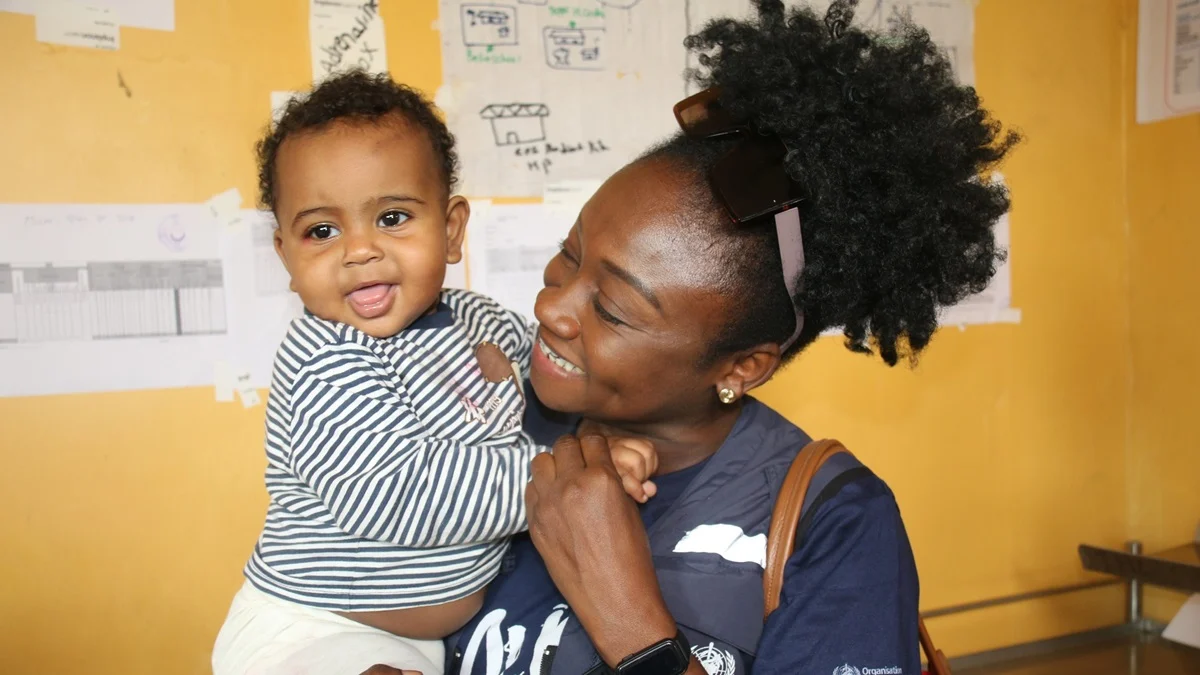
In a landmark development for global pediatric health, the World Health Organization (WHO) has announced the prequalification of the first-ever antimalarial treatment specifically formulated for newborns and young infants weighing between two and five kilograms. This announcement, made in the lead-up to World Malaria Day on April 25, 2026, represents a critical shift in the clinical management of malaria for the most vulnerable age groups. By granting this prequalification designation, the WHO has signaled that the medicine—a specialized formulation of artemether-lumefantrine—meets rigorous international benchmarks for safety, efficacy, and manufacturing quality. This move is expected to catalyze a massive expansion in access to life-saving care for millions of infants in malaria-endemic regions who have historically been underserved by existing pharmaceutical interventions.
For decades, the medical community has faced a significant hurdle in treating malaria in the very young. Because no specific pediatric formulation existed for neonates and infants under five kilograms, healthcare providers were often forced to adapt treatments intended for older children. This practice frequently involved crushing adult-strength tablets and attempting to estimate a safe dosage based on the infant’s weight. Such "off-label" adaptations carried inherent risks, including the potential for dosing inaccuracies that could lead to either sub-therapeutic levels—risking treatment failure and the development of drug resistance—or toxic over-exposure, which can be fatal for a developing infant. The new prequalified treatment eliminates these variables, providing a standardized, quality-assured option that aligns with the physiological needs of the youngest patients.
Addressing the Treatment Gap for the Most Vulnerable
The introduction of this specialized artemether-lumefantrine formulation is aimed at closing a long-standing therapeutic gap. Each year, approximately 30 million babies are born in malaria-endemic areas across Africa. In these regions, malaria remains a leading cause of neonatal and infant mortality. The WHO’s decision to prequalify this treatment is a prerequisite for procurement by major international funding bodies, such as the Global Fund to Fight AIDS, Tuberculosis and Malaria, and UNICEF. This ensures that the medicine can be purchased at scale for public health systems, making it available at little to no cost for the families who need it most.
Dr. Tedros Adhanom Ghebreyesus, WHO Director-General, emphasized the historical weight of this achievement. "For centuries, malaria has stolen children from their parents, and health, wealth, and hope from communities," Dr. Tedros stated. He noted that the landscape of the fight against malaria is fundamentally changing due to the convergence of new vaccines, more precise diagnostic tools, and treatments adapted for the youngest patients. Dr. Tedros underscored that while the goal of ending malaria is no longer a distant dream, it remains contingent upon sustained political and financial willpower. His message for World Malaria Day 2026—"Now we can. Now we must"—serves as a directive to the international community to capitalize on these technological breakthroughs.
Technological Advancements in Malaria Diagnosis
Parallel to the breakthroughs in treatment, the WHO also announced the prequalification of three new rapid diagnostic tests (RDTs) on April 14, 2026. These tests are designed to solve a growing biological crisis: the emergence of "invisible" malaria parasites. Traditionally, the most effective RDTs for detecting Plasmodium falciparum, the deadliest malaria parasite, have relied on identifying a specific protein known as Histidine-Rich Protein 2 (HRP2). However, recent surveillance across 46 countries has revealed a disturbing evolutionary trend. Strains of the parasite have begun to undergo gene deletions, effectively losing the ability to produce the HRP2 protein.
When a parasite lacks the pf-hrp2 gene, it becomes undetectable by standard HRP2-based RDTs, resulting in false-negative results. In parts of the Horn of Africa, studies have indicated that up to 80% of malaria cases were being missed by traditional tests. These undiagnosed cases often lead to delayed treatment, allowing the infection to progress to severe malaria, which can cause organ failure, coma, and death. The three newly prequalified RDTs address this by targeting a different protein, parasite Lactate Dehydrogenase (pf-LDH). Because pf-LDH is essential to the parasite’s metabolism, it is much less likely to be "shed" or deleted through mutation.
The WHO now formally recommends that countries transition to these alternative pf-LDH tests once the prevalence of pf-hrp2 deletions in a given area exceeds 5%. This strategic pivot is essential for maintaining the integrity of malaria surveillance and ensuring that hard-won gains in disease control are not eroded by the parasite’s biological evolution.
A Chronology of Progress and Persistent Challenges
The fight against malaria has seen significant shifts over the last quarter-century. To understand the importance of the 2026 announcements, it is necessary to look at the timeline of global efforts:
- 2000–2015: The era of the Millennium Development Goals (MDGs) saw a massive scale-up in the distribution of insecticide-treated nets (ITNs) and the introduction of artemisinin-based combination therapies (ACTs).
- 2021: The WHO recommended the first malaria vaccine, RTS,S/AS01, for widespread use among children in sub-Saharan Africa.
- 2023: A second vaccine, R21/Matrix-M, was recommended, promising higher efficacy and easier manufacturing at scale.
- 2024–2025: Significant rollout of next-generation mosquito nets, which incorporate dual insecticides to combat growing resistance among mosquito populations.
- April 2026: Prequalification of the first infant-specific treatment and pf-LDH diagnostic tests, marking a new phase in precision medicine for malaria.
Despite these milestones, the World Malaria Report 2025 paints a complex picture. In 2024, there were an estimated 282 million cases of malaria and 610,000 deaths globally, an increase from the previous year. This rise is attributed to a "perfect storm" of challenges, including the disruption of health services by climate-induced disasters, ongoing drug and insecticide resistance, and a significant decline in international development assistance for health. While 47 countries have been certified malaria-free, and 37 others are on the cusp of elimination with fewer than 1,000 cases annually, the global progress has hit a plateau.
Supporting Data: The Impact of Innovation
The data provided by the WHO highlights the high stakes of the current campaign. Since the year 2000, global interventions have prevented an estimated 2.3 billion malaria infections and saved 14 million lives. However, the stagnation in funding threatens to reverse these trends. Currently, 25 countries have integrated malaria vaccines into their routine immunization schedules, protecting millions of children. Furthermore, next-generation mosquito nets now account for 84% of all new nets distributed, a necessary shift as older net varieties lose their effectiveness against resistant mosquito strains.
The introduction of the new infant treatment is expected to have a measurable impact on the "under-five" mortality rate. In many endemic regions, infants under five kilograms represent the highest-risk demographic for rapid disease progression. By providing a safe, pre-measured dose of artemether-lumefantrine, health systems can reduce the incidence of severe malaria complications, such as cerebral malaria and severe anemia, which are often the result of inadequate or delayed initial treatment.
Broader Impact and Strategic Implications
The 2026 World Malaria Day theme, "Driven to End Malaria: Now We Can. Now We Must," reflects a sense of urgency within the global health community. The prequalification of these new tools is not merely a technical success; it is a strategic necessity. As the malaria parasite evolves and mosquitoes become more resistant to chemicals, the global response must become more sophisticated.
The shift toward pf-LDH diagnostic tests suggests a future where malaria diagnosis may become increasingly "multiplexed," using tests that look for multiple biomarkers simultaneously to ensure no strain goes undetected. Similarly, the development of infant-specific medicines highlights the need for "age-appropriate" pharmaceutical design in global health, moving away from the "one size fits all" approach that has historically disadvantaged pediatric patients in low-resource settings.
Furthermore, the WHO’s focus on science as the foundation for health—underscored by the World Health Day 2026 theme "Together for health. Stand with science"—is a direct rebuttal to the rising tide of misinformation and the deprioritization of scientific funding. The success of the malaria program is viewed as a litmus test for the world’s ability to solve complex health crises through international cooperation.
As the WHO and its partners move forward with the 2026 campaign, the focus will remain on securing the necessary financial commitments to deploy these new tools. The transition from "dreaming" of a malaria-free world to achieving it will require an estimated $7.8 billion annually by 2030, a figure that currently faces a significant funding gap. However, with the arrival of infant-specific treatments and mutation-proof diagnostics, the technical barriers are falling, leaving the final outcome in the hands of global policymakers and donors.
