
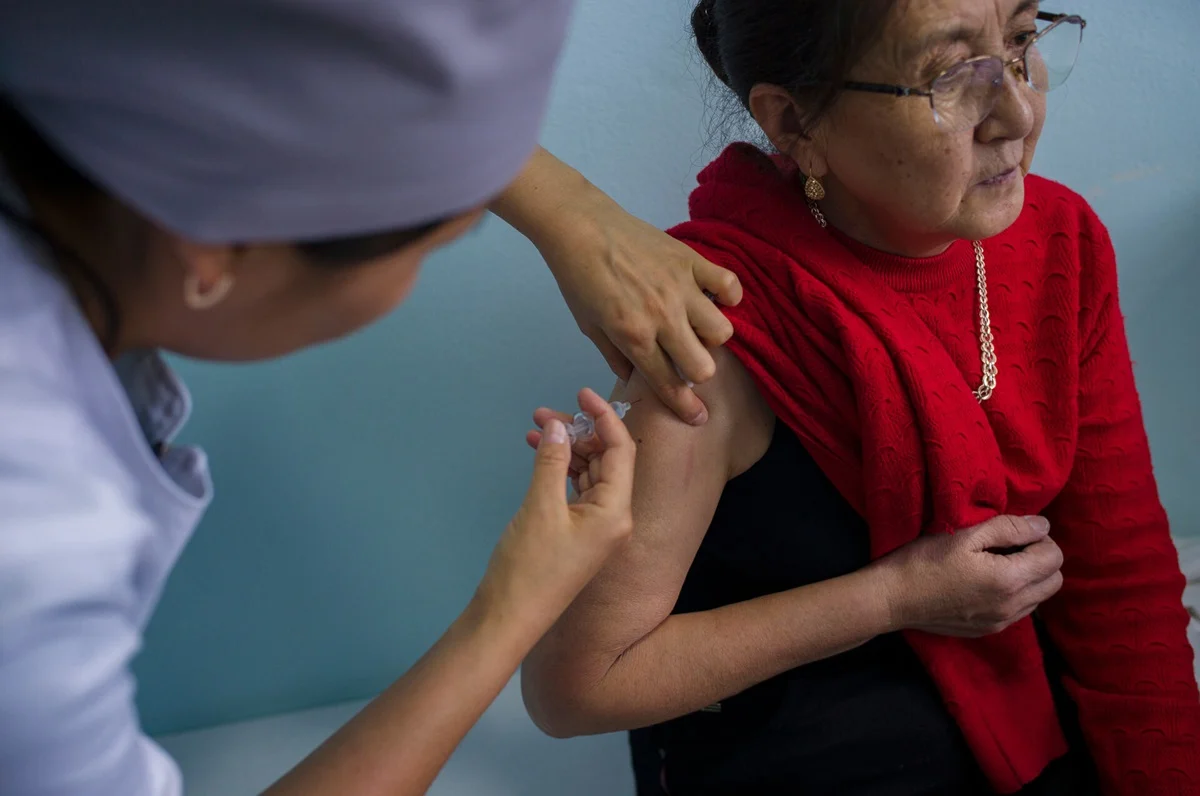
The World Health Organization (WHO) has officially released its highly anticipated recommendations for the viral composition of influenza vaccines for the 2026-2027 Northern Hemisphere season. This announcement, which serves as the foundational blueprint for global pharmaceutical production and national immunization strategies, follows an intensive four-day technical consultation involving a global network of virologists, epidemiologists, and public health officials. The recommendations are designed to ensure that the vaccines produced for the upcoming winter season in the Northern Hemisphere are precisely calibrated to the most prevalent and evolving strains of the influenza virus, thereby maximizing protection against severe disease, hospitalization, and mortality.
Influenza viruses are characterized by their remarkable ability to undergo constant genetic mutation, a process known as antigenic drift. This continuous evolution necessitates a biannual review of vaccine components—once for the Northern Hemisphere and once for the Southern Hemisphere—to maintain efficacy. The WHO’s recommendations are utilized by national vaccine regulatory agencies and pharmaceutical manufacturers across the globe to develop, produce, and license the billions of doses required for seasonal campaigns. By aligning the vaccine’s antigens with the viruses predicted to circulate, health authorities aim to provide the most robust defense possible against a pathogen that remains a leading cause of respiratory morbidity worldwide.
The Emergence of Subclade K and the 2025-2026 Viral Landscape
The recent consultation was heavily influenced by significant shifts in viral activity observed during the 2025 calendar year. Central to the discussions was the emergence and rapid global dissemination of a notably different variant of the influenza A(H3N2) virus. First identified in August 2025, this variant—classified as J.2.4.1 and colloquially referred to within the scientific community as "Subclade K"—has fundamentally altered the epidemiological landscape.
Subclade K demonstrated a high degree of fitness, spreading rapidly across multiple continents and becoming the dominant strain in most regions. This rapid proliferation contributed to an unseasonably early start to the influenza season in several countries, with many health systems reporting higher-than-usual levels of outpatient visits and hospital admissions during the transitional months. The WHO noted that Subclade K accounted for the vast majority of influenza A(H3N2) viruses reported globally, necessitating a shift in the vaccine’s composition to ensure adequate cross-protection.
While A(H3N2) dominated the headlines, other viruses remained active. Influenza A(H1N1)pdm09 continued to circulate, though at lower levels than the H3N2 variant. In the influenza B category, the Victoria lineage remained the primary circulating strain, albeit at relatively low levels of detection. Notably, the consultation confirmed a continued and remarkable absence of the B/Yamagata lineage. No confirmed cases of B/Yamagata have been recorded globally since March 2020, leading to ongoing discussions about the transition from quadrivalent to trivalent vaccines in various jurisdictions, as the inclusion of a seemingly extinct lineage may no longer be biologically necessary.
The Role of the Global Influenza Surveillance and Response System (GISRS)
The precision of the WHO’s recommendations is made possible by the Global Influenza Surveillance and Response System (GISRS). Established in 1952, GISRS represents the longest-standing global platform for systematic disease surveillance, embodying a unique model of international cooperation. The system comprises a network of over 150 National Influenza Centres in 127 countries, alongside several WHO Collaborating Centres and Essential Regulatory Laboratories.
During the four-day consultation, experts reviewed a massive dataset generated by GISRS, including genetic sequences, antigenic characterization, and human serology studies. This data allows scientists to track how well current vaccines neutralize emerging strains and to identify which "candidate vaccine viruses" (CVVs) are most suitable for mass production.
Dr. Tedros Adhanom Ghebreyesus, WHO Director-General, emphasized the importance of this collaborative framework. "Season after season, constantly evolving influenza viruses circulate globally, showing us how connected our world is," Dr. Tedros stated. "Shared risks require shared action. WHO’s recommendations for influenza vaccine composition rest on the diligent, year-round work of the Global Influenza Surveillance and Response System and its partners. Thanks to GISRS, next season’s vaccines have been updated to counter the latest strains of influenza viruses, in turn better protecting communities."
Technical Recommendations for the 2026-2027 Season
For the 2026-2027 Northern Hemisphere season, the WHO has specified the necessary viral components for both egg-based and cell-culture or recombinant-based vaccines. These distinctions are critical for manufacturers, as the substrate used to grow the virus can influence the final antigenic properties of the vaccine.
For egg-based vaccines, which remain the most common manufacturing method globally, the WHO recommends a composition that includes specific antigens representative of the A(H3N2) Subclade K, the A(H1N1)pdm09 lineage, and the B/Victoria lineage. For manufacturers utilizing cell culture, recombinant protein, or nucleic acid-based platforms (such as mRNA), a slightly different set of candidate viruses is often recommended to account for the lack of "egg-adaptation" mutations that can sometimes occur in traditional manufacturing.
The inclusion of the Subclade K component is the most significant update for this cycle. By selecting a virus that closely matches the J.2.4.1 variant, the WHO aims to reverse the "vaccine mismatch" that can occur when a new dominant strain emerges mid-season. This update is expected to significantly improve vaccine effectiveness (VE) scores for the 2026-2027 period, which had seen some fluctuations during the rise of the new H3N2 variant.
Zoonotic Influenza and Pandemic Preparedness
Beyond the scope of seasonal flu, the WHO experts dedicated a significant portion of the consultation to the assessment of zoonotic influenza—viruses that circulate in animals but have the potential to spill over into human populations. These viruses are monitored with extreme scrutiny due to their pandemic potential.
Since the previous consultation in September 2025, a total of 25 human infections with zoonotic influenza were reported to the WHO from six different countries. The majority of these cases involved individuals who had direct exposure to infected poultry, swine, or contaminated environments. While these cases are concerning, the WHO confirmed that no sustained human-to-human transmission has been detected to date.
A major outcome of this review was the recommendation for the development of a new candidate vaccine virus (CVV) for the A(H9N2) virus. A(H9N2) is endemic in poultry in many parts of Asia and the Middle East and has been responsible for sporadic human infections. By creating a CVV now, the WHO ensures that if the A(H9N2) virus were to acquire the ability to spread easily among humans, the global community would already have the "seed" virus necessary to begin immediate large-scale vaccine production. This proactive approach is a cornerstone of the Pandemic Influenza Preparedness (PIP) Framework, designed to reduce the time between the identification of a pandemic threat and the availability of a vaccine.
The Global Burden and Economic Implications
The necessity of these biannual updates is underscored by the staggering global burden of influenza. The WHO estimates that seasonal influenza results in approximately one billion cases annually. Of these, between three and five million cases progress to severe illness, and the virus causes an estimated 290,000 to 650,000 respiratory-related deaths each year.
The economic impact is equally profound. Beyond the direct costs of healthcare—hospitalizations, medications, and outpatient visits—influenza causes massive indirect costs through lost productivity and absenteeism. For the 2026-2027 season, the early arrival of the H3N2 Subclade K suggests that health systems must prepare for a prolonged period of high activity. The timely update of the vaccine is seen as the most cost-effective intervention available to mitigate these impacts.
Regulatory agencies, such as the U.S. Food and Drug Administration (FDA) and the European Medicines Agency (EMA), will now take these WHO recommendations to their respective advisory committees to finalize the strains for their national markets. Following these approvals, pharmaceutical companies will begin the rigorous six-to-nine-month production cycle, involving the cultivation of viruses in millions of specialized eggs or large-scale bioreactors.
Broader Implications and Future Outlook
The transition in vaccine composition for the 2026-2027 season reflects a broader trend in public health: the move toward more agile and data-driven response systems. The emergence of Subclade K serves as a reminder that the window for identifying and reacting to viral shifts is narrow.
Furthermore, the continued absence of B/Yamagata is prompting a global re-evaluation of vaccine formulations. If the lineage is truly extinct, moving to trivalent vaccines (H1N1, H3N2, and B/Victoria) would not only simplify production but also potentially allow for higher doses of the remaining antigens or the inclusion of additional A-strain variants.
As the Northern Hemisphere prepares for the 2026-2027 season, the WHO’s latest recommendations provide the scientific clarity needed to navigate an evolving viral landscape. The focus now shifts to the manufacturing sector and national health ministries, whose task is to ensure that these updated vaccines are produced in sufficient quantities and distributed equitably to the populations most at risk. Through the continued vigilance of the GISRS and the cooperation of the international community, the goal remains a world better protected against the perennial threat of the flu.
