
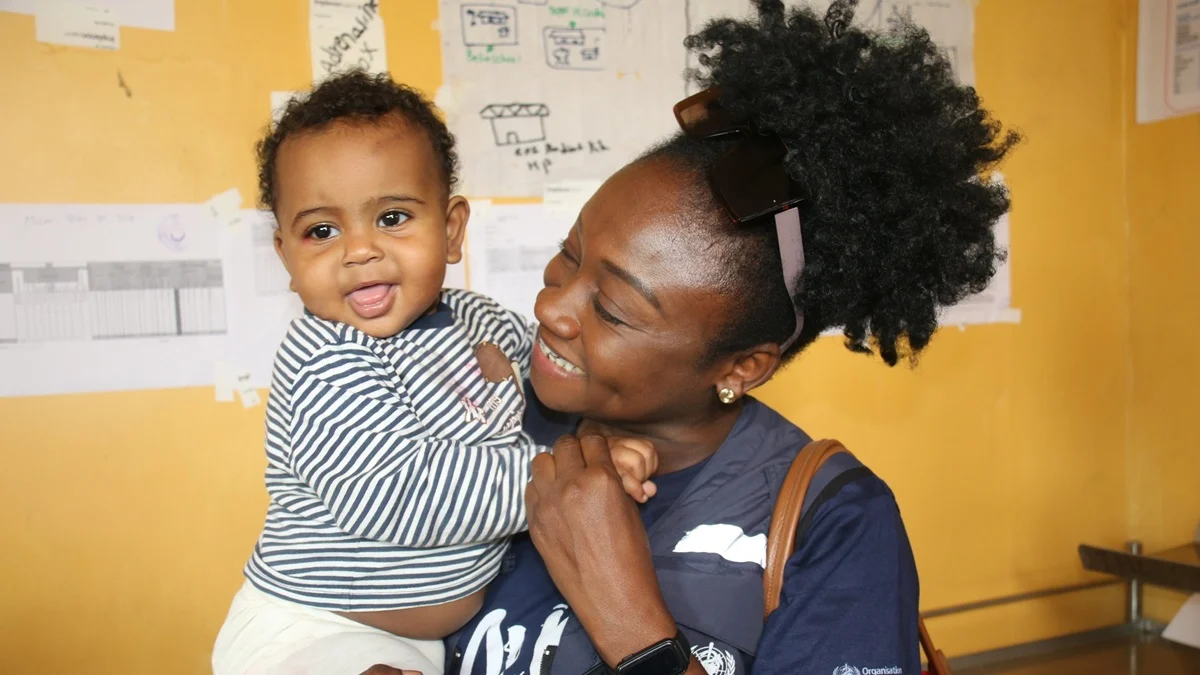
In a landmark development for global pediatric health, the World Health Organization (WHO) has announced the prequalification of the first antimalarial treatment specifically formulated for newborns and young infants weighing between two and five kilograms. This announcement, made in the lead-up to World Malaria Day on April 25, 2026, represents a critical breakthrough in addressing one of the most significant gaps in tropical medicine. By providing a quality-assured, appropriately dosed therapy for the youngest and most vulnerable demographic, the WHO aims to drastically reduce neonatal mortality in malaria-endemic regions, particularly across sub-Saharan Africa.
The newly prequalified medication is a specialized formulation of artemether-lumefantrine. While this combination has long been the gold standard for treating uncomplicated P. falciparum malaria, previous iterations were designed for older children and adults. For decades, clinicians in resource-limited settings were forced to adapt these older formulations for infants—often by crushing tablets or attempting to estimate fractions of a dose. Such practices carry substantial risks, including under-dosing, which can lead to treatment failure and the acceleration of drug resistance, or over-dosing, which can result in acute toxicity and severe side effects in a baby’s developing system.
Dr. Tedros Adhanom Ghebreyesus, WHO Director-General, underscored the historical weight of this achievement. "For centuries, malaria has stolen children from their parents, and health, wealth and hope from communities," Dr. Tedros stated. "But today, the story is changing. New vaccines, diagnostic tests, next-generation mosquito nets and effective medicines, including those adapted for the youngest, are helping to turn the tide. Ending malaria in our lifetime is no longer a dream—it is a real possibility, but only with sustained political and financial commitment. Now we can. Now we must."
Addressing the Treatment Gap for the Most Vulnerable
The significance of this prequalification cannot be overstated for the estimated 30 million infants born annually in malaria-endemic areas. Infants under five kilograms have historically been an "underserved" patient group, largely because clinical trials for new drugs often exclude newborns due to ethical and physiological complexities. Consequently, this group has faced a disproportionately high risk of severe disease progression.
WHO prequalification serves as a "green light" for international procurement agencies, such as UNICEF and The Global Fund to Fight AIDS, Tuberculosis and Malaria, to purchase and distribute the medicine at scale. It guarantees that the manufacturing process, the stability of the drug, and its clinical efficacy meet rigorous international standards. For health ministries in low- and middle-income countries, this designation provides the necessary confidence to integrate the treatment into national malaria control programs.
Public health experts suggest that the availability of a dedicated infant formulation will streamline the work of frontline health workers. With pre-packaged, weight-appropriate doses, the margin for human error is significantly reduced, ensuring that the youngest patients receive the precise concentration of active ingredients needed to clear the parasite without taxing their fragile internal organs.
Solving the Crisis of "Invisible" Parasites
Parallel to the breakthrough in treatment, the WHO also announced the prequalification of three new rapid diagnostic tests (RDTs) on April 14, 2026. These tests are designed to counter a biological evolution that has threatened to undo decades of progress: the emergence of "stealth" malaria parasites.
For years, the most common RDTs have relied on detecting a specific protein known as Histidine-Rich Protein 2 (HRP2) produced by the P. falciparum parasite. However, recent surveys across 46 countries have confirmed a disturbing trend: certain strains of the parasite have undergone genetic deletions (specifically the pf-hrp2 and pf-hrp3 genes), meaning they no longer produce this protein. To a standard HRP2-based RDT, these parasites are "invisible," leading to false-negative results even in patients with high viral loads.
In parts of the Horn of Africa, studies have indicated that up to 80% of malaria cases were being missed by traditional tests. This diagnostic failure is catastrophic; a child with a false-negative result is often sent home without life-saving antimalarials, leading to rapid deterioration, severe anemia, cerebral malaria, and death.
The three newly prequalified RDTs address this by targeting a different protein: parasite lactate dehydrogenase (pf-LDH). Unlike HRP2, the pf-LDH protein is essential to the parasite’s metabolism and cannot be easily "shed" or deleted through mutation without compromising the parasite’s survival. The WHO now recommends that any country reporting a greater than 5% rate of HRP2 deletions must transition to these alternative LDH-based tests. This shift is expected to save thousands of lives by ensuring that every infected individual is accurately identified and treated.
World Malaria Day 2026: A Call to Action
These scientific milestones serve as the cornerstone of the 2026 World Malaria Day campaign, themed "Driven to End Malaria: Now We Can. Now We Must." The campaign reflects a dual reality: the world possesses more tools than ever to eradicate the disease, yet the window of opportunity is threatened by stalling global progress.
The World Malaria Report 2025 provided a sobering backdrop to these announcements. In 2024, there were an estimated 282 million cases of malaria and 610,000 deaths—a slight increase from the previous year. While 47 countries have successfully been certified malaria-free, and 37 countries reported fewer than 1,000 cases in 2024, the global trajectory remains precarious.
Several factors contribute to this stagnation:
- Drug Resistance: The emergence of artemisinin-partial resistance in East Africa and the Greater Mekong Subregion threatens the efficacy of current frontline treatments.
- Insecticide Resistance: Mosquitoes are increasingly evolving to survive the chemicals used in traditional bed nets and indoor residual spraying.
- Climate Change: Shifting weather patterns and increased flooding are expanding the habitat of Anopheles mosquitoes into previously malaria-free highlands and urban areas.
- Funding Gaps: A severe reduction in international development assistance has left many national programs underfunded, leading to "stock-outs" of essential medicines and diagnostic kits.
A Chronology of Progress and Persistent Challenges
To understand the weight of the 2026 announcements, one must look at the trajectory of malaria control since the turn of the millennium. In 2000, the world saw the launch of the Millennium Development Goals, which catalyzed a massive influx of funding and innovation.
- 2000–2015: The "Golden Era" of malaria control saw a 60% reduction in mortality rates globally. The introduction of long-lasting insecticidal nets (LLINs) and artemisinin-based combination therapies (ACTs) were the primary drivers.
- 2019: The WHO recommended the pilot implementation of the world’s first malaria vaccine, RTS,S/AS01.
- 2021: The WHO officially recommended the widespread use of the RTS,S vaccine for children in sub-Saharan Africa.
- 2023: A second vaccine, R21/Matrix-M, was prequalified, promising higher efficacy and easier manufacturing.
- 2024–2025: Deployment of next-generation mosquito nets, which utilize dual insecticides to combat resistant mosquito populations, reached 84% of all new distributions.
- 2026: The prequalification of infant-specific treatments and pf-LDH diagnostic tests addresses the remaining "blind spots" in the global strategy.
Since 2000, an estimated 2.3 billion malaria infections have been prevented, and 14 million lives have been saved. However, the transition from "control" to "elimination" requires reaching the most marginalized populations—including the newborns addressed by the new artemether-lumefantrine formulation.
Analysis: The Economic and Social Implications
The implications of these medical advancements extend beyond clinical outcomes; they are central to economic development. Malaria is often described as both a cause and a consequence of poverty. In high-burden countries, the disease can shave an estimated 1.3% off annual GDP growth. For families, the cost of treating repeated bouts of malaria, coupled with lost wages and funeral expenses, traps entire generations in a cycle of destitution.
By investing in infant-specific treatments and accurate diagnostics, the global community is essentially investing in the future workforce of endemic nations. Healthier infants are more likely to achieve developmental milestones and contribute to their economies later in life.
Furthermore, the shift toward LDH-based diagnostics represents a sophisticated move in the "evolutionary arms race" against the parasite. By staying ahead of genetic mutations, health systems can maintain the integrity of their surveillance data. Accurate data is the lifeblood of malaria elimination; it allows officials to see exactly where outbreaks are occurring and deploy resources with surgical precision.
The Path Forward: Sustaining Momentum
Despite the optimism surrounding the new tools, the WHO warns that technology alone cannot end malaria. The "Now We Must" portion of the 2026 theme is a direct appeal to the G7, G20, and philanthropic organizations to reverse the trend of declining health budgets.
"The tools are in our hands, but the hands must be stayed by political will," said a representative from a leading global health NGO. "We are seeing a dangerous trend where malaria is viewed as a ‘solved’ problem in the West, leading to complacency. But for a mother in a rural village, the threat is as real today as it was twenty years ago. These new infant treatments are only effective if they actually reach the clinic in that village."
As 25 countries continue to roll out malaria vaccines and more nations move toward elimination certification, the global health community remains cautiously optimistic. The prequalification of the infant treatment and the new RDTs are not merely technical updates; they are a testament to the power of targeted innovation. They prove that when science is guided by the needs of the most vulnerable, barriers that once seemed insurmountable can be dismantled.
The World Health Organization, through its 150+ locations worldwide, continues to lead the response to this ancient scourge. As World Health Day 2026 approaches under the theme "Together for health. Stand with science," the focus remains clear: science is the foundation, but equity is the goal. Ending malaria is no longer a question of "if," but a question of "when"—provided the world chooses to act now.
