
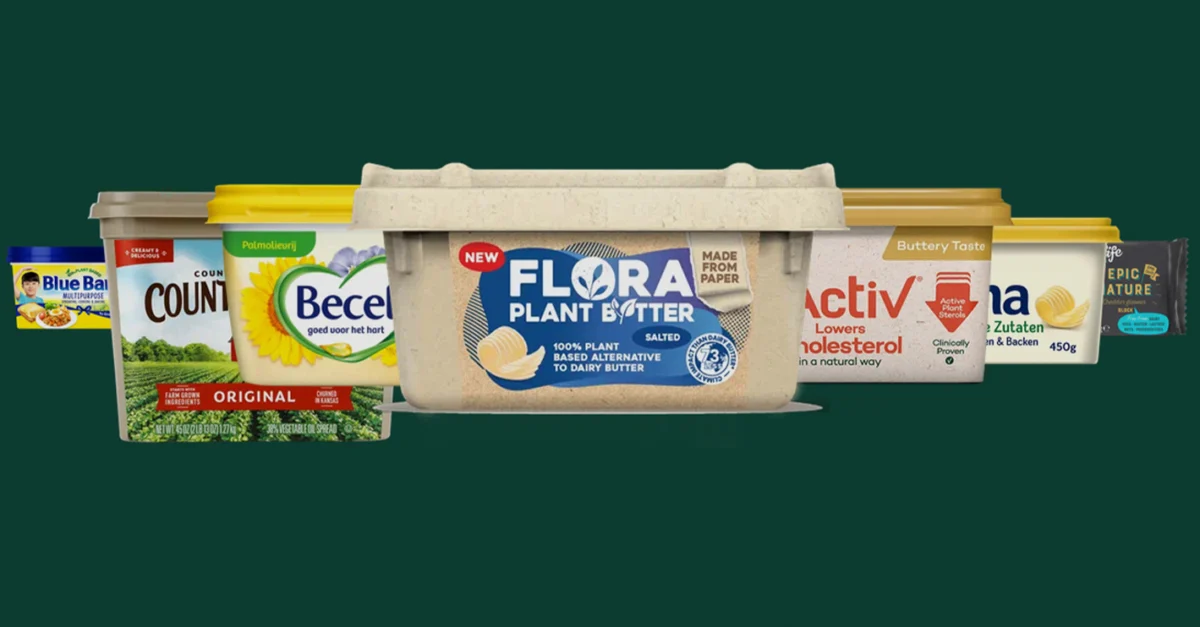
US investment firm KKR is reportedly exploring a potential sale of Flora Food Group, the prominent spreads business it acquired from Unilever in 2018, with a valuation speculated to be as high as $10 billion. This strategic re-evaluation comes as the company, known for household brands like Country Crock, I Can’t Believe It’s Butter!, and Violife, has reportedly abandoned a previously ambitious plan to transition its entire product portfolio to be exclusively plant-based. The move signals a potential significant consolidation within the evolving food sector, particularly in the rapidly transforming plant-based and dairy alternatives market.
The Financial Times first reported on KKR’s exploration of a sale for Flora Food Group, formerly known as Upfield. This potential divestiture is underscored by a perceived revival in demand for traditional dairy products, a trend that appears to have influenced the company’s strategic pivot away from a complete plant-based commitment. This development marks a noteworthy chapter in the journey of a business that has deep historical roots within one of the world’s largest consumer goods conglomerates.
A Legacy Forged in Margarine: The Genesis of Flora Food Group
The lineage of Flora Food Group traces back over 150 years, originating from the very company that popularized margarine. In 1871, Dutch industrialist Antoon Jurgens acquired the patent for margarine, a revolutionary food product at the time. Through a series of strategic mergers and acquisitions, Jurgens’ enterprise evolved into Margarine Unie in 1927. Two years later, a monumental partnership was forged when Margarine Unie joined forces with Lever Brothers, a prominent soap manufacturer, to establish Unilever. This union laid the foundation for the global consumer goods titan that Unilever remains today.
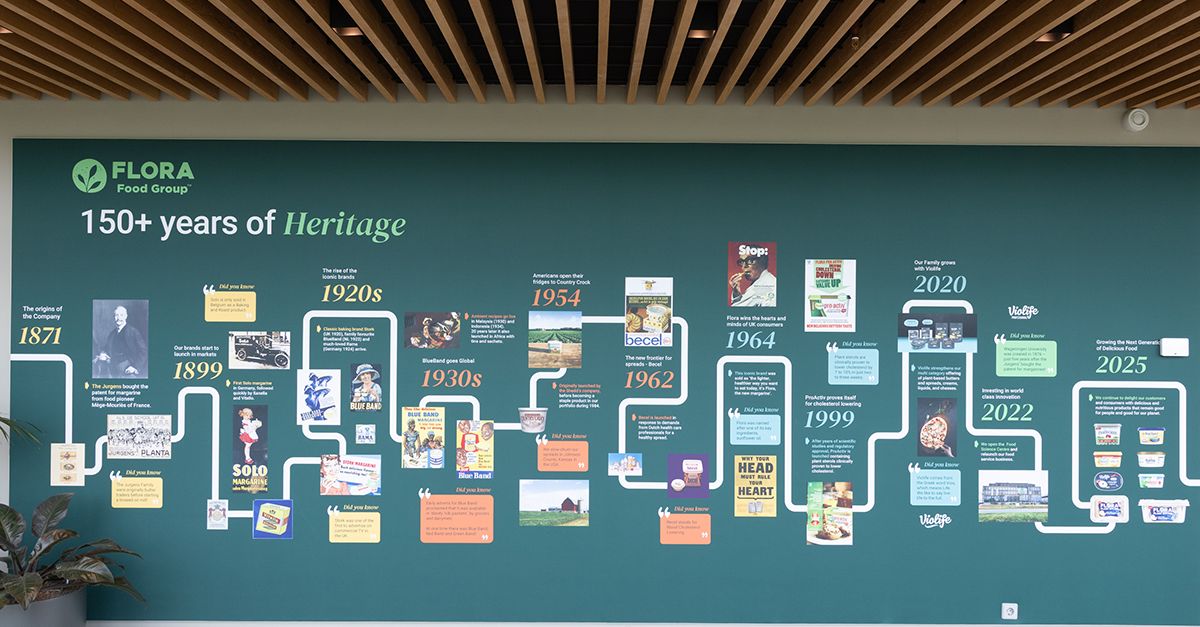
For decades, Unilever’s spreads division was a cornerstone of its business. However, as consumer preferences began to shift, with a notable resurgence in the popularity of butter over margarine, the financial performance of this segment faced increased scrutiny. This trend was exacerbated by a significant market event in 2017 when Unilever faced an unsolicited takeover attempt from Kraft Heinz. In the aftermath of this bid, and with a strategic imperative to enhance shareholder returns and streamline its portfolio, Unilever decided to divest its spreads business. This division, which represented approximately 7% of Unilever’s overall operations, was placed on the market, igniting a fierce bidding war among several prominent private equity firms.
The competition was intense, with firms such as Apollo Global Management, CVC Capital Partners, and Bain Capital vying for the acquisition. Ultimately, in 2018, KKR emerged as the winning bidder, acquiring the business from Unilever for a substantial $8 billion. This acquisition marked a significant move by KKR into the food sector, aiming to leverage the established brands and market presence of the spreads division.
Brand Powerhouse and Financial Footprint
Since its acquisition by KKR and subsequent rebranding from Upfield to Flora Food Group in 2024, the company has consolidated its position as a major player in the alternative dairy and spreads market. It commands a portfolio of highly recognizable brands that cater to a wide range of consumer needs and preferences. Violife, a flagship brand within the group, has achieved remarkable success in the vegan cheese segment, holding an impressive 22% market share in Europe and establishing itself as a leader in the United States.
Beyond Violife, Flora Food Group is also the parent company of its namesake Flora brand, a well-established name in plant-based spreads. The group’s extensive brand roster also includes olive oil producer Bertolli, and a variety of non-dairy alternatives such as butter, margarine, and cream labels like Country Crock, Elmlea, Becel, I Can’t Believe It’s Not Butter!, Rama, and Stork. This broad spectrum of brands allows Flora Food Group to address diverse consumer demands, from traditional spreads to innovative plant-based alternatives. The company has also engaged in high-profile collaborations, including a notable partnership with celebrity chef Gordon Ramsay, aimed at promoting its plant-based offerings.
Financially, Flora Food Group has demonstrated a degree of resilience, even amidst market fluctuations. The company reported €3 billion in net sales in the past year, indicating a steady revenue stream. Furthermore, it has achieved a compound annual growth rate (CAGR) of 1% between 2019 and 2025, suggesting consistent, albeit modest, expansion. However, a key consideration for potential buyers is the company’s significant debt burden. Fitch Ratings analysis, cited by the Financial Times, indicates a debt-to-EBITDA ratio of approximately 7.5x. EBITDA, a measure of operational profitability that excludes certain expenses, is a crucial metric for assessing a company’s ability to service its debt. This high leverage ratio could be a factor in KKR’s decision to explore a sale and may influence the valuation and terms of any potential transaction.
Shifting Strategies: From Plant-Based Ambitions to Dairy’s Resurgence
The current exploration of a sale by KKR is closely linked to Flora Food Group’s strategic evolution, particularly its trajectory concerning plant-based product development. In 2021, the company made a significant pledge to transition its entire product portfolio to be free from animal products by 2025. This ambitious goal positioned Flora Food Group as a leader in the burgeoning plant-based movement within the spreads category. However, reports suggest that the company has faced challenges in fully realizing this commitment. Sources indicate that Flora Food Group has, at times, re-introduced dairy ingredients into some of its margarine products, deviating from its original all-encompassing plant-based vision.
This strategic recalibration appears to be influenced by a broader market trend: the resurgence of traditional dairy products. Global dairy production saw an uptick in 2025, with the top seven dairy exporting nations collectively increasing milk output by 2.5%. In the United States, dairy exports experienced a substantial 15% growth during the same period. Several factors are contributing to this renewed interest in dairy. Evolving dietary guidelines in the US have placed whole milk back in the spotlight, and anecdotal evidence suggests a growing consumer interest in less processed food options, which has boosted sales of dairy products. In fact, US dairy sales surpassed $20 billion, with a notable 4% increase in sales volume.
Conversely, the plant-based alternatives market has encountered headwinds following the post-pandemic boom. Retail purchases of non-dairy milk saw a 2% decline last year, with plant-based butter and cheese experiencing even steeper contractions of 4% and 10% respectively. This post-pandemic "correction" in consumer purchasing habits has led to a more cautious approach within the industry.
However, it is crucial to distinguish between domestic trends and the global landscape. Internationally, dairy-free products continue to dominate the plant-based market, holding a substantial 78.5% share. Global sales of plant-based dairy alternatives reached $22.7 billion in 2025, representing a 2% increase in value compared to the previous year, although sales volumes remained relatively flat. This global strength in plant-based dairy suggests that while specific markets may be experiencing shifts, the overall category remains significant.
Consolidation as a Market Imperative
KKR’s potential divestiture of Flora Food Group is occurring within a broader context of significant consolidation across the alternative protein and plant-based food sectors. Analysis indicates that since September 2024, over 70 businesses in this space have undergone mergers, acquisitions, buyouts, have ceased operations, or have faced insolvency. This trend underscores the intense competitive pressures and the evolving investment landscape within the industry.
Notable transactions that exemplify this consolidation include Unilever’s sale of its subsidiary, The Vegetarian Butcher, to JBS-owned Vivera. Similarly, Livekindly Collective has acquired Tindle Foods’ business operations in the US, UK, and Germany. Other significant deals include Chobani’s takeover of Daily Harvest and Danone’s strategic acquisitions of Kate Farms and Huel. These moves reflect a market that is maturing, with larger entities seeking to streamline operations, acquire promising technologies or brands, or exit segments that are no longer aligned with their core strategies.
The outcome of KKR’s exploration of a Flora Food Group sale remains to be seen. However, the potential transaction, valued at up to $10 billion, would represent one of the largest divestitures in this sector in recent years. Its success or failure, and the subsequent strategy of the new owner, will undoubtedly have significant implications for the future of the iconic brands under Flora Food Group’s umbrella and their continued role in both the plant-based and traditional spreads markets. The evolving consumer preferences, coupled with the financial realities of operating in a capital-intensive industry, continue to shape the strategic decisions of major investment firms and food conglomerates alike.
