
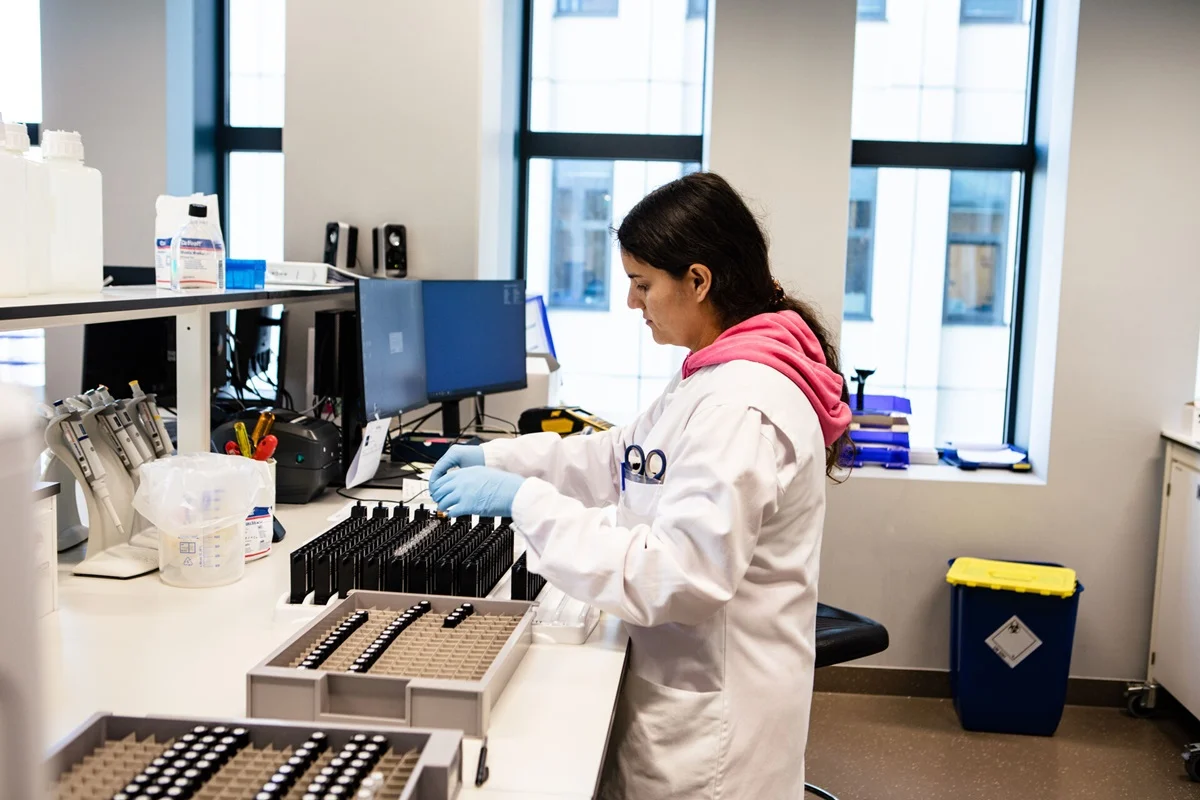
The World Health Organization (WHO) has officially launched its World Health Day 2026 campaign, centering on the theme “Together for health. Stand with science.” This year’s observance carries significant historical weight as it marks the 78th anniversary of the organization’s founding on April 7, 1948. In a comprehensive call to action directed at governments, academic institutions, and the private sector, the WHO is advocating for a renewed global commitment to scientific inquiry and multilateral cooperation as the fundamental pillars of human well-being. The 2026 campaign is designed as a year-long mobilization effort, aiming to bridge the gap between laboratory innovation and public policy while addressing the burgeoning threats of climate change, emerging pathogens, and health misinformation.
The theme “Together for health. Stand with science” arrives at a critical juncture in global history. While the world has witnessed unprecedented medical breakthroughs over the last century, the current era is defined by a paradoxical tension: while scientific capability is at an all-time high, public trust in scientific institutions and the equitable distribution of medical resources remain under significant strain. By centering the 2026 agenda on these "twin engines" of progress, the WHO seeks to reinforce the idea that health outcomes are not merely the result of biological luck but are the products of intentional, evidence-based collective action.
A Century of Transformation: The Impact of Scientific Progress
The rationale behind the 2026 theme is rooted in the tangible successes of the past several decades. According to data highlighted by the WHO, human health has undergone a profound transformation that would have been unimaginable to the generations living at the time of the organization’s inception in 1948. One of the most striking indicators of this progress is the global maternal mortality rate, which has plummeted by more than 40% since the year 2000. This decline is attributed to a combination of better clinical practices, improved access to emergency obstetric care, and the scientific refinement of prenatal monitoring.
Similarly, the mortality rate for children under the age of five has been reduced by over 50% in the same period. This achievement is largely credited to the widespread implementation of immunization programs, improved nutritional science, and the development of low-cost interventions for pneumonia, diarrhea, and malaria. Advances in technology, ranging from the mapping of the human genome to the application of artificial intelligence in drug discovery, continue to redefine what is possible in the medical field. Health challenges that were once considered terminal or severely debilitating—such as HIV/AIDS, certain forms of cancer, and chronic hypertension—have been transitioned into manageable conditions through the rigorous application of scientific research and the scaling of pharmaceutical innovations.
The Chronology of Global Health Leadership
The history of the WHO is a timeline of science-led interventions that have reshaped the global landscape. Founded in the aftermath of World War II, the WHO was established on the principle that health is a fundamental human right and a prerequisite for global peace and security.
- 1948: The WHO Constitution comes into force on April 7, establishing the organization’s headquarters in Geneva.
- 1950s-1960s: Mass campaigns against tuberculosis and the launch of the Global Smallpox Eradication Programme.
- 1980: The official declaration of the eradication of smallpox, marking the first time in history that a human disease was eliminated through scientific and diplomatic collaboration.
- 2000-2015: The Millennium Development Goals (MDGs) era, which saw a massive influx of funding and research into infectious diseases like HIV, malaria, and TB.
- 2020-2023: The COVID-19 pandemic response, which accelerated vaccine technology (mRNA) and highlighted the necessity of global genomic surveillance.
- 2026: The current "Stand with Science" campaign, which shifts focus toward integrating "One Health" approaches—linking human, animal, and environmental health—to prevent future crises.
This chronology demonstrates that every major leap in life expectancy and disease control has been preceded by a breakthrough in scientific understanding, followed by a coordinated international policy response.
Strategic High-Level Convenings: Lyon and Beyond
To catalyze the 2026 theme into actionable policy, the WHO, in partnership with the G7 Presidency of France, is convening the One Health Summit in Lyon from April 5 to April 7. This summit is expected to bring together an elite assembly of Heads of State, leading epidemiologists, environmental scientists, and community organizers. The choice of Lyon is symbolic, as the city has long been a hub for international biological research and is home to the WHO Academy.
The One Health Summit will focus on the intersection of environmental degradation and human pathology. As climate change alters habitats, the risk of zoonotic spillover—where diseases jump from animals to humans—increases. The summit aims to establish a unified framework for monitoring these risks, ensuring that scientific data from the field is translated into immediate political action.
Following the summit, from April 7 to April 9, the WHO will host the Global Forum of its Collaborating Centres network. This network represents a formidable scientific infrastructure, comprising over 800 academic and research institutions across more than 80 countries. These centres serve as the "nervous system" of the WHO, providing the technical expertise required to set international standards for everything from vaccine composition to mental health care protocols. The 2026 Forum will specifically address how to maintain scientific rigor in an age of rapid digital communication and how to ensure that low- and middle-income countries are contributors to, and not just consumers of, scientific innovation.
Official Perspectives: The Moral and Practical Imperative of Science
Dr. Tedros Adhanom Ghebreyesus, Director-General of the WHO, emphasized that the current standard of living enjoyed by billions is a direct dividend of scientific investment. "Science is one of humanity’s most powerful tools for protecting and improving health," Dr. Tedros stated. He pointed to historical milestones such as the discovery of penicillin, the development of germ theory, and the invention of MRI machines as evidence of science’s transformative power. He noted that the average person today lives longer and healthier than their ancestors precisely because of the persistence of scientific inquiry.
However, the WHO leadership also issued a stern warning regarding the dangers of anti-science sentiment. Dr. Sylvie Briand, WHO Chief Scientist, highlighted the risks of allowing bias and misconception to dictate health policy. "Science transforms uncertainty into understanding," Dr. Briand said. "Without the clarity of rigorous scientific inquiry, we risk being led by bias—and too often toward treatments that fail us or even place us in harm’s way." Her remarks underscore a growing concern within the medical community: the "infodemic" of misinformation that can undermine vaccination efforts and public trust in healthcare systems.
Broader Implications: Addressing Emerging Threats
The "Stand with Science" campaign is not merely a retrospective celebration; it is a forward-looking strategy to address a new generation of health threats. The WHO identifies four primary drivers of future health instability: climate change, environmental degradation, geopolitical tensions, and shifting demographics (such as aging populations).
- Climate and Environment: Scientific modeling suggests that rising temperatures are expanding the range of vector-borne diseases like dengue and Zika. Standing with science in this context means integrating meteorological data into public health planning.
- Geopolitical Tensions: Conflict often leads to the collapse of health infrastructure and the interruption of scientific data sharing. The WHO is calling for "health peace," where scientific collaboration remains a neutral zone even during political disputes.
- Antimicrobial Resistance (AMR): Often called the "silent pandemic," the evolution of drug-resistant bacteria threatens to undo a century of medical progress. The 2026 campaign emphasizes the need for scientific innovation in developing new antibiotics and diagnostic tools to preserve the efficacy of modern medicine.
- Health Equity: A central tenet of the 2026 campaign is that science is only truly successful when its benefits are universal. The WHO is advocating for a "science for all" approach, ensuring that the latest genomic therapies or digital health tools are accessible in rural clinics in sub-Saharan Africa as readily as they are in urban centers in Europe.
Conclusion: A Call for Evidence-Based Decision Making
As World Health Day 2026 unfolds, the message from the World Health Organization is clear: the future of human longevity and security depends on the strength of our commitment to evidence-based decision-making. The "Together for health. Stand with science" campaign serves as a reminder that the eradication of diseases and the improvement of health systems are not inevitable; they require constant vigilance, funding, and a shared respect for the scientific method.
By uniting governments and scientific institutions, the WHO aims to build a global health architecture that is resilient enough to withstand the next pandemic and visionary enough to eliminate the health disparities that persist today. As the year-long campaign begins, the global community is urged to view science not as an abstract academic pursuit, but as the practical, life-saving engine that drives the well-being of every individual on the planet. Through collaboration and a steadfast adherence to facts over ideology, the WHO asserts that the next 78 years of global health can be even more transformative than the last.
