
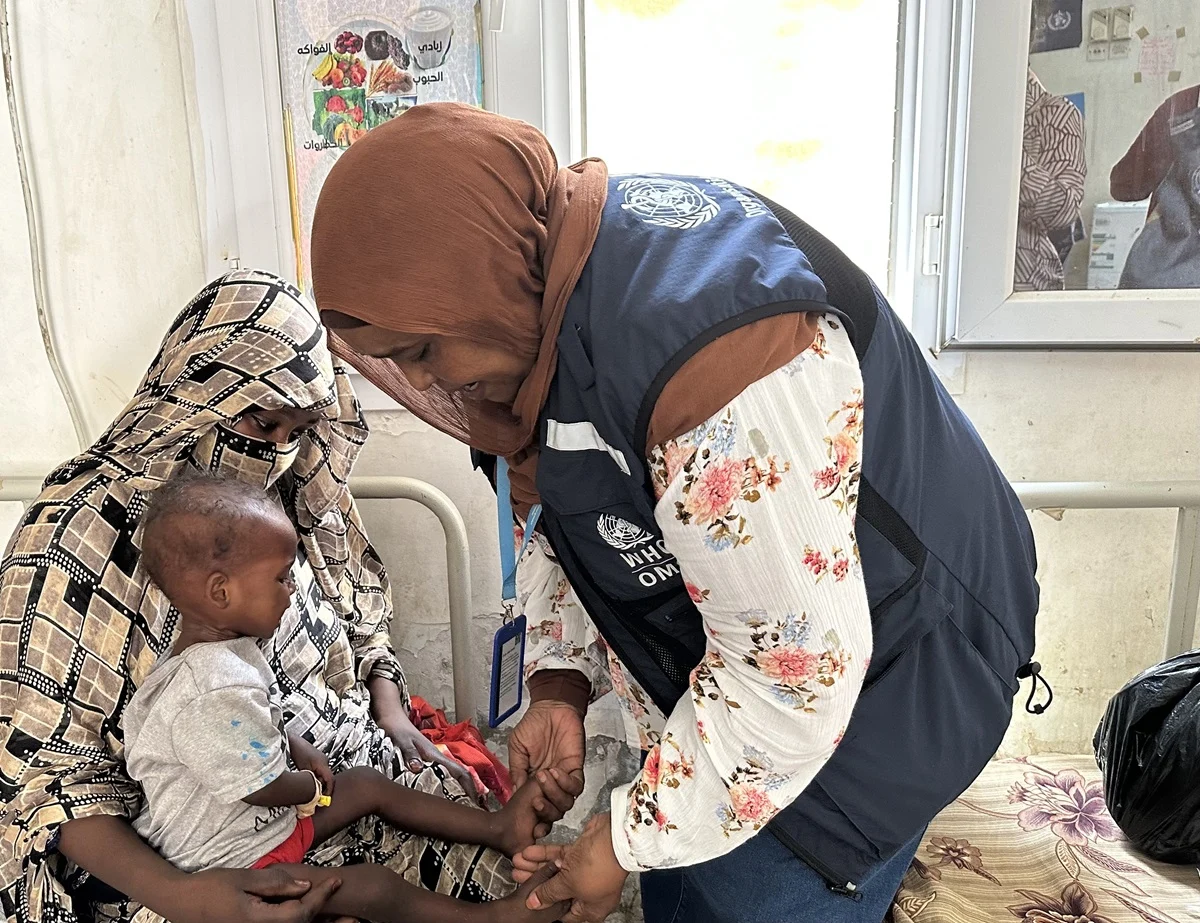
The Republic of Sudan has officially descended into the world’s most severe humanitarian catastrophe following three years of relentless civil warfare, with 34 million people now in desperate need of life-saving assistance. As of April 2026, the nation’s infrastructure has reached a point of near-total systemic failure, leaving 21 million citizens without access to basic health services. The World Health Organization (WHO) and various international observers report that the medical system, already fragile prior to the outbreak of hostilities, has been systematically dismantled by repeated targeted attacks, widespread disease, and a famine that threatens to claim an entire generation. While some administrative states have seen marginal improvements in stability, the health crisis continues to deepen in active combat zones, where the convergence of malnutrition and infectious disease creates a lethal environment for the civilian population.
The Collapse of a National Health Infrastructure
The scale of the destruction within Sudan’s healthcare sector is staggering. According to the latest WHO assessments, approximately 37% of health facilities across Sudan’s 18 states are currently non-functional. In regions most affected by the fighting, such as Darfur, Kordofan, and Khartoum, the percentage of operational hospitals is significantly lower. Many facilities that remain "functional" are only partially so, operating without consistent electricity, clean water, or essential surgical supplies.
The violence has not spared medical professionals or the infrastructure specifically protected under international humanitarian law. Since the conflict erupted on April 15, 2023, the WHO has verified 217 distinct attacks on healthcare entities. These incidents have resulted in at least 2,052 deaths and 810 injuries among patients and staff. The psychological toll on the remaining healthcare workforce is immense, as doctors and nurses are forced to operate under the constant threat of bombardment or arbitrary detention. The loss of specialized medical personnel—many of whom have fled the country or been killed—has created a "brain drain" that will take decades to rectify.
A Three-Year Chronology of Crisis: 2023–2026
The trajectory of the Sudanese conflict has been one of steady escalation and geographic expansion. Understanding the current 2026 milestone requires a look back at the milestones of this collapse:
- April 2023: Hostilities break out in Khartoum between the Sudanese Armed Forces (SAF) and the Rapid Support Forces (RSF). Major hospitals in the capital are occupied or bombed within the first week.
- Late 2023: The conflict spreads to the Darfur and Kordofan regions. Reports of ethnic-based violence and mass displacement begin to emerge, overwhelming the few remaining rural clinics.
- February 2024: The first major cholera outbreak is declared. International aid is hampered by bureaucratic hurdles and active frontlines.
- 2025: A "hunger gap" transforms into a full-scale famine in several pockets of the country. Malnutrition rates among children under five reach emergency thresholds in displaced person camps.
- February 2026: The Integrated Food Security Phase Classification (IPC) issues a high-level alert, estimating that over 4 million people are acutely malnourished, making them highly susceptible to medical complications from otherwise treatable diseases.
- March 2026: A year-long, sustained effort finally sees the most recent cholera outbreak declared over, though the risk of resurgence remains high due to destroyed water and sanitation infrastructure.
- April 2026: The three-year anniversary of the war marks Sudan as the largest humanitarian crisis globally, surpassing other active global conflicts in terms of the total population in need.
The Synergy of Malnutrition and Infectious Disease
The health crisis in Sudan is not defined solely by trauma injuries from the war but by the synergistic relationship between hunger and disease. Malnutrition weakens the immune system, turning common ailments into death sentences. In 2026, the medical community is battling a "polycrisis" of outbreaks. Malaria remains the leading cause of morbidity, but it is joined by rising cases of dengue fever, measles, and hepatitis E.
Of particular concern to the global health community is the resurgence of polio (cVDPV2) and the spread of diphtheria and meningitis across Al Jazirah, Gedaref, and the White Nile states. These outbreaks are fueled by the mass displacement of over 11 million people—the largest internal displacement crisis on Earth—who are often forced into overcrowded camps with minimal sanitary facilities. The lack of clean water has made the management of waterborne diseases an uphill battle for the WHO and its partners.
The Tragedy of El Daein and the Kordofan Regions
The Greater Darfur and Kordofan regions represent the epicenter of the current medical vacuum. In these areas, the movement of humanitarian supplies is severely restricted by shifting frontlines and the presence of various armed factions. A poignant example of the devastation is the recent attack on the El Daein Teaching Hospital in East Darfur.
Before its destruction, El Daein served as a critical referral hub for hundreds of thousands of people. The attack resulted in at least 64 fatalities, including children in pediatric wards and health workers on duty. The facility is now non-functional, leaving an entire region without surgical capacity or emergency maternal care. This pattern of targeting referral centers ensures that even those who survive direct violence may perish from secondary causes, such as obstructed labor or infected wounds.
International Response and the WHO’s Strategic Interventions
Despite the hazardous conditions, the international community, led by the WHO, has maintained a presence on the ground. Dr. Shible Sahbani, the WHO Representative to Sudan, emphasized that the organization has been active since the first day of the conflict, focusing on supply chain management, disease surveillance, and the training of local health workers.
Since April 2023, the WHO has successfully delivered over 3,300 metric tons of medicines and medical supplies. These shipments include trauma kits for the war-wounded, supplies for cholera treatment, and nutritional supplements for malnourished children. Furthermore, WHO-supported services have provided essential care to more than 4.1 million people through a network of primary health centers, mobile clinics, and surviving hospitals.
In a landmark public health achievement amidst the chaos, Sudan became the first country in the region to include malaria vaccines in its routine immunization program. Vaccination campaigns supported by the WHO have reached more than 46 million people with vaccines for cholera, polio, measles, and rubella. Additionally, over 118,000 children suffering from complicated severe acute malnutrition have received specialized inpatient treatment, preventing a significantly higher death toll.
Official Statements and Global Appeals
The leadership of the World Health Organization has been vocal regarding the necessity of a political solution to the health crisis. Dr. Tedros Adhanom Ghebreyesus, WHO Director-General, recently stated, “The war in Sudan is devastating lives and denying people their most basic rights, including health, water, food, and safety. The health system has been crippled, leaving millions without essential health care. Doctors and health workers can save lives, but they must have safe places to work and the medicines and supplies they need. Ultimately, the best medicine is peace.”
Echoing this sentiment, Dr. Hanan Balkhy, WHO Regional Director for the Eastern Mediterranean, highlighted the long-term implications of the crisis. “Three years in conflict have turned Sudan into the world’s largest ongoing health crisis. With millions lacking basic medical care, facing hunger, and at risk of disease, Sudan’s health crisis continues to deepen. We remain committed to the people of Sudan, but the urgent need for humanitarian support and long-term solutions cannot be overstated.”
Analysis of Broader Implications and Future Risks
The implications of the Sudanese crisis extend far beyond its borders. The collapse of the Sudanese state poses a significant threat to the stability of the Horn of Africa and the Sahel. The mass migration of refugees into neighboring Chad, Egypt, and South Sudan—countries already grappling with their own internal challenges—is straining regional resources and potentially exporting disease outbreaks.
Furthermore, the "lost generation" of Sudanese children, who have missed three years of vaccinations and schooling while suffering from chronic malnutrition, will face lifelong physical and cognitive challenges. This creates a long-term developmental vacuum that will hinder Sudan’s recovery even after a ceasefire is reached. The destruction of national reference laboratories also means that Sudan’s ability to detect and respond to future pandemics has been compromised, creating a blind spot in global health security.
The Urgent Need for Sustainable Funding and Access
The WHO and its partners continue to face two primary obstacles: access and funding. Large swaths of the country remain "no-go" zones for humanitarian convoys, necessitating dangerous and expensive cross-border operations. Moreover, the global humanitarian appeal for Sudan remains chronically underfunded as international attention is diverted by other global emergencies.
The WHO has reiterated its call for unrestricted and safe access to all areas of Sudan, the protection of healthcare facilities from military use or targeting, and a sustained commitment from international donors. The recent editorial updates to the WHO’s findings on April 15, 2026, serve as a grim reminder that the numbers—though staggering—represent individual lives, families, and a nation’s future.
In conclusion, the situation in Sudan is a stark reminder that health and peace are inextricably linked. While the WHO and its partners have managed to stave off even higher mortality rates through vaccinations and emergency supplies, these are temporary measures. Without a comprehensive ceasefire and a return to civil governance, the world’s largest humanitarian crisis will continue to expand, claiming more lives through the quiet persistence of hunger and disease than through the violence of the battlefield. Peace is no longer just a political goal for Sudan; it is a clinical necessity.
