
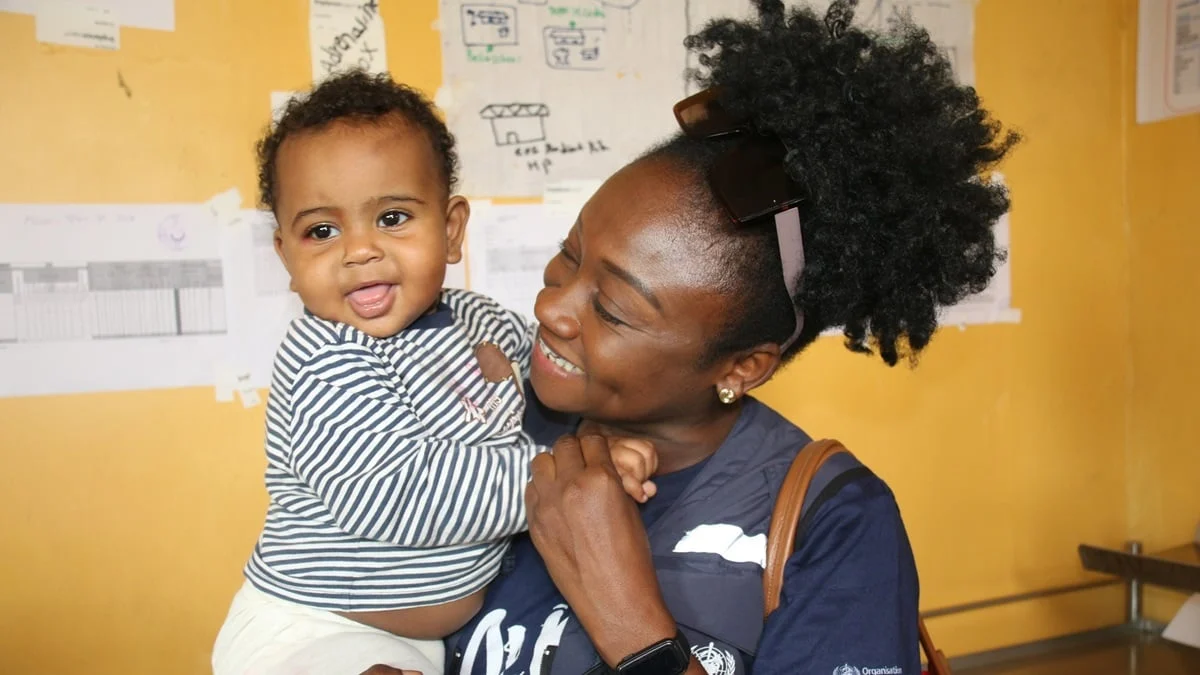
The World Health Organization (WHO) has announced a landmark achievement in pediatric medicine and infectious disease management with the prequalification of the first antimalarial treatment specifically formulated for newborns and infants weighing between two and five kilograms. This announcement, made in the lead-up to World Malaria Day on April 25, 2026, represents a critical shift in the global strategy to protect the most vulnerable demographic in malaria-endemic regions. The newly approved formulation of artemether-lumefantrine is designed to provide precise dosing for neonates, a group that has historically been underserved by standard pharmaceutical developments. By securing WHO prequalification, the treatment is now certified to meet rigorous international standards for safety, efficacy, and quality, clearing the way for large-scale procurement by international agencies and national health ministries.
For decades, healthcare providers in sub-Saharan Africa and other high-burden areas have faced a significant therapeutic dilemma when treating malaria in very young infants. Because no dedicated pediatric formulations existed for those under five kilograms, clinicians were often forced to adapt adult or older-child tablets. This process typically involved crushing tablets and attempting to estimate a fraction of the dose based on the infant’s weight. Such improvised methods carry substantial risks, including under-dosing, which can lead to treatment failure and the development of drug resistance, or over-dosing, which can result in acute toxicity and severe side effects in a patient group with immature hepatic and renal functions. The introduction of a quality-assured, weight-appropriate formulation is expected to significantly reduce these clinical risks for the estimated 30 million infants born annually in malaria-risk zones.
Addressing the Diagnostic Crisis: New Tools for "Invisible" Parasites
In tandem with the therapeutic breakthrough, the WHO also announced the prequalification of three new rapid diagnostic tests (RDTs) on April 14, 2026. These tests are engineered to solve an escalating biological challenge: the emergence of "stealth" malaria parasites. Traditionally, the most effective RDTs for Plasmodium falciparum—the deadliest malaria parasite—rely on detecting a specific protein known as Histidine-Rich Protein 2 (HRP2). However, recent genomic surveillance has confirmed a disturbing trend in 46 countries, particularly within the Horn of Africa, where parasite strains have evolved to delete the pf-hrp2 and pf-hrp3 genes.
When these genes are missing, the parasite no longer produces the HRP2 protein, rendering it invisible to standard diagnostic tools. This genetic mutation has led to a surge in false-negative results, where infected individuals are told they are healthy, only to suffer from escalating symptoms. In some regions of East Africa, studies have indicated that up to 80% of malaria cases were being missed by traditional tests. The consequences of these diagnostic failures are often fatal, as delayed treatment allows the parasite to cross the blood-brain barrier, leading to cerebral malaria.
The three newly prequalified RDTs address this vulnerability by targeting a different protein: Plasmodium falciparum lactate dehydrogenase (pf-LDH). Unlike HRP2, the pf-LDH protein is essential for the parasite’s energy metabolism, making it much harder for the organism to "shed" or mutate away from without compromising its own survival. The WHO now recommends that any country reporting a false-negative rate of more than 5% due to gene deletions should transition immediately to these pf-LDH-based diagnostic tools. This policy shift is intended to safeguard the gains made in malaria control over the last two decades and ensure that no child dies simply because a test failed to detect a treatable infection.
A Chronology of Global Malaria Efforts: 2000 to 2026
The progress announced this week is the result of a long-term trajectory of innovation and international cooperation. To understand the significance of these 2026 milestones, it is necessary to examine the timeline of the global malaria response over the last quarter-century:
- 2000–2010: The Millennium Development Goals (MDGs) era saw the massive scale-up of Long-Lasting Insecticidal Nets (LLINs) and the introduction of Artemisinin-based Combination Therapies (ACTs) as the first-line treatment. During this decade, malaria mortality rates began to fall globally for the first time in recorded history.
- 2015: The WHO launched the "Global Technical Strategy for Malaria 2016–2030," aiming for a 90% reduction in cases and mortality.
- 2021: A historic milestone was reached with the WHO recommendation of the first malaria vaccine, RTS,S/AS01, for use in children living in regions with moderate to high transmission.
- 2023: The R21/Matrix-M vaccine was recommended, providing a more affordable and more easily manufactured alternative to scale up immunization.
- 2024–2025: Despite vaccine rollouts, the "World Malaria Report 2025" highlighted a stagnation in progress, with cases rising to 282 million due to climate change, conflict, and biological resistance.
- 2026: The current year marks the launch of the "Driven to End Malaria" campaign, focusing on precision medicine for newborns and advanced diagnostics to counter parasite evolution.
Analysis of Global Data and the 2025 World Malaria Report
The urgency of the new WHO prequalifications is underscored by the sobering data contained in the World Malaria Report 2025. While the period between 2000 and 2024 saw the prevention of 2.3 billion infections and the saving of 14 million lives, the most recent data indicates that the global trajectory is at a crossroads. In 2024, there were an estimated 610,000 deaths, an increase from the previous year. This rise is attributed to a "perfect storm" of challenges.
First, insecticide resistance has rendered many older-generation mosquito nets less effective. While next-generation nets—which utilize two different active ingredients to bypass resistance—now account for 84% of new distributions, the transition has been slow in some high-burden regions. Second, drug resistance, particularly to artemisinin, has been detected in Southeast Asia and parts of Africa, threatening the efficacy of the world’s most potent treatments. Third, the aforementioned diagnostic failures have created blind spots in surveillance.
However, the report also highlights pockets of extraordinary success. Forty-seven countries have now been certified as malaria-free, and 37 countries reported fewer than 1,000 indigenous cases in 2024. These success stories provide a blueprint for elimination, emphasizing that when political will is matched with adequate funding and modern technology, the disease can be eradicated.
Official Responses and Strategic Implications
The announcements have drawn strong reactions from global health leaders. Dr. Tedros Adhanom Ghebreyesus, WHO Director-General, emphasized that the tools for eradication now exist, but the primary obstacle remains the "funding gap." In his statement, Dr. Tedros noted that "Ending malaria in our lifetime is no longer a dream—it is a real possibility, but only with sustained political and financial commitment."
Public health analysts suggest that the prequalification of the newborn treatment will have immediate implications for the Global Fund to Fight AIDS, Tuberculosis and Malaria, as well as UNICEF. These organizations can now include the newborn formulation in their procurement catalogs, allowing for lower costs through bulk purchasing and ensuring that the medicine reaches the most remote clinics in Africa and Asia.
Furthermore, the introduction of pf-LDH RDTs is expected to trigger a massive procurement shift. National malaria control programs in countries like Ethiopia, Eritrea, and Djibouti—where HRP2 deletions are most prevalent—are expected to overhaul their diagnostic protocols by the end of 2026. This transition will require significant retraining of community health workers who must learn to interpret the new test formats.
Broader Impact: The Path to a Malaria-Free Future
The 2026 World Malaria Day theme, "Driven to End Malaria: Now We Can. Now We Must," reflects a renewed sense of agency within the global health community. The integration of vaccines, next-generation nets, and now, precision diagnostics and pediatric treatments, creates a multi-layered defense against the parasite.
The impact of the new newborn treatment extends beyond simple survival. Malaria in infancy is a leading cause of severe anemia and developmental delays. By providing a safe and effective cure for the youngest patients, health systems can reduce the long-term socio-economic burden on families and communities. When children are healthy, school attendance improves, and parents are not forced to miss work to provide bedside care, creating a positive feedback loop for regional economic stability.
However, the WHO warns that the progress remains fragile. International development assistance for malaria has seen severe reductions in recent years as global attention shifted toward pandemic preparedness and other geopolitical crises. To reach the 2030 targets, the WHO estimates that annual funding must nearly double from current levels.
As the world marks World Malaria Day 2026, the focus remains on closing the gap between scientific innovation and field implementation. The prequalification of specialized treatments for the smallest patients and advanced tests for the most elusive parasites demonstrates that science is keeping pace with the evolution of the disease. The remaining challenge is ensuring that these life-saving innovations reach the millions of households where they are needed most. The mission of the WHO remains clear: to lead the global response to health emergencies and expand access to care for the vulnerable, guided by the principle that every person, everywhere, deserves an equal chance at a healthy life.
