
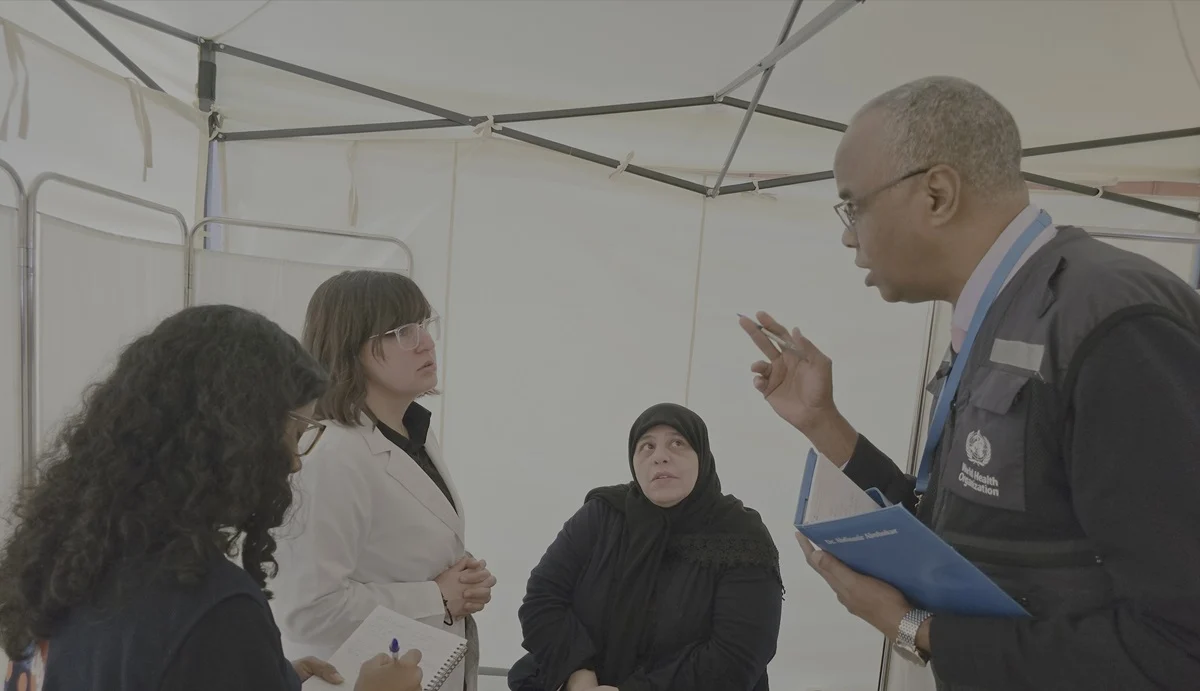
More than ten days into the latest and most severe escalation of hostilities across the Middle East, the World Health Organization (WHO) has issued a dire warning regarding the systematic degradation of regional health infrastructure. As the conflict intensifies, national health systems are being pushed toward a point of total collapse, characterized by a staggering rise in casualties, the mass displacement of civilians, and direct military strikes on medical facilities. The crisis, which spans multiple borders including Iran, Lebanon, Israel, and the occupied Palestinian territory, has created a multifaceted public health emergency that threatens to destabilize the region for years to come.
According to the latest figures provided by national health authorities and verified by international monitors, the human cost of the escalation is mounting rapidly. In Iran, officials have reported more than 1,300 fatalities and approximately 9,000 injuries. Across the border in Lebanon, the situation is equally catastrophic, with at least 570 deaths and more than 1,400 injuries documented. In Israel, authorities have reported 15 deaths and 2,142 injuries resulting from the ongoing exchange of fire. These figures, while already substantial, are expected to rise as search and rescue operations continue and as access to remote or heavily bombarded areas remains restricted.
A Chronology of Escalation and Targeted Infrastructure
The current crisis traces its most recent acute phase to late February, specifically February 28, which marked a turning point in the frequency and intensity of attacks on civilian and medical infrastructure. Over the past several weeks, the WHO has documented a disturbing trend of "attacks on health care," a term encompassing strikes on hospitals, ambulances, medical warehouses, and the killing or kidnapping of health workers.
Since February 28, the WHO has verified 18 distinct attacks on healthcare facilities in Iran, resulting in the deaths of eight health workers. In Lebanon, the scale of the destruction is even more pronounced; 25 verified attacks on healthcare have claimed the lives of 16 medical professionals and left 29 others injured. These incidents represent more than just the loss of individual lives; they signify the erosion of medical neutrality. Under international humanitarian law, health workers and facilities are granted protected status, yet the current conflict has seen these protections ignored, depriving entire communities of life-saving interventions at the very moment they are most needed.
The chronology of these events suggests a narrowing of the humanitarian space. What began as a series of localized skirmishes has evolved into a regional conflagration where the "front line" often encompasses the very hospitals meant to serve as sanctuaries for the wounded.
Mass Displacement and the Specter of Communicable Disease
Beyond the immediate trauma of kinetic warfare, a secondary crisis is unfolding in the form of mass human migration. The WHO estimates that more than 100,000 people in Iran have been forced to relocate within the country due to persistent insecurity. In Lebanon, the scale of displacement is nearly unprecedented in recent history, with up to 700,000 people internally displaced.
Many of these individuals are now residing in crowded collective shelters, such as schools and community centers, which were never designed to house such large populations. These facilities are suffering from a critical lack of access to safe water, sanitation, and hygiene (WASH) services. Public health experts warn that these conditions are a "tinderbox" for the spread of communicable diseases.
“The risk of respiratory infections, diarrheal diseases, and skin conditions like scabies increases exponentially in overcrowded settings where sanitation is compromised,” a WHO regional spokesperson noted. The most vulnerable populations—particularly women, children, and the elderly—are at the highest risk. In many Lebanese shelters, the ratio of people to functioning toilets far exceeds international humanitarian standards, creating an environment where a single outbreak of a waterborne illness could lead to a significant number of preventable deaths.
Environmental Hazards and Toxic Pollutants
The conflict has also introduced severe environmental risks that are complicating the medical response. In Iran, military strikes on industrial zones and energy infrastructure have resulted in massive petroleum fires. The resulting smoke plumes have exposed surrounding communities to a cocktail of toxic pollutants, including particulate matter, carbon monoxide, and sulfur dioxide.
Local health clinics have reported an influx of patients suffering from acute respiratory distress, severe eye irritation, and skin rashes linked to chemical exposure. Furthermore, there are growing concerns regarding the contamination of water and food sources. When petroleum products or chemical agents leak into the soil or groundwater, the health implications can persist for decades, manifesting as chronic illnesses or increased cancer rates in the affected populations. The WHO is currently working with environmental scientists to assess the long-term impact of these fires, though active combat makes comprehensive ground-level testing nearly impossible.
The Paralysis of Regional Health Services
Access to essential health services is becoming increasingly constrained as the geography of the conflict shifts. In Lebanon, the healthcare landscape has been dramatically altered by military evacuation orders. To date, 49 primary healthcare centers and five major hospitals have been forced to shut down following orders issued by the Israeli military. This represents a significant portion of the country’s medical capacity, particularly in southern regions where the need for trauma care is most acute.
The situation in the occupied Palestinian territory remains equally dire. In the West Bank, increased movement restrictions and the closure of key checkpoints have paralyzed the movement of ambulances and mobile clinics. Medical teams report being held at checkpoints for hours, often while transporting patients in critical condition.
In the Gaza Strip, the health system is operating in a state of "functional collapse." Medical evacuations for patients requiring specialized treatment abroad have been entirely suspended since February 28. Hospitals that remain partially functional are doing so under extreme duress, facing chronic shortages of medicines, surgical supplies, and fuel. Fuel rationing has become a daily necessity, with hospital administrators forced to make impossible choices: whether to power neonatal incubators, run oxygen generators, or maintain emergency room lighting. Current priorities are limited to trauma care, maternal services, and the management of communicable diseases, leaving thousands of patients with chronic conditions like cancer or kidney failure without any viable treatment options.
Disruptions to Global Supply Chains and the Dubai Hub
The ripple effects of the conflict have extended to the global logistics of humanitarian aid. The WHO’s global logistics hub in Dubai, which serves as a central artery for medical supplies to the Middle East, Africa, and parts of Asia, has been hampered by temporary airspace restrictions.
These logistical bottlenecks have affected more than 50 emergency supply requests intended to benefit over 1.5 million people across 25 different countries. The resulting backlogs mean that life-saving equipment—from trauma kits to cholera treatment supplies—is sitting in warehouses rather than being deployed to the field.
The WHO is currently prioritizing shipments to Al Arish in Egypt to support the Gaza response, as well as critical deliveries to Lebanon and Afghanistan. However, the unpredictability of regional flight paths and the increased cost of freight are straining the agency’s operational capacity. While a shipment of cholera response supplies is expected to depart for Mozambique in the coming week, the overall flow of aid remains significantly below the required levels.
The Funding Gap and the Path to Recovery
The current escalation has struck a region that was already grappling with some of the highest humanitarian needs globally. Across the Eastern Mediterranean, an estimated 115 million people—nearly half of all people in need of humanitarian assistance worldwide—were already requiring aid before this latest round of fighting began.
Despite the scale of the crisis, humanitarian health emergency appeals remain 70% underfunded. This financial shortfall limits the WHO’s ability to procure medicines, deploy emergency medical teams, and repair damaged infrastructure. Without a significant influx of capital and a commitment to sustained humanitarian access, the international community risks watching the total disintegration of health systems that took decades to build.
In its concluding assessment, the WHO emphasized that the crisis cannot be solved through medical aid alone. The organization has called on all parties to the conflict to immediately cease attacks on healthcare facilities and personnel, to ensure the unimpeded movement of humanitarian supplies, and to pursue a diplomatic path toward de-escalation.
The long-term implications of this conflict extend beyond the immediate casualty counts. The destruction of hospitals, the flight of skilled medical professionals (a "brain drain" that often follows such conflicts), and the psychological trauma inflicted on the population will require a multi-generational recovery effort. For now, the focus remains on the immediate preservation of life in a region where the very systems designed to save lives are themselves under fire.
