

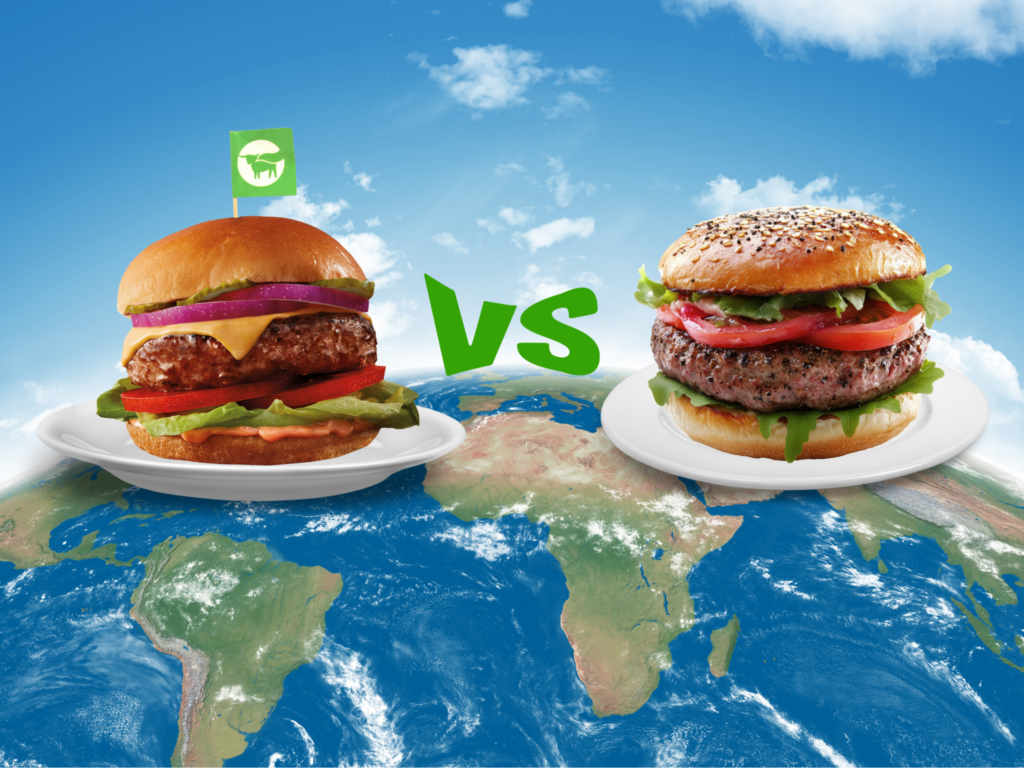
Beyond Meat’s flagship Beyond Burger and Beyond Steak have achieved a significant milestone, becoming the first plant-based meat products to officially qualify for the "Climate Solutions" certification. This recognition, awarded under a framework developed by the Exponential Roadmap Initiative (ERI) and Oxford Net Zero, underscores the substantial environmental benefits of these products when compared to their conventional meat counterparts. The certification arrives at a critical juncture for Beyond Meat, a company navigating a period of intense scrutiny regarding its strategic direction and financial performance.
The "Climate Solutions" designation signifies that Beyond Burger and Beyond Steak demonstrably reduce global greenhouse gas emissions by at least 50% compared to the weighted average of the market options they aim to replace. This benchmark is a key component of the ERI’s framework, designed to identify and promote products and services that actively contribute to mitigating climate change and fostering a transition to a net-zero economy.
This environmental validation arrives as Beyond Meat undergoes a significant corporate evolution. The company recently rebranded to "Beyond The Plant Protein Company," signaling a strategic expansion beyond its core meat alternative offerings into adjacent categories, notably protein drinks. This diversification coincides with a challenging financial period for the company, which reported its lowest annual revenue last year. Consequently, Beyond Meat’s messaging and market strategy have increasingly focused on the health and protein benefits of its products, leading some observers to question whether sustainability remains a primary pillar of its corporate identity and public communication.
The "Climate Solutions" certification appears to be Beyond Meat’s direct response to these concerns, aiming to reaffirm its foundational commitment to environmental action. Ethan Brown, Founder and CEO of Beyond Meat, articulated this sentiment: "We believe in the power of plants to fuel our bodies and to heal the planet. We are dedicated to building a more sustainable, more humane food system, and I am thrilled that ERI has recognised Beyond Burger and Beyond Steak for their role in tackling the climate crisis, which has been part of our mission since day one."
A Rigorous Framework for Environmental Impact

The Exponential Roadmap Initiative’s climate solutions framework provides a robust methodology for assessing and certifying products and companies based on their contribution to climate action. For individual products, the primary criterion is a significant reduction in emissions compared to established market alternatives. The framework also sets stringent requirements for companies seeking certification, demanding that at least 90% of their revenue stems from climate solution products. Furthermore, certified companies must demonstrate near-term emissions reduction targets, commit to net-zero goals encompassing Scopes 1, 2, and 3 emissions, provide annual disclosures of their progress, and actively work towards transforming their respective sectors.
Crucially, the framework also includes safeguards against unintended negative environmental consequences. Certified products and companies must not pose a significant threat to biodiversity and ecosystems, or negatively impact water and marine resources. Additionally, they must not contribute to the longevity of fossil-fuel-dependent technologies or generate substantial pollution. This holistic approach distinguishes the "Climate Solutions" certification from simpler carbon footprint labeling. In 2023, Oatly, the oat milk producer, was the first food and beverage company to achieve "Climate Solutions" business certification, setting a precedent for the industry.
The certification for Beyond Meat’s plant-based burger and steak is the culmination of a detailed assessment conducted by ERI. The company asserts that its mission to combat climate change and preserve natural resources has been integral to its operations since its inception. In December of the previous year, Beyond Meat released a third-party-reviewed life-cycle assessment (LCA) for its Beyond IV beef platform. This comprehensive analysis revealed that the latest iteration of the Beyond Burger generates an impressive 88% fewer greenhouse gas emissions than a conventional 80/20 beef patty. The LCA also indicated that the plant-based alternative requires 28% less non-renewable energy, 92% less water, and 97% less land. When emissions associated with land-use change within the Beyond Burger supply chain are factored in, the plant-based product’s greenhouse gas output is reduced by 86% compared to conventional beef.
The current "Climate Solutions" qualification applies specifically to Beyond Meat products sold in the United States and is valid until February 2027. The assessment determined that the emissions associated with a quarter-pound uncooked Beyond Burger patty delivered to retailers and foodservice outlets, along with 88 grams of cooked Beyond Steak, are at least 50% lower than comparable beef products available in the U.S. market. This granular data provides concrete evidence supporting the environmental claims.
Navigating a Period of Unprecedented Challenge
The achievement of the "Climate Solutions" certification comes at a time when Beyond Meat is facing its most significant operational and financial challenges since becoming a publicly traded company. In 2025, the company experienced a substantial revenue decline of 15.6%, falling to $275.5 million, marking its lowest annual total to date. This financial downturn has led to workforce reductions and a significant drop in its stock value, even resulting in a delisting warning from the Nasdaq stock exchange due to its failure to meet minimum share price requirements.
In an effort to reverse these trends, Beyond Meat has strategically diversified its product portfolio. Recognizing the growing consumer demand for protein-rich options, the company launched "Beyond Immerse," a line of sparkling protein drinks. This move aims to tap into a market segment increasingly focused on health and wellness, leveraging the company’s expertise in plant-based protein innovation.
Ethan Brown addressed this strategic shift during the company’s Q4 earnings call, stating, "I believe that no company has innovated with plants under more scrutiny than Beyond ever. We’re now bringing the resulting hard-fought expertise and capabilities, our commitment to health and clean ingredients, and our brand to adjacent categories, where we believe we can be disruptive and win." He further emphasized that this expansion is not a departure from the company’s core mission but rather an amplification of it. "Far from stepping away from our mission to change the source of protein at the center of the plate from animals to plants, we reaffirm it, and take to these promising adjacencies to introduce our brand to a much larger number of consumers than currently participating in the plant-based meat category," Brown explained.
The CEO expressed a long-term aspiration that this broader brand engagement will ultimately drive consumers back to Beyond Meat’s core plant-based meat offerings. "In the end, it is our aspiration that, though indirect, this expansion will lead more consumers back to Beyond at the center of their plate as they enjoy our brand, clean ingredients, and commitment to their health in less controversial, more convenient products like Beyond Immerse," he concluded.
Implications and Future Outlook
The "Climate Solutions" certification offers Beyond Meat a valuable opportunity to re-center its narrative around its environmental impact, potentially mitigating some of the skepticism stemming from its recent financial struggles and strategic pivot. By highlighting this achievement, the company can reinforce its commitment to sustainability and its role in the broader transition towards a net-zero economy.
Johan Falk, co-founder and CEO of the Exponential Roadmap Initiative, commented on the significance of Beyond Meat’s achievement: "We are thrilled to recognize pioneering products such as Beyond Burger and Beyond Steak that support the global transition toward a net-zero economy. We created the climate solutions framework to highlight climate solutions, such as these Beyond Meat products, to remind companies that exponential growth of such qualifying products and services is just as important as decarbonisation of higher-emitting market alternatives."

The certification’s emphasis on significantly lower emissions aligns with global climate goals, such as limiting post-industrial temperature rises to below 1.5°C by 2100. When products like Beyond Burger and Steak displace highly polluting alternatives like conventional beef, they accelerate progress toward these ambitious targets.
The long-term implications of this certification for Beyond Meat are multifaceted. While it provides a strong marketing and communication tool to highlight its environmental credentials, the company must continue to demonstrate financial stability and growth. The success of its diversification strategy into areas like protein drinks will be crucial in the coming years. Furthermore, the ongoing evolution of the plant-based meat market and the increasing scrutiny of environmental claims by consumers and investors will require Beyond Meat to maintain transparency and continuous innovation.
The "Climate Solutions" certification serves as a reminder that even amidst financial headwinds and strategic adjustments, the core environmental value proposition of plant-based meat alternatives remains compelling. For Beyond Meat, this recognition offers a vital platform to reaffirm its mission and potentially regain consumer and investor confidence by demonstrating that its innovative products are not only good for consumers’ health but also demonstrably beneficial for the planet. The company’s ability to leverage this certification effectively, while simultaneously navigating its financial challenges, will be key to its future success.
