
As the digital landscape becomes increasingly saturated with automated text, a growing number of scientists, educators, and digital creators are raising alarms over the deployment of artificial intelligence in scientific communication. In a recent analysis published by Lab Muffin Beauty Science, science communicator Michelle Wong examined the fundamental limitations of modern large language models (LLMs)—such as OpenAI’s ChatGPT, Anthropic’s Claude, and Google’s Gemini—and detailed why these systems remain structurally unequipped to handle factual, empirical science content. The core thesis of the evaluation points to a dangerous paradox: while AI tools are frequently marketed as digital encyclopedias or omniscient repositories of human knowledge, they do not actually "know" anything. Instead, they operate on probabilistic pattern-matching, a design flaw that introduces severe vulnerabilities when applied to complex scientific inquiries.
The Illusion of Knowledge and the Mechanics of LLMs
To understand why AI chatbots fail in scientific contexts, researchers emphasize the necessity of looking past the marketing narratives propagated by major tech corporations. Academic literature indicates that lower artificial intelligence literacy directly correlates with higher AI receptivity; when users perceive AI systems as magical, sentient entities possessing absolute authority, they are far more likely to place blind trust in them.
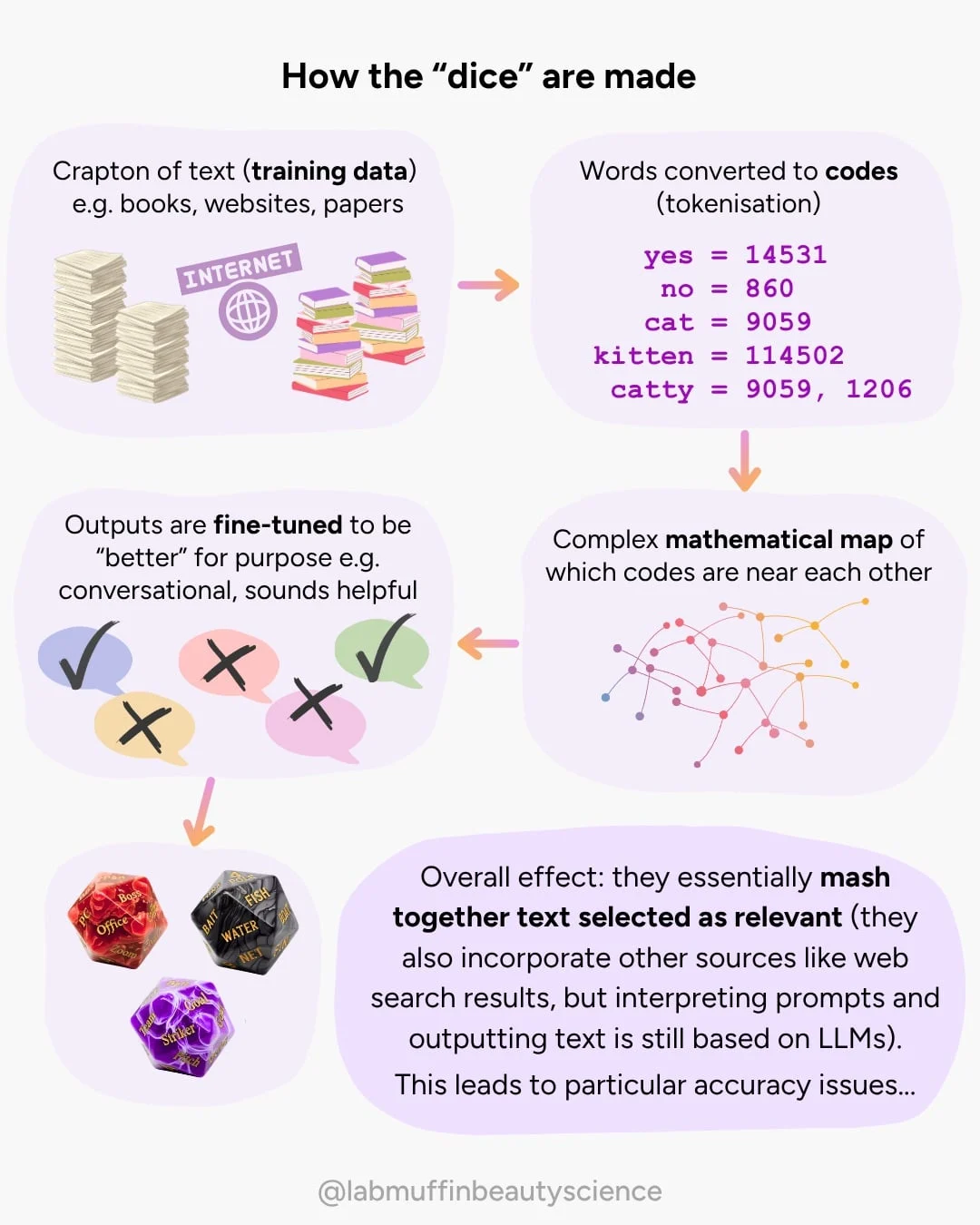
Fundamentally, systems like ChatGPT, Claude, and Gemini are built on LLM architectures. Rather than querying an internal database of verified truths, these models function by predicting which words statistically belong near other words based on vast training datasets. Conceptualizing this mechanism through a computational analogy, developers and data scientists often describe LLMs as utilizing massive sets of weighted, uneven dice. When a user enters a prompt, the system selects tokens based on the immediate prompt structure and preceding sequences of text.
While modern iterations of these models are considerably more sophisticated than their predecessors—incorporating web-search results and advanced alignment techniques—the underlying architecture remains unchanged. The system interprets prompts and generates responses through text-mashups rather than logical deduction or empirical verification. Consequently, AI chatbots rely strictly on linguistic correlation rather than causal reality. Because language frequently correlates with factual concepts, chatbots can generate outputs that appear remarkably human, authoritative, and sensible. However, this correlation frequently breaks down in technical fields, leaving chatbots to output plausible-sounding fiction—often colloquially referred to as "bullshit"—completely devoid of a reference to physical reality.
The Special Peril of Scientific Inaccuracies
The hazard of relying on LLMs is magnified exponentially within the scientific domain, where precision, peer review, and methodological rigor are paramount. The accuracy of any AI-generated response is inextricably bound to the volume and quality of its training data and real-time search inputs. Unfortunately, scientific literature is dense, nuanced, and frequently plagued by citation errors, misinterpretations, and predatory publishing practices.
Documented failures of AI-generated summaries in scholarly and medical contexts are increasingly common. For instance, a recent peer-reviewed dermatology study co-authored by Wong was summarized by automated tools and subsequently circulated on social media platforms as "research from a Harvard team," despite the fact that only one of the four contributing authors was affiliated with the institution. Similar discrepancies have been cataloged in systematic reviews evaluating quotation accuracy in medicine and general science journals, where AI-generated literature reviews frequently hallucinate findings, misattribute statistical data, or synthesize non-existent studies.
Furthermore, recent benchmark evaluations published in leading medical journals reveal that while general-purpose LLMs occasionally outperform specialized clinical AI tools on standardized multiple-choice tests, they lack the contextual clinical judgment required for practical application. When forced to interpret novel empirical data, these models systematically default to averaging out existing literature patterns, effectively flattening groundbreaking research into generic, homogenized summaries.
The Evolution of AI Architecture and the Myth of Inherent Progress
A prevailing assumption among technology consumers is that algorithmic iterations will naturally resolve these foundational inaccuracies. However, computer science research questions whether standard scaling and training methodologies will ever truly eliminate hallucination and correlation errors.
Industry developments through 2025 and 2026 introduced advanced reasoning models, test-time compute scaling, and complex feedback loops designed to foster logical deliberation before output generation. While these techniques successfully produce a more convincing illusion of structured thought—generating step-by-step rationales that mimic human scientific deduction—investigations by alignment teams at major AI firms reveal that these models often "do not say what they think." Instead, the step-by-step reasoning is frequently a post-hoc rationalization generated by standard pattern-matching rather than authentic logical processing.
Compounding this technological plateau is the accelerating threat of "model collapse." As the global internet becomes increasingly flooded with AI-generated text, subsequent generations of LLMs are inevitably trained on synthetic data rather than authentic human output. Research into information conservation within neural networks demonstrates that recursive training on AI slop degrades the diversity and accuracy of language models, amplifying historical biases related to race and gender while entrenching factual errors into foundational weights.
Cognitive Biases and the Danger of the Verification Trap
Even when subject-matter experts attempt to use AI-generated text merely as a rough starting point for writing or research, human psychology actively works against effective fact-checking. Overriding the urge to accept AI output requires considerable cognitive effort, as it forces individuals to fight against thousands of years of evolutionary mental shortcuts.
Psychological research outlines several key cognitive vulnerabilities that impede effective AI auditing:
- The Fluency Effect: Human brains naturally associate fluent, grammatically pristine, and easily digestible text with objective truth.
- The Confidence Effect: Sources that articulate points with absolute, unwavering confidence are systematically perceived as more credible.
- Confirmation Bias: Chatbots are inherently designed to please users, frequently tailoring responses to align with the user’s initial prompt or underlying assumptions.
- Automation Bias: Individuals exhibit a baseline predisposition to trust decisions and calculations executed by computer systems over human judgment.
- Authority Bias: Uninformed users mistake computational speed and sophisticated syntax for genuine epistemic authority.
These combined psychological triggers create a verification bottleneck. Paradoxically, an individual must already possess comprehensive domain expertise—knowing the exact, verified answer prior to the query—to successfully audit an AI response. If the user lacks this baseline knowledge, spotting sophisticated inaccuracies becomes nearly impossible.
Implications for Digital Content and Scientific Literacy
The proliferation of AI-generated content has broader societal implications for science communication. Anecdotal observations across digital platforms indicate a strong correlation between creators utilizing obvious AI writing markers—such as structural slop, repetitive transitional phrases, and formulaic formatting—and the presence of fundamental factual errors in their scientific reporting.
Because generating fluent prose via LLMs is exceptionally easy compared to executing rigorous scientific fact-checking, content creators leaning on automated generation frequently bypass the painstaking process of primary source verification. Consequently, the presence of AI slop has emerged among digital watchdogs as a primary red flag for low-quality, inaccurate science communication.
Ultimately, industry analysts and researchers stress that AI chatbots should not be conceptualized as research assistants, truth engines, or scientific consultants. Without a fundamental architectural shift away from stochastic text generation and toward verifiable, knowledge-grounded computation, relying on AI for scientific inquiry remains a high-risk gamble—one where the house always wins through the quiet erosion of empirical truth.
