
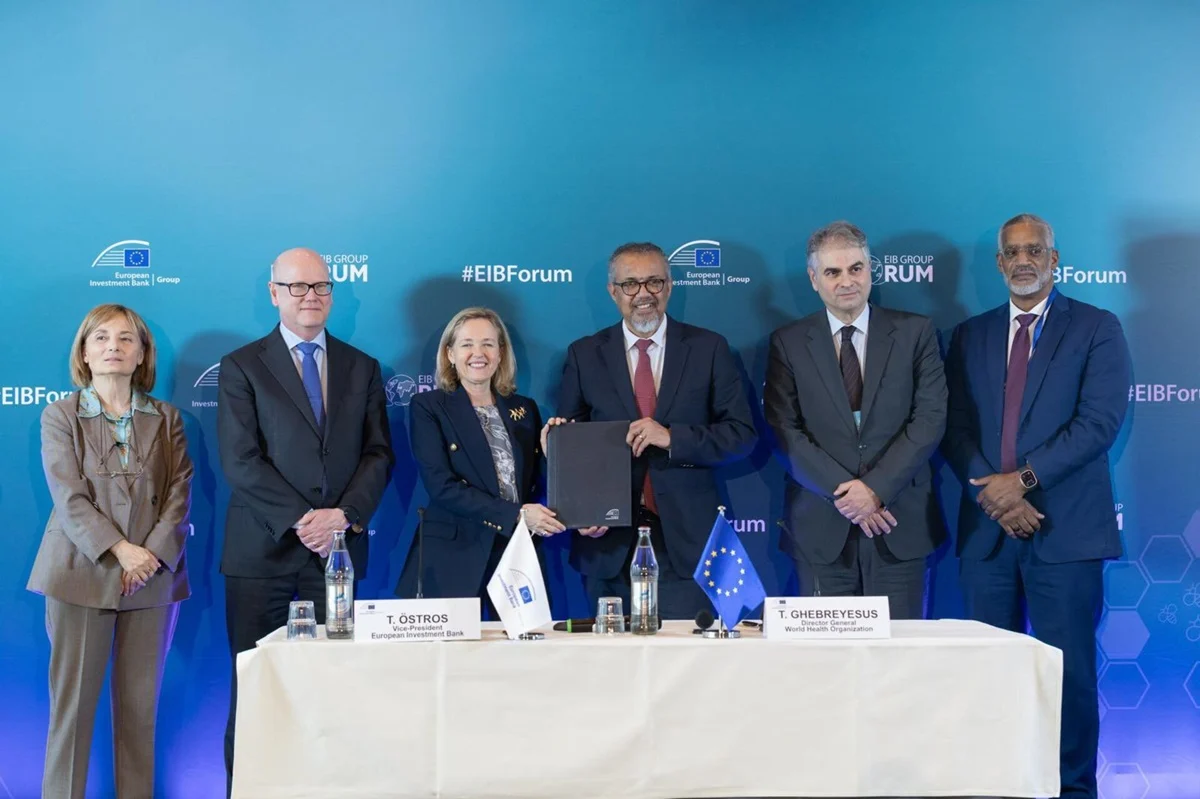
On 6 March 2025, at the EIB Group Forum in Luxembourg, Dr. Tedros Adhanom Ghebreyesus, Director-General of the World Health Organization (WHO), and Thomas Östros, Vice-President of the European Investment Bank (EIB Global), formalized a landmark partnership aimed at shoring up the crumbling healthcare foundations of Lebanon. The agreement, which commits a 10 million euro grant to the nation’s health sector, arrives at a critical juncture for a country struggling under the weight of sustained economic instability, regional geopolitical volatility, and the systemic erosion of its essential public services.
A Strategic Response to Systemic Healthcare Collapse
The primary objective of this collaboration is the re-establishment of Lebanon’s Central Public Health Laboratory. For years, the laboratory—a vital pillar of the nation’s epidemiological surveillance and diagnostic capabilities—has suffered from chronic underfunding, technical obsolescence, and a lack of qualified staff due to the "brain drain" that has plagued the Lebanese professional sector since 2019. By restoring this facility, the WHO and EIB aim to bring Lebanon back into compliance with international health security standards, allowing for the rapid detection of infectious diseases and the reliable analysis of public health threats.
Beyond the laboratory’s physical reconstruction, the grant addresses a more immediate humanitarian crisis: the procurement of essential medicines for vulnerable populations. The initiative is explicitly designed to support over 50,000 individuals grappling with chronic conditions, specifically targeting patients with cardiovascular diseases, diabetes, and various forms of cancer. In the context of the current Lebanese economic crisis, where the local currency has lost over 90% of its value and medication shortages have become routine, this infusion of capital acts as a lifeline for patients who have been effectively priced out of the private healthcare market.
Chronology of the Crisis and Intervention
The road to this agreement has been paved by a series of compounding crises that have severely hampered the Lebanese Ministry of Public Health’s ability to function.
- October 2019: The onset of a severe financial crisis in Lebanon leads to the devaluation of the Lira, triggering a massive inflation rate that makes imported medical supplies unaffordable for the state and the public.
- August 2020: The Port of Beirut explosion causes catastrophic damage to medical facilities and infrastructure, further destabilizing the health system.
- 2021-2023: The "brain drain" accelerates, with thousands of doctors and nurses emigrating, leaving the remaining public health facilities understaffed and overwhelmed.
- 2024: Negotiations intensify between international financial institutions and UN bodies as the epidemiological risk of unmonitored outbreaks increases due to the lack of a functioning central laboratory.
- March 2025: The signing of the EIB-WHO agreement marks the first major, multi-year, multi-stakeholder intervention aimed at rebuilding the centralized diagnostic capacity of the state.
Supporting Data: The Magnitude of Need
The necessity of this intervention is underscored by the current health indicators within the Lebanese borders. According to recent WHO assessment reports, the cost of medical care in Lebanon has risen by nearly 600% since 2019. The reliance on private healthcare—previously the backbone of the Lebanese system—has become impossible for the middle and lower classes.
Furthermore, data from the Lebanese Ministry of Public Health indicates that chronic diseases are the leading cause of mortality in the country, accounting for approximately 80% of all deaths. The inability of the state to subsidize insulin, oncology drugs, and antihypertensive medication has led to a significant increase in preventable complications and premature deaths. By prioritizing these specific medical categories, the 10 million euro grant directly targets the most significant contributors to the country’s excess mortality rate.
Official Responses and Institutional Alignment
The partnership reflects a broader strategic alignment between the European Union’s lending arm and the UN’s global health lead. Thomas Östros, representing the EIB, noted during the forum that the intervention is not merely a philanthropic gesture but a foundational investment in regional stability. "Health security is a prerequisite for economic recovery," Östros stated during the signing ceremony. He emphasized that the EIB’s role is to ensure that development finance bridges the gap between emergency aid and long-term institutional resilience.
Dr. Tedros Adhanom Ghebreyesus highlighted the collaborative nature of the effort, noting that the WHO’s technical expertise in laboratory management and pharmaceutical supply chain logistics, when paired with the EIB’s financial capacity, creates a scalable model for health reconstruction in conflict-affected states. "This is not just about equipment or medicine; it is about restoring the trust of the Lebanese people in their own public health system," Dr. Tedros remarked.
The Broader Implications for Regional Public Health
The restoration of the Central Public Health Laboratory serves a dual purpose: national healthcare and regional health security. In the Levant, the porous nature of borders and the movement of displaced populations make the control of infectious diseases a collective regional responsibility. A functioning laboratory in Beirut will allow for the systematic tracking of disease outbreaks, preventing the cross-border transmission of pathogens that could otherwise overwhelm the region.
However, analysts caution that while 10 million euros is a significant capital injection, it remains a fraction of what is required to fully rehabilitate the Lebanese healthcare sector. The long-term efficacy of this project depends heavily on the political will of the Lebanese government to implement necessary structural reforms. Without a parallel effort to address the broader governance challenges and financial oversight within the Ministry of Public Health, there is a risk that the new equipment and supply chains could once again face the same obstacles of corruption and inefficiency that contributed to the initial collapse.
Analytical Outlook: Sustainability and Future Integration
The success of the EIB-WHO initiative will be measured by its sustainability beyond the initial grant cycle. The agreement includes provisions for technical training and capacity-building for local laboratory personnel. By focusing on human capital, the project seeks to ensure that when the international assistance eventually phases out, the domestic expertise remains to manage the facility.
Moreover, the integration of digital health solutions—such as automated inventory management for the 50,000 chronic disease patients—is expected to provide a blueprint for other public health services in the country. This digital transition aims to minimize the risk of drug diversion and ensure that aid is delivered to the individuals who need it most, rather than being lost to the black market.
Conclusion
The agreement signed in Luxembourg represents a pivotal step in the effort to avert a total collapse of the Lebanese health system. By linking the restoration of essential infrastructure (the Central Public Health Laboratory) with the immediate humanitarian need (medicine for chronic disease), the WHO and EIB Global are adopting a holistic approach to crisis management. As the region navigates a period of profound uncertainty, this initiative stands as a testament to the importance of multilateral cooperation in preserving human lives and ensuring that the most vulnerable populations are not left behind during times of national trauma.
The international community will be watching closely as the project rolls out over the coming months. If successful, the model could serve as a template for future interventions in other states struggling with the intersection of financial crisis and institutional failure. For now, however, the focus remains on the logistical challenge of procuring and distributing life-saving treatments, and the painstaking work of re-equipping a laboratory that has been dormant for far too long. The health of the Lebanese people, and by extension the stability of the local public health environment, now hinges on the rapid and efficient execution of these commitments.
