
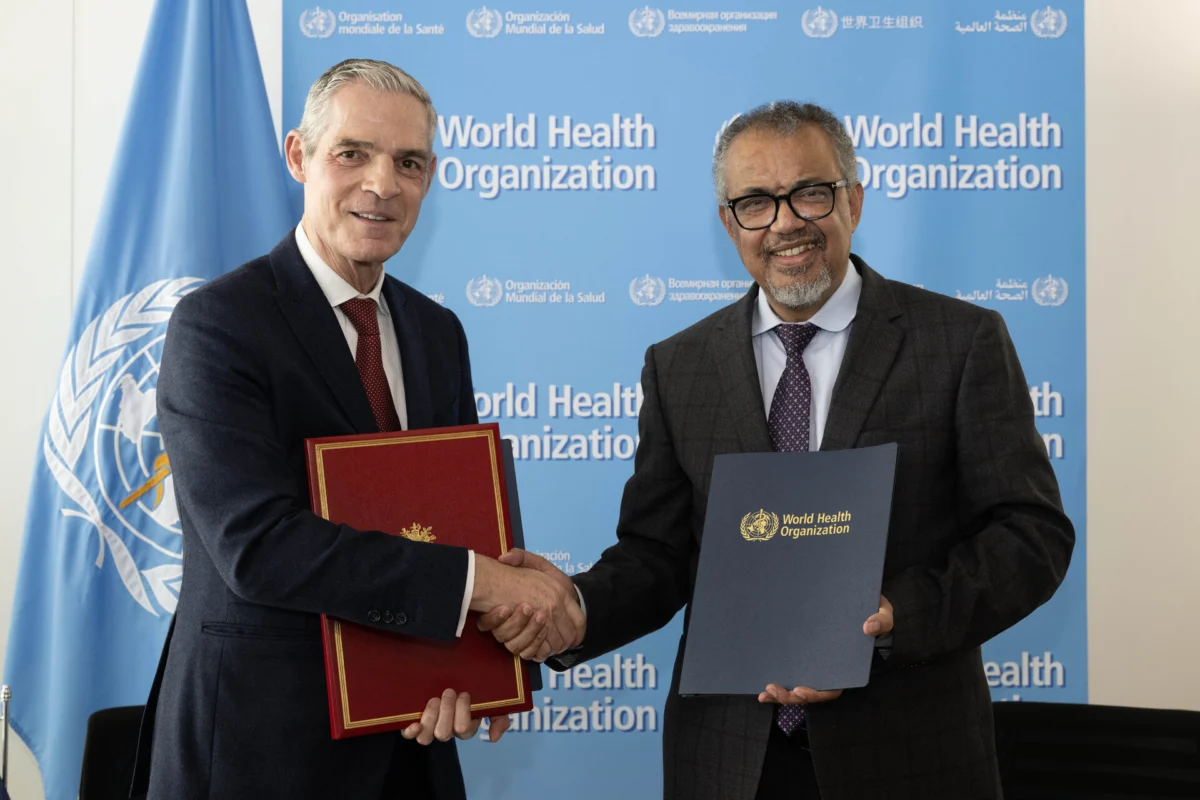
GENEVA — In a significant consolidation of international health diplomacy, the French government has formalized a substantial financial commitment to the World Health Organization (WHO), pledging 24 million euros to bolster the global health body’s operational capacity. The agreement was finalized on the afternoon of October 17, 2024, at the WHO headquarters in Geneva, where His Excellency Mr. Jérôme Bonnafont, Permanent Representative of France to the United Nations in Geneva, and WHO Director-General Dr. Tedros Adhanom Ghebreyesus signed a series of seven contribution agreements.
This financial injection, channeled through the French Ministry of Europe and Foreign Affairs, serves as a pivotal component of the France-WHO Framework Agreement (2020–2025). This multi-year accord provides the necessary administrative, legal, and strategic scaffolding to ensure that French support is effectively integrated into the WHO’s broader mission. By formalizing these ties, both parties have reaffirmed a shared commitment to addressing the multifaceted health crises currently facing the international community.
Strategic Allocation of Funds and Core Priorities
The 24 million euro package is strategically divided to balance long-term systemic health improvements with the immediate exigencies of humanitarian crises. A notable feature of this contribution is the allocation of 4.5 million euros in fully flexible voluntary funds directed toward the Core Voluntary Contributions Account (CVCA). Unlike earmarked funding, which is restricted to specific projects, flexible contributions allow the WHO to pivot rapidly in response to emerging threats or unforeseen gaps in global health funding.
Beyond the flexible funds, the contribution is earmarked for several high-priority domains:
- Non-Communicable Diseases (NCDs): With chronic conditions such as diabetes, cardiovascular disease, and cancer accounting for the majority of global mortality, the funds will support initiatives aimed at reducing the burden of NCDs through policy reform and community intervention.
- Emergency Preparedness and Response: A significant portion of the funding will bolster the WHO Contingency Fund for Emergencies (CFE), ensuring the organization can maintain a rapid-response posture.
- Regionalized Crisis Intervention: The funds provide critical support for the WHO’s ongoing humanitarian responses, specifically targeting the health crisis in Gaza, the mitigation of cholera outbreaks in vulnerable regions, and the provision of mental health support services in conflict-affected Ukraine.
- Urban Health Labs and One Health: Recognizing the intersection of human, animal, and environmental health, France is backing the "One Health" approach, as well as the implementation of urban health laboratories designed to test resilient healthcare models in densely populated metropolitan areas.
The Role of the Lyon Emergency Hub
A cornerstone of the France-WHO partnership remains the WHO emergencies centre in Lyon. This facility has become a vital nerve center for global health security, serving as a hub for training, laboratory coordination, and logistical support during public health emergencies. By continuing to support this site, France is investing in a permanent, high-readiness infrastructure that serves the entire international community, ensuring that when the next pandemic or regional epidemic arises, the WHO possesses the technical expertise and logistical readiness required to contain the threat at its source.

Contextualizing the France-WHO Partnership
The relationship between France and the WHO has evolved significantly over the past five years. Since the inception of the 2020–2025 Framework Agreement, the partnership has transitioned from purely project-based funding toward a more holistic, programmatic approach. This shift aligns with broader global efforts to move the WHO away from a reliance on highly earmarked funds—which can often lead to fragmented and inefficient programming—toward a more sustainable and predictable funding model.
France has been a vocal advocate for the WHO’s first-ever Investment Round, a multi-year effort aimed at mobilizing the resources necessary to implement the Fourteenth General Programme of Work (2025–2028). This initiative, which was officially approved by the World Health Assembly in early 2024, seeks to provide the WHO with the financial stability required to address the next generation of global health challenges, including climate change, aging populations, and the rising threat of antimicrobial resistance.
Official Perspectives on the Collaboration
During the signing ceremony, Ambassador Bonnafont emphasized that France views its contributions not merely as financial transactions, but as an investment in the stability of global society. "France remains deeply committed to supporting the World Health Organization in its efforts to tackle critical global health challenges," Bonnafont stated. "These agreements reflect our shared priorities of promoting health equity, responding to emergencies, and strengthening healthcare systems worldwide."
Dr. Tedros Adhanom Ghebreyesus, in turn, acknowledged the leadership role France has played in shaping the current global health agenda. "We are immensely grateful to the French Government for its steadfast support to WHO, continued partnership, and leadership in global health," Dr. Tedros said. "This contribution will enable us to address key health threats, from non-communicable diseases to emergency response, helping to save lives and protect the most vulnerable populations."
Fact-Based Analysis: The Impact of Flexible Funding
The inclusion of 4.5 million euros in flexible, voluntary funding is a critical indicator of the maturity of the France-WHO relationship. In the world of international development, "earmarked" funding often forces organizations to follow the priorities of the donor rather than the clinical or epidemiological needs on the ground. By providing flexible funding, France is empowering the WHO to exercise technical autonomy.
This autonomy is essential for "gap-filling." Often, global health crises that do not make headlines struggle to attract funding, even if they pose a significant threat to global health security. Flexible funds allow the WHO to maintain essential services—such as routine childhood vaccinations, surveillance for emerging viral strains, and the maintenance of essential medical supply chains—during periods when the world’s attention may be focused elsewhere.

Broader Implications for Global Health Architecture
The signing of these seven agreements comes at a time when the global health architecture is undergoing intense scrutiny. Post-COVID-19, many nations are reassessing the efficacy of international health bodies and the mechanisms of emergency response. By reinforcing its financial commitment to the WHO, France is positioning itself as a champion of multilateralism in health.
Furthermore, the focus on the "One Health" approach and urban health labs reflects a growing consensus that future pandemics are likely to emerge from the interface of urban expansion and ecological degradation. By funding these specific areas, the French government is essentially funding "upstream" health security—the work that happens before a pathogen becomes a global crisis.
As the 2025 deadline for the current Framework Agreement approaches, the success of these new agreements will likely serve as a blueprint for the next generation of cooperation. For the international community, the continued collaboration between a major G7 nation and the world’s lead health authority provides a vital layer of stability in an increasingly uncertain geopolitical landscape.
The agreements represent more than just a sum of money; they represent a technical and political alignment. With France continuing to push for an increase in assessed contributions—the mandatory fees member states pay to the WHO—this latest voluntary contribution serves as a bridge, ensuring the organization remains robustly funded while the broader structural reforms to the WHO’s financial architecture continue to take shape under the watchful eye of the World Health Assembly. As the world moves toward 2028, the partnership between France and the WHO will likely remain a bellwether for the effectiveness of global health governance.
