
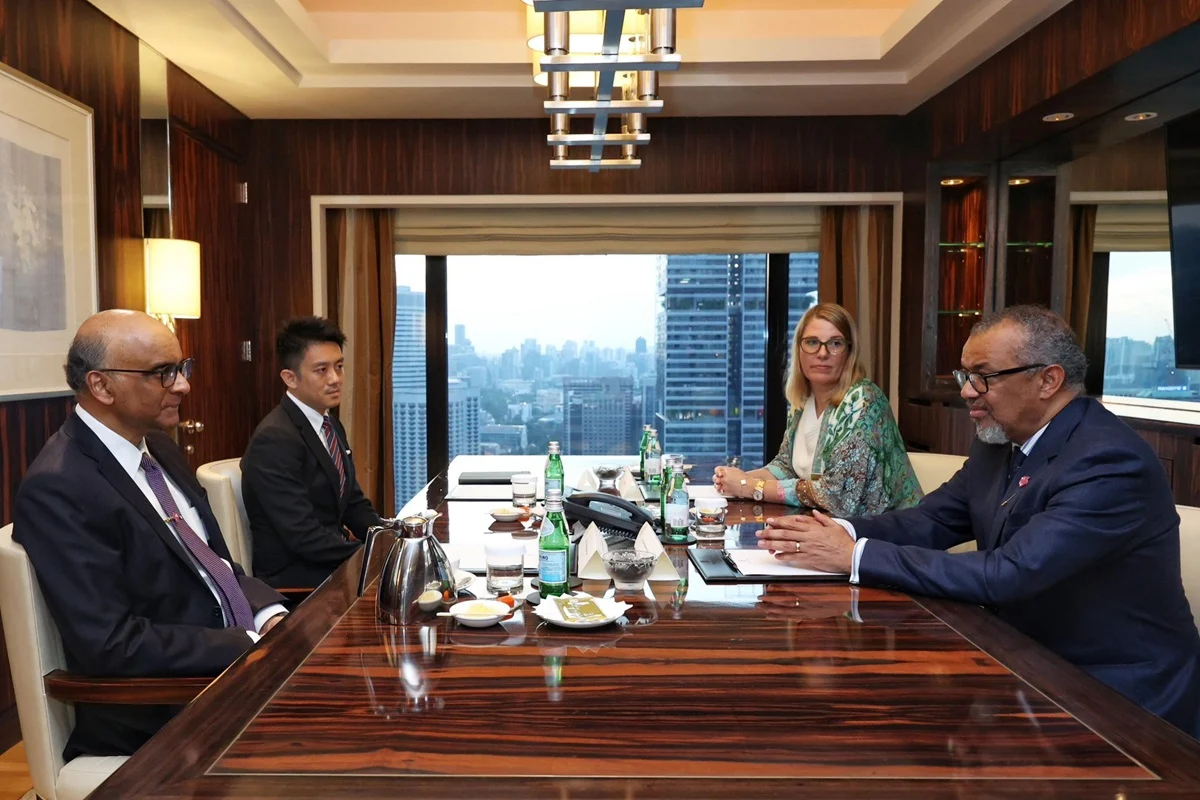
The recent Philanthropy Asia Summit, hosted in Singapore from May 5 to May 7, 2025, served as a definitive platform for reinforcing the symbiotic relationship between private sector philanthropy and international public health governance. At the center of these discussions was the World Health Organization (WHO), represented by Director-General Dr. Tedros Adhanom Ghebreyesus, who emphasized that the traditional model of relying solely on state-led health funding is increasingly insufficient in an era defined by volatile climate shifts, emerging pathogens, and socioeconomic instability. As global health demands evolve, philanthropic capital has transitioned from a supplemental resource to a foundational element of the WHO’s strategic framework for the next decade.
The Evolution of the WHO Investment Round
The WHO Investment Round, launched as a multi-year financial strategy, represents a fundamental shift in how the organization secures predictable, flexible, and sustainable funding. Historically, the WHO has relied heavily on earmarked voluntary contributions, which often restrict the agency’s ability to respond rapidly to unforeseen crises. The current Investment Round seeks to diversify this donor base, explicitly inviting philanthropic organizations to play a more integrated role.
By engaging with foundations and private philanthropic alliances, the WHO aims to stabilize its core budget. This is not merely a financial endeavor; it is an attempt to align private sector innovation with public health mandates. The support pledged by the Temasek Foundation and other members of the Philanthropy Asia Alliance during the summit serves as a blueprint for how high-net-worth entities can provide the "patient capital" necessary for long-term health system strengthening.
A Chronology of Strategic Engagement
The path to the 2025 Philanthropy Asia Summit was marked by several milestones that underscore the increasing importance of non-state actors in global health:
- 2020–2021: The COVID-19 pandemic acted as a catalyst for new philanthropic models. Foundations shifted from reactive emergency grants to long-term investments in cold-chain logistics, vaccine manufacturing, and digital health infrastructure.
- 2023: WHO formalized its strategic engagement plans with the private sector, identifying "philanthropic catalysts" as a key pillar in the Fourteenth General Programme of Work (GPW 14).
- May 2025: The Philanthropy Asia Summit provided the formal venue for Dr. Tedros to acknowledge Singapore’s leadership. The summit signaled a transition from ad-hoc donations to structured, multi-year strategic partnerships.
- Future Outlook (2026–2030): The WHO aims to leverage these partnerships to close the estimated $10 billion annual funding gap in primary health care delivery across low- and middle-income countries.
The Comparative Advantage of Philanthropy
Data from the Global Health Council suggests that philanthropic investment in health has grown by approximately 15% annually over the last five years. Unlike government funding, which is often subject to domestic political cycles and budgetary austerity, philanthropic capital provides unique advantages that the WHO is keen to utilize:
- Risk Tolerance: Philanthropic entities are often better positioned to fund "high-risk, high-reward" research—such as novel vaccine delivery mechanisms or experimental primary care models—that traditional intergovernmental agencies might deem too speculative for immediate public funding.
- Agility: During the 2025 Summit, analysts noted that philanthropic organizations can bypass bureaucratic procurement hurdles, enabling the rapid deployment of resources to regions experiencing localized health crises.
- Advocacy and Policy Influence: Beyond financial capital, these partners provide intellectual capital. They possess the convening power to bring together cross-sectoral stakeholders, influencing policy frameworks that prioritize health equity at the national level.
Singapore’s Role as a Global Health Hub
The selection of Singapore as the host for the 2025 summit was deliberate. Under the leadership of President Tharman Shanmugaratnam, Singapore has emerged as a critical node in the global health architecture. Its domestic health system, consistently ranked among the most efficient in the world, serves as a proof-of-concept for the Universal Health Coverage (UHC) goals the WHO advocates.
In his remarks, Dr. Tedros noted that Singapore’s early commitment to the Investment Round was a decisive signal to the international community. The Temasek Foundation’s involvement is particularly significant; by focusing on the nexus of sustainability and health, the foundation demonstrates how the "One Health" approach—which connects human, animal, and environmental health—can be operationalized through private funding.
Implications for Global Health Equity
The primary objective of these collaborative efforts is the realization of the "highest attainable standard of health," a vision enshrined in the WHO constitution but often hindered by systemic inequality. The current partnership model aims to address this by:
- Strengthening Local Self-Reliance: By funding training for local health workforces rather than importing external experts, philanthropic partners help build sustainable domestic systems.
- Bridging the Digital Divide: Investments in health-tech infrastructure allow for the democratization of diagnostics, particularly in remote areas where physical clinics are sparse.
- Addressing Social Determinants: Philanthropic actors are increasingly funding initiatives that address the root causes of poor health, such as clean water access, nutrition, and environmental sanitation, which are often outside the mandate of clinical-focused government agencies.
Challenges and Critical Perspectives
While the trend toward increased philanthropic involvement is widely welcomed, it does not come without scrutiny. Public health experts have occasionally raised concerns regarding the transparency and accountability of private foundations. The concern, frequently discussed in academic literature, is that private agendas might inadvertently skew global health priorities toward the specific interests of donors rather than the evidence-based needs of the most vulnerable populations.
To mitigate these risks, the WHO has established rigorous governance frameworks. These guidelines ensure that partnerships remain aligned with the organization’s neutral, science-based mandate. As Dr. Tedros emphasized in Singapore, the collaboration is not about outsourcing health governance but about leveraging collective strengths to fulfill the WHO’s foundational mandate: that health is a human right, not a luxury.
Future Trajectory: The Fourteenth General Programme of Work
Looking toward the remainder of the decade, the integration of philanthropic collaboration is central to the Fourteenth General Programme of Work (GPW 14). This programme emphasizes a move away from disease-specific silos toward a more holistic, system-wide approach to health security.
The success of this strategy will depend on the ability of the WHO to maintain a "healthy tension" between private influence and public interest. If the models established at the 2025 Philanthropy Asia Summit are successfully scaled, the global health community may witness a significant stabilization in international health financing. This would represent a departure from the "crisis-response" cycle that has dominated the last decade, moving instead toward a proactive, resilient, and inclusive health infrastructure.
As the summit concluded, the message from both the WHO and its philanthropic partners was clear: the complexity of modern health challenges—from pandemic threats to the non-communicable disease burden—requires a global health community that is as interconnected as the threats it faces. By bridging the gap between philanthropic agility and multilateral reach, the WHO is positioning itself to be a more robust steward of global health, ensuring that the progress made is not only sustainable but equitable across all borders.
Ultimately, the partnership model represents a pragmatic recognition that the scale of investment required to reach the Sustainable Development Goals (SDGs) by 2030 cannot be met by the public sector alone. Through the collaborative efforts fostered in Singapore, the foundation for a more secure and equitable health future is being laid, piece by piece, through a combination of strategic vision and sustained financial commitment.
