
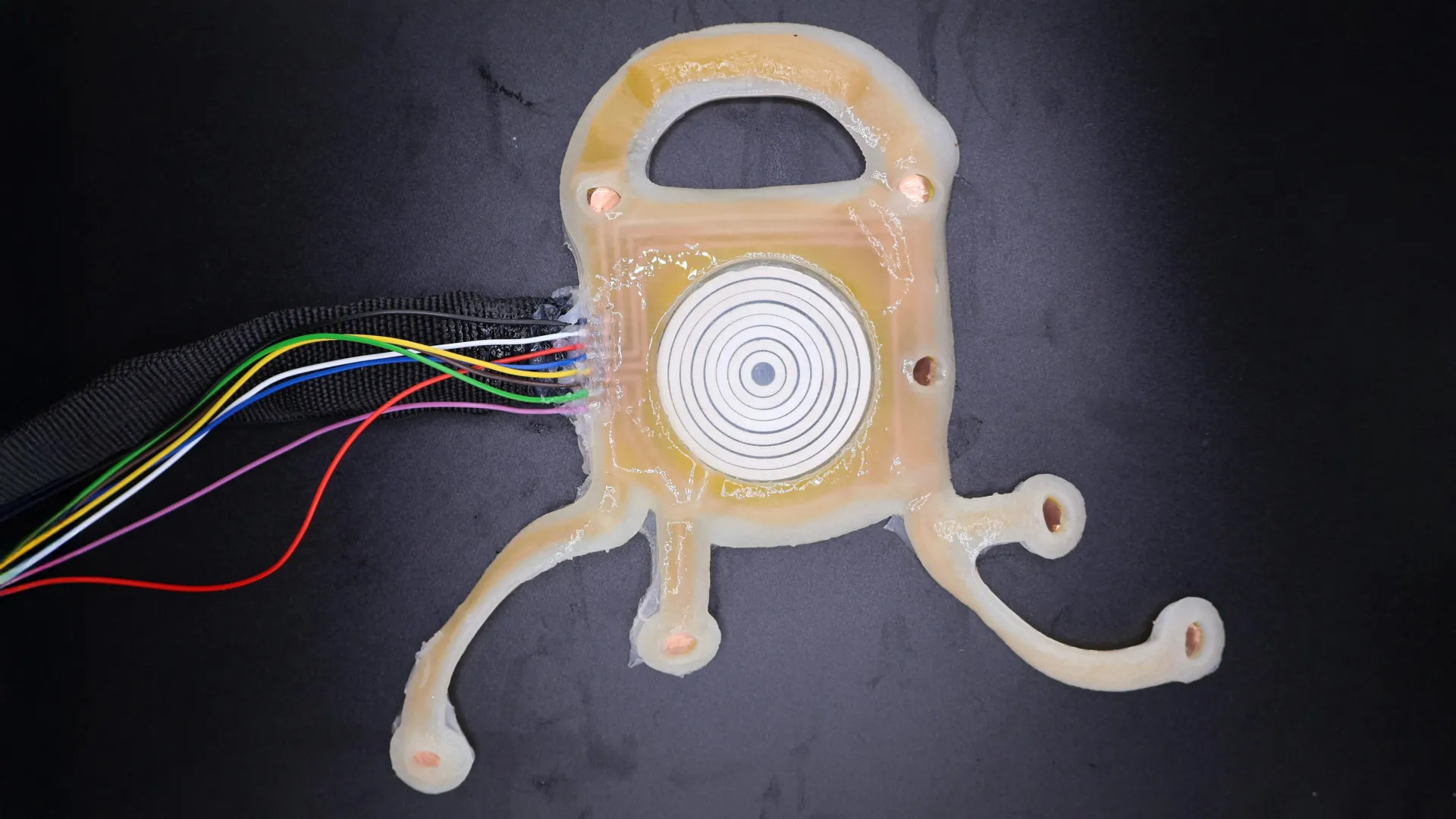
In an unprecedented breakthrough in the field of sleep medicine and neuroengineering, a multidisciplinary research team led by the University of Texas at Austin has successfully developed and tested a soft, skin-interfaced wearable patch capable of improving Rapid Eye Movement (REM) sleep in real-world environments. Devoid of invasive surgical procedures or pharmacological interventions, the device—formally designated as NEUSLeeP—utilizes a sophisticated combination of gentle, targeted ultrasound stimulation and integrated electrodes. These dual-function components allow the patch to simultaneously monitor active brainwave patterns and influence deep-seated neural circuits traditionally inaccessible through noninvasive external devices.
Published in the peer-reviewed journal Nature Communications, the initial human trials of the NEUSLeeP technology mark a monumental stride forward in neurology, biomedical engineering, and psychiatry. As modern societies grapple with escalating rates of chronic sleep deprivation, stress-induced disorders, and neurological ailments, the arrival of a safe, at-home therapeutic intervention offers a promising horizon for millions of individuals struggling with compromised sleep architectures.
The Anatomy and Mechanics of the NEUSLeeP Patch
To fully appreciate the significance of the NEUSLeeP device, one must understand the traditional limitations of sleep science and neuromodulation. For decades, targeting deep brain structures—those subcortical regions responsible for governing complex autonomic functions, emotional processing, and REM sleep phases—required either invasive surgical procedures such as deep brain stimulation (DBS) or systemic pharmaceutical agents. While medications can induce unconsciousness or sedation, they frequently fail to replicate natural sleep architecture, often suppressing crucial REM stages and carrying significant risk profiles, including daytime drowsiness, cognitive dulling, and chemical dependency.
The UT Austin research team bypassed these barriers by engineering a soft, flexible, skin-compliant patch that adheres seamlessly to the user’s head or face. The device integrates advanced ultrasound transducers capable of emitting low-intensity, focused mechanical waves that safely penetrate the skull to stimulate specific neural populations deep within the brain. Simultaneously, high-sensitivity electrodes embedded in the patch record real-time electroencephalogram (EEG) data, tracking shifts in brain activity on a millisecond-by-millisecond basis.
This closed-loop system is what sets NEUSLeeP apart from previous consumer sleep trackers. Traditional consumer wearables—ranging from smartwatches to commercial headbands—rely solely on peripheral biometric data, such as heart rate, skin temperature, and surface movement, to estimate sleep stages. They observe sleep passively without the ability to intervene. In stark contrast, NEUSLeeP acts as both an observer and an active modulator. By reading real-time neural signatures, the patch applies precisely timed ultrasound stimulation that encourages the brain to transition into and maintain restorative REM sleep stages, adapting dynamically to the user’s neurological state throughout the night.
Chronology of Development and Rigorous Clinical Trials
The path to realizing the NEUSLeeP technology represents years of rigorous interdisciplinary collaboration within the Cockrell School of Engineering and Dell Medical School at the University of Texas at Austin. The project was spearheaded by Kai Wing "Kevin" Tang, a recent biomedical engineering Ph.D. graduate who served as the lead researcher, operating under the principal investigatorship of Huiliang "Evan" Wang, an assistant professor in the Department of Biomedical Engineering.
The development phase involved exhaustive benchtop testing, material science optimization to ensure skin biocompatibility, and rigorous validation of ultrasound safety parameters to ensure non-thermal, non-destructive interaction with neural tissue. Once the hardware and algorithmic software achieved stability, the team advanced to human clinical trials.
The landmark study evaluated the efficacy of the NEUSLeeP patch across a cohort of 28 human participants, encompassing a diverse demographic of healthy sleepers alongside individuals reporting various degrees of sleep difficulties. The results surpassed initial hypotheses. On average, participants outfitted with the active NEUSLeeP patch entered REM sleep approximately 43 minutes sooner than their baseline measurements without stimulation. Furthermore, once inside the REM cycle, participants remained in that restorative stage for an average of 16 minutes longer than normal.
Importantly, the clinical safety profile of the device was exceptionally favorable. Participants reported that the patch was comfortable to wear throughout the night, causing no physical disruption to their natural sleeping postures. The study documented minimal adverse effects, cementing the viability of the device for unsupervised, at-home application.
Supporting Data and Physiological Implications
The implications of enhancing REM sleep extend far beyond simply eliminating morning grogginess. REM sleep is a biologically critical phase characterized by high-frequency brain activity, vivid dreaming, and bodily muscle atonia. It plays an indispensable role in memory consolidation, neurodevelopment, and emotional regulation.
During the clinical evaluation, researchers uncovered compelling physiological data regarding the systemic impacts of targeted REM enhancement. Among healthy participants, the application of NEUSLeeP stimulation triggered a measurable increase in heart rate variability (HRV). Higher HRV is widely recognized by the medical community as a robust biomarker of autonomic nervous system flexibility and the body’s resilience to physiological and psychological stress.
Furthermore, functional neuroimaging performed in conjunction with the study revealed noticeable alterations in neural circuits intimately associated with emotional processing. These neurological shifts strongly suggest that noninvasive deep brain stimulation via the patch can actively support mood regulation and bolster psychological resilience.
"REM sleep is not just about dreaming — it’s about emotional reset and stress adaptation," noted Gregory Fonzo, an assistant professor in the Dell Medical School’s Department of Psychiatry and Behavioral Sciences and a co-principal investigator on the project. "By enhancing REM, we may help people better cope with stress and improve their overall well-being."
Given that disruptions in REM sleep architecture are clinically correlated with a host of severe psychiatric conditions—including major depressive disorder, generalized anxiety disorder, and post-traumatic stress disorder (PTSD)—the potential therapeutic applications of this technology are vast. Conventional treatments for these conditions often involve prolonged courses of pharmacotherapy that take weeks to manifest efficacy and frequently present debilitating side effects. A non-pharmacological, targeted neurostimulation tool could fundamentally alter the treatment paradigm for stress- and trauma-related disorders.
Broader Impact and Future Clinical Trials
Building upon the success of the initial 28-participant trial, the UT Austin research collective is already laying the groundwork for expansive, multi-center clinical trials. These upcoming studies will focus specifically on patient populations suffering from chronic insomnia, clinical depression, and combat- or trauma-induced PTSD. By testing the boundaries of the NEUSLeeP technology in clinically vulnerable cohorts, the researchers hope to demonstrate definitive therapeutic relief where traditional interventions have fallen short.
The long-term vision for the technology extends into personalized medicine and domestic healthcare management. Experts anticipate a future where individuals diagnosed with chronic sleep or mood disorders can utilize prescription-grade smart patches in their own homes, downloading sleep optimization profiles tailored to their unique neurological maps.
"Our vision is a future where patients with mental health disorders can optimize their sleep with a noninvasive and safe treatment," stated Vincent Mysliwiec, M.D., a professor at UT Health San Antonio, an internationally recognized authority on sleep disorders, and a co-principal investigator on the initiative. "This technology could help millions of people get the restorative sleep they need."
Commercialization Pathway and Intellectual Property
Recognizing the immense commercial and public health value of the NEUSLeeP device, the research team is actively collaborating with Discovery to Impact, the University of Texas at Austin’s dedicated technology commercialization unit. This partnership is designed to bridge the gap between academic innovation and market availability, facilitating industrial manufacturing scaling, regulatory compliance pathways—such as future clearance evaluations by the U.S. Food and Drug Administration (FDA)—and strategic industry partnerships.
To protect the intellectual property underpinning the device, a comprehensive patent application has been formally filed. The patent covers both the unique electromechanical design of the soft wearable patch and the specific algorithmic protocols governing the closed-loop ultrasound stimulation.
The success of the NEUSLeeP project is a testament to the power of cross-disciplinary academic research. Alongside Tang, Wang, Fonzo, and Mysliwiec, the broader investigative team comprises a deep roster of scientific talent, including William D. Moscoso-Barrera, Mengxia Yu, Mengmeng Yao, Jinmo Jeong, Ilya Pyatnitskiy, Anakaren Romero Lozano, Jiachen Wang, Ju-Chun Hsieh, Tony Sungjin Chae, Daniel Song, Julieta Garcia, Rithvik Mittapalli, and Adam Bush from the Department of Biomedical Engineering; Benjamin Baird from the College of Natural Sciences’ Department of Psychology; and Wynn Legon from Virginia Tech’s Fralin Biomedical Research Institute.
As the research team moves forward toward commercialization and advanced clinical trials, the medical community watches with cautious optimism. If subsequent trials successfully replicate and expand upon these initial findings, the NEUSLeeP patch may soon transition from an academic engineering marvel into a foundational pillar of modern neurological therapeutics, offering a safe, restorative, and noninvasive gateway to better mental and physical health.
