
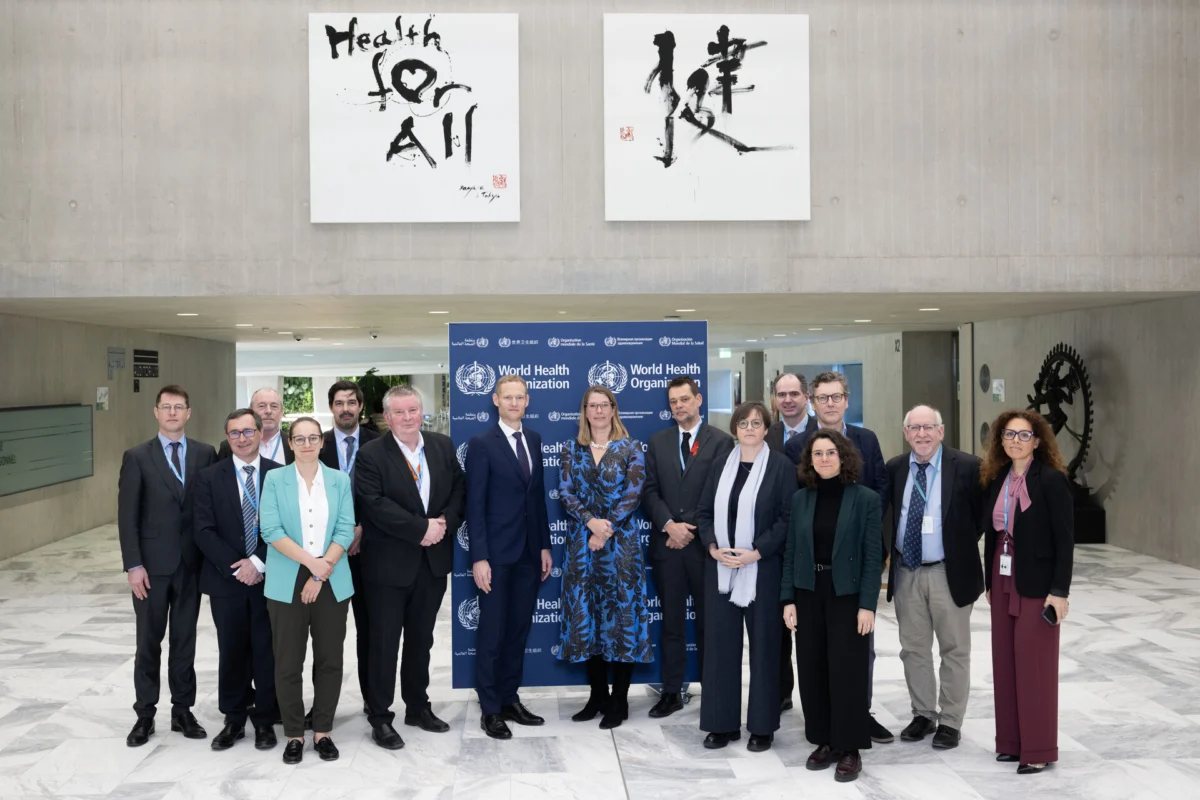
In a significant reinforcement of international health diplomacy, the Kingdom of Belgium and the World Health Organization (WHO) concluded a three-day strategic dialogue in early March 2025, marking a pivotal moment in their long-standing partnership. Held at the WHO headquarters in Geneva, the sessions aimed to synchronize Belgium’s development cooperation priorities with the WHO’s 14th General Programme of Work (GPW14), focusing on the dual pillars of universal health coverage (UHC) and robust, resilient health systems.
The high-level delegation from Belgium, representing a unified front of the Federal government alongside the Flemish and Walloon regional authorities, was led by H.E. Christophe Payot, Ambassador of Belgium to the United Nations and other international organizations in Geneva. The meeting served as a critical forum to evaluate the impact of Belgian-funded initiatives while charting a course for future multilateral collaboration in an era characterized by rapid biological risks, climate-induced health crises, and the imperative for sustainable, equitable access to medical technology.
A Chronology of Collaboration and Strategic Alignment
The partnership between Belgium and the WHO has historically functioned as a cornerstone of European support for global health security. The recent dialogue followed a period of intense activity, most notably Belgium’s presidency of the Council of the European Union in 2024, during which the nation championed the cause of equitable access to health tools.
During the three-day summit, participants engaged in a rigorous review of programs initiated between 2021 and 2024. The agenda was divided into thematic blocks, allowing for a deep dive into the technical and operational challenges of global health governance. Day one focused on the integration of national priorities into global frameworks, particularly regarding the UHC-Partnership. Day two centered on the technical implementation of access-to-medicine programs, using Senegal and the Democratic Republic of Congo as primary case studies. The final day was dedicated to future-proofing the relationship through a renewed WHO-Belgium Country Cooperation Strategy.
Addressing the Access to Medicines Gap
A primary focal point of the dialogue was the Belgium-funded Access to Medicines programme. For decades, the global health community has struggled with the "last mile" problem—ensuring that life-saving diagnostics, vaccines, and therapeutics reach the most vulnerable populations in low- and middle-income countries.
WHO experts illustrated the effectiveness of this program by presenting data from Senegal, where systematic investments have enabled better supply chain management and procurement transparency. The dialogue reached a consensus on the necessity of "market shaping," a strategic approach designed to incentivize manufacturers to produce essential medicines at prices that remain affordable for developing markets. By fostering local production capabilities, Belgium and the WHO aim to reduce dependency on fragile international supply chains, a vulnerability that was painfully exposed during the COVID-19 pandemic.
Global Health Architecture and Pandemic Preparedness
The discourse on pandemic prevention, preparedness, and response (PPR) underscored the urgency of current negotiations regarding a global pandemic agreement. The delegates acknowledged that the traditional reactive approach to health crises is no longer sufficient.
Central to these discussions was the "One Health" approach—a collaborative, multisectoral strategy that recognizes the interconnection between people, animals, plants, and their shared environment. With the acceleration of biological risks and the increased frequency of zoonotic diseases—pathogens jumping from animals to humans—the dialogue emphasized the need for real-time data sharing and surveillance. The WHO provided a sobering briefing on its field operations in Gaza, illustrating the extreme difficulties of delivering healthcare in conflict zones, which served as a reminder of the fragility of health infrastructure when exposed to kinetic warfare and humanitarian catastrophe.
Strengthening Universal Health Coverage (UHC)
Universal Health Coverage remains the heartbeat of the WHO’s mandate. The review of the UHC-Partnership projects conducted between 2021 and 2024 revealed substantial progress in partner countries, though significant hurdles remain, particularly regarding the sustainability of funding for primary health care (PHC).

The dialogue highlighted the critical role of mental health integration into primary care, a policy area that has seen renewed emphasis by the WHO. In the Democratic Republic of Congo, efforts have focused on streamlining WHO country office programs with Belgian bilateral aid to prevent duplication of efforts. This "one-country, one-plan" philosophy is intended to maximize the impact of every euro invested, ensuring that health systems are not just built but are capable of self-sustaining growth once international donor support transitions.
Institutional Perspectives and Official Reactions
The atmosphere of the meetings was marked by a spirit of mutual transparency. Dr. Catharina Boehme, Assistant Director-General for External Relations and Governing Bodies at the WHO, praised the Belgian commitment, noting that the country’s cross-governmental representation—bringing together the Federal, Flemish, and Walloon perspectives—was vital for a holistic approach to development aid.
"We thank you for your support, honesty, and strong engagement for global health," Dr. Boehme stated. "Your efforts in supporting our work in Mozambique and Senegal are clear examples of the crucial work we accomplish together."
From the Belgian side, the sentiment was one of strategic trust. Mr. Koen Van Acoleyen, Minister Counselor at the Permanent Representation of Belgium to the UN, reflected on the complexities of the current geopolitical landscape. "After listening to the leaders and experts of WHO, we now better understand how they are navigating these challenging times," he remarked. "We are honoured that we can walk this road together."
Mr. Dirk Brems, Director of Thematic and Multilateral Cooperation, echoed this sentiment, emphasizing the importance of sustained multilateralism. "We recognize WHO as a trustworthy partner in global health. We felt proud hearing how crucial our support is to the Organization and how it is having a positive impact at country, regional, and global levels," Brems noted, adding that Belgium looks forward to navigating "uncharted territories" in the future of global health.
Broader Impact: The Path Toward GPW14
The implications of this dialogue extend beyond the immediate agreements. By aligning with the WHO’s 14th General Programme of Work (GPW14), Belgium is positioning itself to be a key influencer in the future trajectory of global health policy. GPW14 is designed to shift the focus from reactive emergency management to proactive health systems strengthening, a move that is expected to define the WHO’s agenda through the end of the decade.
The evidence-based approach discussed during the sessions—particularly in relation to Neglected Tropical Diseases (NTDs) and Sexual, Reproductive Health and Rights (SRHR)—signals that Belgium will continue to prioritize marginalized health outcomes. The integration of these specific programs into the broader UHC framework ensures that these critical areas are not siloed but are instead treated as essential components of a healthy society.
Fact-Based Analysis and Conclusion
The collaboration between Belgium and the WHO represents a model of modern donor-agency relations. Unlike traditional aid models that often suffer from bureaucratic fragmentation, the alignment of Belgian bilateral cooperation with WHO’s strategic goals minimizes the "fragmentation of aid" problem that has long plagued the sector.
Data points from the dialogue suggest that the transition from a purely donor-recipient dynamic to a true strategic partnership is well underway. The focus on local production in Africa, the emphasis on One Health to mitigate future pandemic risks, and the commitment to primary health care are not merely aspirational; they are pragmatic responses to the challenges identified by the global health community over the past five years.
As the world faces an increasingly volatile health landscape, the outcome of this three-day dialogue provides a roadmap for how middle-power nations can exert significant influence through multilateral channels. By committing to a multi-year framework and a renewed Country Cooperation Strategy, Belgium and the WHO have set a standard for evidence-based, transparent, and resilient health diplomacy that will likely serve as a blueprint for other partnerships in the coming years.
