
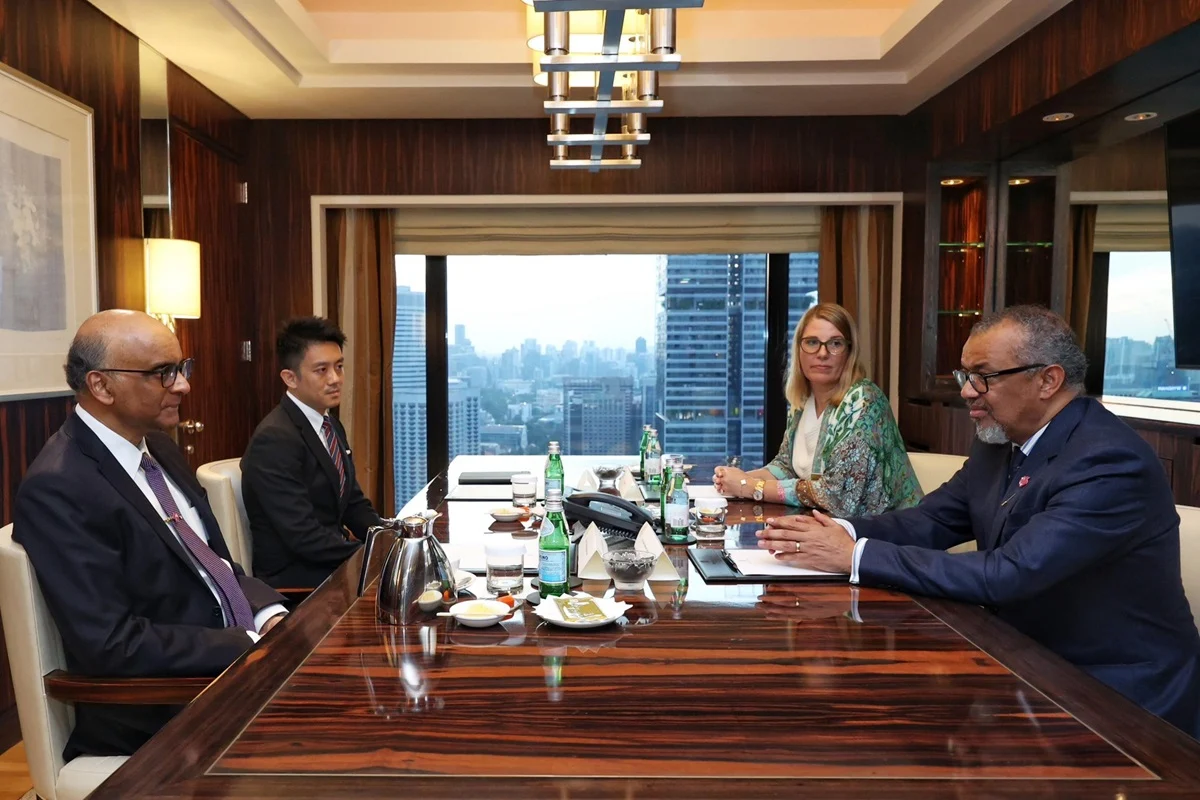
The global health landscape is undergoing a structural transformation as the World Health Organization (WHO) increasingly pivots toward a collaborative funding model, placing philanthropic entities at the center of its strategic framework. This evolution was center stage at the Philanthropy Asia Summit, held in Singapore from May 5–7, 2025. The event served as a critical forum for global leaders to address the urgent necessity of sustainable health financing, emphasizing that the traditional reliance on state-level contributions is no longer sufficient to navigate the complexities of modern public health crises.
WHO Director-General Dr. Tedros Adhanom Ghebreyesus utilized the platform to articulate a vision where private capital and organizational expertise are not merely supplementary but fundamental to achieving universal health coverage. The summit highlighted that in an era characterized by geopolitical instability and the persistent threat of emerging pathogens, the intersection of private philanthropy and public health policy has become a decisive factor in maintaining global security.
The Evolution of WHO Financing and the Investment Round
For decades, the WHO’s funding model relied heavily on assessed contributions from member states, which provided a stable but often rigid budgetary foundation. However, the emergence of the WHO Investment Round, launched in 2024, signaled a radical departure toward a more flexible and diversified funding ecosystem. This strategic initiative is designed to provide the organization with the predictable, sustainable, and flexible resources required to execute its Fourteenth General Programme of Work.
The Investment Round is specifically structured to capture a broader donor base, inviting philanthropic foundations, private sector entities, and high-net-worth individuals to participate in long-term health initiatives. By engaging these non-state actors, the WHO aims to bridge the funding gap that has historically hampered its ability to respond to primary health care needs and pandemic preparedness efforts simultaneously.
Chronology of the 2025 Philanthropy Asia Summit
The three-day summit in Singapore acted as a catalyst for these new partnerships.
- May 5, 2025: The opening ceremonies focused on the theme of "Resilient Health Systems in a Turbulent World." Discussions centered on the role of private capital in de-risking health investments in developing nations.
- May 6, 2025: Dr. Tedros Adhanom Ghebreyesus addressed the assembly, explicitly acknowledging the leadership of Singapore and the Temasek Foundation. The day was marked by high-level bilateral meetings aimed at formalizing pledges for the ongoing Investment Round.
- May 7, 2025: The concluding sessions focused on the operationalization of philanthropic contributions. Stakeholders established working groups to ensure that private sector funding is aligned with the specific technical requirements of WHO regional offices, ensuring that investments target the most vulnerable populations effectively.
The Strategic Role of the Temasek Foundation and Singapore
The acknowledgment of Singapore and the Temasek Foundation during the summit was not merely ceremonial. As early adopters of the Investment Round, these entities set a precedent for sovereign wealth and philanthropic integration. President Tharman Shanmugaratnam’s advocacy for global health architecture reform has positioned Singapore as a central hub for health diplomacy.
The Temasek Foundation’s commitment reflects a broader trend among major philanthropic organizations to move beyond grant-making toward deep institutional partnership. By providing not just capital but also management expertise and data-sharing frameworks, these partners help the WHO optimize its resource allocation. This collaboration is particularly vital in the context of the Fourteenth General Programme of Work, which targets a 30% reduction in mortality from non-communicable diseases and a significant acceleration toward universal health coverage by 2030.
Supporting Data: The Impact of Private Funding
Global health experts note that the funding gap for achieving the Sustainable Development Goals (SDGs) related to health is estimated in the hundreds of billions of dollars annually. Data from the OECD indicates that philanthropic contributions to health have seen a compound annual growth rate of approximately 4% over the last decade. However, the nature of this funding is shifting.
- Research and Development: Private philanthropies now account for roughly 20% of all global health research and development funding, particularly in areas like neglected tropical diseases and malaria vaccine development—sectors often overlooked by traditional market-driven pharmaceutical investments.
- Pandemic Preparedness: Post-2020, philanthropic investment in pandemic surveillance systems has increased by an estimated $1.5 billion annually, providing the "first-loss" capital necessary to incentivize public sector spending in high-risk regions.
- Equity Gap: Despite these gains, 65% of philanthropic health funding remains concentrated in high-income countries or specific regional clusters. The WHO’s Investment Round is explicitly designed to redistribute this capital toward the Global South, where the return on investment in terms of life-years saved is statistically higher.
Addressing the "High-Risk, High-Reward" Frontier
One of the most compelling arguments for philanthropic involvement is the ability to assume risks that governments cannot. Public funding is often constrained by legislative cycles, budgetary audits, and political accountability that favors low-risk, proven interventions. In contrast, philanthropic actors can fund high-risk research—such as novel mRNA platforms for emerging viruses or long-term climate-health adaptation projects—that may not yield immediate, measurable outcomes but possess the potential to revolutionize public health infrastructure.
Dr. Tedros emphasized this during his remarks, noting that the WHO’s ability to "innovate at scale" is dependent on the risk-tolerance of its private partners. By providing the "patient capital" required for long-term health system strengthening, these foundations allow the WHO to maintain its focus on preventative care rather than purely reactive crisis management.
Official Perspectives and Organizational Reactions
The shift toward a more inclusive funding model has received cautious but optimistic backing from the broader public health community. Advocates for health equity have noted that while the inclusion of private capital is essential, it must be accompanied by stringent transparency protocols.
"The involvement of philanthropic partners brings unprecedented energy and resources," stated a representative from a global health policy think tank. "However, the challenge lies in ensuring that these partnerships do not dictate the agenda of the WHO, but rather support the established technical priorities of member states. The Singapore Summit was a positive step in formalizing this balance."
The WHO leadership has been clear: the founding vision of the organization—that health is a fundamental human right and not a luxury—remains the guiding principle. The integration of private philanthropy is seen as a mechanism to fulfill this mandate in an era where the demand for health services is outpacing the fiscal capacity of the public sector.
Broader Implications for Global Health Governance
The implications of the Philanthropy Asia Summit extend well beyond the immediate pledges made in Singapore. We are witnessing the birth of a "Multi-Stakeholder Health Governance" model. This model recognizes that the WHO, while the sole global authority for health standards, acts as the coordinator of a massive ecosystem of players.
- Standardization of Impact Reporting: The move toward structured investment rounds necessitates a higher degree of accountability. Philanthropic partners are now requiring standardized reporting on how their funds translate into specific health outcomes, which is inadvertently driving better data collection and transparency across the entire WHO infrastructure.
- Resource Multiplier Effect: Every dollar provided by a philanthropic partner is now frequently used to "crowd-in" additional funding from domestic governments. By demonstrating the efficacy of a pilot program, private actors help secure the political buy-in from national ministries of health, leading to long-term sustainability.
- Decentralized Health Resilience: By focusing on country self-reliance, the partnership model emphasizes training local workforces and upgrading national diagnostic capabilities. This reduces the dependency on international emergency aid, creating a more stable, decentralized global health system.
Conclusion: The Path Toward 2030
As the international community looks toward the 2030 deadline for the Sustainable Development Goals, the collaboration between the WHO and the philanthropic sector stands as a vital bridge. The discussions in Singapore underscored that the challenges facing global health—from climate-driven pandemics to the rising burden of chronic disease—are too immense for any single entity to manage alone.
By aligning the vast, agile resources of the philanthropic community with the technical expertise and global reach of the WHO, the international community is establishing a new paradigm. It is a transition from an era of fragmented, reactive assistance to one of coordinated, strategic investment. As Dr. Tedros concluded at the summit, the objective is to ensure that the highest attainable standard of health is a reality for everyone, irrespective of geography or economic status. This ambition now relies, in significant part, on the enduring partnership between the world’s leading health organization and the philanthropic actors committed to the global public good.
