
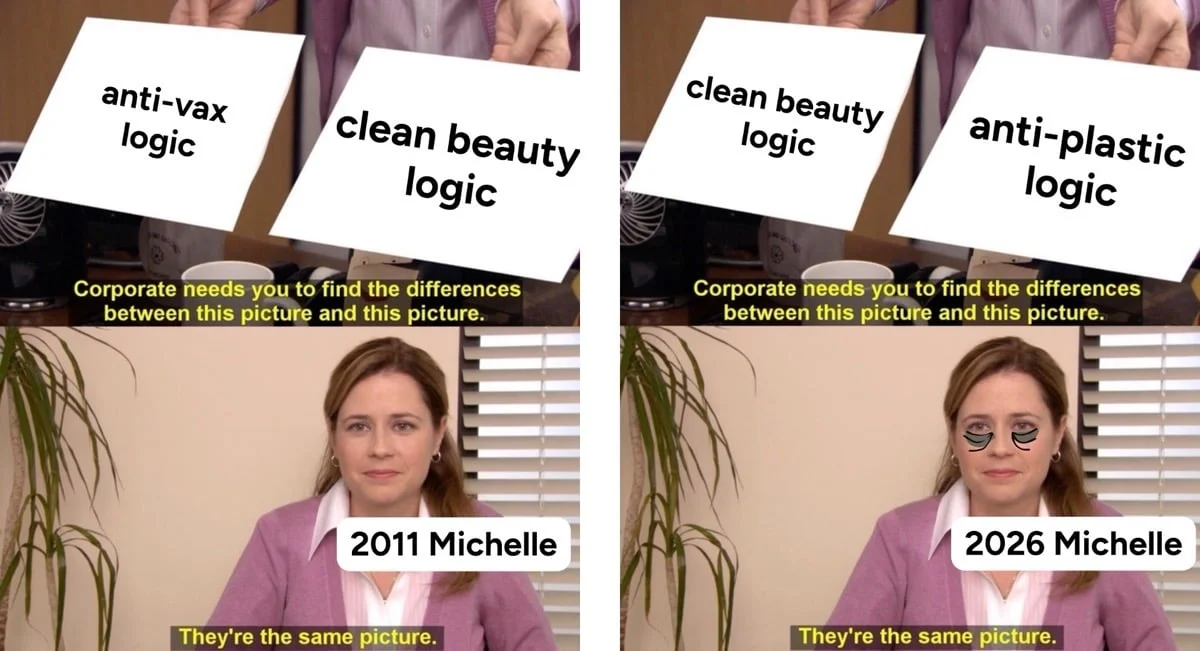
The modern consumer landscape is currently undergoing a significant ideological shift, pivoting away from traditional packaging and synthetic materials under the banner of sustainability. However, science communicators and researchers are increasingly identifying deep, structural parallels between the contemporary anti-plastic movement and the pseudoscientific "clean beauty" trends of the past decade. Michelle Wong, a prominent science communicator operating under the moniker Lab Muffin Beauty Science, published an analytical treatise examining how fearmongering, logical fallacies, and anti-science rhetoric have seamlessly migrated from chemical demonization in cosmetics to the absolute rejection of plastics. While legitimate global concerns regarding plastic waste and microplastic accumulation persist, experts caution that uncritical, blanket rejections of synthetic polymers often disregard foundational scientific principles, leading to flawed environmental outcomes and misdirected consumer advocacy.
The lineage of modern anti-plastic sentiment shares significant conceptual DNA with historical clean beauty and anti-vaccine movements. Throughout the 2010s, the clean beauty sector popularized the notion that synthetic ingredients were inherently harmful—frequently utilizing fear-based marketing around substances like aluminum and formaldehyde. This rhetoric relied heavily on emotional appeals rather than toxicological data. Analysts note that the current discourse surrounding plastics mirrors this exact trajectory. Blanket "plastic-free" claims, apocalyptic narratives regarding microplastics, and the uncritical elevation of "natural" alternatives have created a commercial environment where marketing narratives regularly override empirical evidence. Observers point out that even well-intentioned consumers and scientifically literate publications have historically fallen into clean beauty tropes, a vulnerability that now appears to be repeating itself in discussions surrounding petrochemicals and synthetic polymers.
At the core of the anti-plastic trend lies the appeal to nature fallacy—the presupposition that natural materials are intrinsically safe and environmentally benign, while synthetic alternatives are uniformly hazardous. This dichotomy fails under basic scientific scrutiny, as the origin of a substance bears no direct correlation to its biological safety or environmental impact. Numerous naturally occurring compounds rank among the most toxic substances known to science, while many synthetic materials offer stable, inert properties that minimize adverse interactions with human biology and natural ecosystems. Despite these established facts, consumer demand has driven brands to seek alternative materials—such as bioplastics derived from natural sources—without necessarily subjecting those replacements to rigorous safety or lifecycle evaluations.
The oversight of fundamental scientific principles is perhaps most apparent when examining the environmental metrics used to evaluate packaging and consumer goods. In the fields of industrial ecology and sustainability science, Life Cycle Assessment (LCA) serves as the standardized, quantifiable method for measuring the comprehensive environmental impact of a product. An LCA evaluates every stage of a product’s lifecycle, including raw material extraction, manufacturing, distribution, utilization, and end-of-life disposal. Public discourse on plastics, however, is heavily skewed toward end-of-life considerations—focusing on visible waste, marine debris, slow degradation rates, and litter accumulation. While end-of-life management is a critical component of waste reduction, this laser focus often eclipses broader environmental metrics, most notably climate change, which the scientific community widely regards as the preeminent ecological crisis of the modern era.
Empirical data frequently challenges the intuitive assumption that abandoning plastic universally benefits the environment. Comprehensive analyses, such as industry and academic LCA reports, indicate that substituting plastic packaging with alternative materials like glass, aluminum, or paper can sometimes dramatically increase resource consumption. For instance, replacing lightweight plastic containers with alternative substrates has been shown in certain studies to require significantly greater quantities of raw material, higher energy inputs during manufacturing, and increased carbon dioxide emissions driven by heavier transport logistics. Plastics often provide critical functional advantages, such as exceptional strength-to-weight ratios, high durability, and superior barrier properties that protect perishable goods, minimize food spoilage, and reduce transit-related emissions. Consequently, any blanket policy or consumer choice favoring non-plastic materials without the backing of a holistic LCA risks exacerbating climate impacts under the guise of ecological progress.
Compounding these methodological oversights are significant challenges within the scientific literature concerning microplastics. In recent years, high-profile studies have claimed to detect microplastic particles across a wide array of human tissues, including arterial plaque, blood, and neural tissue from dementia patients. However, independent replication and critical methodological reviews have cast substantial doubt on many of these findings. Researchers attempting to quantify microscopic polymer particles face severe technical hurdles, including high background contamination rates from laboratory equipment, clothing, and ambient air, as well as analytical limitations. A prominent example involves the use of Pyrolysis-Gas Chromatography-Mass Spectrometry (Py-GCMS), a common quantification technique where organic fats can register identical signals to polyethylene unless rigorous corrective controls are applied. Studies utilizing such methods without adequate calibration have occasionally reported inflated microplastic counts, generating sensationalized headlines that disproportionately amplify public anxiety.
The uncritical acceptance of correlation as causation further distorts the public perception of microplastic toxicity. The detection of microparticles within diseased or compromised tissue does not inherently establish a causal relationship with the pathology of the disease. Such findings may reflect analytical artifacts, incidental exposure without physiological consequence, or secondary accumulation rather than the primary driver of illness. This logical leap parallels historical clean beauty claims, such as the widely criticized 2004 study that identified parabens in breast tumor tissue while failing to measure paraben concentrations in healthy control tissue. In both instances, the mere presence of a substance is improperly equated with localized harm, bypassing the fundamental toxicological tenet that "the dose makes the poison."
Commercial entities and influential beauty brands have increasingly capitalized on these scientific nuances through a phenomenon known as "science-washing." By utilizing cherry-picked studies, appealing to convenient and sympathetic experts, and deploying pseudoscientific marketing terminology, companies often promote alternative packaging as inherently superior while simultaneously driving consumerism through limited-edition merchandise, non-recyclable hybrid textiles, and excessive promotional items. Regulatory bodies, including the United States Federal Trade Commission (FTC), the United Kingdom Competition and Markets Authority (CMA), and the Australian Competition and Consumer Commission (ACCC), have established guidelines designating unsubstantiated environmental claims as potentially misleading and deceptive. Experts emphasize that mitigating greenwashing requires brands to consult qualified sustainability professionals and rely strictly on empirical lifecycle data rather than marketing aesthetics.
The ideological entrenchment surrounding the anti-plastic movement is further reinforced by identity-based motivated reasoning and confirmation bias. Recent discussions within mainstream journalism illustrate the friction that occurs when complex scientific realities challenge established narratives. When prominent news organizations publish reports detailing methodological errors in high-profile microplastic research—citing independent public scientists and institutional review boards—they frequently face aggressive accusations of industry bias from public commentators. Analysts stress that reflexively dismissing scientific critiques based solely on institutional affiliation or funding sources, rather than evaluating the empirical merits of the arguments presented, runs contrary to foundational principles of critical thinking.
Ultimately, experts maintain that addressing global challenges requires nuanced, evidence-based mitigation strategies rather than dogmatic material rejections. Just as the clean beauty movement fostered a counterproductive aversion to safe, highly effective cosmetic preservatives and functional ingredients, unmeasured hostility toward plastics can lead to misallocated conservation efforts, increased carbon footprints, and compromised product integrity. Achieving genuine environmental and human health benefits demands a commitment to rigorous scientific methodology, comprehensive lifecycle assessments, and a willingness to evaluate materials based on empirical data rather than ideological appeal.
