
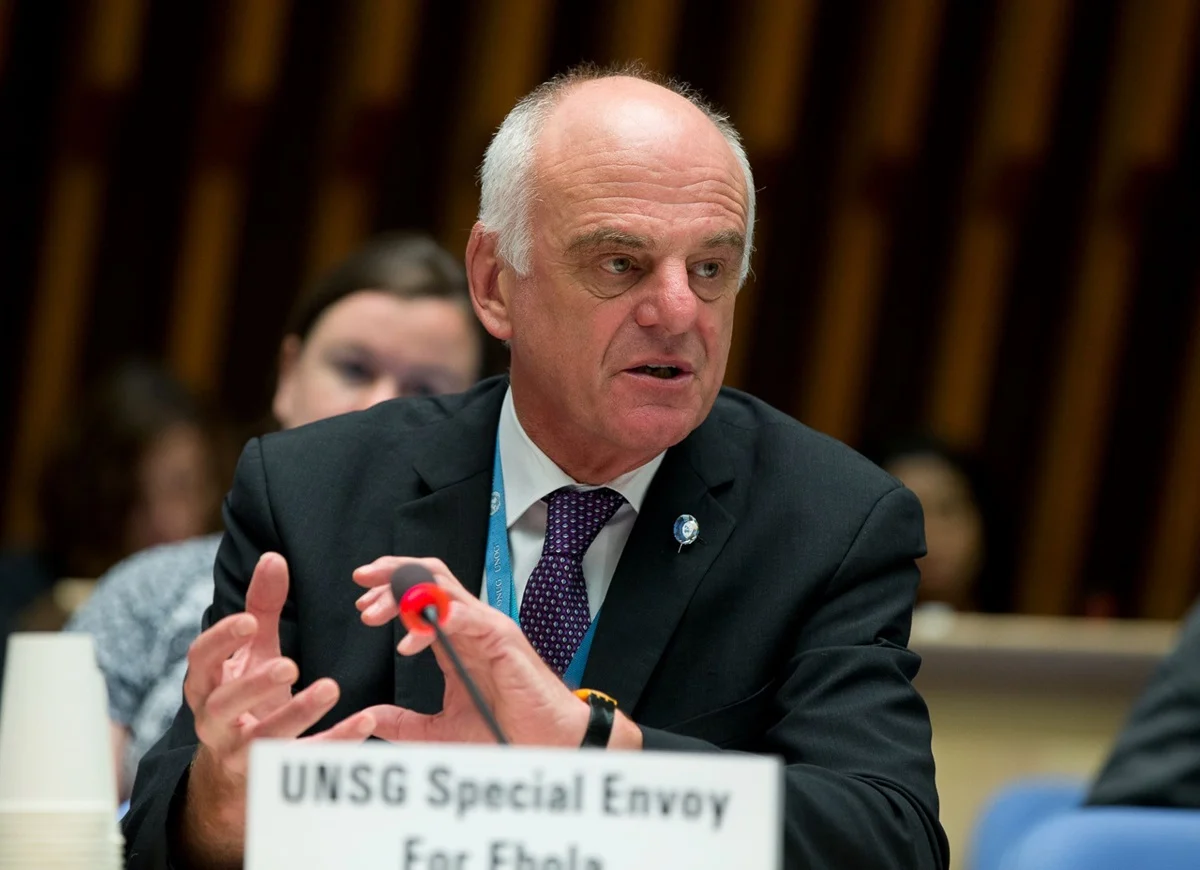
The international community is in mourning following the death of Sir David Nabarro, a towering figure in global public health, whose career spanned over four decades of service to the most vulnerable populations on Earth. Dr. Nabarro passed away at his home on Friday, July 25, 2025, at the age of 75. His death marks the conclusion of a life defined by an unwavering commitment to systemic change, health equity, and the compassionate application of science to solve the world’s most intractable humanitarian crises.
A polymath of international development, Sir David was known for his unique ability to bridge the gap between high-level policy formulation and on-the-ground execution. Whether addressing the complexities of the Ebola virus, coordinating global food security, or navigating the logistical nightmares of the COVID-19 pandemic, his work was consistently characterized by a rare blend of intellectual rigor, diplomatic finesse, and profound empathy for those marginalized by global systems.
A Career Defined by Crisis and Commitment
Dr. Nabarro’s professional trajectory was essentially a timeline of the most significant global health challenges of the late 20th and early 21st centuries. His early work at the World Health Organization (WHO) between 1999 and 2005 saw him take on roles that required both technical expertise and political maneuvering. As the Executive Director for the Roll Back Malaria Project and subsequently as the Director-General’s Special Representative for Health Action in Crises, he established the framework for how international bodies respond to sudden-onset health emergencies.
In 2005, he transitioned to the United Nations, a move that placed him at the heart of global pandemic preparedness. Serving as the UN System Senior Coordinator for Avian and Pandemic Influenza, he was instrumental in shaping the international community’s understanding of zoonotic threats. This was a formative period, as his work during this decade laid the groundwork for the modern, integrated approach to "One Health"—the recognition that the health of people is connected to the health of animals and the environment.
His subsequent tenure as the UN Secretary-General’s Special Representative for Food Security and Nutrition (2008–2014) underscored his belief that health is not merely the absence of disease, but the presence of robust, sustainable food systems. He played a pivotal role in the Scaling Up Nutrition (SUN) movement, a landmark initiative that brought together governments, civil society, and the private sector to combat the scourge of malnutrition in children—a condition that remains a leading contributor to mortality in the Global South.
The Architect of Global Response
Sir David’s leadership during the West Africa Ebola outbreak (2014–2015) is widely cited by public health historians as a masterclass in crisis coordination. As the UN Secretary-General’s Special Envoy, he managed the complex logistics of an unprecedented epidemic, balancing the immediate need for clinical intervention with the necessity of community engagement. His ability to synthesize disparate streams of information allowed him to navigate political sensitivities while maintaining a focus on scientific mandates.
This expertise made him the logical choice to lead the expert group tasked with reforming the WHO’s approach to outbreaks and emergencies in 2015. The reforms implemented following his recommendations fundamentally changed the architecture of the WHO, strengthening the organization’s capacity to detect and respond to health threats before they escalate into global catastrophes.
When the COVID-19 pandemic paralyzed the world in early 2020, Dr. Nabarro was called back to the front lines as the WHO Director-General’s Special Envoy. Throughout the pandemic, he served as a steady, authoritative voice, advocating for evidence-based policies and, perhaps most crucially, highlighting the disproportionate impact of the virus on low-income countries. He remained in this position until his death, providing strategic counsel as the world transitioned from the acute phase of the pandemic to the long-term work of health system strengthening.
Academic Legacy and Mentorship
Beyond his work with international bureaucracies, Sir David was deeply committed to the training of the next generation of global health leaders. As Co-Director and Chair of Global Health at the Institute of Global Health Innovation at Imperial College London, he influenced thousands of students and researchers.
In 2018, he co-founded the 4SD Foundation with Florence Lasbennes. The organization was built on a simple yet profound premise: that the world does not lack solutions to its problems, but rather the skills and systems to implement them. Through 4SD, Sir David pioneered the use of "Food Systems Dialogues," a method of bringing stakeholders together to transform how the world produces and consumes food. This work was central to the preparations for the 2021 UN Food Systems Summit, an event that continues to serve as a cornerstone for national development policies across the globe.
Recognition and Tributes
The recognition of his service culminated in 2023, when King Charles III conferred a knighthood upon him. The honor reflected decades of service that spanned the fields of nutrition, climate change, and disaster management.
WHO Director-General Dr. Tedros Adhanom Ghebreyesus expressed his profound grief in an official statement, noting that the organization had lost not just a peer, but a mentor. "David was a great champion of global health and health equity, and a wise, generous mentor to countless individuals," Dr. Tedros stated. "His work touched and impacted so many lives across the world. We will dearly miss your expertise, wisdom, and kindness."
The outpouring of condolences from world leaders and public health organizations underscores the breadth of his influence. The 4SD Foundation, in a poignant announcement, highlighted his personal legacy, noting that he is survived by his wife, Flo, and their six children and seven grandchildren. The family has expressed their gratitude for the global response, stating, "We are proud to see how his legacy will continue through so many compassionate leaders working to shift systems from within."
Implications for Future Global Health Policy
The death of Sir David Nabarro leaves a significant vacuum in the leadership of international development. His career demonstrated that systemic change is possible, provided that leaders possess the patience to build consensus and the skill to translate complex data into actionable policy.
His work on the "Nature-Based Solutions" workstream and his contributions to the UN’s Climate Action Summit serve as a blueprint for the future of global health. As climate change continues to act as a threat multiplier for disease and food insecurity, the integrated frameworks Sir David championed—connecting health, climate, and agriculture—will become increasingly vital.
The immediate challenge for the international community is to carry forward the momentum of the food systems transformation and the emergency response protocols he helped to professionalize. His legacy is not found in the titles he held, but in the institutional changes he catalyzed and the cadre of professionals he mentored.
Final Arrangements
A private funeral for family and close friends will be held on Monday, August 4, 2025. In the subsequent weeks, the international community plans to host a series of memorial services, reflecting the global reach of his influence. A digital memorial page has been established to allow colleagues, students, and those he served to share their memories and mementos.
As the global health community pivots toward the challenges of the coming decade, the influence of Sir David Nabarro will persist. Whether through the national convenors of food systems he helped organize or the emergency response systems he helped rebuild, his life remains a testament to the idea that dedicated, compassionate leadership can, in fact, move the world toward a more equitable and resilient future.
