

A comprehensive new study, "Decoding the Why: Consumer Attitudes Towards Breakthrough Science," conducted by Leaps by Bayer, Boston Consulting Group (BCG), and Ipsos UK, reveals a complex landscape of public perception surrounding emerging technologies, with a particular focus on cultivated meat. The research indicates that while climate consciousness remains a strong driver for younger generations, especially Gen Z, their embrace of innovations like lab-grown meat is nuanced, contingent on transparency, safety, and affordability.
The study builds upon a foundational 2025 report that surveyed over 13,000 individuals across 13 countries, providing a global snapshot of optimism and caution towards scientific advancements. This latest iteration delves deeper, utilizing in-depth interviews with consumers in China, the United States, and Germany – nations recognized for their substantial GDP, leadership in research and development, and significant patent filings in emerging technologies. The objective is to move beyond mere statistics to understand the underlying motivations and concerns that shape public acceptance, thereby informing innovators on how to build trust and foster legitimacy for these transformative technologies.
The Evolving Landscape of Cultivated Meat Acceptance
The initial 2025 global survey laid crucial groundwork, revealing that 39% of respondents held a positive view of cultivated meat, a figure twice that of negative opinions (19%). However, a substantial 40% remained undecided, positioning cultivated meat as the most polarizing among the four technologies examined, which also included AI in healthcare, cell and gene therapies, and new genomic techniques in agriculture.

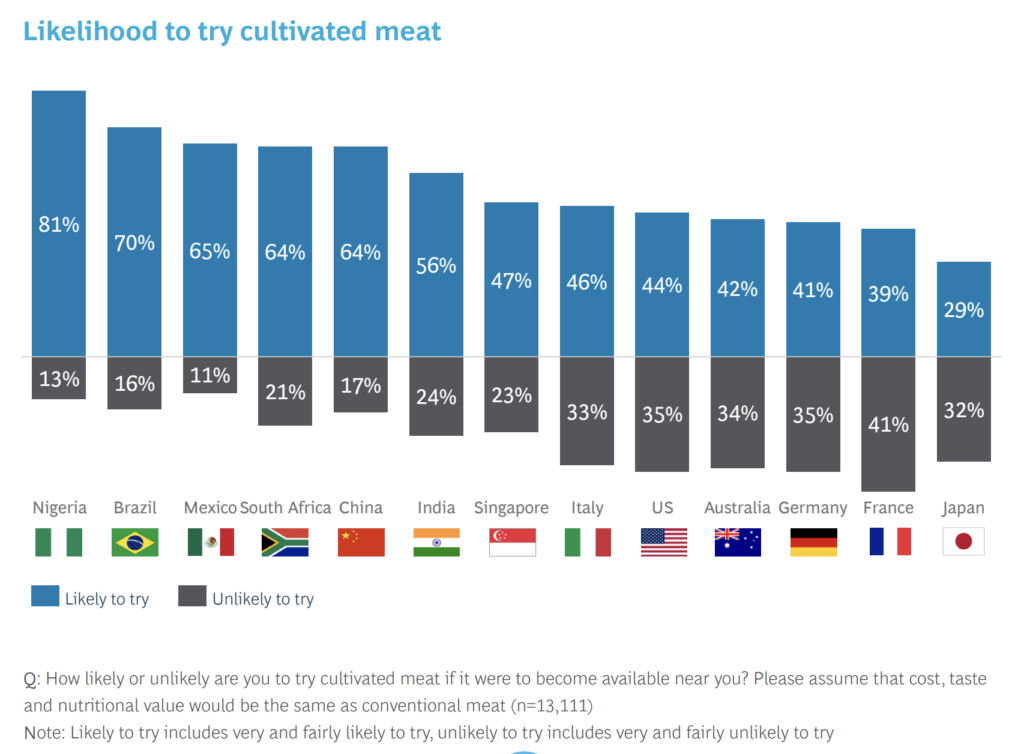
Geographically, Western nations, particularly France (33% pessimistic), Germany, and the United States (both 28% pessimistic), exhibited higher levels of skepticism. Concerns cited included potential disruption to existing agricultural industries, as well as questions surrounding the safety and authenticity of cultivated meat. This sentiment translated into a reluctance to try the product, with 41% of French citizens, and 35% each of Germans and Americans, expressing unwillingness, exceeding the global average of 26%.
Conversely, regions like Nigeria (81% willing to try), Brazil (70%), Mexico (65%), South Africa, and China (both 64%) demonstrated greater openness. This contrast suggests a correlation between willingness to adopt cultivated meat and factors such as the cost and availability of conventional meat. In countries where traditional meat consumption might be limited by economic factors, novel protein sources could offer a more accessible alternative.
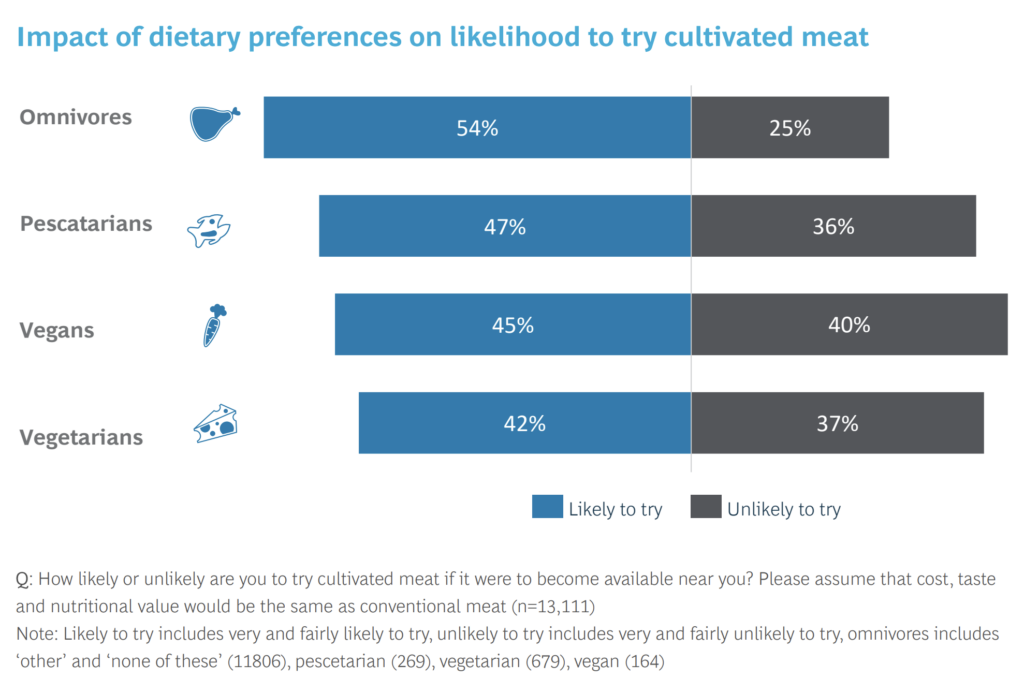
Dietary preferences also emerged as a significant factor. Omnivores showed a higher likelihood of trying cultivated meat (54%) compared to other groups, with the lowest percentage expressing an outright refusal (25%). Gender and age also played a discernible role. Men (57%) expressed more interest in trying cultivated meat than women (49%). Furthermore, younger demographics, Gen Z (46%) and millennials (48%), displayed considerably more optimism about these innovations than their older counterparts, Gen X (35%) and baby boomers (27%).
Decoding Consumer Motivations: Three Archetypes of Cultivated Meat Consumers
The follow-up study, "Decoding the Why," provides a more granular understanding of the emotional and rational drivers behind these attitudes, particularly through interviews conducted in China, the US, and Germany. Cultivated meat emerged as the most emotionally charged innovation, eliciting a spectrum of reactions from "ethical enthusiasm and curiosity" to an immediate "gut-level no."
While more informed participants acknowledged the environmental benefits, some expressed reservations regarding the energy consumption associated with scaled production. A recent Life Cycle Assessment (LCA) based on industrial-scale models, capable of producing 400-600kg of protein daily, projected a carbon footprint for cultivated meat ranging from 3.3kg to 6.6kg of CO2e per kilogram of protein. This figure, dependent on raw material choices and energy sources, represents a significant reduction compared to conventional beef (up to 95% lower) and pork (up to 55% lower). However, the need for comprehensive, full-scale LCAs to definitively balance land, water, and feedstock reductions against energy inputs remains a point of discussion.
Consumer concerns frequently revolve around taste, texture, and potential health implications. Yet, a persistent psychological barrier is the perception of cultivated meat as "unnatural" or excessively processed. The study identifies three distinct consumer archetypes:
- The Optimists: This group is eager to embrace cultivated meat, viewing it as a significant innovation capable of improving animal welfare and planetary health. Their ethical considerations supersede concerns about processing, and they believe widespread adoption is achievable if quality and affordability improve.
- The Rationalists: These consumers prioritize rigorous testing, transparent labeling, and verifiable safety data before forming opinions. Their acceptance is contingent on real-world experience – they would try cultivated meat if its taste, price, and nutritional value align with conventional meat, and if its climate benefits are substantiated by robust LCA data.
- The Sceptics: This segment distrusts meat produced through non-traditional methods. They harbor strong concerns about processing and the idea of "messing with nature," viewing cultivated meat as a departure too far from established food systems.
Gen Z: A Generation of Conditional Optimism
The original global survey highlighted Gen Z’s greater receptiveness to cultivated meat compared to older generations. However, this openness is characterized more by conditional curiosity than outright endorsement. Their primary motivations stem from the ethical and environmental advantages, particularly concerning animal welfare. Similar to older demographics, they express unease regarding artificiality and a perceived detachment from nature.
Crucially, Gen Z’s hesitation differs from that of older skeptics. Their concerns are forward-looking, focusing on potential health effects, processing methods, transparency, and governance, rather than nostalgia for tradition. They are keenly interested in the long-term consequences of production processes and the mechanisms that will ensure safety as the technology evolves.
This makes Gen Z a highly persuadable demographic, provided that clear labeling and honest communication about manufacturing processes are prioritized. The report emphasizes that transparency is paramount to capturing this cohort’s interest.
Pathways to Mainstream Acceptance
The overarching conclusion from the study is that cultivated meat holds significant potential to transition from a subject of emotional debate to a cautiously accepted mainstream food product. This transition hinges on several key factors:
- Matching Conventional Standards: Cultivated meat must achieve parity with conventional meat in terms of taste, price, and convenience.
- Visible and Verified Benefits: The safety, nutritional value, and environmental/animal welfare benefits must be clearly communicated and independently verified.
- Addressing the Undecided Middle: A substantial segment of consumers remains neutral. Clear labeling, honest communication about production, and reassurance regarding the support for farmers and rural economies during the transition could sway this group.
Conversely, the report warns of potential pitfalls. If the rollout of cultivated meat feels opaque or driven solely by corporate interests, it risks solidifying its image as "unnatural food" across global markets. This could undermine efforts to present it as a sustainable and ethical alternative to traditional animal agriculture.
The implications of this research are far-reaching for food technology developers, policymakers, and consumer advocacy groups. Understanding the diverse motivations and concerns across different demographics is essential for developing effective communication strategies and regulatory frameworks. As cultivated meat technology advances, fostering public trust through transparency and demonstrable benefits will be critical for its successful integration into the global food system. The insights gleaned from this study offer a roadmap for navigating the complex ethical, social, and economic considerations surrounding this groundbreaking food innovation, positioning Gen Z as a key demographic to engage with through education and open dialogue.
