
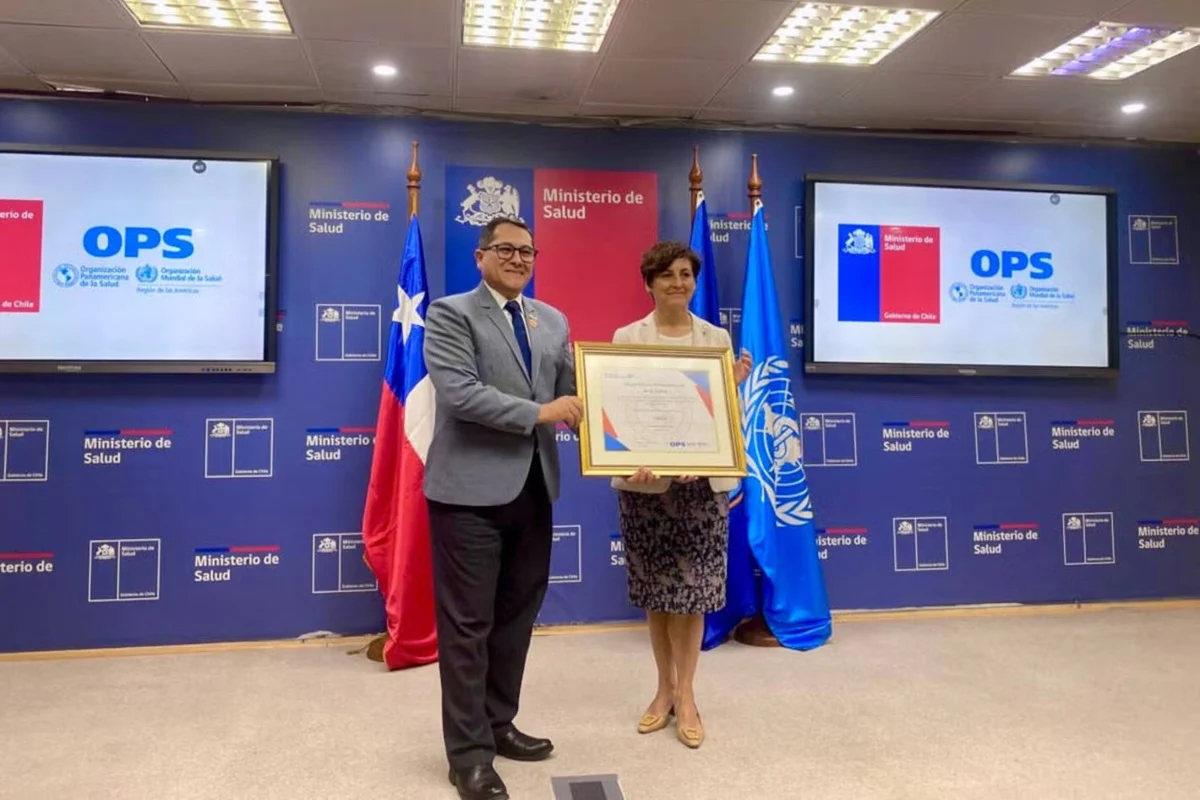
The World Health Organization (WHO) and the Pan American Health Organization (PAHO) have formally announced the verification of Chile as the first country in the Americas to eliminate leprosy, marking a monumental achievement in global public health. This certification also distinguishes Chile as only the second country worldwide to reach this milestone, following the Hashemite Kingdom of Jordan. The official recognition comes after a comprehensive evaluation of Chile’s health systems, historical data, and surveillance capabilities, confirming that the nation has successfully interrupted the local transmission of Mycobacterium leprae, the causative agent of leprosy, also known as Hansen’s disease.
The landmark announcement follows a rigorous verification process conducted by an independent panel of experts convened in 2025 at the request of the Chilean Ministry of Health. The panel’s findings concluded that while sporadic imported cases have been recorded due to global migration, no locally acquired cases have occurred on Chilean soil for more than 30 years. This achievement is viewed as a blueprint for other nations grappling with neglected tropical diseases (NTDs), demonstrating that even diseases with deep historical roots and significant social stigma can be consigned to history through sustained political will and scientific rigor.
Historical Context: From Rapa Nui to the Mainland
The history of leprosy in Chile is inextricably linked to Rapa Nui (Easter Island), where the disease was first documented in the late 19th century. Due to the island’s geographic isolation, the disease remained largely contained there, though it presented a significant public health challenge for the local population for decades. During the early and mid-20th century, management of the disease relied heavily on isolation and specialized treatment centers on the island.
By the late 1990s, the last secondary cases on Rapa Nui had been successfully managed, effectively ending the cycle of transmission in that territory. On the Chilean mainland, the disease was never endemic in the same capacity, with only sporadic introductions that were quickly contained. The last locally acquired case of leprosy in the country was detected in 1993. Since that pivotal year, Chile has maintained a record of zero indigenous transmission, a feat that required three decades of observation to meet the stringent criteria for WHO verification.
Despite the absence of local cases, the Chilean government made a strategic decision not to remove leprosy from its public health agenda. Instead, it maintained leprosy as a mandatory notifiable condition. This decision ensured that the healthcare system remained "clinically ready," with practitioners trained to identify symptoms even if they had never encountered the disease in their professional careers.
The Road to Verification: Data and Methodology
The path to official verification was paved by an exhaustive review of epidemiological data spanning from 2012 to 2023. During this period, Chile reported a total of 47 cases of leprosy nationwide. Crucially, every single one of these cases was determined to be non-autochthonous, meaning they were acquired outside of the country.
In 2025, the WHO and PAHO independent expert panel scrutinized several key areas of the Chilean health system:
- Epidemiological Surveillance: The panel reviewed the integration of leprosy reporting into the national mandatory surveillance system.
- Case Management Protocols: Experts assessed the speed and efficacy with which suspected cases were referred from primary care to specialized dermatology units.
- Laboratory Capacity: The ability of national laboratories to accurately diagnose Mycobacterium leprae was verified.
- Sustainability Planning: The panel evaluated Chile’s long-term strategy for maintaining its elimination status in the face of ongoing global migration.
The panel’s validation confirmed that Chile possesses the institutional capacity to detect and respond to any future cases occurring among non-autochthonous populations, thereby preventing the re-establishment of local transmission.
Official Responses and Global Leadership
The verification has drawn praise from the highest levels of global health leadership. Dr. Tedros Adhanom Ghebreyesus, WHO Director-General, characterized the achievement as a "testament to what leadership, science, and solidarity can accomplish." He emphasized that Chile’s success sends a powerful message that ancient diseases can be defeated through inclusive health services and early detection.
Dr. Jarbas Barbosa, Director of PAHO, highlighted the regional significance of the milestone. He noted that Chile’s success proves that diseases often associated with poverty and vulnerable conditions can be eliminated. "This contributes to interrupting the vicious circle between disease and poverty," Dr. Barbosa stated, noting that Chile’s model of building strong, responsive systems is one that other countries in the Americas should emulate.
Chilean Minister of Health, Ximena Aguilera, expressed national pride in the recognition, attributing the success to decades of effort by health teams across the country. She reaffirmed Chile’s commitment to maintaining active surveillance and providing "respectful, stigma-free care" for all individuals, regardless of their origin.
Clinical Infrastructure and the "Zero Leprosy" Strategy
Chile’s success is rooted in an integrated healthcare model that prioritizes early intervention. Under this system, primary care centers serve as the first line of defense. When a suspected case of leprosy is identified, the patient is immediately referred to specialized dermatological services for definitive diagnosis and treatment.
The clinical approach aligns with the WHO’s "Towards Zero Leprosy" strategy, which focuses on:
- Interruption of Transmission: Ensuring that every case is treated promptly to stop the spread.
- Disability Prevention: Leprosy primarily affects the skin and peripheral nerves. If untreated, it can lead to permanent nerve damage and physical disabilities. Chile’s system integrates physiotherapy and rehabilitation services to ensure holistic recovery.
- Stigma Reduction: By integrating leprosy care into general health services rather than isolating patients, Chile has worked to dismantle the social stigma historically associated with the "leper" label.
A critical component of this infrastructure has been the uninterrupted access to multidrug therapy (MDT). Since 1995, PAHO and WHO have ensured that countries in the Americas have a reliable supply of MDT, a combination of antibiotics that renders a patient non-infectious within days of starting treatment. This supply has been supported by long-term partnerships with The Nippon Foundation and Novartis, which have provided the medication free of charge.
Legal Frameworks and Social Inclusion
Chile’s achievement was not solely a medical victory; it was supported by a robust legal and social framework. The country’s legislation guarantees equal access to healthcare and social protection for all residents, including migrants and vulnerable populations. This is particularly relevant in the context of leprosy, as modern cases in Chile are typically found among migrant populations who may have contracted the disease in endemic regions.
By ensuring that migrants have access to the same quality of care as citizens, Chile has prevented the disease from circulating within marginalized communities. This inclusive approach is a cornerstone of the PAHO Disease Elimination Initiative, which aims to eliminate more than 30 communicable diseases in the Americas by 2030.
Broader Implications for Neglected Tropical Diseases (NTDs)
The verification of Chile marks a significant step in the global fight against Neglected Tropical Diseases. Leprosy is one of 21 conditions categorized as NTDs—diseases that primarily affect impoverished communities in tropical areas and often lack the research and funding directed toward more high-profile illnesses.
Globally, leprosy remains a significant concern, with more than 200,000 new cases reported annually across 120 countries. Chile’s verification makes it the 61st country globally to have eliminated at least one NTD. Within the Americas, Chile joins Brazil, Colombia, Ecuador, Guatemala, and Mexico as nations that have successfully eliminated at least one disease from the NTD list (such as onchocerciasis or trachoma). However, Chile’s specific achievement with leprosy is unique in the Western Hemisphere.
Sustaining Post-Elimination Status
The WHO has cautioned that "elimination" does not mean the health system can become complacent. In the post-elimination phase, Chile is tasked with maintaining high levels of clinical suspicion. Because many modern healthcare workers have never seen a case of leprosy, the WHO verification panel recommended the formal designation of a national referral center and the use of the WHO Academy’s online training modules to keep the workforce prepared.
Chile must continue to report all cases—even imported ones—to the WHO to ensure global transparency. The focus now shifts to "Zero Leprosy," a goal that encompasses zero transmission, zero disability, and zero stigma.
As the global health community looks toward the 2030 targets for NTDs, Chile stands as a beacon of possibility. Its journey from the isolated cases on Rapa Nui to a scientifically verified status of elimination provides a roadmap for how modern medicine, when paired with persistent public health policy, can finally close the chapter on one of humanity’s oldest and most misunderstood afflictions.
