
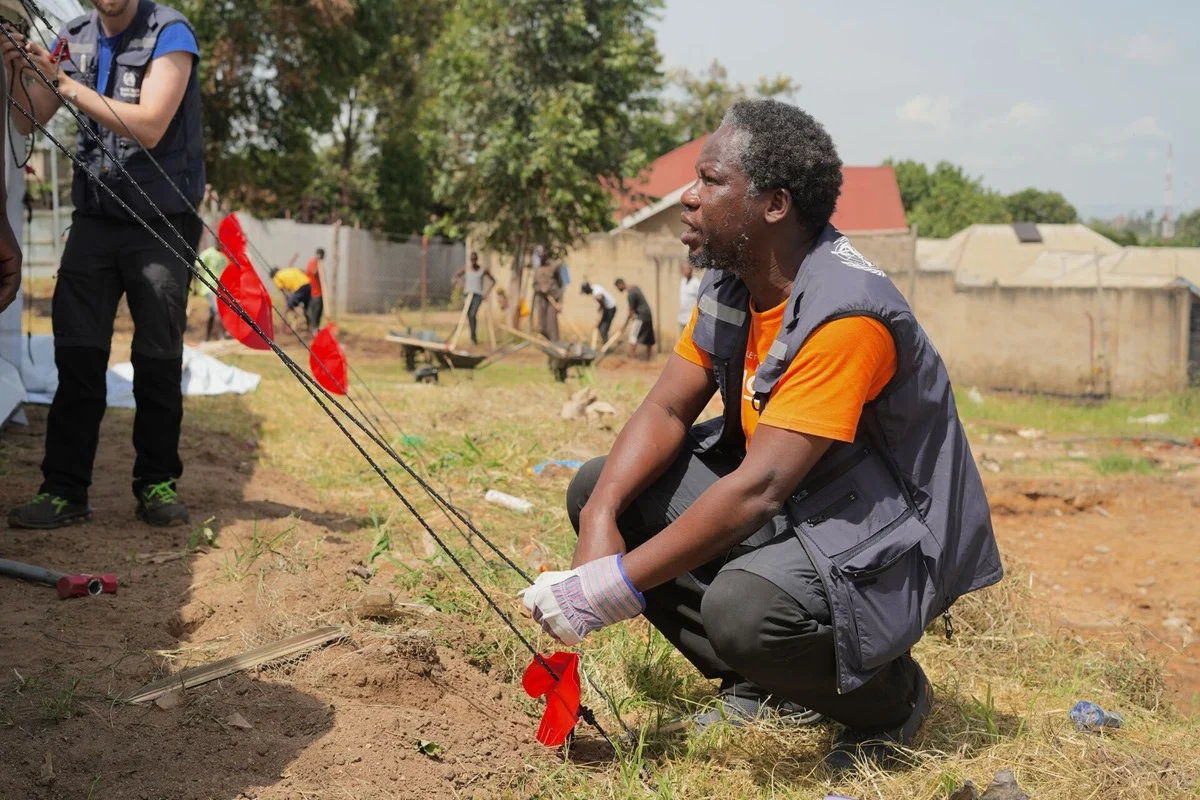
The World Health Organization (WHO) has initiated an emergency mobilization of its global technical advisory groups to address a significant outbreak of Ebola disease caused by the Bundibugyo virus (BVD) currently affecting the Democratic Republic of the Congo (DRC) and Uganda. In a series of high-level consultations, the WHO R&D Blueprint technical advisory groups, alongside the Strategic Advisory Group of Experts on Immunization (SAGE), have conducted a comprehensive assessment of experimental vaccines and therapeutics. This international effort aims to bridge the critical gap in medical countermeasures for the Bundibugyo strain, for which no licensed treatments or preventative vaccines currently exist. The primary recommendation emerging from these sessions is the immediate, yet strictly controlled, deployment of candidate products within the framework of clinical trials. This strategy is designed to ensure that any intervention not only potentially saves lives in the immediate term but also generates the robust scientific data required for future regulatory approval and broader public health use.
The Emergence of the Bundibugyo Strain and Current Epidemiological Context
The Bundibugyo virus (BVD) is one of the six species within the genus Ebolavirus, first identified in 2007 during an outbreak in the Bundibugyo District of Western Uganda. While it has historically exhibited a lower case-fatality rate—ranging from 25% to 40%—compared to the more notorious Zaire ebolavirus, its clinical presentation is similarly severe, characterized by fever, malaise, gastrointestinal distress, and in some cases, internal and external hemorrhaging. The current outbreak, spanning across the border regions of the DRC and Uganda, presents a complex public health challenge due to the high mobility of populations in these areas and the logistical difficulties of delivering specialized healthcare in remote, often underserved regions.
Unlike the Zaire ebolavirus, for which the Ervebo (rVSV-ZEBOV) and Zabdeno/Mvabea vaccines have been successfully licensed and deployed, the Bundibugyo strain remains a "neglected" variant in terms of pharmaceutical readiness. This lack of a licensed toolset has forced the global health community to pivot toward rapid-response research protocols. The WHO’s recent meetings were specifically designed to evaluate the current "pipeline" of candidate products—experimental drugs and vaccines that have shown promise in laboratory or early-phase clinical settings but have yet to be proven effective against BVD in a real-world epidemic environment.
Chronology of the WHO Response and Expert Consultations
The international response began immediately following the laboratory confirmation of the Bundibugyo virus in symptomatic patients in the DRC. Within days, the WHO activated its R&D Blueprint, a global strategy and preparedness plan that allows for the rapid activation of research activities during epidemics.
Following the initial detection, the WHO convened the R&D Blueprint technical advisory groups to review the existing inventory of candidate therapeutics. Concurrently, SAGE and its dedicated Ebola vaccine working group were tasked with determining whether existing vaccines for other Ebola strains could offer any cross-protection or if the focus must remain entirely on Bundibugyo-specific candidates. By the second week of the response, these groups reached a consensus: while some candidates are "promising enough to warrant prioritization," the lack of definitive data means they cannot be distributed as standard care. Instead, they must be administered under "Monitored Emergency Use of Unregistered and Investigational Interventions" (MEURI) protocols or formal clinical trial structures.
The timeline of this intervention reflects a significant evolution in pandemic management. In previous decades, the development of vaccines during an active outbreak was often considered unfeasible. However, following the successful trial of vaccines during the 2014–2016 West Africa Ebola crisis, the WHO has standardized the process of integrating high-level research into the emergency response.
Strategic Recommendations for Clinical Evaluation
The WHO’s advisory groups have laid out a dual-track strategy focusing on both treatment and prevention. For the treatment of active cases, the focus is on monoclonal antibodies and antiviral drugs that have shown potential in neutralizing the virus. For prevention, the priority is identifying a vaccine candidate that can be used in "ring vaccination" strategies—vaccinating the contacts of confirmed cases to create a buffer zone of immunity.
The key recommendations emphasize that all research must be led by national health authorities in the DRC and Uganda. This localized leadership is essential for ensuring that the trials are culturally sensitive and that the results are owned by the communities most affected by the disease. The WHO has specified that the evaluation of these products must adhere to the highest ethical standards, including informed consent and transparent communication regarding the experimental nature of the interventions.
Strengthening the Research Coalition and Infrastructure
The implementation of these clinical trials is not a solitary effort by the WHO. It involves a massive coalition including the Africa Centres for Disease Control and Prevention (Africa CDC), the ANRS Emerging Infectious Diseases (the French National Agency for Research on AIDS and Viral Hepatitis), and various scientific partners from across the globe. This coalition is working to harmonize protocols so that data collected in different regions can be pooled, providing a more comprehensive understanding of how these experimental products perform across different demographics.
A critical component of this infrastructure is the "New Public Health Order" championed by the Africa CDC, which emphasizes local manufacturing and African-led research. By conducting these trials in the DRC and Uganda, the global health community is investing in the scientific capacity of these nations, ensuring they are better prepared for future biological threats. The WHO has called for "accelerated access to essential supplies," ranging from personal protective equipment (PPE) to the cold-chain logistics required to transport sensitive experimental vaccines into tropical environments.
Traditional Containment: The First Line of Defense
While the focus on experimental vaccines and therapeutics represents the "cutting edge" of the response, the WHO remains adamant that traditional public health measures remain the most effective tools for stopping transmission in the immediate term. These "tried and true" methods include:
- Disease Surveillance and Rapid Testing: Early detection of cases is the cornerstone of outbreak control. The deployment of mobile laboratories has significantly reduced the turnaround time for BVD diagnosis.
- Contact Tracing: Identifying and monitoring every individual who has come into contact with a confirmed case for the 21-day incubation period.
- Isolation and Optimized Care: Providing supportive care, such as rehydration and symptom management, which significantly improves survival rates even in the absence of specific antivirals.
- Infection Prevention and Control (IPC): Ensuring that healthcare workers are protected and that clinics do not become "amplification points" for the virus.
- Community Engagement: Building trust with local leaders to ensure that public health advice is followed and that misinformation is minimized.
- Safe and Dignified Burials: Because the Ebola virus remains highly contagious in deceased bodies, specialized burial teams are required to prevent transmission during traditional funeral rites.
Analysis of Implications for Global Health Security
The WHO’s decision to prioritize clinical trials for the Bundibugyo virus marks a shift toward a more proactive stance on "Disease X" and neglected viral strains. Historically, research funding has flowed toward diseases with the highest perceived threat to global commerce or those that have already caused massive pandemics. By mobilizing for a Bundibugyo outbreak with the same intensity as a Zaire ebolavirus outbreak, the WHO is signaling that every strain of a high-consequence pathogen requires a ready-to-use pharmaceutical toolkit.
This approach also highlights the importance of the "R&D Blueprint" as a permanent fixture of global health architecture. It allows the world to move from a "reactive" mode—where research starts only after an outbreak is out of control—to a "pre-emptive" mode, where protocols and candidate products are pre-vetted and ready for deployment at the first sign of transmission.
However, the success of this initiative depends heavily on "coordinated investment." The WHO has highlighted that the research and development of countermeasures for BVD are often underfunded because the outbreaks are sporadic and typically occur in low-income settings. The call for investment is not just for the current crisis but for the long-term sustainability of the vaccine pipeline.
Looking Toward 2026: Science as the Foundation of Health
The current efforts coincide with the lead-up to World Health Day 2026, which carries the theme "Together for health. Stand with science." This theme underscores the WHO’s commitment to using rigorous scientific methodology as the primary defense against health emergencies. The organization’s leadership has noted that the response to the Bundibugyo outbreak will serve as a landmark case study in how science can be fast-tracked without compromising safety or ethics.
As the UN agency for health, the WHO continues to connect nations and partners across more than 150 locations. The mission in the DRC and Uganda is a microcosm of its broader goal: to serve the vulnerable and ensure that scientific progress is equitably distributed. By facilitating these clinical trials, the WHO is not only looking to end the current outbreak but is also building a repository of knowledge that will protect the world from the next inevitable emergence of a viral pathogen. The integration of community trust, national leadership, and international expertise remains the only viable path toward a world where no community is left defenseless against the threat of Ebola.
