
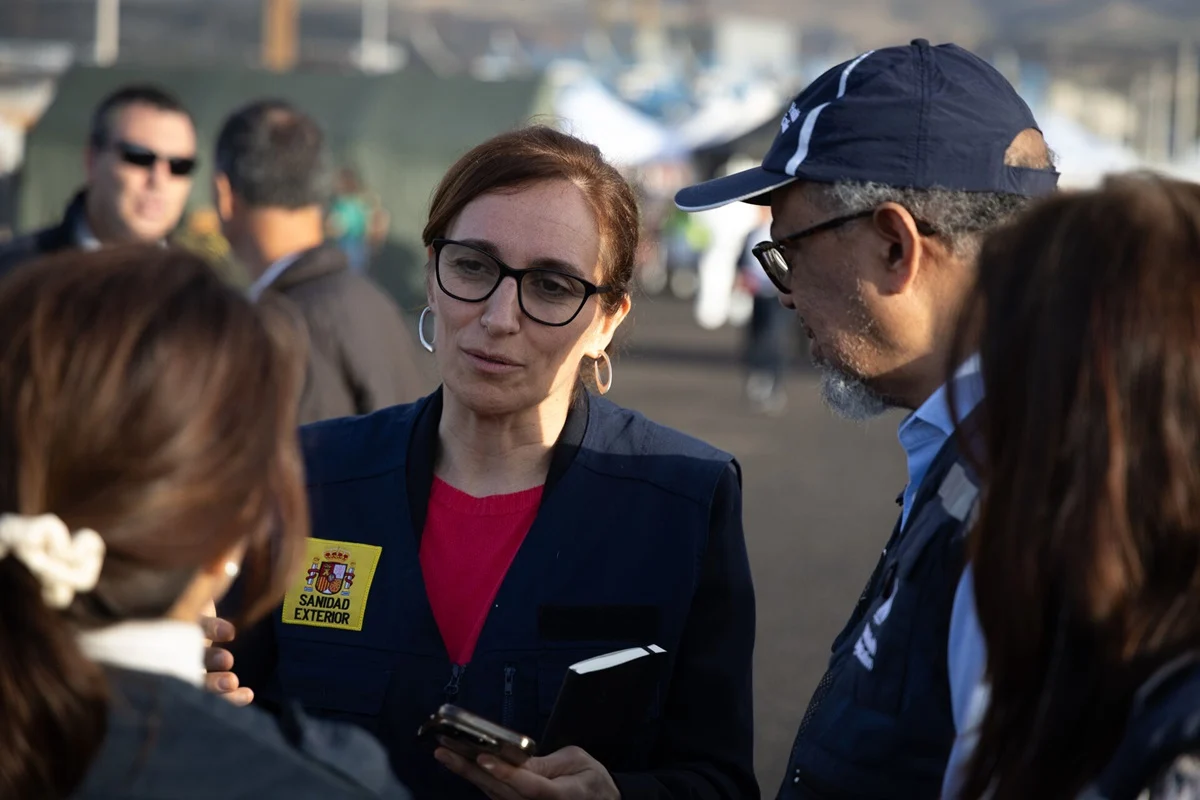
The World Health Organization (WHO) has officially marked the conclusion of a high-stakes humanitarian and public health operation in the Canary Islands, following the successful disembarkation and repatriation of passengers from the MV Hondius. Dr. Tedros Adhanom Ghebreyesus, Director-General of the WHO, praised the Spanish government and the local community of Tenerife for their "moral courage" and logistical precision in managing an outbreak of hantavirus that had left the expedition vessel in a state of international distress. The operation, which concluded at the Port of Granadilla de Abona, saw more than 120 passengers from 23 different nations safely moved through a strictly controlled sanitary corridor to their home countries.
The resolution of the crisis serves as a landmark case study in maritime health protocols, demonstrating how international cooperation and adherence to scientific risk assessments can mitigate the effects of rare viral outbreaks at sea. While the operation was deemed a logistical success, it was shadowed by the loss of four lives: three passengers succumbed to the virus, and one member of the Spanish Guardia Civil died of a heart attack while performing his duties during the emergency response.
Background of the MV Hondius Outbreak
The MV Hondius, a state-of-the-art polar expedition vessel operated by Oceanwide Expeditions, became the center of a global health concern after several individuals on board began exhibiting severe respiratory and febrile symptoms. Laboratory testing later confirmed the presence of hantavirus, a family of viruses primarily spread by rodents. While hantavirus is not typically known for easy person-to-person transmission, the confined environment of a maritime vessel necessitated an immediate and robust isolation strategy to prevent a wider outbreak and to provide critical care to those infected.
The ship, which was navigating international waters when the crisis peaked, faced significant challenges in finding a port willing to accept a vessel under quarantine. The situation echoed the maritime disruptions seen during the early stages of the COVID-19 pandemic, where cruise ships were frequently denied entry to ports, exacerbating health crises on board. However, the Spanish government, in consultation with the WHO and the International Maritime Organization (IMO), agreed to facilitate a controlled disembarkation in Tenerife, citing its obligations under the International Health Regulations (2005).
Chronology of the Crisis and Response
The timeline of the MV Hondius incident reflects a rapid escalation followed by a meticulously planned extraction. The first signs of illness were reported in late April, as the ship moved through the South Atlantic. By the time the vessel approached the coast of Africa, two passengers had already died on board, prompting an emergency intervention by the WHO Regional Office for Europe.
On May 1, the Spanish Ministry of Health, led by Minister Mónica García, coordinated with the Ministry of the Interior and the Ministry of Transport to designate the Port of Granadilla de Abona as the primary site for the operation. Granadilla was chosen for its modern infrastructure and its relative isolation from major population centers, allowing for the establishment of a secure perimeter.
Between May 2 and May 6, health teams consisting of specialized epidemiologists and emergency medical technicians boarded the vessel while it was anchored off the coast to stabilize patients and conduct a comprehensive risk assessment. On May 8, the "Sanitary Corridor" was officially activated. This involved the use of specialized vehicles and chartered flights to move passengers directly from the ship’s gangway to the airport, bypassing standard terminal procedures to ensure zero contact with the general public.
By Monday, May 13, the final group of passengers had successfully boarded their repatriation flights. The ship, manned by Captain Jan Dobrogowski and a skeleton crew of 26, subsequently departed for the Netherlands, where it will undergo a comprehensive deep-cleaning and sanitation process.
Scientific and Logistical Framework
The success of the Tenerife operation rested on the "Sanitary Corridor" model, a logistical framework designed to move potentially exposed individuals through a public space without compromising local biosecurity. According to the WHO, the protocols involved three primary layers of protection:
- On-board Triage: Only passengers who were asymptomatic or had completed a primary observation period were cleared for transit. Those requiring active medical care were moved in high-containment ambulances to specialized isolation units in Tenerife.
- Protective Equipment and Decontamination: All personnel involved in the transfer—including port authorities, Guardia Civil officers, and health workers—were equipped with Level C personal protective equipment (PPE). Continuous decontamination of transit paths was conducted throughout the day.
- Global Monitoring: The WHO utilized its Global Outbreak Alert and Response Network (GOARN) to ensure that the 23 home countries of the passengers were prepared to receive them under appropriate quarantine conditions upon arrival.
The hantavirus strain involved in this incident is currently under investigation by virologists. While hantaviruses in the Americas (such as the Sin Nombre virus) are known for causing Hantavirus Pulmonary Syndrome (HPS), European and Asian strains often manifest as Hemorrhagic Fever with Renal Syndrome (HFRS). The WHO has emphasized that the risk to the residents of Tenerife remained "negligible" throughout the operation due to the absence of the specific rodent vectors in the port environment and the lack of sustained human-to-human transmission.
Official Responses and Political Leadership
The Spanish government’s response has been characterized as a fulfillment of international humanitarian law. Prime Minister Pedro Sánchez stated that the decision to open the port was based on the principle that "public health and human dignity are not mutually exclusive."
Dr. Tedros Adhanom Ghebreyesus, who traveled to Tenerife to oversee the final stages of the operation, expressed profound gratitude to the Spanish ministers involved. He specifically highlighted the roles of Minister of the Interior Fernando Grande-Marlaska and Minister of Territorial Policy Ángel Víctor Torres in ensuring the safety and efficiency of the port operations.
"The government of Spain honored its obligations under international law and then went beyond them," Dr. Tedros noted in his formal statement. "They chose to help when it would have been easier to turn away. This is the definition of moral courage."
The Port Authorities of Granadilla were also recognized for executing a "flawless" complex operation. The port’s ability to pivot from industrial operations to a high-security medical transit point was cited by maritime experts as a testament to Spain’s emergency preparedness.
Casualties and Tributes
Despite the logistical success, the human cost of the outbreak remains significant. The WHO confirmed that three individuals died in connection with the hantavirus outbreak. Two of these deaths occurred on the MV Hondius while at sea, and a third passenger passed away after arriving in South Africa, where they had been transferred for emergency care.
Furthermore, the operation was marred by the sudden death of a member of the Guardia Civil of Tenerife. The officer suffered a fatal heart attack while on duty at the port. Dr. Tedros extended his deepest condolences to the officer’s family and colleagues, stating that his service was a reflection of the "duty and commitment" that defined the entire mission. "He was there because he believed in protecting his community and helping those in need. His sacrifice will not be forgotten by the international community," the Director-General said.
Global Implications and Analysis
The MV Hondius incident highlights the ongoing vulnerabilities of the cruise and expedition travel industry to infectious diseases. However, it also provides a blueprint for future responses. Analysts suggest that the "Tenerife Model" will likely be studied by the WHO as a gold standard for managing maritime health crises.
Key takeaways from the operation include:
- The Importance of Transparency: By communicating the risks clearly and adhering to established protocols, the authorities prevented public panic and maintained the trust of the local population.
- Decisive Leadership: The rapid designation of a suitable port and the coordination between multiple government ministries prevented the vessel from becoming a "floating coffin," a term used during previous maritime crises.
- Solidarity as a Health Strategy: The WHO has reiterated that "the best immunity we have is solidarity." The willingness of a single island to host an international crisis response prevented a much larger diplomatic and humanitarian disaster.
As the MV Hondius makes its way to the Netherlands, the passengers who have returned to their respective countries remain under the surveillance of their national public health systems. The WHO has confirmed that the job is not truly finished until every passenger and crew member has cleared their final quarantine period and reunited with their families.
In his closing remarks, Dr. Tedros reflected on the beauty of Tenerife and the spirit of its people, promising to return to the island under more peaceful circumstances. For now, the record of the "yes" given by Tenerife stands as a significant chapter in the history of international public health, proving that even in a time of fear, humanity can choose the path of science, coordination, and compassion.
