
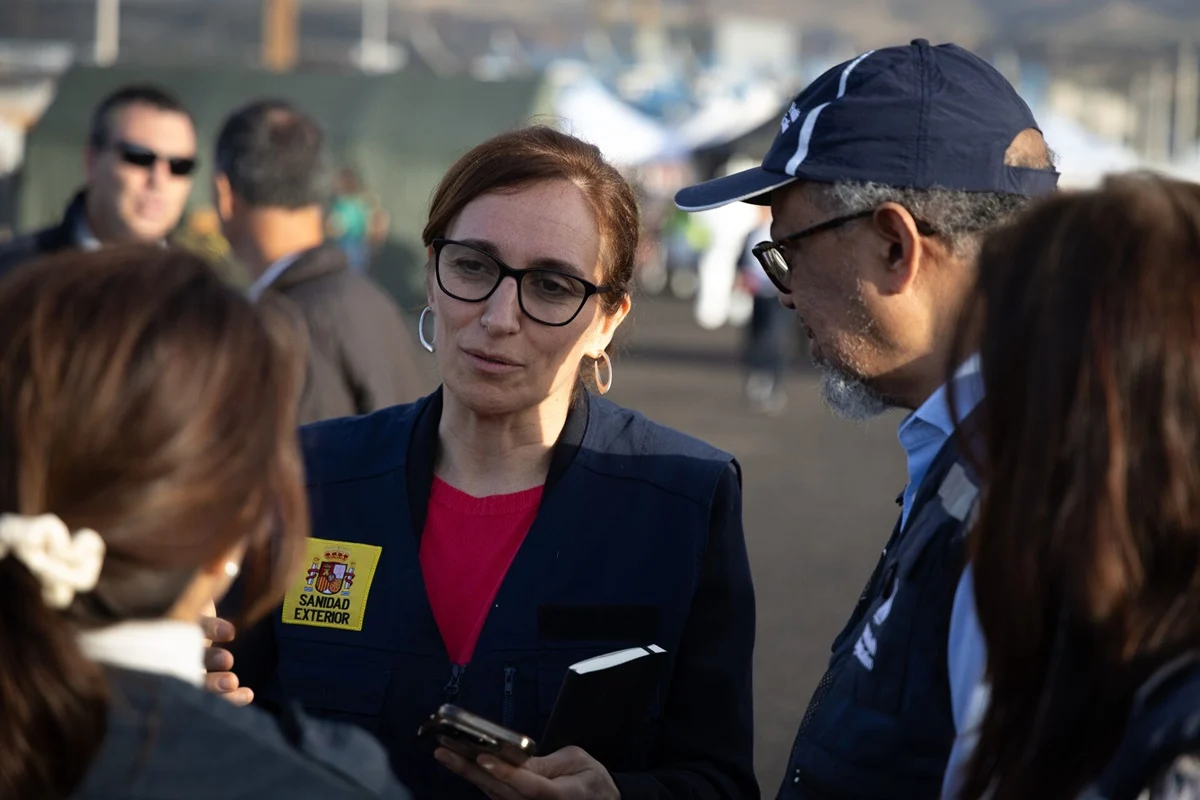
The World Health Organization (WHO) has officially concluded its emergency oversight of the public health crisis involving the MV Hondius, a polar expedition vessel that became the center of a significant hantavirus outbreak in the Atlantic. In a detailed statement issued from Geneva, WHO Director-General Dr. Tedros Adhanom Ghebreyesus praised the government of Spain and the citizens of Tenerife for their "moral courage" and "logistical precision" in managing an international health emergency that saw over 120 passengers from 23 different nations safely evacuated and repatriated. The operation, which centered on the port of Granadilla de Abona, is being hailed by health experts as a gold standard for international solidarity and the application of rigorous public health protocols under pressure.
The crisis began several weeks ago when respiratory illnesses were reported among passengers and crew aboard the MV Hondius, a vessel known for its expeditions to remote polar regions. As the situation escalated, it was confirmed that the ship was experiencing an outbreak of hantavirus, a viral pathogen typically transmitted by rodents that can lead to severe respiratory distress or hemorrhagic fever in humans. With multiple individuals requiring urgent medical attention and the ship facing potential isolation as various ports weighed the risks of contagion, the Spanish government, in coordination with the WHO, agreed to provide a humanitarian corridor in the Canary Islands.
The Logistics of the Granadilla de Abona Operation
The evacuation process at the port of Granadilla de Abona was characterized by what Dr. Tedros described as "quiet precision." The operation required the mobilization of specialized health units, security forces, and maritime authorities to ensure that passengers could disembark without risking the health of the local population. A strictly controlled "sanitary corridor" was established, allowing passengers to move from the ship to specialized transport vehicles and eventually to aircraft or quarantine facilities.
According to data provided by the WHO, the operation involved the safe transit of 120 passengers. These individuals represented a diverse global cohort, hailing from 23 different countries, which necessitated complex diplomatic coordination to ensure that their home nations were prepared to receive them under specific health monitoring protocols. The Spanish health teams, equipped with advanced personal protective equipment (PPE), conducted on-site assessments for every individual boarding the transport vehicles.
The success of the mission relied heavily on the "Risk Assessment" and "Protocol Verification" models developed by the WHO Regional Office for Europe in Copenhagen. These protocols were designed to prevent the cross-contamination of the viral strain while ensuring that those in need of immediate medical intervention received it with the dignity afforded to any patient in a modern clinical setting.
Chronology of the MV Hondius Crisis
The timeline of the MV Hondius incident reflects the rapid escalation of public health threats in a maritime environment. The vessel was mid-voyage when the first signs of illness appeared.
- Initial Outbreak: In the weeks preceding the arrival in Tenerife, several passengers began showing symptoms of severe respiratory distress. The ship’s medical team initiated isolation protocols, but the limited facilities on an expedition vessel were soon strained.
- Emergency Identification: Laboratory tests eventually identified the pathogen as hantavirus. Given the high mortality rate associated with certain strains of the virus, the WHO was notified, and international health regulations were triggered.
- The Search for Port Entry: As the ship approached the African and European coasts, the Spanish government, led by Prime Minister Pedro Sánchez, signaled its willingness to host the evacuation under the guidance of the WHO.
- The Granadilla Operation: On the final Monday of the operation, the port of Granadilla de Abona became the primary hub for the evacuation. Health workers and the Guardia Civil managed the disembarkation of over 120 people.
- Repatriation and Monitoring: Following disembarkation, passengers were either placed in monitored transit to their home countries or admitted to local healthcare facilities for stabilization.
- Current Status: The MV Hondius, staffed by Captain Jan Dobrogowski and a 26-member skeleton crew, has since departed Tenerife and is currently en route to the Netherlands. The crew remains under quarantine and medical observation until the incubation period for the virus has passed.
Scientific Context: Understanding the Hantavirus Risk
Hantaviruses are a family of viruses spread mainly by rodents. In the context of a ship, an outbreak can be particularly difficult to manage due to the confined spaces and shared ventilation systems. While hantavirus is not typically known for human-to-human transmission—unlike COVID-19 or influenza—the severity of the disease it causes, such as Hantavirus Pulmonary Syndrome (HPS), makes it a significant public health concern.
The mortality rate for HPS can be as high as 38%, according to data from the Centers for Disease Control and Prevention (CDC). Therefore, the "risk assessment" mentioned by the WHO was critical. If the strain on the MV Hondius had shown any signs of atypical transmission or heightened virulence, the protocols for disembarkation would have been significantly more restrictive. The fact that the "corridor held," as Dr. Tedros noted, indicates that the scientific barriers established by the Spanish medical teams were sufficient to contain the biological risk while fulfilling humanitarian obligations.
The Human Cost and Official Tributes
Despite the logistical success of the operation, the outbreak was not without tragedy. The WHO confirmed that three individuals died in connection with the hantavirus outbreak. The specific details provided by health officials clarify that two of these deaths occurred onboard the MV Hondius during its time at sea. The third fatality occurred after a passenger reached South Africa, highlighting the lingering danger of the virus even after a patient has been moved to a land-based medical facility.
Furthermore, the operation claimed the life of a member of the Guardia Civil in Tenerife. The officer suffered a fatal heart attack while performing his duties during the emergency response. Dr. Tedros extended his deepest condolences to the officer’s family and colleagues, noting that his death was a reminder of the personal sacrifices made by frontline workers during public health crises.
"He was here because of duty and commitment to his community," Tedros stated, emphasizing that the officer’s service was a vital component of the broader effort to protect both the passengers and the residents of Tenerife.
Political and International Reactions
The Spanish government’s handling of the crisis has received widespread international acclaim. The coordination involved multiple ministries, including the Ministry of Health, led by Mónica García; the Ministry of the Interior, led by Fernando Grande-Marlaska; and the Ministry of Territorial Policy and Democratic Memory, led by Ángel Víctor Torres.
The WHO highlighted that the government of Prime Minister Sánchez not only met its obligations under international law—specifically the International Health Regulations (IHR 2005)—but exceeded them through the "warmth and speed" of the response. The IHR (2005) is a legally binding instrument of international law that requires countries to report certain disease outbreaks and public health events to the WHO. It also stipulates that ships should not be refused "free pratique" (permission to enter a port) solely on public health grounds, provided that measures can be taken to control the risk.
By opening the port of Granadilla, Spain reinforced the principle that maritime nations have a moral and legal responsibility to assist those in distress at sea, even when that distress involves a biological hazard. This stands in contrast to recent global trends where fear of contagion has sometimes led to the closing of borders and the stranding of vessels in international waters.
Broader Implications for Global Health Security
The resolution of the MV Hondius crisis provides several key lessons for future global health security. First, it demonstrates the necessity of trust between international health bodies and national governments. The WHO’s presence on the ground in Tenerife, alongside experts from the Regional Office for Europe, provided an added layer of technical expertise that supported local decision-making.
Second, the event underscores the importance of specialized maritime health protocols. As the cruise and expedition industry continues to grow, the likelihood of isolated outbreaks on vessels increases. The "Tenerife model"—characterized by a dedicated sanitary port, pre-arranged transit corridors, and immediate international repatriation—could serve as a blueprint for future incidents.
Finally, the incident highlights the role of "solidarity" as a functional tool in public health. Dr. Tedros remarked that "the best immunity we have is solidarity," suggesting that the collaborative approach taken by Tenerife actually reduced the overall risk to the global community. By managing the outbreak in a controlled environment rather than leaving the ship to wander from port to port, the Spanish authorities prevented a potentially uncoordinated and more dangerous spread of the virus.
Conclusion of the Mission
As the MV Hondius sails toward the Netherlands, the WHO continues to monitor the health of the remaining crew. The operation will not be considered fully closed until the final member of the crew has cleared the mandatory quarantine period and is reunited with their family.
For the people of Tenerife, the departure of the passengers marks the end of a period of quiet heroism. The island, which typically makes headlines for its tourism and natural beauty, has now earned a place in the annals of international public health for its response to a crisis that began in the isolation of the high seas and ended with the successful repatriation of over a hundred individuals. The WHO has pledged to carry the record of this response forward as a testament to how humanity can, and should, respond to the inevitable health challenges of the 21st century.
