
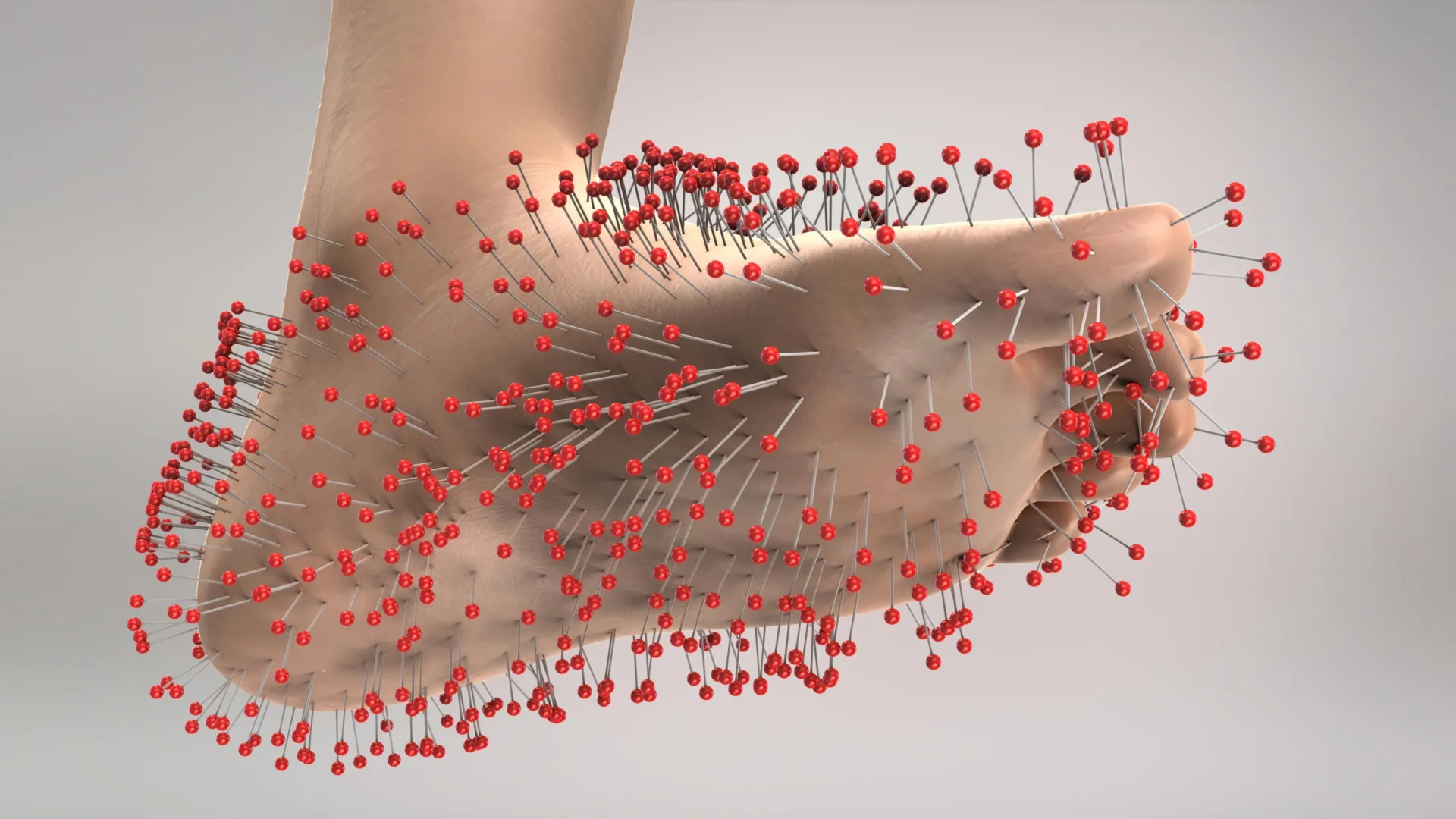
Millions worldwide grapple with the debilitating effects of chronic nerve pain, a condition where even the gentlest touch can trigger agonizing sensations. For decades, the scientific community has suspected a link between the malfunction of mitochondria – the powerhouses of our cells – and the onset of this persistent discomfort. Now, groundbreaking research emerging from Duke University School of Medicine suggests that revitalizing these crucial cellular components could represent a paradigm shift in how we approach and treat chronic neuropathic pain.
The Energy Deficit in Damaged Nerves
The genesis of chronic nerve pain is a complex biological puzzle. One of the leading hypotheses centers on the role of mitochondria, which are responsible for generating adenosine triphosphate (ATP), the primary energy currency of the cell. In damaged nerve cells, these vital organelles are believed to falter, leading to an energy deficit that disrupts normal neuronal function. This disruption can manifest as the hypersensitivity and pain characteristic of conditions like diabetic neuropathy and chemotherapy-induced peripheral neuropathy. These conditions alone affect an estimated 15 million Americans, with global figures numbering in the hundreds of millions, underscoring the immense public health burden.
Duke University’s Breakthrough Study in Nature
A pivotal study, recently published in the prestigious journal Nature, has provided compelling evidence for this mitochondrial hypothesis and introduced a novel therapeutic strategy. Researchers at Duke University School of Medicine meticulously investigated whether replenishing or restoring healthy mitochondria could facilitate the recovery of damaged nerve cells. Employing a dual approach using both human tissue samples and meticulously designed mouse models, the team observed a significant reduction in pain associated with both diabetic neuropathy and chemotherapy-induced nerve damage. Remarkably, in some instances, the pain relief was sustained for up to an impressive 48 hours, offering a tantalizing glimpse of long-lasting therapeutic effects.
This innovative approach diverges from conventional pain management strategies that primarily focus on blocking pain signals. Instead, the Duke researchers posit that their method targets a fundamental underlying cause of chronic nerve pain: the compromised energy supply essential for proper nerve cell function.
"By providing damaged nerves with fresh mitochondria, or by stimulating their capacity to generate more of their own, we can effectively reduce inflammation and foster a more conducive environment for healing," explained Dr. Ru-Rong Ji, the study’s senior author and director of the Center for Translational Pain Medicine in the Department of Anesthesiology at Duke School of Medicine. "This therapeutic strategy holds the potential to alleviate pain through an entirely novel mechanism, addressing the root cause rather than merely managing symptoms."
Unveiling a Novel Cellular Support System
The findings from Duke University align with a growing body of scientific evidence highlighting the remarkable capacity of cells to transfer mitochondria between one another. This intercellular mitochondrial exchange is increasingly recognized as a sophisticated natural support system, potentially playing a role in a wide spectrum of health conditions, including obesity, cancer, stroke, and, critically, chronic pain.
The Duke researchers specifically focused their investigation on satellite glial cells, a type of glial cell that envelops and supports sensory neurons. Their study unearthed a previously unrecognized function for these cells: they appear to be instrumental in directly transferring healthy mitochondria into sensory neurons. This transfer is facilitated by an intricate network of microscopic conduits known as tunneling nanotubes.
Dr. Ji elaborated on the critical nature of this process, explaining that when this mitochondrial transfer mechanism falters, nerve fibers begin to deteriorate. This degeneration is what precipitates the debilitating symptoms of chronic nerve pain, including persistent pain, tingling sensations, and numbness, particularly pronounced in the extremities such as the hands and feet, where nerve fibers are most extensively distributed.
"Through the sharing of energy reserves, satellite glial cells appear to play a crucial role in maintaining neuronal health and preventing the onset of pain," Dr. Ji remarked. A professor of anesthesiology, neurobiology, and cell biology at Duke School of Medicine, he emphasized the significance of this discovery. In their experimental mouse models, the researchers observed a remarkable reduction in pain-related behaviors by as much as 50% when the mitochondrial transfer process was artificially enhanced.
Identifying the Molecular Architects of Mitochondrial Transfer
Beyond understanding the biological process, the Duke team also sought to identify the molecular machinery that underpins this crucial mitochondrial transfer. They employed a more direct experimental approach, injecting isolated mitochondria – sourced from both human donors and mice – into the dorsal root ganglia. These ganglia are complex clusters of nerve cells that serve as critical relay stations, transmitting sensory information from the body to the brain.
The success of this direct mitochondrial injection was heavily contingent on the quality of the donor mitochondria. Healthy mitochondria from donor cells demonstrably reduced pain in the experimental models. Conversely, mitochondria obtained from individuals with diabetes, presumably already compromised by the disease, failed to elicit any beneficial effect, further reinforcing the importance of mitochondrial health.
A significant molecular discovery emerged from this phase of the research: the identification of a protein named MYO10. This protein was found to be indispensable for the formation of the tunneling nanotubes, the very conduits that enable the essential movement of mitochondria between cells. The identification of MYO10 provides a potential molecular target for future therapeutic interventions aimed at enhancing mitochondrial transfer.
This groundbreaking research was spearheaded by lead author Dr. Jing Xu, a research scholar in the Department of Anesthesiology, in close collaboration with Dr. Caglu Eroglu, a distinguished Duke professor of cell biology renowned for her pioneering work on glial cells, and Dr. Ji.
Implications for Future Chronic Pain Therapies
While the findings represent a significant leap forward, the researchers acknowledge that further investigation is imperative. High-resolution imaging techniques are needed to achieve a more profound understanding of the precise mechanisms by which these tunneling nanotubes deliver mitochondria within living nerve tissue. This detailed visualization will be crucial for optimizing therapeutic strategies.
Nevertheless, the implications of this study are far-reaching. The research illuminates a previously underappreciated communication pathway between nerve cells and their supporting glial cells. This discovery opens the door to the development of novel treatments for chronic pain that could target the disease at its fundamental source, rather than merely offering symptomatic relief. Such an approach could lead to more effective and durable pain management for millions of patients worldwide.
Broader Context and Potential Impact
The scientific pursuit of understanding and treating chronic pain has been ongoing for decades, with progress often incremental. Previous research has explored various pathways, including the role of ion channels, neurotransmitters, and inflammatory mediators. However, the focus on cellular energy metabolism, specifically mitochondrial function, represents a more fundamental and potentially more impactful avenue.
The prevalence of chronic pain conditions is staggering. In the United States, an estimated 20% of adults experience chronic pain, leading to significant healthcare costs, reduced quality of life, and lost productivity. Diabetic neuropathy alone is a common complication of diabetes, affecting a substantial percentage of individuals with the condition. Similarly, chemotherapy-induced peripheral neuropathy is a dose-limiting side effect for many cancer treatments, impacting patient adherence and overall treatment outcomes.
The Duke study’s findings are particularly relevant given the increasing recognition of the interconnectedness of cellular processes. The concept of intercellular communication through nanotubes and organelle transfer is a rapidly evolving field with implications beyond pain management. If successful, a therapy derived from this research could offer a new class of drugs or interventions that go beyond simply masking pain, aiming instead to restore cellular function and promote genuine healing.
Potential Challenges and Future Directions:
While the outlook is promising, several challenges lie ahead. Translating findings from animal models to human therapies is a complex and often lengthy process. The efficacy and safety of any mitochondrial-based therapy will need to be rigorously established through extensive preclinical and clinical trials. Furthermore, understanding the precise conditions under which mitochondrial transfer is beneficial versus potentially detrimental will be crucial.
The identification of MYO10 as a key protein involved in nanotube formation presents a tangible target for drug development. Therapies could potentially be designed to enhance MYO10 activity or modulate its downstream effects to promote mitochondrial transfer. Alternatively, strategies could involve direct delivery of healthy mitochondria or compounds that stimulate endogenous mitochondrial production and function within nerve cells.
The long-term sustainability of pain relief is another critical consideration. While the observed 48-hour relief is encouraging, the goal would be to achieve sustained functional recovery and pain reduction. This might require ongoing or intermittent therapeutic interventions.
The Duke University research team’s work represents a significant advancement in our understanding of the cellular mechanisms underlying chronic nerve pain. By focusing on the energetic health of nerve cells and the remarkable capacity for intercellular support, they have illuminated a new and potentially revolutionary pathway for therapeutic intervention. As research continues to unravel the complexities of mitochondrial dynamics and cellular communication, the hope for effective and lasting relief for millions suffering from chronic nerve pain grows stronger. The integration of basic science discoveries with clinical application remains the cornerstone of progress in medicine, and this study exemplifies that crucial link.
