
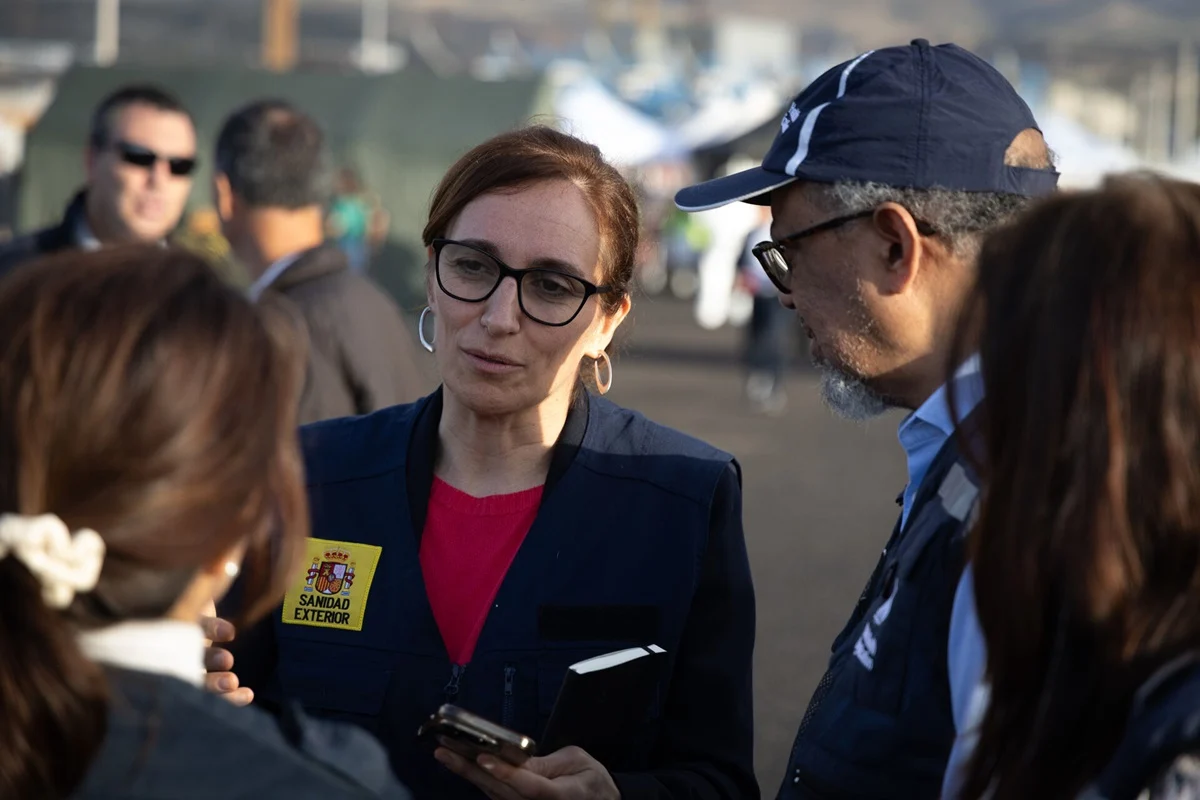
The conclusion of a complex international public health operation at the Port of Granadilla de Abona in Tenerife marks a significant milestone in maritime crisis management and global health solidarity. Following an outbreak of hantavirus aboard the MV Hondius, an expedition vessel, a coordinated effort between the World Health Organization (WHO) and the Spanish government has resulted in the safe disembarkation and repatriation of more than 120 passengers from 23 different nations. Dr. Tedros Adhanom Ghebreyesus, Director-General of the WHO, personally oversaw the final stages of the operation, praising the "moral courage" and "quiet precision" of the local community and national authorities in managing a situation that initially sparked fear and international concern.
The operation, which concluded this week, saw health workers in full protective equipment and Spanish security forces managing a high-stakes "humanitarian corridor." This corridor allowed passengers, who had been living in a state of uncertainty and grief following three fatalities linked to the outbreak, to transit safely from the vessel to their home countries. The successful resolution of the crisis is being hailed by health experts as a blueprint for how science, international law, and human empathy can intersect to prevent a localized health emergency from escalating into a broader diplomatic or epidemiological catastrophe.
Chronology of the MV Hondius Crisis
The crisis began several weeks ago when the MV Hondius, a vessel known for polar expeditions, reported a cluster of severe respiratory and hemorrhagic symptoms among its occupants. As the ship navigated the Atlantic, the situation worsened, leading to the confirmation of a hantavirus outbreak. Hantaviruses are a group of viruses normally carried by rodents; in humans, they can cause Hantavirus Pulmonary Syndrome (HPS) or Hemorrhagic Fever with Renal Syndrome (HFRS), both of which carry high mortality rates.
The timeline of the response was marked by rapid escalation and eventual stabilization. Upon the discovery of the first cases, the vessel was placed under strict maritime quarantine. Two passengers succumbed to the virus while still on board, creating a somber atmosphere of confinement for the remaining 150 people. A third individual, whose condition had deteriorated rapidly, passed away upon arrival in South Africa after an emergency medical evacuation, bringing the total death toll related to the outbreak to three.
Faced with a mounting humanitarian crisis, the Spanish government, led by Prime Minister Pedro Sánchez, agreed to allow the vessel to dock at the Port of Granadilla in Tenerife. This decision was made under the framework of international maritime law and the International Health Regulations (2005), which mandate that states provide assistance to vessels in distress while protecting their own domestic populations. From the moment the ship arrived at the port, a meticulously planned logistical operation was activated, involving the Ministry of Health, the Ministry of the Interior, and the Ministry of Territorial Policy.
Epidemiological Context and Risk Mitigation
Hantavirus outbreaks are rare in maritime environments, making the MV Hondius incident a unique challenge for the WHO and Spanish health authorities. Unlike airborne viruses such as influenza or COVID-19, hantavirus is typically transmitted through contact with infected rodents or their excreta. However, the confined spaces of a ship necessitated a rigorous risk assessment to ensure that no secondary transmission occurred during the disembarkation process.
The "Granadilla Protocol" involved the establishment of a sterile transit zone. Health teams from the Canary Islands (Servicio Canario de la Salud) boarded the ship to conduct final screenings before passengers were permitted to step onto Spanish soil. Each passenger was moved through a controlled environment—the humanitarian corridor—directly to specialized transport vehicles. According to WHO data, the 120 passengers represented 23 different nationalities, requiring intense diplomatic coordination with embassies and health ministries worldwide to ensure that monitoring continued upon their arrival in their home countries.
The WHO Regional Office for Europe, based in Copenhagen, provided technical support throughout the process, ensuring that the risk assessment held steady. "The protocols worked. The corridor held," Dr. Tedros noted during his observation of the final departures. The remaining 26 crew members, led by Captain Jan Dobrogowski, remain on the vessel as it sails toward the Netherlands, where final disinfection and quarantine protocols will be completed.
Official Responses and Political Leadership
The success of the operation has been attributed to the seamless coordination between various levels of the Spanish government. Dr. Tedros specifically highlighted the roles of Mónica García (Minister of Health), Fernando Grande-Marlaska (Minister of the Interior), and Ángel Víctor Torres (Minister of Territorial Policy and Democratic Memory). Their leadership ensured that the port authorities at Granadilla could execute a complex operation without a single breach in safety or public order.
Prime Minister Sánchez’s administration has been lauded for going beyond its legal obligations. While international law requires ports to assist ships in distress, the "warmth, speed, and care" described by the WHO Director-General suggests a level of humanitarian commitment that exceeded standard bureaucratic responses. This sentiment was echoed by local officials in Tenerife, who maintained a stance of "quiet, steady acceptance" rather than the hostility or panic that often accompanies the arrival of a quarantined vessel.
However, the operation was not without its own tragedies. In addition to the three lives lost to the virus, the Tenerife community is mourning a member of the Guardia Civil who died of a heart attack while serving on the front lines of the port operation. The officer’s death served as a poignant reminder of the physical and emotional toll such operations take on first responders. Dr. Tedros extended his deepest condolences to the Guardia Civil, stating that the officer’s service "will not be forgotten" by the international community.
Analysis of Global Health Implications
The management of the MV Hondius incident provides several critical lessons for global health security. First, it demonstrates the efficacy of the International Health Regulations when they are applied with transparency and mutual trust. In many recent global health crises, nations have responded by closing borders and turning away vessels, a practice that can exacerbate the spread of disease and lead to greater loss of life. Tenerife’s choice to "open its doors" serves as a counter-narrative to the trend of isolationism.
Second, the event highlights the importance of localized expertise. The port of Granadilla was chosen for its strategic isolation and modern infrastructure, allowing for a high-volume transit operation to occur without disrupting the daily lives of the island’s residents. The ability of the Canary Islands’ health infrastructure to absorb such a specialized task confirms the region’s readiness for complex maritime emergencies.
Finally, the incident underscores the necessity of addressing the "human element" in public health. The passengers did not just receive medical screening; they were treated with what Dr. Tedros described as "the dignity of being cared for by strangers." This psychological aspect of crisis management is often overlooked but is essential for maintaining public trust and ensuring the cooperation of those affected by quarantine measures.
The Path Forward for the MV Hondius and Its Crew
As the MV Hondius makes its way to the Netherlands, the public health mission enters its final phase. The 26 crew members remain under observation, and the ship will undergo a comprehensive environmental audit to determine the source of the hantavirus and ensure that the vessel is safe for future use. The WHO continues to track the health status of the repatriated passengers, although no new cases have been reported since the disembarkation began.
In his closing remarks from Geneva, Dr. Tedros expressed a personal connection to the island of Tenerife, noting that he had walked through the city alone during the operation’s final days. He praised the beauty of the island and the character of its people, vowing to return in the future as a visitor rather than a crisis responder.
The legacy of the MV Hondius outbreak will likely be defined not by the virus itself, but by the international response it triggered. At a time when global cooperation is often strained, the collaboration between the WHO, the Spanish government, and the people of Tenerife stands as a testament to the power of "solidarity as immunity." The operation proved that when science and moral courage are aligned, even the most daunting public health challenges can be met with grace and efficiency. For the 150 people who were trapped in a floating crisis, the island of Tenerife will forever be remembered as the place that said "yes" when the rest of the world might have said "no."
