
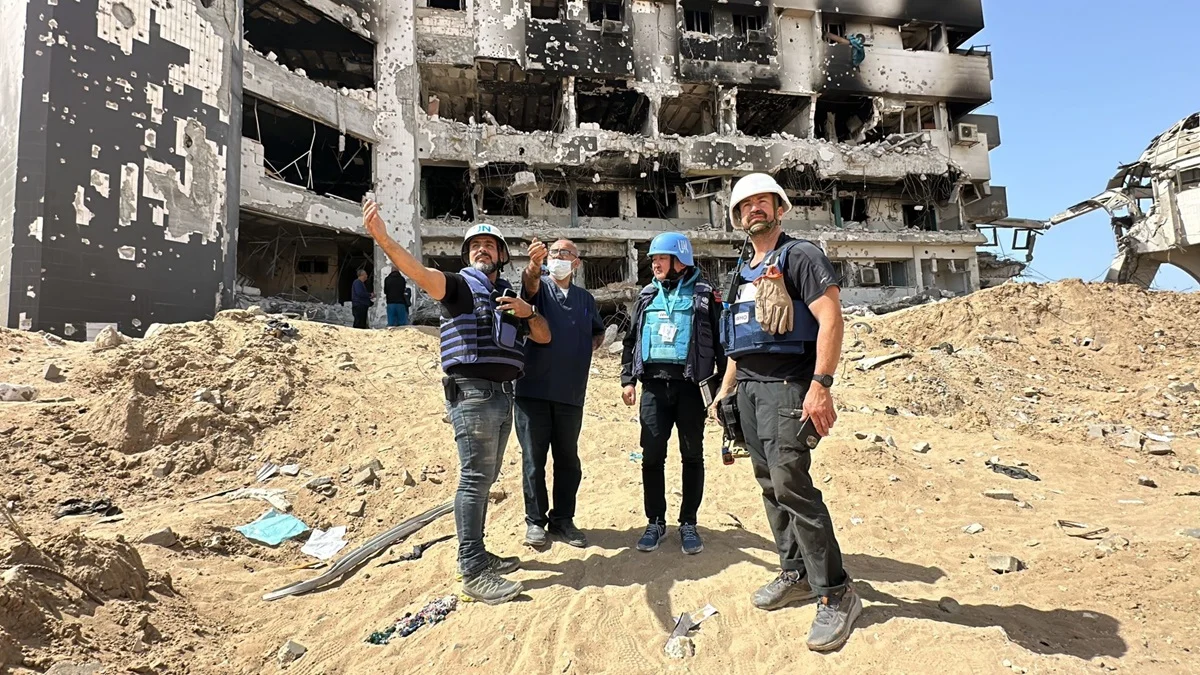
The leaders of the world’s most prominent humanitarian and health organizations have issued a joint indictment of the international community’s failure to protect medical services in conflict zones, marking the tenth anniversary of United Nations Security Council Resolution 2286 not as a milestone of progress, but as a somber acknowledgment of systemic collapse. In a rare unified front, the International Committee of the Red Cross (ICRC), the World Health Organization (WHO), and Médecins Sans Frontières (MSF) declared that the violence affecting medical facilities, transport, and personnel has not only continued unabated since the resolution’s adoption but has intensified in both frequency and brutality. The organizations argue that the persistent targeting of healthcare is no longer a localized tragedy of war but a global "crisis of humanity" that signals a fundamental breakdown in the rules and norms intended to limit the suffering of civilians.
When the UN Security Council unanimously adopted Resolution 2286 a decade ago, it was hailed as a landmark commitment to the sanctity of healthcare. The resolution strongly condemned acts of violence, attacks, and threats against the wounded and sick, medical personnel, and humanitarian personnel, as well as their means of transport and equipment. It urged states to ensure accountability for such acts and to develop effective measures to prevent them. However, ten years later, the heads of the ICRC, WHO, and MSF—Mirjana Spoljaric, Dr. Tedros Adhanom Ghebreyesus, and Dr. Christos Christou—state that the harm the resolution sought to prevent has flourished. From the destruction of hospitals in Gaza and Ukraine to the systematic obstruction of medical supplies in Sudan and the targeting of ambulances in various sub-Saharan conflicts, the "sanctity of healthcare" has been treated by many warring parties as a suggestion rather than a binding legal obligation.
A Chronology of Declining Norms and Escalating Violence
The trajectory of the last decade reveals a disturbing trend where the protection of medical facilities has shifted from a red line to a strategic target. Following the 2014-2016 escalation of the conflict in Syria, where "double-tap" strikes frequently targeted first responders and medical facilities, the international community felt a renewed urgency to codify protections. This led to the 2016 adoption of Resolution 2286. Yet, the years that followed saw little reprieve. In Yemen, the conflict that intensified in 2015 resulted in the damage or destruction of more than half of the country’s health facilities by 2020, often through direct airstrikes or the withholding of salaries for medical staff.
The turn of the decade brought even more acute crises. The onset of the conflict in Ukraine in 2022 saw hundreds of verified attacks on healthcare infrastructure within the first few months, including the widely condemned bombing of a maternity hospital in Mariupol. More recently, the escalation of hostilities in the Middle East and Sudan has seen medical neutrality virtually disappear in several regions. In Gaza, the total collapse of the healthcare system under the weight of bombardment and siege has become a primary feature of the humanitarian catastrophe. Meanwhile, in Sudan’s ongoing civil war, hospitals in Khartoum and Darfur have been occupied by military forces, looted, or bombed, leaving millions without access to basic surgical or maternal care. This chronology demonstrates that rather than Resolution 2286 serving as a deterrent, the decade has been defined by a normalization of medical infrastructure as a legitimate theater of war.
Statistical Overview: The Data Behind the Destruction
The scale of the crisis is reflected in the increasingly sophisticated data collection methods employed by global health bodies. In 2012, the World Health Assembly adopted Resolution 65.20, which mandated the WHO to develop a systematic method for documenting and reporting attacks on healthcare. This led to the creation of the Surveillance System for Attacks on Health Care (SSA). The data gathered through this system and the ICRC’s "Health Care in Danger" initiative provide a chilling quantitative look at the failure of Resolution 2286.
According to WHO data, the year 2023 was one of the deadliest on record for healthcare workers. In conflict zones globally, thousands of attacks were documented, ranging from the use of heavy weaponry against hospitals to the detention and harassment of nurses and doctors. In many contexts, the "obstruction of health care"—a metric that includes the blocking of ambulances at checkpoints and the denial of visas for specialized medical teams—has become a pervasive tool of warfare. The ICRC’s internal tracking suggests that in several protracted conflicts, the indirect deaths caused by the destruction of health infrastructure (due to untreated chronic diseases, maternal mortality, and preventable infections) far outnumber the direct casualties of kinetic military action. This "evidence base," as the joint statement notes, is essential for accountability, yet the transparency of reporting has not yet translated into legal consequences for perpetrators.
The Humanitarian and Societal Impact
The consequences of compromising healthcare extend far beyond the immediate damage to bricks and mortar. When a hospital is reduced to rubble, the impact is felt for generations. The ICRC, WHO, and MSF highlight that the loss of a single medical facility can deprive an entire community of life-saving services, including vaccinations, emergency trauma surgery, and safe childbirth. In many contemporary wars, women are forced to give birth in unsanitary conditions or without professional assistance because the nearest clinic has been abandoned or destroyed.
Furthermore, the psychological toll on medical personnel is immense. Doctors and nurses in conflict zones are increasingly facing "impossible choices"—deciding which patients to treat with dwindling supplies or whether to remain at their posts when they are being directly targeted. The joint statement emphasizes that when healthcare is no longer safe, it serves as a "warning sign" that the very rules of war are breaking down. This erosion of International Humanitarian Law (IHL) creates a vacuum where no one is safe, and the basic tenets of human dignity are discarded. The organizations describe this not merely as a logistical or humanitarian challenge, but as a fundamental "crisis of humanity."
Legal Frameworks vs. Political Will
Central to the joint statement is the distinction between the strength of the law and the weakness of its implementation. The leaders of the three organizations stress that the failure to protect healthcare is not a failure of International Humanitarian Law itself. The Geneva Conventions and their Additional Protocols provide a robust legal framework that mandates the protection of the wounded and sick and those who care for them. Resolution 2286 was intended to reinforce these existing laws by providing a roadmap for states to integrate these protections into their domestic legislation and military doctrine.
The obligation under IHL to "respect and ensure respect… in all circumstances" requires states to do more than just follow the rules themselves; it compels them to use their diplomatic, economic, and political influence to ensure that their allies and other parties to a conflict do the same. The joint statement argues that the recommendations provided by the UN Secretary-General alongside Resolution 2286—which included practical measures such as better data collection, independent investigations into attacks, and the training of military personnel on medical neutrality—remain largely ignored. The current situation is described as a "failure of political will" rather than a lack of legal clarity.
A Call for Urgent Measures
In their urgent call for action, the ICRC, WHO, and MSF have outlined a series of measures that states must implement to prevent another decade of deteriorating norms. These measures include:
- Full Compliance with International Law: Parties to armed conflict must immediately cease all attacks on medical personnel, facilities, and transport. This includes ensuring that the "exclusively medical duties" of humanitarian personnel are respected without interference.
- Implementation of the Secretary-General’s Roadmap: States are urged to adopt the clear, actionable recommendations provided in the wake of Resolution 2286, which focus on preventing attacks and ensuring accountability when they occur.
- Strengthened Reporting and Accountability: Enhancing the consistent and transparent reporting of attacks through systems like the WHO’s SSA is vital for building the evidence needed to hold perpetrators accountable in international and domestic courts.
- The Use of Diplomatic Influence: States must leverage their positions in the international community to pressure warring parties to uphold IHL. This includes reviewing military support and arms transfers to parties that systematically violate the sanctity of healthcare.
The three organizations have pledged to remain present in conflict settings, offering their medical expertise and operational capacity to support states in implementing these measures. However, they emphasize that humanitarian presence cannot substitute for political leadership.
Broader Implications for Global Security
The failure to uphold Resolution 2286 has implications that extend beyond the health sector. The normalization of attacks on healthcare erodes the very foundation of the international order. If hospitals are no longer considered sanctuaries, the distinction between combatants and civilians—a cornerstone of IHL—effectively disappears. This leads to "total war" scenarios where the civilian population is targeted as a matter of strategy, leading to mass displacement, regional instability, and long-term societal collapse.
The joint statement concludes with a stark reminder to world leaders: "Health care must never be a casualty of war." As the world marks ten years since the international community reaffirmed that the laws of war must be respected, the reality on the ground serves as a haunting rebuttal to that promise. The ICRC, WHO, and MSF are calling for an end to the rhetoric of concern and a beginning of the era of action. Without a significant shift in political will, the next decade risks seeing the complete erasure of the protections that have saved countless lives since the inception of modern humanitarian law. The "crisis of humanity" identified by these leaders is a call to conscience for every state that is a signatory to the Geneva Conventions.
