
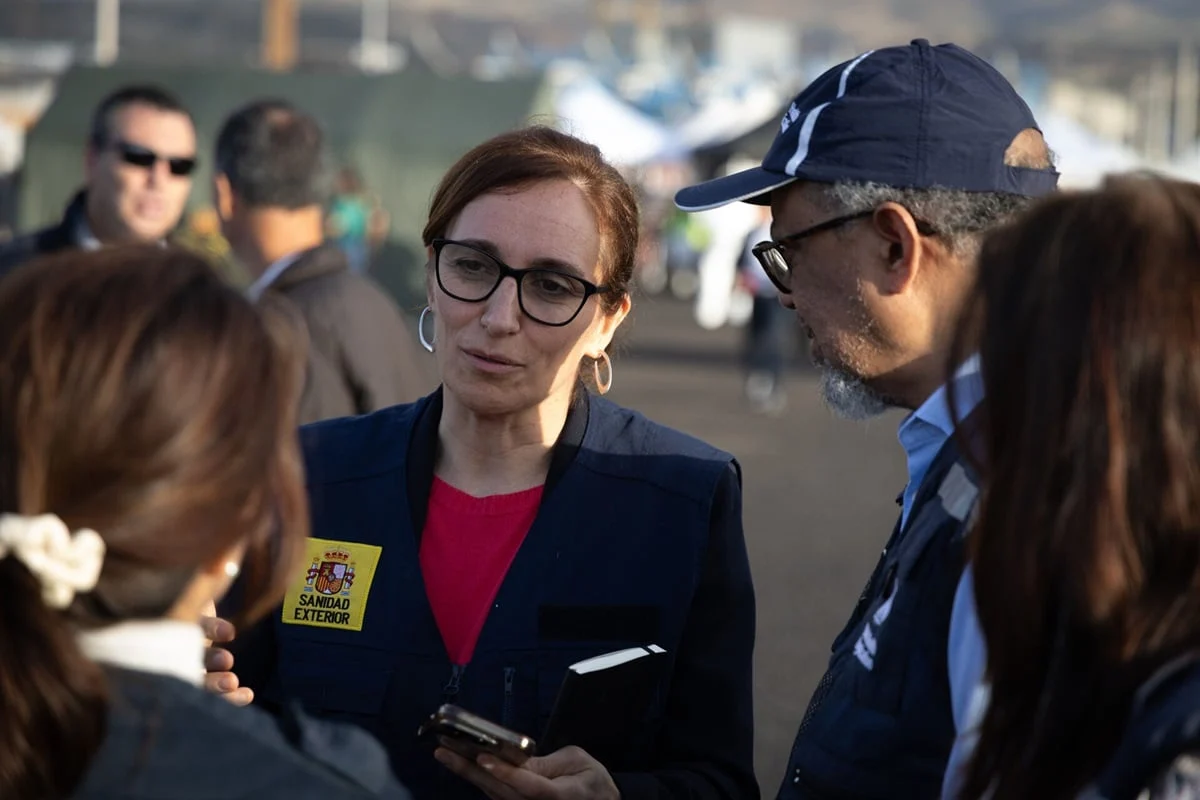
The World Health Organization (WHO) has officially concluded its emergency intervention in Tenerife, marking the successful resolution of a complex public health crisis involving the MV Hondius expedition vessel. Dr. Tedros Adhanom Ghebreyesus, the Director-General of the WHO, confirmed that the high-stakes operation to disembark and repatriate more than 120 passengers from 23 different countries has been completed with "grace and professionalism." The operation, which centered on the Port of Granadilla de Abona, serves as a significant case study in international health coordination, following a localized outbreak of hantavirus that resulted in three fatalities.
The conclusion of the mission marks the end of a period of intense uncertainty for the passengers and crew of the MV Hondius, who had been subject to strict quarantine and health protocols while at sea. According to official statements, the operation was characterized by a "sanitary corridor" that allowed for the safe transit of potentially exposed individuals from the vessel to their respective home countries. Dr. Tedros, who personally oversaw the final stages of the disembarkation in Tenerife, emphasized that the success of the mission was rooted in the seamless integration of scientific risk assessment and political will.
The Genesis of the Crisis: The MV Hondius Outbreak
The MV Hondius, an ice-strengthened expedition ship often utilized for polar voyages, became the center of an international health emergency when several individuals on board began exhibiting symptoms consistent with a severe viral infection. Subsequent testing confirmed an outbreak of hantavirus, a rare occurrence in a maritime environment. Hantaviruses are a family of viruses spread mainly by rodents and can cause varied disease syndromes in people worldwide. Specifically, the virus can lead to Hantavirus Pulmonary Syndrome (HPS) or Hemorrhagic Fever with Renal Syndrome (HFRS).
The outbreak resulted in three confirmed deaths. While initial reports were unclear regarding the locations of these fatalities, the WHO has since clarified the chronology: two individuals succumbed to the illness while on board the vessel, while a third passenger died following arrival in South Africa. The grieving families of these victims have remained a focal point of the WHO’s communications, with Dr. Tedros noting that the logistical success of the operation does not erase the "real lives and real losses" experienced by those affected.
The presence of hantavirus on an expedition ship presented unique challenges for public health officials. Unlike more common maritime illnesses such as norovirus, hantavirus requires specific environmental conditions for transmission—usually through the inhalation of dust contaminated with rodent urine or droppings. The source of the infection on the MV Hondius remains a subject of epidemiological investigation, though the immediate priority for the WHO and the Spanish government was the containment of the virus and the safe evacuation of those on board.
Chronology of the Tenerife Humanitarian Response
The decision to dock at Tenerife was the result of high-level negotiations between the Spanish government and international health authorities. As the ship sought a port capable of handling a complex biohazard evacuation, the Spanish administration, led by Prime Minister Pedro Sánchez, volunteered the facilities at Granadilla de Abona.
The operation unfolded over several weeks, beginning with the implementation of a strict risk assessment framework. Once the "sanitary corridor" was established, health workers in specialized protective equipment boarded the vessel to conduct final screenings. On Monday, the final group of passengers was observed boarding secure vehicles destined for the airport, where chartered flights awaited to return them to their home nations.
The timeline of the operation was dictated by the incubation period of the virus and the need to ensure that no passenger would pose a risk to the public during transit. Throughout this period, the 26-member crew, led by Captain Jan Dobrogowski, maintained the vessel’s operations under conditions of confinement. The MV Hondius is currently en route to the Netherlands, where the remaining crew members will complete their required health protocols.
Medical and Logistical Coordination: The "Sanitary Corridor"
The successful evacuation was made possible through the application of the "sanitary corridor" model, a logistical strategy designed to move individuals from a contaminated or high-risk zone to a safe zone without breaking isolation. In Tenerife, this involved a multi-agency effort including the Port Authorities of Granadilla, the Spanish Ministry of Health, and the Ministry of Transport, Mobility, and Urban Agenda.
Medical teams from the Canary Islands’ health service (Servicio Canario de la Salud) worked alongside WHO experts from the headquarters in Geneva and the Regional Office for Europe in Copenhagen. These teams were responsible for:
- On-board Triage: Assessing the stability of all passengers before disembarkation.
- Environmental Sampling: Conducting tests on the ship to identify the source of the hantavirus.
- Secure Transport: Utilizing a fleet of vehicles specifically outfitted to prevent cross-contamination.
- International Liaison: Coordinating with the embassies of 23 countries to ensure that health monitoring would continue upon the passengers’ arrival in their home jurisdictions.
The WHO noted that the "risk assessment held" throughout the process, meaning that the protocols established at the beginning of the crisis were sufficient to prevent any secondary transmission of the virus to the local population of Tenerife or the health workers involved.
Official Responses and Political Leadership
The resolution of the MV Hondius crisis has drawn praise for the Spanish government’s adherence to international law and humanitarian principles. Dr. Tedros highlighted the roles of several key Spanish officials, including Minister of Health Mónica García, Minister of the Interior Fernando Grande-Marlaska, and Minister of Territorial Policy Ángel Víctor Torres.
"The government of Prime Minister Sánchez honored its obligations under international law and then went beyond them, with warmth, speed, and care," the Director-General stated. The Spanish response is being viewed as a departure from the "closed-door" policies sometimes seen during international health scares, where ports may refuse entry to ships with infected passengers due to fear of local outbreaks.
Local authorities in Tenerife and the Guardia Civil were also instrumental in the operation’s success. However, the mission was marked by a further tragedy when a member of the Guardia Civil of Tenerife died of a heart attack while on duty during the operation. This loss has been acknowledged by the WHO as a testament to the dedication of the local personnel who facilitated the humanitarian effort.
Broader Implications for Global Health Governance
The MV Hondius incident provides several critical lessons for the future of global health governance, particularly regarding maritime health and the International Health Regulations (IHR). The IHR (2005) is a legally binding instrument that requires countries to report certain disease outbreaks and public health events to the WHO. It also outlines the rights and obligations of countries in handling public health events that have the potential to cross borders.
The Tenerife operation demonstrates that when nations comply with the IHR and cooperate with the WHO, even rare and deadly pathogens like hantavirus can be managed without causing widespread panic or regional outbreaks. The "solidarity" cited by Dr. Tedros is increasingly seen by health experts as a technical necessity rather than just a moral sentiment. In an interconnected world, the refusal to assist a vessel in distress can lead to unregulated disembarkations and a higher risk of uncontrolled viral spread.
Furthermore, the event highlights the need for specialized maritime health protocols. While the cruise industry has robust measures for common infections, the appearance of hantavirus—typically a terrestrial disease—suggests that health screenings and environmental controls on expedition vessels must be comprehensive, accounting for the various environments these ships visit.
Analysis of the Humanitarian Impact
Beyond the logistical and medical data, the MV Hondius crisis underscored the psychological toll of maritime quarantines. The 120 passengers, hailing from diverse backgrounds and 23 different countries, experienced weeks of "fear and uncertainty." The WHO emphasized that the "dignity of being cared for by strangers" played a vital role in the passengers’ recovery and successful repatriation.
For the island of Tenerife, the operation served as a moment of significant international visibility. By choosing "solidarity over hostility," the island community and the Spanish state have established a precedent for how modern democracies can respond to health crises with both scientific rigor and human compassion.
The Director-General of the WHO concluded his assessment by stating that the job is not yet finished, as the organization continues to monitor the health of the crew and passengers until all have cleared their respective quarantine periods. However, the active phase of the Tenerife intervention has ended, with the "sanitary corridor" proving that international cooperation remains the most effective tool in the global public health arsenal.
As the MV Hondius sails toward the Netherlands, the international community looks to this event as a successful model of crisis management. The combination of local commitment, national leadership, and international expertise prevented a localized outbreak from becoming a larger international incident, providing a blueprint for future responses to maritime health emergencies.
